
Feature Photo: ajay_suresh, CC BY 2.0 <https://creativecommons.org/licenses/by/2.0>, via Wikimedia Commons
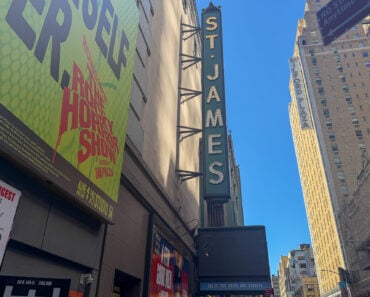
The Stephen Sondheim Theatre was once called Henry Miller’s Theatre. However, it isn’t one of those venues that have remained the same for the most part since the start. It retains its original facade, one of New York City’s official landmarks. In contrast, its interior dates to 2009 rather than 1918. Regardless, the Stephen Sondheim Theatre has returned to use as a Broadway Theater. Something that hasn’t always been true throughout its existence.
Henry Miller was born in the United Kingdom. His parents moved the family to Canada when he was still a child. As a result, Miller’s acting career started in that country before moving to the United States. He became successful, but he wasn’t satisfied. Over time, Miller became an actor, a director, a producer, and even a writer. On top of that, he harbored a longstanding dream of building a theater, which he got the chance to fulfill during the second half of the 1910s.
Miller announced his building of a theater on a leased lot in 1916. For its design, he hired the firm Ingalls & Hoffman but also brought in the independent architect Paul Allen. The first wasn’t a particularly surprising choice. Harry Creighton Ingalls and Francis Burrall Hoffman, Jr. were graduates from elite schools with previous experience in theater design work. In particular, the two were responsible for Winthrop Ames’s Little Theatre in 1912 and other smaller venues. It is known that Miller preferred more intimate auditoriums that brought actors and their audiences closer together. As such, it seems safe to say that his choice of Ingalls & Hoffman was no coincidence.
Bringing in Paul Allen was more eyebrow-raising, though explainable by personal connections. Miller had worked with Allen’s sister Viola Allen on numerous occasions. Supposedly, he exclaimed that he would one day choose the man to build his theater when they were introduced backstage. If true, Miller proved to be a man of his word. Allen is little known outside of this because there are just a couple of residences attributed to him. Perhaps unsurprisingly, Miller owned one of those residences.
By 1918, Henry Miller’s Theatre was ready to open its doors. Its facade is Neo-Georgian, which refers to the revival of Georgian architecture in the late 19th century and early 20th century. Primarily, the exterior is made out of red brick. However, white marble has been used to make it more stately while still keeping it warm and welcoming. The latter was critical for the sense of closeness that Miller wanted for his theater.
Under Father and Son
Henry Miller ran his theater from 1918 to 1926. He performed in some of the productions, but he was often involved in other ways as well. When Miller died, his son Gilbert Miller took over the running of the theater with what seems to have been a considerable amount of success. For instance, he doesn’t seem to have run into the same financial woes as so many other theater owners and operators during the Great Depression. Instead, he continued running the theater until 1966, which was when he and his wife put the place up for sale.
Used in Various Ways
Initially, Henry Miller’s Theatre went to the Nederlander Organization in 1966 because of a promise that the venue would continue hosting productions. With that said, that situation didn’t last very long. The Nederlander Organization sold Henry Miller’s Theatre to the real estate magnate Seymour Durst before leasing it in 1968. Subsequently, the venue continued to host productions before being converted for other uses. It was a movie theater of dubious repute from the late 1960s to the late 1970s. Then, it was a nightclub for the greater part of the next few decades. The survival of Henry Miller’s Theatre in this period was as much luck as anything else. Durst had several plans to redevelop the area that never came to fruition for one reason or another.
Of course, it became much more difficult to make changes to Henry Miller’s Theatre in the late 1980s. That is because the New York City Landmarks Preservation Commission started looking into ways to protect Broadway Theaters in the early 1980s, which would lead to it handing out official landmark status to numerous venues in the late 1980s. Henry Miller’s Theatre was somewhat unusual in that only its facade received protection. Something that would go on to have huge consequences for the venue.
The 1990s and 2000s
The 1990s and 2000s proved to be a complicated time for Henry Miller’s Theatre. The Roundabout Theatre Company decided to host its revival of Cabaret at the venue in 1998. Unfortunately, there was a construction accident at an adjacent building just nine months later, which forced it to relocate its production to Studio 54. Subsequently, matters became even messier. There was a legal fight between the owner and the lessee. Something that ended with the owner evicting the lessee, using the venue to host Urinetown, and then deciding to demolish the venue so that the Bank of America Tower could be built.
Since the facade had been granted official landmark status, the construction workers preserved it while demolishing the interior of Henry Miller’s Theatre. Then, the old interior was replaced with a new interior from 2004 to 2009. The new interior is notable for several reasons. First, it sits at the base of the Bank of America Tower. Second, it is underground for the most part, thus making it one of two Broadway Theaters to fit that description. Third, it was built with eco-friendliness in mind, which is why it is the first Broadway Theater to receive LEED certification.
Renamed For Stephen Sondheim
The Roundabout Theatre Company is the long-term lessee for the rebuilt venue. As such, it renamed the venue the Stephen Sondheim Theatre in 2010. That was timed to honor the composer and lyricist on his 80th birthday, which made sense because he worked on everything from West Side Story to Into the Woods. Since then, the Roundabout Theater Company has continued running the venue with minimal issues. The one notable incident would be the COVID-19 closures in March 2020, which were industry-wide rather than venue-specific.
References:
https://www.roundabouttheatre.org/theatres-and-venues/stephen-sondheim-theatre/
http://cinematreasures.org/theaters/2969
http://s-media.nyc.gov/agencies/lpc/lp/1357.pdf
Jackson, Kenneth T. The Encyclopedia of New York City. New Haven, CT: Yale University Press, 2011.
Haskell, David. The Encyclopedia of New York. New York: Avid Reader Press, an imprint of Simon & Schuster, Inc., 2020.
Bloom, Ken. Broadway: Its History, People, and Places: An Encyclopedia. New York: Routledge, 2004.
History Of The Stephen Sondheim Theatre On Broadway article published on ClassicNewYorkHistory.com ©2022
ClassicNewYorkHistory.com claims ownership of all its original content and Intellectual property under United States Copyright laws and those of all other foreign countries. No one person, business, or organization is allowed to re-publish any of our original content anywhere on the web or in print without our permission. All photos used in the articles are either original photographs taken by ClassicNewYorkHistory.com journalists, public domain creative commons photos or photos licensed officially from Shutterstock under license with ClassicNewYorkHistory.com and ClassicRockHistory.com. All photo credits have been placed at end of the article.
We are not responsible for any locations visited based on our recommendations or information included in the articles as the website is for entertainment purposes only.