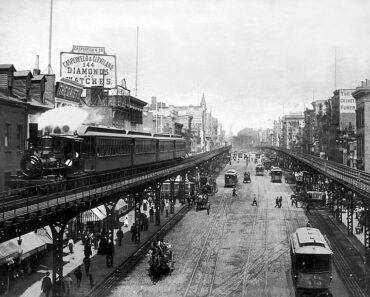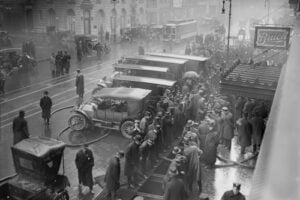
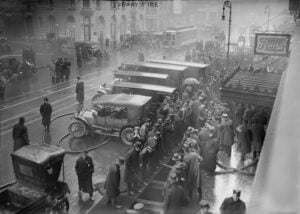
Crowds gather at Broadway and West 55th Street during the New York City subway fire on January 6, 1915. Photo: Everett Collection / Shutterstock.com.
On the morning of January 6, 1915, New Yorkers boarded the subway expecting an ordinary trip to work. The underground railroad was just over ten years old, yet it had already changed the way people traveled through Manhattan and between the boroughs. Trains carried crowded rush-hour passengers beneath Broadway, and the city increasingly depended on a transportation system that had seemed almost miraculous when it opened in 1904.
That morning, a failure in the subway’s electrical equipment brought trains to a halt beneath Midtown Manhattan. The lights went out, smoke spread through the tunnels, and passengers who had been sitting or standing in their cars suddenly found themselves trapped underground. Some tried desperately to force their way out. Others were overcome before rescuers could reach them.
One woman, Ella Grady, died, and more than 200 people were injured or overcome by smoke. The fire itself was largely confined to electrical cables rather than the passenger trains, but that distinction offered little comfort to those struggling to breathe. The incident became one of the most frightening emergencies in the early history of the New York City subway.
The disaster exposed a problem that would continue to concern transit engineers for generations: even a relatively localized electrical failure could become a serious threat when smoke, darkness, crowding, and uncertainty combined in a confined tunnel. The events of January 6 were not simply a story about a fire. They were a test of how an expanding city could protect the people it had persuaded to travel underground.
New York’s Young Subway System in 1915
The first section of New York City’s underground subway opened on October 27, 1904, operated by the Interborough Rapid Transit Company, usually called the IRT. Its trains quickly became essential to everyday life. The subway let people travel distances that once required slow streetcars, elevated railways, or long trips through congested streets. Its success also encouraged continued construction and expansion.
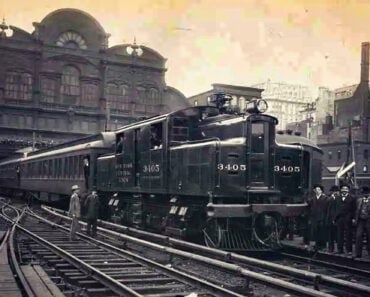
Electric traction made that expansion possible, but it also introduced hazards that were not always obvious to passengers. Power had to reach trains through cables, conduits, and rails underground. The system also required ways to remove heat and maintain breathable air. These problems had been discussed before 1915, including in engineering publications devoted to tunnel ventilation.
The subway was celebrated as a modern achievement, and with good reason. But an engineering success could still contain vulnerabilities. The public generally encountered the system as stations, platforms, and trains. Few riders gave much thought to the electrical installations that kept the cars moving, or to what might happen if a train lost power between stations.
The Electrical Failure Beneath Broadway
The trouble began during the morning rush with a short circuit involving power cables in the Broadway subway corridor in Midtown Manhattan. Accounts of the exact manhole and cable location vary, referring to the area around West 52nd to West 55th Streets. The consequences were unmistakable: electricity was interrupted, lights failed, and trains stopped in the stretch between the 50th Street and 59th Street stations near Columbus Circle.
The burning material was mainly insulation surrounding electrical cables. Rather than a great wall of flames racing through the passenger cars, the immediate danger was smoke. Heated insulation released dense, irritating fumes that spread into the tunnels and reached trains immobilized without normal power.
That distinction is central to the history of the incident. Passengers were not trying to escape a train already engulfed in flames. They were caught in stopped cars while the air around them became difficult to breathe. The inability to move the trains away from the smoke turned a cable failure into a far more dangerous emergency.
Passengers Trapped Between the Subway Stations
Contemporary accounts describe two crowded trains, an express and a local, at the heart of the emergency. An Associated Press dispatch referred to approximately 700 passengers aboard those two trains. Other reports counted roughly 2,500 people affected by the broader disruption, including additional cars and station areas. Those figures should not be treated as identical measurements of the same group.
At first, passengers did not necessarily know why their trains had stopped. In the dim glow of emergency lights, a power failure might have seemed like another temporary delay. Then smoke entered the cars. The atmosphere changed rapidly as people began coughing, feeling faint, and trying to work out whether the safest course was to remain aboard or flee into the tunnel.
Passengers pushed toward doors and windows. Contemporary reports described broken glass, damaged seats, and people struggling against one another in crowded cars. Some were injured in the rush to escape, while others suffered from the smoke itself. The darkness made it harder for people to understand where they were, how far they had to travel, and whether a clear route to the street existed.
What might have been a manageable equipment failure on an open-air railway became a crisis underground. When the trains stopped, passengers were suddenly dependent on the decisions of transit employees, the condition of the tunnel, and the ability of emergency crews to reach them.
Why the Guards Would Not Immediately Open the Doors
One of the most troubling parts of the original reporting concerned the conduct of subway guards. Passengers demanded to leave the stationary cars, but some guards initially refused to open doors between stations, explaining that company rules prohibited such an evacuation. Their refusal became a major focus of newspaper accounts describing the growing panic.
The question was not as simple as whether people should have been allowed to step outside. The tracks themselves presented dangers, particularly the electrified third rail, and employees had reason to fear uncontrolled movement through the tunnel. Yet remaining in smoke-filled cars could also be deadly. The episode revealed how inadequate a rigid rule could become when it was applied to an emergency for which passengers and staff were poorly prepared.
As conditions worsened, some people forced their way out or broke windows in search of air. Others remained trapped or became too weak to move. There was no straightforward, well-marked exit immediately beside every car. The disaster showed how quickly ordinary passengers could become helpless when electricity, communications, visibility, and normal train operations failed together.
Firefighters Descend into the Smoke
The New York City Fire Department faced a rescue scene unlike an ordinary building fire. The passengers were beneath the street, surrounded by smoke and difficult to reach through the subway’s limited openings. Firefighters, police officers, ambulance crews, and transit personnel converged on Broadway as the emergency developed.
Rescuers used access points and ventilation openings along the street. Near West 55th Street, firefighters removed or opened street-level coverings and lowered ladders to bring people out of the tunnel. Contemporary newspaper accounts describe victims emerging weak or unconscious, while other commuters reached the surface coughing and covered with soot.
The conditions endangered firefighters as well. Men who descended to help passengers were themselves affected by the fumes, and some needed medical attention. Their difficulty was captured in contemporary photographs showing exhausted firefighters seated on the sidewalk after the rescue. These photographs survive in the Library of Congress collections, a direct visual record of the emergency rather than a later recreation.
Even as rescue work continued, confusion spread above ground. Early rumors suggested a far greater number of deaths than had occurred. Relatives tried to learn what had happened to commuters who had failed to arrive at work, while hospitals and emergency services dealt with the injured. The scene was a reminder that an underground accident could create a crisis throughout the streets and institutions above it.
Ella Grady and the Hundreds Who Were Injured
One passenger did not survive. Historical reporting identifies her as Ella Grady, age 39. She died during the emergency, becoming the name most closely associated with its human cost. More than 200 others were injured, overcome by smoke, or hurt in the attempts to escape. The widely repeated total of more than 210 reflects contemporary reporting, although different accounts and stages of the emergency produced slightly different figures.
Many of the injuries were not conventional burns. The fire had not swept through the cars themselves. Victims suffered from smoke inhalation, fainting, cuts from broken glass, bruising, and injuries sustained amid crowded and frightening conditions. Some passengers needed hospital treatment; others emerged shaken and physically exhausted.
The importance of identifying Grady by name is easy to overlook in a history built around electrical equipment and subway engineering. She was one of the New Yorkers taking an ordinary train journey that morning. The number of people injured is large, but the single fatality also deserves to be remembered as an individual life lost rather than merely as a statistic.
The Subway Shutdown Disrupts New York City
The incident affected many more people than those inside the smoke-filled trains. Subway service was badly disrupted, and commuters scrambled to find other ways to reach their destinations. Elevated lines and surface transportation could not simply absorb everyone who normally depended on the underground trains.
Newspaper reports described severe crowding on alternative routes, including difficulties around the Brooklyn Bridge as travelers tried to cross between boroughs. The interruption continued to complicate the evening trip home. A system that had quickly become indispensable revealed how vulnerable the city could be when a central transportation artery stopped working.
The disruption reached schools and offices as well. A January 7, 1915, report in The New York Times described how many students and faculty members were unable to attend Columbia University classes because they were delayed by the subway trouble. The detail may seem minor beside the casualties, but it illustrates the reach of the event into everyday New York life.
Investigations into the Fire and Subway Safety
The disaster brought renewed scrutiny to the Interborough Rapid Transit Company and the officials responsible for overseeing the subway. Investigators examined the electrical failure and the way burning cable insulation had filled the tunnels with dangerous smoke. The immediate question was how a relatively limited equipment problem had produced such widespread suffering.
In the aftermath, engineers debated the limits of electrical insulation and the challenge of preventing a cable from burning after a powerful short circuit. The noted electrical engineer Charles Proteus Steinmetz was among those whose comments appeared in contemporary press coverage. The issue was not simply whether cables might fail, but how to prevent a failure from spreading smoke into spaces occupied by passengers.
Ventilation also came under criticism. The need to move fresh air through tunnels had been recognized before the January 1915 fire, but the event made the consequences of inadequate smoke removal painfully clear. Suggestions included improvements to electrical materials, the handling of smoke, and the protection of passengers when trains were unable to move.
Mayor John Purroy Mitchel called for a serious examination of the incident, and the Public Service Commission faced questions about the safeguards used by the railway. The broader history of subway regulation included later investigations of transit operations and oversight. It is reasonable to identify the 1915 fire as an important warning, but not to claim that it instantly produced every modern subway ventilation shaft or evacuation rule.
What Changed After the 1915 Subway Fire?
Retrospective histories of the fire point to improved electrical safeguards and changes in subway-car design as part of the response to the dangers it exposed. The catastrophe made it difficult to ignore the fact that passengers could be trapped in stopped cars while smoke spread from equipment that was not itself part of the train.
That does not mean the danger of subway fires was solved permanently. Decades later, the National Transportation Safety Board continued studying fires in the New York subway system, including electrical equipment, materials in tunnels, training, and emergency response. Safety has evolved through many investigations, technological changes, and lessons learned from different incidents, not from one event alone.
The lasting lesson of January 6, 1915, was the need to consider the underground environment as a whole. Equipment failures, smoke, tunnel access, decisions by employees, and the ability of emergency services to operate below street level all affected the outcome. Treating each problem separately was not enough when they could occur together during a crowded rush hour.
Why the 1915 New York City Subway Fire Still Matters
The January 1915 emergency is sometimes called New York’s first subway disaster, but that description overlooks earlier serious incidents, including a September 1914 collision and fire noted in the Library of Congress’s subway history timeline. What makes the 1915 event distinctive is not a claim to being the first accident. It is the scale of the smoke emergency and the frightening demonstration that underground travel could become dangerous even when the passenger trains themselves were not burning.
For New Yorkers, the subway was already an essential part of the city, and the events beneath Broadway showed the responsibility that came with that dependence. More than a century later, the system’s daily operation still rests on the interaction of machinery, public safety, and the people who use it. Remembering Ella Grady and those who struggled to escape on January 6, 1915, is one way to understand the human history behind that infrastructure.
For more New York transit history, explore our articles on the oldest operating New York City subway stations, the history of the Second Avenue Subway, and the history of Union Square subway station.