Photo: Brian Kachejian 2018
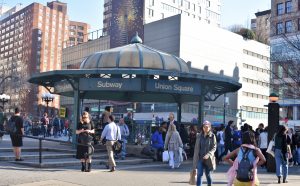
Most people who visit New York City are under the impression that Manhattan’s largest public transportation hubs, aside from the airports, are Pennsylvania Station and Grand Central Terminal. As far as the blend of subway lines and commuter railroads connecting New Jersey, Long Island, and the rest of the Northeast Corridor, those hubs stand as the largest transportation centers in New York City. However, within the New York City subway system alone, one of the busiest and most important stations is Union Square Station. Located beneath the historic Union Square Park, this massive transit hub serves millions of riders every year and connects seven subway lines, making it one of the most vital stations in the entire system.
New York City’s Union Square Station is located at 14th Street and Fourth Avenue in Lower Manhattan. However, don’t let the single address fool you, as the station has multiple entrances and exits spread across several blocks surrounding Union Square Park. Both the subway station and the park share a long and fascinating history that has made them among Manhattan’s most recognizable destinations.
In simple terms, you can get almost anywhere you want to go in Manhattan, Queens, the Bronx, or Brooklyn from Union Square Station. There may be transfers involved, but your journey can begin here. However, depending on which entrance you use, that journey may also require a healthy dose of patience. Union Square Station is huge. Depending on where you enter, your experience can range from a simple MetroCard swipe to navigating what feels like an underground maze.
Certain entrances to Union Square Station leave riders with only one train line to choose from. The entrance at East 16th Street and Union Square East, for example, takes you directly to the 6 train platform, making the decision as simple as choosing uptown or downtown. Enter through the main entrance at 14th Street and Fourth Avenue, however, and you’ll soon find yourself standing at one of the busiest crossroads in the entire subway system. It’s not a place for first-time visitors.
The main Union Square Station features plenty of signs directing riders toward the different subway lines, but somehow it always seems as though the signs disappear just when you need them most. Add in the summer heat, the familiar subway smells, and the endless parade of colorful New York characters, and the experience can be both entertaining and overwhelming.
Union Square Station is the ultimate subway connection point outside Penn Station and Grand Central Terminal, though without the extensive shopping, restaurants, and conveniences found at those larger rail terminals. Union Square Station connects the following subway lines.
Subway Lines Serving Union Square Station
4 Line – Lexington Avenue Express
From Woodlawn in the Bronx to New Lots Avenue in Brooklyn.
5 Line – Lexington Avenue Express
From Eastchester-Dyre Avenue in the Bronx to Flatbush Avenue-Brooklyn College. This express train does not always stop at Union Square Station.
6 Line – Lexington Avenue Local
From Pelham Bay Park in the Bronx to Brooklyn Bridge-City Hall in Manhattan. This local train stops at every station along Lexington Avenue.
L Line – 14th Street Canarsie Local
From 8th Avenue in Manhattan to Canarsie-Rockaway Parkway in Brooklyn.
N Line – Broadway Express
From Astoria-Ditmars Boulevard in Queens to Coney Island-Stillwell Avenue in Brooklyn.
Q Line – Second Avenue/Broadway Express
From 96th Street on the Upper East Side to Coney Island-Stillwell Avenue in Brooklyn.
W Line – Broadway Local
From Astoria-Ditmars Boulevard in Queens to Whitehall Street in Lower Manhattan. This train operates on weekdays only.
Updated June 27, 2026