
Photo courtesy of Michael R. Virgintino
The latest offering by Theme Park Press, Freedomland U.S.A.: More Definitive History, continues the intriguing narrative about one of the most innovative and beloved entertainment venues in the country. This new book about America’s theme park places the spotlights on a trove of recently found documents and other resources along with remembrances shared by more than one hundred employees and park guests. The Bronx park lasted only five years (1960-1964), but Freedomland to this day continues to generate fond memories among boomers who enjoyed the 85-acre playground with family and friends and many others who are captivated by its brief but vital role on the theme park timeline.
In the previous book, Freedomland U.S.A.: The Definitive History (Theme Park Press, 2018), author Michael R. Virgintino believed that he had documented much of the available Freedomland story from conception to bankruptcy. He knew that the official park records had been lost for 50 years and that, with a few exceptions, all significant park, vendor and sponsor executives had been deceased for decades. To connect the remaining pieces of Freedomland’s scattered history, Virgintino relied on archived and digitized media articles, online research and interviews with several employees and other people who had been associated with the park.
After the initial Freedomland book was published, according to Virgintino, many additional employees and the children of employees contacted him to share memories and previously unknown stories. The conversations generated many interesting and significant questions that required further examination. Simultaneously, as more newspapers from the 1950s and 1960s were digitized, the author gained access to additional news and publicity articles along with advertisements that showcased the park.
Hundreds of family photographs and home movies that captured minute but important details about the park have been shared with the author by fans who enjoyed Freedomland during their formative years. Virgintino also obtained three extensive photo archives with more than 3,500 images by park photographers, and he located museum archives in Connecticut, Delaware, New York and California that contained significant information associated with the Freedomland story. Articles and photographs, along with the park’s history, appear regularly on his Freedomland social media platforms – Facebook, Instagram, X/Twitter and Pinterest.
The first Freedomland book serves as a prerequisite to the new volume. Freedomland U.S.A.: More Definitive History reprises the roles of people mentioned in the first volume while introducing others associated with the park to further explain the many elements of the Freedomland story. Several corrections of previous assumptions and a few minor errors that appear in the earlier book are attributed to new revelations.
Among the highlights of Freedomland U.S.A.: More Definitive History:
- More than 100 interviews/profiles feature park employees from management, creative, construction, attraction operation, and food and other services. The stories and memories deliver unique insights into park operations. An extensive, though far from conclusive, listing of additional employees throughout the park is featured in the book.
- Detailed contributions by key vendors, including Evans, Linesch and Dutton (landscaping), Arrow Development (attractions), Todd Shipyards of Hoboken and Minneford Yacht Yard of City Island (boats), and The Brass Rail (food concessioner).
- Updates and stories about appearances by celebrity entertainers, character actors, clowns and even a few politicians.
- More information about the park’s role as a “placeholder” for the site that led to the subsequent development of the marshland. Plus, more details about the conversion of the Bronx property to build Co-op City, the world’s largest housing cooperative.
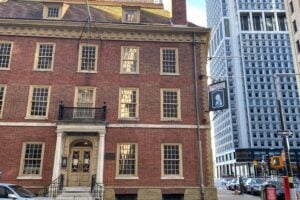
- Discovery of the park’s first Bronx office location that was occupied during the construction phase (the building still stands!) and the likely inspiration for the park’s name.
From Disney Connection To Land Development
Freedomland was celebrated as the “Disneyland of the East.” To this day, the park generates fond memories among remaining employees and the boomers who enjoyed its American history-themed attractions.
Freedomland was conceived and built by C.V. Wood and his Marco Engineering Company. Known to many as Woody, he was Disneyland’s first employee and he brought Walt Disney’s imagination to life by leading the team that built that park. He then created Marco Engineering to build theme parks and other venues across the country. Six Flags Over Texas in Arlington and the community of Lake Havasu, Arizona, continue to prosper.
Unknown to Woody and the general public that adored Freedomland, landowner William Zeckendorf, Sr., local politicians, city planners and construction unions considered the park a temporary occupant of the property until land variances permitted significant development of the marshland for housing and shopping.
“Co-op City was on New York City’s blueprints before the first shovel of dirt was turned to build the park,” said Virgintino. “Freedomland U.S.A. was doomed to fail before the first guest entered the park. As everyone was hailing this great achievement on its opening day, Woody already was concentrating on his Texas park and other projects. Other people, including William Zeckendorf, Sr., operated Freedomland U.S.A. and they kept it afloat, or ran it into the ground, depending on one’s perspective. The park survived until the land variances could be applied to the property. Then, Freedomland U.S.A. was declared a bankrupt and the land was cleared for development.”
You can purchase the book by clicking on the title below.