When the federal government shut down in January 2018, one of New York City’s most recognizable landmarks was caught in the political crossfire. Rather than allow thousands of visitors to be turned away each day, New York Governor Andrew M. Cuomo announced that the State of New York would fund operations to keep the Statue of Liberty and Ellis Island open. The decision protected tourism, preserved hundreds of jobs, and highlighted the importance of two of America’s most significant historic landmarks.
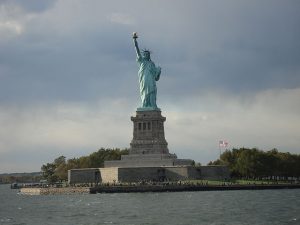
Public Domain Photo: Wiki Images
On January 21, 2018, New York State Governor Andrew M. Cuomo announced plans to keep the Statue of Liberty and Ellis Island open after both monuments were forced to close because of the federal government shutdown. Under the Governor’s proposal, the State of New York would temporarily assume the costs necessary to reopen the landmarks until the federal government resumed normal operations.
Protecting Jobs And New York Tourism
Because of the shutdown, federal employees working at both the Statue of Liberty and Ellis Island were left without pay. The closure also affected employees working for the ferry service that transports visitors to the two monuments. In total, approximately 900 jobs were impacted.
Beyond the employees, the shutdown threatened one of New York City’s busiest tourist attractions. Nearly 10,000 visitors a day travel to the Statue of Liberty and Ellis Island. Closing the monuments would not only disappoint visitors from around the world, but also affect local businesses that depend on tourism throughout Lower Manhattan.
A Practical Financial Decision
Governor Cuomo understood that allowing the monuments to remain closed would likely cost the State far more in lost tourism revenue than the temporary expense of keeping them open. While the exact financial figures were not available, the continued operation of the Statue of Liberty and Ellis Island helped preserve ticket sales, ferry operations, souvenir purchases, and the economic activity generated by thousands of daily visitors.
The Political Significance Of The Decision
Some observers viewed Governor Cuomo’s decision as more than simply an economic measure. By stepping in during the federal shutdown, he demonstrated a willingness to protect New York workers, businesses, and one of the state’s most recognizable symbols while political negotiations continued in Washington.
Supporters argued that the move reflected strong leadership during an uncertain period, while critics viewed it through a political lens. Regardless of perspective, the decision ensured that one of America’s most recognizable landmarks remained accessible to visitors from around the world.
The Symbolism Of The Statue Of Liberty
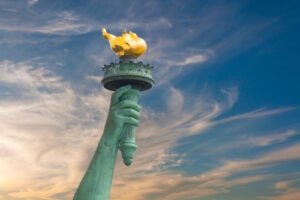
Governor Andrew M. Cuomo’s decision to reopen the Statue of Liberty using state resources also carried symbolic importance. The federal government shutdown centered largely on disagreements over immigration policy, making the temporary closure of the Statue of Liberty especially meaningful. For many, the monument represents America’s long tradition as a nation of immigrants and a beacon of hope for people arriving from around the world. Whether viewed as politics or practical leadership, keeping Lady Liberty open ensured that her symbolic message continued during one of the nation’s more contentious political moments.
Related Classic New York History Articles
If you enjoyed this article, be sure to read more about the Statue of Liberty, Grand Central Terminal, the Flatiron Building, and St. Patrick’s Cathedral.
Article updated June 28 2026