More than sixty years after Freedomland U.S.A. first welcomed visitors to the Bronx, the legendary amusement park continues to fascinate historians, former employees, and the generations of New Yorkers who grew up exploring its themed lands. While countless articles and memories have been shared over the years, one book has emerged as the definitive account of the park’s remarkable rise and heartbreaking fall. Freedomland U.S.A.: The Definitive History by Michael R. Virgintino tells the complete story of one of New York City’s most beloved attractions through extensive research, firsthand interviews, and never-before-published photographs.
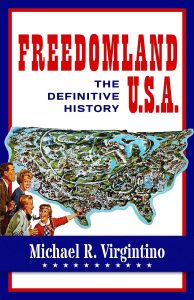
The Definitive Book On Freedomland U.S.A.
ClassicNewYorkHistory.com is proud to recognize the outstanding work of contributing writer Michael R. Virgintino, whose book Freedomland U.S.A.: The Definitive History has become the most comprehensive history ever written about the legendary Bronx amusement park.
Michael has contributed numerous historical features to ClassicNewYorkHistory.com through the years and also served as a special advisor on our original Freedomland U.S.A. article. His passion for preserving the park’s history is evident throughout this remarkable book, which combines meticulous historical research with the memories of those who built, operated, and enjoyed one of America’s most distinctive theme parks.
The Story Behind Freedomland
The book chronicles the complete history of Freedomland U.S.A., from its conception by C. V. Wood and Marco Engineering through its construction, operation, and eventual closure. Often referred to as the “Disneyland of the East,” Freedomland operated for only five seasons between 1960 and 1964, yet its impact on generations of New Yorkers remains immeasurable.
Virgintino explores the vision behind the park, its uniquely American history theme, and the circumstances surrounding its development on the northeast Bronx marshlands that would eventually become Co-op City and the Bay Plaza shopping area.
More Than An Amusement Park
One of the strengths of Freedomland U.S.A.: The Definitive History is its ability to place the park within the larger story of New York City and American history. The book examines not only the attractions and entertainment but also the business decisions, politics, land development, and personalities that shaped the park’s destiny.
Readers will discover detailed accounts of classic attractions including the Chicago Fire, Earthquake, Mine Caverns, Northwest Fur Trappers, Great Lakes sternwheelers, the Civil War exhibits, Danny the Dragon, and many more attractions that remain vivid memories for baby boomers who visited the park.
Firsthand Stories
Perhaps the most valuable aspect of the book is the collection of firsthand interviews with former employees and people who experienced Freedomland during its brief but unforgettable existence. Character actors, ride operators, restaurant employees, parking attendants, and countless visitors share memories that help preserve an important chapter in Bronx history.
The book also explores the many celebrities who appeared at Freedomland, including musicians, television personalities, radio disc jockeys, entertainers, and actors who helped make the park one of New York’s premier family attractions during the early 1960s.
A Must Read For New York History Fans
If you have an interest in New York City history, amusement parks, American popular culture, or simply enjoy learning about places that helped shape generations of New Yorkers, Freedomland U.S.A.: The Definitive History belongs on your bookshelf. Michael R. Virgintino has created an enduring historical record that preserves the story of one of New York City’s most fascinating lost landmarks.
Related ClassicNewYorkHistory.com Articles
If you enjoy reading about Freedomland U.S.A., be sure to visit our articles on Freedomland U.S.A., Co-op City, Williamsbridge Oval Park, and The New York Botanical Garden.
Updated June 29, 2026.