If you ask ten New Yorkers who owns the Empire State Building, you may get ten different answers. Some will say Donald Trump. Others will mention Leona Helmsley, Japanese billionaire Hideki Yokoi, or the thousands of investors who once held participation interests in the property.
Each answer contains a piece of the truth, but none describes the building’s ownership today.
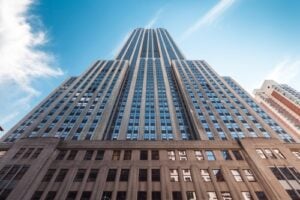
The short answer is that the Empire State Building is owned by Empire State Realty Trust, a publicly traded real estate investment trust. The long answer is far more complicated. Over the decades, ownership of the land, the building, the master lease, and the operating rights were divided among different entities. That structure produced one of the most tangled property sagas in New York City history.
The story involves former Governor Al Smith, financier John J. Raskob, Chicago industrialist Henry Crown, real estate syndicators Lawrence Wien and Harry Helmsley, thousands of small investors, a bitter Japanese family dispute, Donald Trump’s attempt to break a long-term lease, and the Malkin family’s eventual consolidation of the property into a public company.
Here is the history of who built, bought, divided, fought over, reunited, and ultimately placed the world’s most famous skyscraper on the New York Stock Exchange.
Direct Answer: Who Owns the Empire State Building Today?
The Empire State Building is owned by Empire State Realty Trust, Inc., a publicly traded real estate investment trust listed on the New York Stock Exchange under the ticker symbol ESRT.
Through its operating partnership and controlled subsidiaries, Empire State Realty Trust owns the fee title to the Empire State Building and the land beneath it. The company also owns and operates the Empire State Building Observatory Experience.
Anthony E. Malkin serves as chairman and chief executive officer of Empire State Realty Trust. The company is publicly traded, which means its economic ownership is divided among public stockholders and holders of operating-partnership units.
Buying a share of ESRT does not give an investor a deed to a tiny physical piece of the tower. It gives that person an ownership interest in the public company whose real estate portfolio includes the Empire State Building.
Who Does Not Own the Entire Empire State Building?
Donald Trump does not own it. From 1994 until 2002, Trump held a 50 percent interest in the fee-title entity connected to the land and building. He did not control the long-term master lease or the building’s daily operations, and his lawsuits did not succeed in terminating that lease.
Leona Helmsley never owned the whole tower by herself. The Helmsley interests were on the leasehold and operating side of the structure created in 1961. Her estate later held a significant interest in the operating company that managed the building.
The Malkin family does not privately own the entire property today. The family played the central role in reuniting the property’s interests and creating Empire State Realty Trust. Anthony Malkin leads the company, but ESRT is owned by its stockholders and operating-partnership investors.
1. Al Smith, John Raskob, and the Original Empire State Syndicate
The ownership story begins in 1929, when former General Motors executive John J. Raskob joined Coleman du Pont, Pierre S. du Pont, Louis G. Kaufman, Ellis P. Earle, and other investors to form Empire State, Inc. They selected former New York Governor Alfred E. Smith to serve as the corporation’s public leader.
The syndicate acquired the former Waldorf-Astoria Hotel site at Fifth Avenue and 34th Street and launched an extraordinarily ambitious construction project. Shreve, Lamb & Harmon designed the Art Deco tower, and Starrett Bros. & Eken built it at remarkable speed.
The Empire State Building opened on May 1, 1931, during the Great Depression. Office leasing was slow enough that critics called it the “Empty State Building,” but the observation decks attracted visitors almost immediately. Over time, the building’s occupancy improved, and it became both a profitable property and an international symbol of New York.
Al Smith died in 1944, and John Raskob died in 1950. The original investors and their heirs then prepared to sell their interests.
2. The 1951 Sale to the Roger Stevens and Henry Crown Group
In 1951, a syndicate led by theatrical producer and real estate investor Roger L. Stevens agreed to buy the Empire State Building from the Raskob interests for approximately $51 million. The price was extraordinary for the time.
Chicago industrialist Henry Crown entered the deal as a major investor. Crown gradually purchased the interests of other members of the buying group and emerged as the building’s controlling owner by the middle of the 1950s.
The ownership was already becoming complicated. Prudential Insurance Company acquired the land beneath the skyscraper for approximately $17 million in 1951, while the Stevens-Crown group controlled the building and the leasehold connected to the site.
This separation between the ground and the tower laid the foundation for the even more elaborate structure created a decade later.
3. The 1961 Deal That Divided Ownership Into Layers
In 1961, Lawrence A. Wien, Peter L. Malkin, and Harry B. Helmsley arranged to acquire control of the Empire State Building in a transaction valued at $65 million. At the time, it was the highest price reported for a single building.
The deal did not result in one buyer simply receiving one clean deed. Instead, it separated the property into several legal and economic layers.
Prudential already owned the land. As part of the 1961 transaction, the building itself was conveyed to Prudential for $29 million. Prudential then leased the land and building to Empire State Building Associates under a master lease that, with renewal rights, could run for 114 years.
Empire State Building Associates acquired that master lease for $39 million. The partnership financed the purchase with a $6 million mortgage and approximately $33 million raised through the sale of 3,300 participation units priced at $10,000 each.
Many of those units went to individual investors who could never have purchased a major Manhattan skyscraper on their own. The transaction became one of the best-known examples of real estate syndication in American history.
The master lessee did not directly operate the tower. It subleased the property to Empire State Building Company, an operating venture associated with Wien, Helmsley, and other interests. That company collected rents, managed tenants, and ran the building while the fee owner and master-lease investors occupied different levels of the ownership structure.
Why the 1961 Structure Was So Confusing
From the outside, the Empire State Building looked like a single property. Legally, however, several different rights existed at the same time.
The fee title represented ownership of the land and physical building.
The master lease gave Empire State Building Associates long-term control of the entire property under its agreement with Prudential.
The operating sublease allowed Empire State Building Company to manage the tower, lease office space, and collect revenue from tenants.
The participation interests allowed thousands of investors to share in the economics of the master-lease partnership.
This structure worked for decades, but it also meant that buying the deed did not automatically provide control of the building. That distinction became crucial during the ownership battle of the 1990s.
4. Hideki Yokoi and the Disputed Japanese Ownership
In 1991, an investment vehicle connected to Japanese billionaire Hideki Yokoi acquired the fee title from Prudential for approximately $42 million. The title remained burdened by the extremely long master lease, which sharply limited the fee owner’s control and income.
The acquisition involved Yokoi’s daughter, Kiiko Nakahara, her husband, Jean-Paul Renoir, and investor Oliver Grace. A bitter family dispute followed. Yokoi later accused his daughter and son-in-law of diverting control of the Empire State Building and other international properties away from him.
The competing claims produced years of litigation and uncertainty. What is clear is that the new fee owners possessed the deed but did not control the valuable operating lease. Without eliminating or renegotiating that lease, ownership of the title alone offered limited power over the tower.
5. Donald Trump Buys Half of the Fee Title
Donald Trump entered the Empire State Building saga in 1994. He formed a partnership with Nakahara and Renoir and received a 50 percent interest in the fee-title venture.
Trump reportedly contributed no cash at the beginning of the arrangement. His value to the partnership was supposed to come from his legal team, negotiating ability, public profile, and willingness to challenge the long-term lease.
Trump publicly described himself as a co-owner of the Empire State Building, which was legally true in relation to the fee title. The statement was also easy to misunderstand because he did not control the building’s offices, rents, observatory, or daily management.
The economically valuable operating rights remained with the entities connected to the Helmsley and Malkin interests.
6. The Lawsuit to Break the Master Lease
Trump’s strategy depended on terminating the long-term lease that stood between the fee owners and control of the skyscraper.
He sued the leasehold and operating interests, alleging that the Empire State Building had been poorly maintained and allowed to deteriorate. His complaints described the tower as a second-rate property suffering from operational neglect.
The legal campaign placed Trump on one side and the Malkin and Helmsley interests on the other. The dispute generated enormous publicity, but it did not produce the result Trump wanted. The courts did not terminate the master lease, and the fee-title owners remained unable to take control of the building’s operations.
The episode explains why saying that Trump once “owned the Empire State Building” is both true and misleading. He co-owned the fee title for several years, but he never controlled the entire ownership stack.
7. Peter Malkin Reunites the Fee and Leasehold Interests
By 2002, the Trump and Yokoi side was ready to sell. Empire State Building Associates, led by Peter Malkin, agreed to purchase the fee title for $57.5 million.
The transaction placed the deed and the master-lease interests under related Malkin-led entities for the first time since the ownership structure had been divided. The property still contained separate legal entities and lease layers, but the hostile relationship between the fee owner and the master lessee had ended.
That reunification cleared the way for a more coordinated approach to management, investment, renovation, and long-term planning. The Malkin organization gained full control of the building’s day-to-day management in 2006 after replacing the prior managing and leasing agent.
Leona Helmsley died in 2007. Her estate retained a large economic interest in the operating company, which later became part of the consolidation that created Empire State Realty Trust.
8. The Empire State Building Goes Public
Peter Malkin and his son, Anthony Malkin, eventually proposed combining the Empire State Building with other office and retail properties into a publicly traded real estate investment trust.
The plan met resistance from some longtime investors who preferred a private sale or wanted to preserve the old syndicate structure. Lawsuits and investor challenges followed, but the required supermajorities approved the consolidation.
Empire State Realty Trust completed its initial public offering and related formation transactions on October 7, 2013. Its Class A shares began trading on the New York Stock Exchange under the symbol ESRT.
The IPO ended the era in which thousands of families held direct participation interests in the original 1961 partnership. Their interests were exchanged for cash, shares, operating-partnership units, or combinations permitted by the transaction.
How Empire State Realty Trust Owns the Building Today
Empire State Realty Trust operates through a structure commonly used by public real estate companies. The public corporation controls Empire State Realty OP, L.P., its operating partnership. That partnership and its subsidiaries hold the real estate and related businesses.
The Empire State Building is now part of ESRT’s larger New York City portfolio rather than a stand-alone private syndicate. The tower remains the company’s flagship asset and accounts for a substantial portion of its rental revenue.
ESRT also owns and operates the Observatory Experience. The attraction underwent a $165 million redevelopment that created a dedicated visitor entrance, an interactive museum, and a redesigned 102nd-floor observatory.
The building has also undergone extensive energy-efficiency work. It has used renewable wind electricity since 2011, and the retrofit program has substantially reduced its energy use.
Can Anyone Own Part of the Empire State Building?
In an economic sense, yes. Anyone who purchases ESRT stock becomes a stockholder in the company that owns the Empire State Building and the rest of the ESRT portfolio.
That is different from the 1961 arrangement. The original participants owned interests in a private partnership created specifically around the master lease. Today’s public investors own shares in a diversified corporation whose value depends on all of its properties, debts, operating businesses, and management decisions.
A share of ESRT therefore represents indirect ownership through the public company, not direct title to an office, window, brick, antenna, or square foot of the Empire State Building.
A Final Word
The simplest answer to the ownership question is Empire State Realty Trust. The more interesting answer is that the skyscraper’s ownership was never as simple as one famous person holding the keys.
Al Smith and John Raskob built it through a private syndicate. Roger Stevens and Henry Crown bought it. Prudential owned the ground and later the building. Lawrence Wien, Peter Malkin, and Harry Helmsley divided the economics among leases, operating companies, and thousands of investors. Hideki Yokoi’s family interests and Donald Trump later owned the fee title but could not control the tower. Peter Malkin’s group reunited those interests, and Anthony Malkin led the transition into a publicly traded company.
The Empire State Building survived every ownership fight because the landmark was always bigger than any one investor. Today, Wall Street owns the stock, ESRT owns and operates the property, and New York still treats the tower as if it belongs to everyone.
Empire State Building Ownership Timeline
| Period | Principal ownership or control | What changed |
|---|---|---|
| 1929–1951 | Empire State, Inc. | John J. Raskob’s investor group built the tower, with Al Smith leading the corporation |
| 1951–1961 | Roger Stevens syndicate and Henry Crown; Prudential owned the land | The land and building interests were divided, and Crown gained control of the building ownership |
| 1961–1991 | Prudential fee ownership; Empire State Building Associates master lease; Empire State Building Company operating sublease | The property was divided into fee, master-lease, operating, and investor-participation layers |
| 1991–2002 | Yokoi-related entities and later Trump partners held the fee title; Malkin and Helmsley interests retained leasehold control | Fee owners fought unsuccessfully to terminate the long-term lease |
| 2002–2013 | Malkin-led related entities and the Helmsley estate | The fee title and leasehold interests were reunited under aligned ownership |
| 2013–present | Empire State Realty Trust, Inc. | The property became part of a publicly traded REIT listed on the New York Stock Exchange |
How the Empire State Building Lights Are Chosen
The Empire State Building accepts applications from eligible organizations seeking special tower lightings. The building’s team reviews each proposal and may approve or deny the request. Personal celebrations, political campaigns, and many commercial or religious requests are not eligible under the published guidelines.
The official lighting calendar explains the meaning behind approved color schemes, which may recognize nonprofit organizations, cultural occasions, major sporting events, public celebrations, and historic milestones.
More New York City Building History
Readers interested in the buildings that shaped the New York skyline can continue with our guide to the oldest surviving buildings in New York City, our history of Rockefeller Center, our look at famous lost New York City landmarks and what replaced them, and our New York History Article Directory.
Updated August 4, 2026.
Who Owns the Empire State Building? The Wild History of New York’s Most Famous Tower article published on ClassicNewYorkHistory.com © 2026