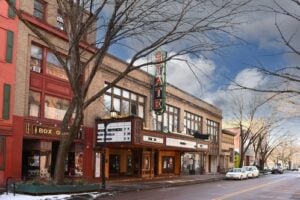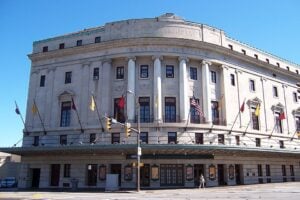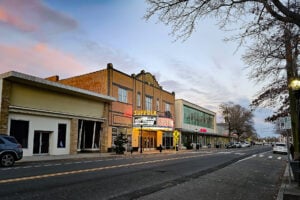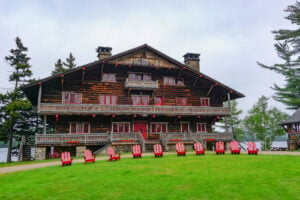
eardslee Castle in Little Falls, New York, a historic 19th-century building associated with local ghost stories. Photo: Apocheir / Wikimedia Commons.
Upstate New York has no shortage of places where history and ghost stories meet. Old military forts stand beside lakes and rivers where armies once fought. Former hospitals and poorhouses recall a time when people who needed care were often separated from their communities. Railroad stations, country inns, theaters, and private mansions have survived generations of changing owners and visitors. Some are carefully preserved museums today. Others are ruins or buildings that the public can see only from a distance.
What makes these places especially interesting is that the history is often more compelling than the haunting. At Fort William Henry, the siege of 1757 is documented, even if stories of soldiers still walking the grounds belong to folklore. The suitcases discovered at Willard Psychiatric Center were real possessions belonging to real people, and their stories deserve more than a frightening description of an abandoned asylum. At Buffalo Central Terminal, thousands of travelers once passed beneath an Art Deco ceiling that later stood almost silent. The ghost stories came afterward.
These locations have another side. Some actively welcome visitors who are curious about the paranormal. Owners of old inns share stories handed down through their families, museums run evening tours, and historic properties sometimes host organized investigations. Other places are restricted, unsafe, or protected historic grounds. Their reputations should never be taken as an invitation to trespass, especially at abandoned institutions or industrial ruins.
The distinction between history and legend matters throughout this article. You can check opening dates, original uses, major events, and preserved artifacts against historical records. An apparition, an unexplained voice, or a ghost associated with a particular room is a reported experience or a local story, not an established historical fact. That does not make the folklore uninteresting. In many cases, the tales reveal what later generations remembered, feared, or wondered about the people who came before them.
From the Adirondacks and Mohawk Valley to the Finger Lakes, Central New York, and Western New York, these 25 places have authentic historical backgrounds and enduring reputations for hauntings. Together, they offer a revealing look at the state’s past and the stories that continue to surround it.
1. Rolling Hills Asylum (East Bethany)
Rolling Hills began as the Genesee County Poorhouse in 1827, when counties were expected to shelter and support residents with nowhere else to turn. The farm housed people living in poverty, older residents, and individuals needing care. Over the years, the institution changed, eventually becoming a county infirmary and nursing home before closing as a county facility in 1974. The surviving building offers a sobering reminder of how differently public assistance and institutional care operated in the 19th and 20th centuries.
Today the property is promoted as Rolling Hills Asylum and hosts organized ghost hunts and tours. Its operators cite more than 1,700 deaths associated with the institution and describe reports of voices, moving shadows, and unusual sensations in its corridors. Stories also circulate about former residents whose presence visitors believe they have encountered. Those claims belong to the site’s paranormal tradition, while its documented history as a poorhouse and care facility helps explain why the building continues to attract attention.
2. Utica State Hospital (Utica)
The New York State Lunatic Asylum at Utica opened in 1843 as an important early institution in the treatment of mental illness. Its enormous Greek Revival main building, commonly known as Old Main, was meant to represent a more humane approach than the confinement many patients previously endured. Superintendent Amariah Brigham promoted activities, education, and treatment intended to improve patients’ lives. The hospital’s history also includes controversial practices, most famously the Utica Crib, a restraint device devised during the 19th century. Understanding both sides of that history is essential to understanding the institution.
Old Main closed in September 1978 and has since become one of Utica’s most imposing historic structures. Stories about sounds from empty rooms, figures appearing in windows, and former patients wandering the halls have grown around its long periods of inactivity. These are unverified reports rather than a record of actual supernatural events. The building is not an open urban-exploration destination, and its condition and restricted access should be respected. Its architecture and medical history deserve careful attention without turning the lives of former patients into a horror attraction.
3. Fort William Henry (Lake George)
British forces built Fort William Henry in 1755 at the southern end of Lake George, a strategically important point during the French and Indian War. In August 1757, troops commanded by the Marquis de Montcalm besieged the fort and forced its surrender. After the garrison marched out under negotiated terms, some of Montcalm’s Indigenous allies attacked members of the departing column and took captives. Later accounts greatly inflated the number of people killed; historians continue to distinguish the documented losses from the sensational stories that followed. James Fenimore Cooper’s The Last of the Mohicans helped make the episode famous.
The fort visitors see today is a reconstruction, operated as a historical museum. Its association with warfare, disease, and the 1757 siege has inspired a second identity as a destination for ghost tours. Stories describe military footsteps, drums, and figures dressed as soldiers, although such experiences cannot be verified as paranormal. The museum offers special programs that explore its history and legends. Here, the most powerful part of a visit is knowing that the surrounding landscape was the setting of events that shaped colonial New York.
4. Buffalo Central Terminal (Buffalo)
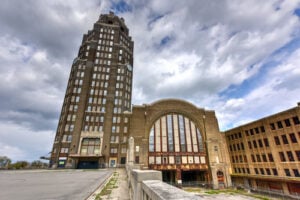
Buffalo Central Terminal opened on June 22, 1929, as an ambitious New York Central Railroad complex designed to handle enormous numbers of trains and passengers. Its grand Art Deco concourse and tall office tower made the terminal one of the city’s outstanding buildings. For decades, travelers passed through the station on their way across New York State and the country. The rise of automobile and air travel, along with changes in the railroad industry, gradually reduced its importance. The last passenger train departed in October 1979, beginning a difficult period in which portions of the complex were neglected or stripped.
Preservation efforts have since helped bring new public attention to the terminal. Its empty halls also became a favorite setting for ghost stories and paranormal investigations. Visitors and investigators have described phantom footsteps, voices, and a supposed spirit called Rose associated with the former baggage area. There is no established historical identity for Rose, so the name should be understood as part of modern folklore. What can be documented is the terminal’s extraordinary place in Buffalo’s transportation history and the community’s determined work to preserve it.
5. Willard Psychiatric Center (Willard, Seneca Lake)
Willard Asylum opened in 1869 on the eastern shore of Seneca Lake as New York sought a different way to care for people with chronic mental illnesses. Over time, the campus developed farms, workshops, residential buildings, and other facilities, functioning almost like a community separated from the surrounding towns. Many residents lived there for years or decades. The psychiatric center closed in 1995, although the property later served other state purposes. Its history includes medical care, institutional confinement, and the difficult question of how society treated people who had little control over their own circumstances.
The most affecting discovery at Willard was not a ghost. In 1995, workers found approximately 400 suitcases belonging to former patients, carefully stored in an attic. Photographs, clothing, letters, and other possessions revealed individual lives beyond the labels that had defined their treatment. The New York State Museum subsequently preserved and exhibited material from the collection. Willard has also accumulated tales of footsteps and figures seen in old buildings, but the documented belongings and burial grounds should remain the center of its historical story. The former institutional campus is not a place to enter without authorization.
6. The Sagamore Resort (Bolton Landing)
The Sagamore opened on Lake George’s Green Island in 1883, serving wealthy travelers who came to the Adirondacks for scenery, fresh air, and the social life of a grand resort. The original hotel suffered a major fire in 1893, and its successor was destroyed by another fire in 1914. The resort was eventually rebuilt and continued its place in Lake George tourism. Its history includes changes in ownership, periods of uncertainty, and major restoration efforts, making it far more than a hotel that has simply stood unchanged since the Gilded Age.
The Sagamore’s ghost stories are part of its modern reputation. One frequently repeated tale concerns a boy said to appear near the golf course, while another describes a silver-haired woman in a blue polka-dot dress seen in the hotel. The woman’s alleged appearance has been repeated in travel accounts, but the details remain folklore, not verified incidents. The stories add another layer to the resort’s history without replacing what is known about the fires, architecture, and generations of people who vacationed on Lake George.
7. Beardslee Castle (Little Falls)
Beardslee Castle was built around 1860 in the Mohawk Valley as a stone country residence inspired by an Irish castle. The property survived changes of ownership and devastating fires, including one in 1919 and another in 1989. After major restoration, it reopened as a restaurant and event venue, retaining the heavy stone walls, distinctive architecture, and dramatic setting that make it unlike most other dining establishments in Central New York.
Ghost stories have long been part of the castle’s public image. Former owners, fires, and deaths associated with its history have all contributed to accounts of mysterious figures, unexplained noises, and unusual experiences reported by employees and guests. It is difficult to separate stories repeated over many years from firsthand observations, and none establishes that the building is haunted. The old castle remains a fascinating place because its documented architectural history, restaurant life, and local legends have become closely intertwined.
8. The Naples Hotel (Naples)
The brick Naples Hotel was constructed in 1895 on the site of an earlier tavern associated with the old stagecoach route through the village. Its predecessor, Lyon Tavern, dated to 1818, when travelers passing between communities in the Finger Lakes relied on inns for food, lodging, and news. The 1895 building became a gathering place in Naples and survived changes in ownership and periods when its future was uncertain. The historic hotel has undergone restoration and continues to represent the village’s long hospitality tradition.
The Naples Hotel is also featured on New York’s Haunted History Trail. Stories collected by the hotel include lights switching unexpectedly, strange movements, and figures associated with former guests or staff. Some versions of the lore identify spirits by names such as Alice or Topper. These are reported traditions rather than established biographies of supernatural occupants. Visitors interested in the stories can learn about them alongside a building whose actual past reaches back to the days of stagecoach travel.
9. Spanky’s Diner (Massena)
Spanky’s Diner in Massena might seem an unlikely addition to a collection of imposing forts, castles, and old institutions. Its connection to the North Country’s past is partly geographical: the diner stands near Pine Grove Cemetery, a burial ground whose history includes graves relocated during the St. Lawrence Seaway and power projects of the 1950s. The cemetery and its changing landscape became part of local memory in a region dramatically reshaped by major public works.
Accounts published by regional tourism organizations describe employees and customers who believe they have experienced strange activity at the diner. The stories include objects moving, unexpected sounds, and a tale about a person said to appear near the nearby Grasse River. They are personal reports and legends rather than independently established events. The appeal of Spanky’s story comes from the contrast between an ordinary roadside diner and the older history of its surrounding community and cemetery.
10. Iron Island Museum (Buffalo)
Iron Island Museum occupies a brick building in Buffalo’s Lovejoy neighborhood that began as a church in 1883. After the congregation closed, the property was used as a funeral home beginning in the 1950s. It later became the headquarters and museum of the Iron Island Preservation Society, which works to preserve the stories and artifacts of the surrounding neighborhood. Its exhibits are concerned with Buffalo’s railroads, local families, military service, and the development of a working-class community.
The museum has also embraced its reputation for hauntings and conducts paranormal investigations. Visitors and investigators describe voices, unusual photographs, and activity they associate with the building’s years as a funeral home. Its paranormal stories are promoted by the museum itself, but claims of electronic voice recordings or apparitions should not be confused with scientific confirmation of ghosts. It is the building’s unusual sequence of uses, and the people connected to each of them, that give Iron Island its distinctive place in Buffalo history.
11. Belhurst Castle (Geneva)
Belhurst Castle stands on the western shore of Seneca Lake near Geneva. The present stone mansion was constructed in the late 19th century, replacing earlier structures on the property. Over the years the estate acquired a reputation for grand architecture, hidden passages, colorful ownership, and later use as a hotel and hospitality destination. Its lakeside towers and stonework are especially memorable against the Finger Lakes landscape.
The best-known Belhurst legend concerns Isabella, a woman said to have fled with a lover and died when an underground passage collapsed. According to the tale, a figure dressed in white still appears around the estate. The story has become so closely tied to the property that the name Isabella is used for its spa. The details of the supposed tragedy are not established in reliable historical records and should be presented as a legend. Belhurst offers an excellent example of how a dramatic building can accumulate stories that become part of its identity for generations.
12. Split Rock Quarry (Near Syracuse)
Split Rock began as a limestone quarry before part of the site was used for explosives production during World War I. On July 2, 1918, a disastrous fire and explosion at the munitions works killed more than 50 workers and injured many others. The accident left a lasting mark on communities around Syracuse and became one of Central New York’s most tragic industrial events. Today, remnants of the plant and the large concrete rock crusher remain in a wooded landscape.
The ruins have attracted stories about mechanical sounds, voices, and the sensation of an unseen presence. Those claims are part of local ghost lore, while the explosion and the lives lost are historical facts. The grounds also contain dangerous terrain and deteriorating industrial remains. Visitors should follow park guidance and avoid tunnels, unstable structures, and any attempt to explore hazardous areas. Split Rock is an important place to remember the workers whose deaths were a consequence of the nation’s wartime production effort.
13. Ohana’s 1950s Diner (Tupper Lake)
Ohana’s 1950s Diner brought a nostalgic atmosphere to Tupper Lake, with old-fashioned decorations, music, and familiar American diner food. The building had earlier commercial uses, and renovation work prompted stories from its owners and staff about unusual experiences. In a 2016 account published by Tupper Lake’s tourism organization, the people involved described what they believed had happened in the building rather than claiming to present a proven supernatural event.
The reported incidents included voices, figures seen in a hallway, and a jukebox or popcorn machine behaving unexpectedly. The same account included an important detail often missing from retellings: the owner said the unexplained activity appeared to stop after an attempt to send the supposed spirits away. That makes this a more specific local story than the exaggerated accounts of constant hauntings that circulate online. It also shows how ghost lore can develop around a relatively ordinary commercial building.
14. Landmark Theatre (Syracuse)
Syracuse’s Landmark Theatre opened in 1928 as a Loew’s movie palace. Architect Thomas W. Lamb created an extravagant interior, with decorative details that reflected the ambition of the great theaters of the late silent-film era. As moviegoing and downtown entertainment changed, the building faced serious challenges, but preservation efforts helped save one of the city’s most spectacular public spaces. It continues to host concerts, stage productions, and other performances.
The Landmark’s most familiar ghost story concerns Clarissa, a young woman said to have died after falling from a balcony around 1930. The tale has been repeated in the theater’s paranormal programming, and visitors have described a pale figure in white. Additional dramatic details sometimes attached to her death should not be treated as verified without contemporary documentation. Whether or not one believes the story, the theater’s survival is remarkable. Its architecture preserves the era when an evening at the movies was intended to feel like entering a palace.
15. Batcheller Mansion Inn (Saratoga Springs)
George Sherman Batcheller’s elaborate home was built in Saratoga Springs in 1873. The High Victorian Gothic mansion, with its intricate woodwork, towers, and richly decorated rooms, reflected the prosperity and social ambition of a city celebrated for its mineral springs, racing, and fashionable visitors. The house eventually became an inn, allowing modern guests to experience some of the atmosphere of Saratoga’s great resort era.
Stories about unexplained movement, unusual lights, and a lingering presence associated with the Batcheller family have become part of the mansion’s reputation. Some accounts suggest that George Batcheller himself has never left the building. These are stories told about a historic home, not proof of an actual apparition. The mansion is especially well suited to such folklore because its architecture and surviving interiors so vividly suggest the lives of the people who occupied it more than a century ago.
16. Bull’s Head Inn (Cobleskill)
The Bull’s Head Inn occupies a building dating to 1802 in the village of Cobleskill. Across more than two centuries it has served several purposes, including residence, meeting place, and inn. The building’s changing uses reflect the history of a community that developed around travel, local government, agriculture, and commerce in Schoharie County. Its survival makes it an especially interesting setting for visitors who enjoy old buildings as much as ghost stories.
One of the inn’s best-known legends involves Grace Steacy, a former resident and supporter of the temperance movement. According to the story, the use of part of the property as a bar disturbed her spirit, producing reports of moving glasses, displaced silverware, and a woman in old-fashioned clothing. The name is sometimes misstated in retellings, which is one reason historical identification matters. The inn offers haunted dining and tours, but the story remains a piece of local folklore rather than a verified supernatural event.
17. Saratoga Battlefield (Stillwater)
The Battles of Saratoga took place in September and October 1777 and helped change the course of the American Revolution. American forces defeated the army commanded by British General John Burgoyne, strengthening the case for French support of the American cause. The preserved battlefield near Stillwater is one of the nation’s most significant Revolutionary War landscapes. Its trails, historic positions, and interpretation help visitors understand what happened there without the need for theatrical embellishment.
Over the years, stories of uniformed figures, footsteps, distant gunfire, and strange lights have attached themselves to the battlefield. Saratoga County tourism organizations include the area among local haunted sites, while the National Park Service focuses on its documented military significance. Anyone visiting should respect the battlefield as a memorial landscape and follow park hours and access rules. The reported hauntings are legends; the sacrifices and consequences of the 1777 campaign are part of the historical record.
18. Erie Canal Museum (Syracuse)
The Erie Canal Museum occupies the historic Syracuse Weighlock Building, completed in 1850. During the canal’s busiest years, boats entered the building’s lock chamber to be weighed so tolls could be assessed on their cargo. The structure is a rare survivor from the era when the Erie Canal transformed the economy of New York and connected communities across the state to growing markets. The museum preserves the history of the waterway, canal workers, merchants, and the towns that developed around it.
The museum has also collected stories about unexplained noises and figures associated with the old building. The Haunted History Trail describes tales of children appearing in the courtyard, footsteps in empty rooms, and encounters with former canal workers. These stories are part of the museum’s interpretive appeal, not documented evidence of ghosts. For a visitor interested in the real past, the weighlock itself is an extraordinary reminder that boats once floated into the very building where people now study their history.
19. Casey’s Cottage (Mexico Point)
Casey’s Cottage stands near Lake Ontario at Mexico Point, in a building originally used as a carriage house for a resort property. In the 20th century, Dr. William Casey and artist Severin Bischof transformed it into an imaginative medieval-style retreat. The cottage’s stonework and unusual interior details give it an appearance very different from a typical North Country house. The building reflects both the earlier resort history of Mexico Point and the creativity of the people who reshaped it.
After Casey’s death in 1978, visitors began sharing stories about mysterious music, furniture moving, missing objects, and a figure said to appear near the property. Some versions of the legend include a young girl associated with a nearby tree. The cottage is featured on New York’s Haunted History Trail, which promotes authorized tours and paranormal investigations. It is an appealing place to distinguish the historically documented conversion of a carriage house from the imaginative stories that later grew around it.
20. The 1890 House Museum (Cortland)
The 1890 House was built in Cortland for industrialist Chester F. Wickwire, whose wire-manufacturing business helped shape the city’s economy. The elaborate mansion on Tompkins Street reflects the wealth of the late 19th century, but the museum also tells the stories of household employees and factory workers whose labor supported that prosperity. After the last family resident died in 1973, local preservation efforts saved the building, which opened as a museum in 1975.
Stories of unexplained footsteps, voices, and shadows have made the house a destination for paranormal programs. Investigators and visitors sometimes associate those experiences with members of the Wickwire family, although such identifications are speculative. The museum has hosted after-hours investigations while maintaining its central mission of preserving Cortland’s industrial and domestic history. Whether one visits for its architecture or its ghost stories, the mansion offers an unusually detailed look into the world of a prominent Upstate manufacturing family.
21. Hyde Hall (Cooperstown)
Hyde Hall stands within Glimmerglass State Park, overlooking Otsego Lake near Cooperstown. Built in the early 19th century for George Clarke and his family, the large neoclassical mansion preserves an impressive amount of original architectural detail and furnishings. Its rooms offer a window into the lives of a wealthy family and the many people who worked on the estate. The house is now a National Historic Landmark and a destination for guided historical tours.
Hyde Hall also conducts special haunted tours, including seasonal evening programs that explore reports of footsteps, voices, and the supposed presence of former residents. Stories often connect the experiences to George Clarke, who died in 1835, although no paranormal explanation has been established. Unlike a ruined site, Hyde Hall provides an opportunity to see carefully preserved rooms while learning how legends developed alongside the family’s documented history.
22. Phelps Mansion Museum (Binghamton)
Businessman and former Binghamton mayor Sherman D. Phelps had an elaborate house constructed on Court Street around 1870. The mansion became a prominent expression of the city’s prosperity during the period when industry and transportation were transforming the Southern Tier. Today it operates as the Phelps Mansion Museum, preserving its interiors and explaining the lives of the family and people who worked within its walls.
The mansion has long been associated with ghost stories, including a clock said to chime when no one has wound it, doors that seem to move by themselves, and figures reportedly seen watching visitors. The museum includes these accounts in haunted tours and organized investigations. The stories should be treated as reported experiences, but they add another dimension to a building already worth visiting for its history, workmanship, and connection to Binghamton’s Gilded Age.
23. Fort Ontario (Oswego)
Fort Ontario occupies a strategic site overlooking Lake Ontario and the mouth of the Oswego River. Military fortifications have stood in the area since the colonial period, and the present star-shaped fort dates to the 19th century. The site saw repeated military use and later served a remarkable humanitarian role when refugees from Nazi persecution were sheltered nearby during World War II. It is preserved today as a New York State historic site where visitors can explore the region’s military and social history.
Ghost stories associated with Fort Ontario include a figure appearing in an upper window, unexplained lights or music, and a voice said to call for a lost cat. The Haunted History Trail documents the site’s paranormal reputation and its occasional organized investigations. Whatever a visitor believes about these reports, the fort’s layered history provides the most substantial reason to visit. Few places in Upstate New York connect colonial warfare, later military life, and 20th-century refugee history in quite the same way.
24. Old Stone Fort Museum (Schoharie)
The Old Stone Fort in Schoharie was originally built as a church in 1772. During the American Revolution, it was fortified to protect the surrounding settlement, and British-led forces attacked the site in 1780. The building survived and eventually became a museum that preserves artifacts and interprets the settlement’s history. Its old stone walls and surrounding burial grounds put visitors in direct contact with the Schoharie Valley’s complicated frontier history.
Visitors and staff have reported footsteps on empty floors, voices, and unusual experiences in the building’s older rooms. The museum has hosted organized ghost tours and investigations, and the state’s Haunted History Trail recognizes its haunted reputation. Stories of mysterious figures belong to folklore, but the Revolutionary War’s violence and the building’s changing uses are well established. The Old Stone Fort demonstrates how a place of worship could become a defensive position and later a center for historical preservation.
25. Fainting Goat Island Inn (Nichols)
The Fainting Goat Island Inn occupies a former railroad-era hotel near the Susquehanna River in the Southern Tier community of Nichols. Its late-19th-century origins recall a time when small hotels served travelers and local residents before modern highways changed how people moved across New York. The restored inn retains an old-fashioned atmosphere, while its gardens and resident animals provide a setting unlike the more imposing castles and institutions in this article.
The inn has built a strong reputation for paranormal activity and offers visitors chances to hear its stories through overnight stays and investigations. Its Haunted History Trail listing also notes recognition in national haunted-hotel reader polls. Like every location in this article, popularity as a haunted destination should not be mistaken for proof of spirits. Visitors will encounter a surviving piece of Southern Tier hospitality history, along with the stories that have accumulated around it.
Nothing ties these places together that proves the supernatural. It is the survival of buildings and landscapes that have witnessed very different chapters of New York history. At first glance, a stagecoach hotel, a Revolutionary War fort, a psychiatric institution, and an Art Deco railroad terminal have little in common. Yet each gives later generations something physical to look at and a story to ask about. The hauntings may remain matters of belief, but the history is there to be explored.
For more stories about New York’s mysterious, historic side, read our articles on 10 haunted historic locations in the Hudson Valley you can visit, the history and ghost stories of the Shanley Hotel, and Lily Dale’s influence on spiritualism and mediums.