Lily Dale is one of New York State’s most unusual destinations. Known around the world as the center of the American Spiritualist movement, the small Chautauqua County community has welcomed visitors seeking mediums, healing, and spiritual exploration for more than a century. Whether you visit out of curiosity, faith, or historical interest, Lily Dale remains one of New York’s most fascinating places.
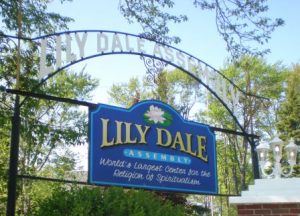
Photo: By Plazak (Own work) [CC BY-SA 3.0], via Wikimedia Commons
All over New York, even after the Fox sisters admitted they were enhancing their abilities with theatrics, Spiritualism became a popular hobby, if not a religion. A cultural renaissance, the Second Great Awakening, was taking hold, and many seekers embraced new ideas and philosophies. The bloody Civil War, with so many families grieving young loved ones who died violent deaths, kept mediums in business, with upstate New York becoming a particular gathering place for Spiritualists. This interest spread throughout the country, with Mary Todd Lincoln, distraught over the loss of two of her sons, particularly Willie, who died in 1862, welcoming mediums into her home and holding séances in the White House.
Spiritualism, although practiced all over the world, has a distinctly American appeal, and New York remained the faith’s version of Mecca. In 1879, the Cassadaga Lake Free Association formed a community called Lily Dale. Lily Dale is situated about 60 miles south of Buffalo. In 1915, the little cottage home where the famous Fox sisters lived was moved from Hydesville to Lily Dale. There it remained until a fire destroyed it in 1955. Although the Fox sisters’ home no longer exists, their contribution to Spiritualism, although controversial, is impossible to ignore. Lily Dale keeps the memories of the early medium pioneers alive.
The History of Lily Dale
Lily Dale was first a summer camp meeting ground for Spiritualists around 1870. Twenty acres were purchased, and the Cassadaga Lake Free Association was formed. The incorporated community was later renamed the City of Light. By 1900, the name was permanently changed to Lily Dale Assembly. The name “Lily Dale” is derived from the water lilies that grow in abundance around the lake. If the name Cassadaga seems familiar, there is also a sister Spiritualist community, Cassadaga Spiritualist Camp, located in Volusia County, Florida, near Daytona Beach. Both communities offer visitors a trip back in time and the opportunity to meet practitioners who believe the spirit world remains closely connected to our own.
Lily Dale is a hamlet nestled within the Town of Pomfret. The latest census estimates place the year-round population at approximately 275 residents. Tourism provides much of the area’s economy, especially during the autumn months leading up to Halloween. Tours, lectures, bookstores, restaurants, and scheduled programs make this quiet community a destination for spiritual seekers from around the world.
Life Inside Lily Dale
Why does this small New York community in Chautauqua County hold such an attraction? Not only is Lily Dale a place to get away from it all with its peaceful setting and quaint charm, it is home to what many consider some of the world’s best-known mediums. This is no traveling psychic show. There are full-time residents who call Lily Dale home. When people think of those who communicate with spirits, they often imagine mysterious figures dressed in black. Instead, many of Lily Dale’s mediums are warm, welcoming practitioners dressed in bright colors, stylish hats, and colorful jewelry. Along with mediums, the community is also home to psychics, Reiki practitioners, and spiritual healers.
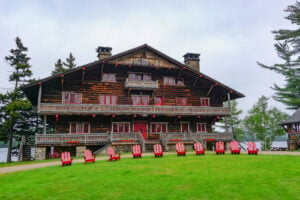
Even if you have no interest in contacting a loved one, Lily Dale offers visitors the feeling of stepping back in time. The Maplewood Hotel has traditionally operated without televisions, Wi-Fi, or air conditioning. Visitors gather in the lobby simply to relax and socialize. Throughout the community, numerous mediums advertise private readings, making it easy for visitors to schedule an appointment.
Lily Dale, in many ways, resembles any other small upstate New York community. It has its own post office and volunteer fire department. It also offers a Sunday School program through the Andrew Jackson Davis Lyceum, commonly known as the A.J. Davis Lyceum. Andrew Jackson Davis (1826–1910) was a Spiritualist leader who believed children should receive religious education inspired by spirit teachings, which he referred to as “Summerland.” His writings remain influential within the Spiritualist movement, and January 25 is still celebrated as the anniversary of the first Spiritualist Progressive Children’s Lyceum, established in 1863.
Faith, Skepticism, and Continuing Debate
Since the Fox sisters first admitted to fraud and later retracted their confession, Spiritualism has remained both fascinating and controversial. Lily Dale has attracted believers, skeptics, historians, and curious visitors alike. HBO explored the community in its 2011 documentary No One Dies in Lily Dale, featuring both devoted followers and outspoken critics. Some fundamentalist Christian groups have protested outside the community, arguing that psychic readings conflict with biblical teachings.
Critics have also questioned the methods used by modern celebrity mediums. Theresa Caputo, better known as the Long Island Medium, has frequently been challenged by skeptics who argue that audience information may be gathered before performances and that television programs are heavily edited. Others point to unsuccessful live readings as evidence against psychic claims. For many visitors, however, Lily Dale offers a quieter and more personal alternative to televised mediumship, emphasizing reflection and individual experiences over entertainment.
The mediums in Lily Dale, as shown in the documentary, sometimes appear to search broadly during group demonstrations and are not always precise. Yet many visitors leave convinced by the readings they receive and continue to return year after year.
Lily Dale is considered by many to be a destination worth experiencing at least once. Visitors often leave feeling comforted, encouraged, or simply fascinated by the community’s unique history. Whether one believes in Spiritualism or approaches it strictly from a historical perspective, the peaceful surroundings, welcoming atmosphere, and remarkable past have made Lily Dale one of New York State’s most enduringly intriguing destinations.
Article updated on June 26, 2026.