Hidden beneath 129 Spring Street in Manhattan sits one of New York City’s most chilling true crime landmarks. The Manhattan Well Murder, tied to the 1799 death of Gulielma “Elma” Sands, remains one of the city’s most haunting unsolved stories. More than two centuries later, the well, the trial of Levi Weeks, the involvement of Alexander Hamilton and Aaron Burr, and the ghost stories surrounding the site continue to make this small corner of SoHo one of New York’s most fascinating hidden pieces of history.
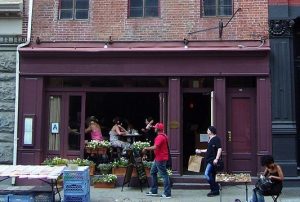
Photo: By Beyond My Ken (Own work) [GFDL (http://www.gnu.org/copyleft/fdl.html) or CC BY-SA 4.0-3.0-2.5-2.0-1.0 (https://creativecommons.org/licenses/by-sa/4.0-3.0-2.5-2.0-1.0)], via Wikimedia Commons
The Gulielma Sands Murder
In late 1799, Gulielma “Elma” Sands lived in a boarding house located at 208 Greenwich Street in New York City. In December of 1799, the young woman enjoyed a secret love affair with another tenant on Greenwich Street, Levi Weeks, a local carpenter. The two had planned to elope, and when Elma left her home on December 22, she hoped that Levi and herself would return as a married couple.
Elma’s cousin, Catherine Ring, claimed that she had heard the front door close at around 8 that night, but she did not witness Levi or Elma leaving. When Levi arrived at 10 o’clock, demanding to know where his future bride was, panic took over the home.
Witnesses would later testify that they had seen Elma traveling in the area of Lispenard’s Meadow with two unidentified men. Just days later, Elma’s body would be pulled from a well in the same area, with evidence showing that her neck had been broken before her body was dumped in the well.
The trial over Elma’s death would last a little over a day. Backed by the infamous lawyers Alexander Hamilton and Aaron Burr, who were retained by Levi’s elder brother, Levi Weeks was acquitted of all charges. To this day, the murder of Elma Sands remains a mystery, although some claim they can still see her haunting the well where she was found more than 200 years ago.
The Manhattan Well
The Manhattan Well was originally built shortly before the death of Elma Sands. At the time, the well sat in Lispenard’s Meadow, a popular destination for local sweethearts in the winter. In the 1820s, upper-middle-class houses were built over the property, sealing the well in the basement of one of these buildings and making 129 Spring Street the well’s legal address today.
After that, the location transformed regularly over the years. In the late 1820s, it was a shop that sold remedies for tobacco addiction, then a German beer hall, before it was finally vacated and left abandoned for years.
It was not until the early 2000s that the well hidden under 129 Spring Street would be featured in the headlines again. When the Manhattan Bistro decided it needed more storage space, the owners chose to excavate the cellar, unearthing a well that had been hidden for nearly 200 years. According to the owners, the well had an eerie presence, looking as though it had not aged a day since it was covered up all those years ago.
Today, if you travel to 129 Spring Street to see the haunted well, you will find COS, an H&M sister company. The well still remains unnervingly perfect in the basement.
Ghostly Sightings And Catherine’s Curse
Since the murder of Elma Sands, young men and women have often reported seeing ghostly apparitions in the area. As the story goes, a select few can still hear Elma screaming near Spring and Greene, pleading for her life. Most recently, COS employees have often blamed strange occurrences in the store on the ghost of Elma, holding her responsible for missing merchandise, broken elevators, and various electrical outages.
Many blame Elma’s cousin for the strange occurrences that surround the mysterious well to this day. Transcripts show that following the ruling, Catherine Ring cursed the room, shouting, “I call upon the Almighty to curse you all, and He will do it!” It is believed by many that Catherine’s curse led to the peculiar disappearance of Judge Lansing, the man ultimately responsible for the acquittal of Weeks.
Nearly 30 years to the day of the trial, Judge Lansing left his Manhattan hotel to post a letter. That day, Judge Lansing disappeared into thin air, all traces of him ultimately vanishing. The investigation that followed turned up no leads, and the case was ultimately abandoned, although locals would soon link the disappearance to the death of Elma.
Shrouded in mystery, the Manhattan Well remains a hidden gem for many. Whether you believe in the ghost stories that have followed 129 Spring Street for decades or not, its historical significance to the city cannot be denied. Elma’s story, much like the hidden well, is sure to remain a mystery for years to come.
More Haunted And Historic New York Stories
If you enjoy haunted New York history and true crime stories, take a look at our features on the haunted history of Smalley’s Inn in Carmel, Café Wha? on Greenwich Street, Sybil Ludington, and the Revolutionary War massacre at Pines Bridge.
Article updated June 28, 2026.