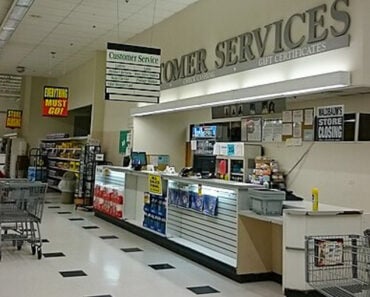
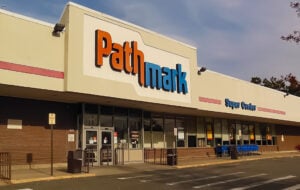
A Pathmark Super Center supermarket. Photo by GRUBBXDN, CC BY-SA 4.0, via Wikimedia Commons.
When I think of Pathmark, the first memory that comes to mind is their store-brand potato chips. It was the first time I realized that generics, store brands, or whatever you want to call them could be not just as good as name brands, but possibly even better. I loved those Pathmark plain potato chips. I’m sure I enjoyed many other Pathmark products too, but those potato chips always stayed with me. And of course, it wasn’t just the taste, but the price.
Those prices helped Pathmark become one of the most loved supermarkets of its time. And it wasn’t only the prices, but the hours too. I could go into a Pathmark in my town at midnight and shop. That kind of access, along with low prices and great store-brand products, made Pathmark one of the most enjoyable supermarkets I’ve ever shopped in during my life.
For generations of shoppers across New York, New Jersey, and the surrounding region, Pathmark was one of the most familiar names in supermarket retailing. The chain became known for large stores, aggressive pricing, 24-hour shopping, pharmacies, and later its Super Center format. Yet Pathmark did not begin as an independent supermarket company. Its roots were inside the ShopRite cooperative, and its history became a long cycle of expansion, heavy debt, bankruptcy, disappearance, and eventual return.
The Pathmark name first appeared after Supermarkets General Corporation broke away from Wakefern and ShopRite in 1968. At its height, the chain ranked among the largest supermarket operators in the Northeast. By 2015, however, the final collapse of parent company A&P wiped the Pathmark banner from the region. The name returned in Brooklyn in 2019, and in 2026 the first Pathmark Daily opened in East Meadow on Long Island, giving the old supermarket brand another chapter.
How Pathmark Grew Out of ShopRite
Pathmark’s story began with Wakefern Food Corporation, the cooperative formed by independent New Jersey grocers after World War II. Within Wakefern, several ambitious operators joined together to open and manage larger ShopRite supermarkets. In 1956, Alex Aidekman, Herb Brody, and Milt Perlmutter formed Supermarkets Operating Company, which expanded rapidly under the ShopRite name.
In 1966, Supermarkets Operating Company merged with another large Wakefern member, General Super Markets, to create Supermarkets General Corporation. By the end of that year, Supermarkets General was operating about 75 ShopRite supermarkets across several Northeastern states and generating roughly $420 million in annual sales.
Tensions developed between the rapidly growing company and the cooperative over control, expansion, and the structure of Wakefern. In 1968, Supermarkets General left Wakefern and stopped using the ShopRite name. Its supermarkets were renamed Pathmark.
Pathmark Becomes a Major New York Area Supermarket Chain
Pathmark grew quickly after the split. By 1971, the company operated more than 90 supermarkets along with separate drugstores and gas stations. The chain built its reputation around high sales volume, competitive pricing, and large stores in densely populated markets.
One of Pathmark’s most memorable moves came in May 1972, when 94 of its 96 supermarkets began operating around the clock. Overnight grocery shopping was still highly unusual, and 24-hour operation became closely associated with the Pathmark name for decades.
The company was also an early adopter of computerized checkout technology. Pathmark introduced computer scanners at checkout counters in 1974 as supermarkets throughout the country began experimenting with the newly standardized Universal Product Code.
The Pathmark Super Center Era
In 1977, Pathmark introduced its Super Center concept. The roughly 50,000-square-foot stores expanded beyond conventional groceries into health and beauty products, pharmacies, small appliances, and other merchandise. Many existing Pathmark locations were enlarged or remodeled to fit the new format.
By the end of the 1970s, Pathmark had become one of the dominant supermarket names in the New York metropolitan area. In 1978, Supermarkets General reported that Pathmark held about 15 percent of the area’s supermarket market share. By 1982, Pathmark supermarket sales had reached approximately $2.8 billion, making it one of the ten largest supermarket chains in the United States.
Pathmark Expands Into New York City Neighborhoods
Pathmark also became notable for operating large supermarkets in densely populated urban neighborhoods where assembling enough land for a suburban-style supermarket could be difficult. In 1977, Supermarkets General entered into an agreement with the Bedford-Stuyvesant Restoration Corporation to develop a supermarket in Brooklyn. The project became an important example of a large supermarket working with a community development organization.
Pathmark later pursued similar urban projects. One of the best known was the East Harlem store at 125th Street and Lexington Avenue. Developed in partnership with the Abyssinian Development Corporation and other community interests after years of planning, the approximately 50,000-square-foot supermarket opened in 1999.
The East Harlem Pathmark became an important neighborhood grocery store. Pathmark reported that it served roughly 30,000 customers each week, and the store eventually employed more than 200 people. Its importance became especially clear when it closed during the A&P liquidation in 2015, leaving residents concerned about the loss of a major source of affordable groceries.
The 1987 Leveraged Buyout and Pathmark’s Debt Problem
Pathmark’s stores remained productive, but the corporate structure surrounding them changed dramatically during the 1980s. In 1987, the Haft family’s Dart Group launched an attempted takeover of Supermarkets General. Management responded with a leveraged buyout backed by Merrill Lynch Capital Partners and other investors.
The transaction left the company carrying an enormous amount of debt. Contemporary financial records show that Supermarkets General emerged from the buyout with nearly $2 billion in debt, compared with only a fraction of that amount beforehand. Servicing that debt restricted the company’s ability to invest in stores and became a long-term financial burden.
Pathmark’s core supermarket operations survived, but the debt eventually became unsustainable. In July 2000, Pathmark and its parent companies entered a prepackaged Chapter 11 bankruptcy. The company emerged from bankruptcy that September after approximately $1 billion in subordinated debt was eliminated.
A&P Acquires Pathmark in 2007
Pathmark remained a major regional supermarket business after its 2000 restructuring, but independence did not last. In March 2007, Pathmark agreed to be acquired by The Great Atlantic & Pacific Tea Company, better known as A&P.
The transaction was completed on December 3, 2007, for approximately $1.4 billion in cash, stock, and assumed or retired debt. A&P said it intended to maintain the Pathmark name and store network. The combined company operated roughly 450 stores and generated about $9.4 billion in annual sales.
The merger placed Pathmark alongside other familiar A&P banners, including Waldbaum’s, SuperFresh, Food Basics, and The Food Emporium. Unfortunately, A&P was already facing serious competitive and financial problems of its own.
A&P Bankruptcy and the Disappearance of Pathmark
A&P filed for Chapter 11 bankruptcy protection in December 2010. The company reorganized and emerged from bankruptcy, but the recovery did not last. On July 19, 2015, A&P filed for Chapter 11 protection again and began selling and closing its supermarket operations.
Pathmark stores were sold to other supermarket companies, converted to different banners, or closed outright. By the end of the liquidation, the old Pathmark chain had disappeared. On Long Island, all of the remaining Pathmark locations closed or changed hands.
The East Harlem store on 125th Street closed in 2015 as well. Its former site had already been sold to Extell Development, which later bought out the supermarket lease as part of a larger redevelopment of the block.
Pathmark Returns to Brooklyn in 2019
The Pathmark name survived even though the old chain did not. In 2016, Allegiance Retail Services acquired the Pathmark brand and associated intellectual property following the A&P bankruptcy. Allegiance is a cooperative that supports independently owned supermarkets under several different banners.
After studying how the familiar name might be brought back, Allegiance and PSK Supermarkets revived Pathmark at 1525 Albany Avenue in East Flatbush, Brooklyn. The location had itself been a Pathmark before the 2015 collapse. After extensive renovations, it reopened under the Pathmark banner in April 2019.
The revived store demonstrated that the Pathmark name still carried recognition among New York shoppers years after the original chain had disappeared.
Pathmark Daily Brings the Name Back to Long Island in 2026
On May 1, 2026, Pathmark returned to Long Island in a different form. Allegiance Retail Services launched the first Pathmark Daily at 625 Merrick Avenue in East Meadow, replacing an existing Foodtown operated by independent grocer Mike Said.
Unlike the enormous Pathmark Super Centers of earlier decades, Pathmark Daily is intentionally smaller. The East Meadow location has a roughly 15,000-square-foot main sales floor and is designed around quicker neighborhood shopping. It offers produce, meat, seafood, grocery essentials, the Best Yet private label, weekly promotions, and Pathmark’s loyalty program.
The new concept represents an interesting reversal of Pathmark’s earlier strategy. The old company once pushed aggressively toward larger Super Centers. Pathmark Daily is based on the idea that some modern shoppers prefer smaller stores where they can buy everyday necessities quickly without navigating a giant supermarket.
The Pathmark Legacy
Pathmark’s history reflects many of the larger changes that transformed American supermarkets during the second half of the 20th century. The company grew out of a cooperative, embraced 24-hour operation, introduced new checkout technology, built huge Super Centers, expanded into underserved urban neighborhoods, and became one of the most recognizable grocery names in the New York metropolitan area.
Its decline also demonstrates how financial engineering could overwhelm a successful retail operation. The debt created by the 1987 leveraged buyout followed the company for years and ultimately contributed to Pathmark’s 2000 bankruptcy. Its later acquisition by A&P connected Pathmark’s fate to another struggling supermarket company, ending the original chain in 2015.
Yet Pathmark is unusual among vanished supermarket names because it did not remain vanished. The Brooklyn revival in 2019 and the launch of Pathmark Daily on Long Island in 2026 show that decades of familiarity can leave a brand with value long after the corporation that created it has disappeared.
Readers interested in more New York supermarket history can also explore our A&P Supermarket History and Memories, History and Memories of Bohack’s Grocery Stores, and The Story of Waldbaum’s: From a Brooklyn Butter Shop to a Long Island Supermarket Icon.