
Photo: Brian Kachejian © 2017
In 1984, our college jazz band leader informed the group that we would be performing at the Kings Park Psychiatric Center. We were the Suffolk County Community College Jazz Band, led by the well-respected and legendary jazz musician Sonny Dallas. At the time, the Kings Park Psychiatric Center was still open and operational. This was long before the ghost stories began. This was a time when other types of stories circulated about the institute. It’s hard to decipher which stories were true and which ones were simply made up. However, those stories resonated with Long Islanders and caused a great deal of trepidation among us college students when we were told we would be performing at the Kings Park Psychiatric Center. In fact, I don’t remember calling it the Kings Park Psychiatric Center back in the old days. The center actually had a plethora of nicknames that will be respectfully left unnamed in this article.
In reality, the Kings Park Psychiatric Center was one of Long Island’s four state mental institutions. For most of the twentieth century, these four institutions housed thousands of mentally ill and disabled patients. Eventually, the state closed all the facilities and began housing patients and those who could not take care of themselves in small group homes. It’s a rather complex and detailed history that is too deep for the scope of this article. However, the simple point is that all the state psychiatric centers have been closed. Nonetheless, this is the story of what it was like for patients to perform at the center.
It was a twenty-five-piece jazz band that boarded the bus at the college and headed toward the Kings Park Psychiatric Center. Most of the students were between the ages of 17 and 20. There were a few of us in our early twenties who were simply just playing in the band for the opportunity to learn from the great Sonny Dallas. Our bass player, Bruce, was much older than the rest of us. For lack of a better term, Bruce was a little crazy, and he seemed to be the only one not worried about playing at the center.
When our bus arrived at the Kings Park Psychiatric Center, a hospital administrator boarded and went over the rules we needed to follow once we entered the building. We were told to walk quickly through the side door of the building and head straight into the theater doors across from the side entrance. We were told not to hesitate or look down the halls. Just keep our eyes focused on the doors and move quickly into the theater. If any patients began yelling at us or making comments, we were sternly advised to ignore them and keep moving. Well, this did nothing to alleviate any apprehensions.
We left the bus and lined up to enter the building in our black pants and white dress shirts. As a piano player, I was usually lucky enough not to have to carry a piano. However, I always got stuck carrying a drum for one of the percussionists. As the band entered the building, the students quickly moved across the hall into the theater. I heard some howls ahead of me before I entered the building. As soon as the drummer and I walked through the outside entrance into the hallway, we heard a very loud scream. I juggled the bass drum and did exactly what I was told not to do. I looked down the hallway directly into the eyes of a very tall man with super-long gray hair wearing some sort of white gown. He began running toward me, screaming wildly. I dropped the drum instantly and ran into the theater, leaving the drum and drummer behind me.
Once we were on the stage and warmed up, the administrators began letting the patients and residents into the theater. I watched everyone closely as they found their seats. It was not what I expected, especially after my experience in the hallway. Most of the people who came into the theater were quiet. There was a sense of sadness and a somewhat blank look on their faces. Some were a little active, but for the most part, the audience was pretty solemn as they entered the hall. That all changed as the band began to play.
Music therapy has become an important part of the mental health care system. For those looking for inspiring reading and insight into the therapeutic power of music, I would strongly recommend Oliver Sacks’ 2007 book Musicophilia. That 1984 spring day I saw firsthand the impact music can have therapeutically. Once our band began to play, the hall exploded into joy. The same faces that seemed so sad and sat motionless in their seats were now smiling, clapping, and cheering.
We were a 25-piece big band conducted by the great Sonny Dallas. We may have been just a college band, but we had a powerful sound that was completely uplifting to anyone. Sonny Dallas was an amazing musician and conductor. His jazz big bands were always great. The whole dynamic of that hall at the Kings Park Psychiatric Center changed when it was engulfed by the great, joyous sound of big-band swinging jazz.
We performed about ten songs that spring afternoon in 1984. Most of the songs were about ten minutes long with solos. Add in the onstage banter, and the show rounded out to be about two hours long. Most of the show went on without any problems. Our initial fears about performing at the center proved unfounded. However, there was one moment when we almost lost control of the audience, and a near-riot ensued. There was a small tango section in the middle of one of the jazz pieces that we performed.
Our band had a female lead singer named Lenore. During the tango section, I would usually jump off the piano, grab Lenore, and then dance the tango with her across the stage. We had done it a few times at previous concerts, and it always went over well with the audiences. It was fun to do, and at that time in my life, I was pretty much a better dancer than I was a piano player, so it sort of felt like my saving grace in the band. However, at that concert, when I jumped off the piano and grabbed Lenore, the audience at the Kings Park Psychiatric Center went wild.
The patients began screaming intensely. Some of them were running up and down the aisles. A few ran toward the stage but were stopped by orderlies. I cut the dance short with Lenore and ran and hid behind my piano. All Lenore had to hide behind was a microphone stand. It was pretty intense for a few minutes, but like the band in the Titanic, we kept playing until it all calmed down.
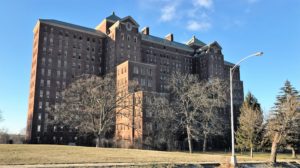
At the time, we were unaware of the separate buildings that formed the Kings Park Psychiatric Center complex. We had actually performed in Building 80, which was known as York Hall. The center was located in the town of Kings Park, Long Island. Kings Park is a North Shore town between the towns of Smithtown and Northport. The grounds in which all the buildings were located were, at one time, beautifully landscaped. Today, the buildings still stand but are mere shells of what they once were.
The issues with asbestos and other hazardous materials have proven to be major obstacles to any redevelopment plans for the grounds. For now, it simply looks like a ghost town or war-torn city. It’s hard to imagine that the grounds that are so devastated in the present functioned as a state mental health facility that employed thousands of people in a complex of over twenty-five buildings. There are many stories from the hospital’s history. Inevitably, most of them are sad and tragic. However, for two hours on a spring afternoon in 1984, we managed to make some people feel good, at least for a few minutes. And who knows how long that may have lasted. I, for one, have never forgotten.
Kings Park Psychiatric Center Performance Recordings
“Brazilian Fantasy” was our opening number at the Kings Park Psychiatric Center. I recorded this with a small tape cassette recorder. I would have to believe that the tapes I recorded that day may be the only surviving audio recordings of any musical performances at the Kings Park Psychiatric Center. I have never found anything else like this on the internet. You can really hear the sound of that large hall in the natural reverb present on the recording. Just hearing Sonny Dallas count the band in and respond to the audience reactions at times is such an interesting listen. These tapes give the reader an actual audio window into the sounds of the Kings Park Psychiatric Center Hall.
Kings Park Psychiatric Center Photographs
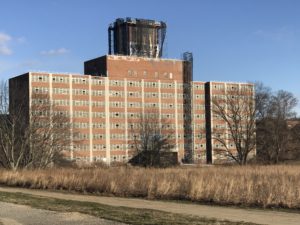
Photo: Brian Kachejian © 2017
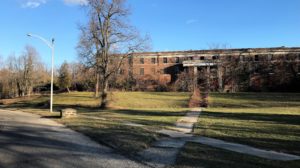
Photo: Brian Kachejian © 2017
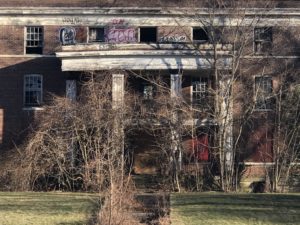
Photo: Brian Kachejian © 2017
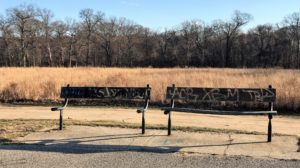
Photo: Brian Kachejian © 2017
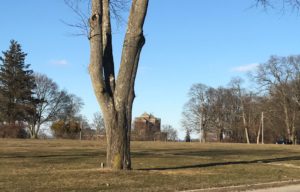
Photo: Brian Kachejian © 2017
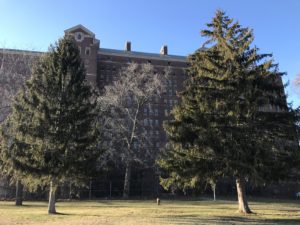
Photo: Brian Kachejian © 2017
More New York Psychiatric Hospital History
If you enjoyed reading this firsthand account of performing at the Kings Park Psychiatric Center, be sure to explore our other articles on New York’s historic psychiatric institutions. We have also restored features on Pilgrim Psychiatric Center, Harlem Valley Psychiatric Center, Rockland State Psychiatric Center, and Willowbrook State School. Together, these articles help preserve the history of the patients, employees, families, and communities connected to New York’s former state psychiatric facilities.
Updated June 24, 2026









This is fantastic! So glad to read this story and have the pleasure of listening into that wonderful show with the audio recording! What a treasure!!