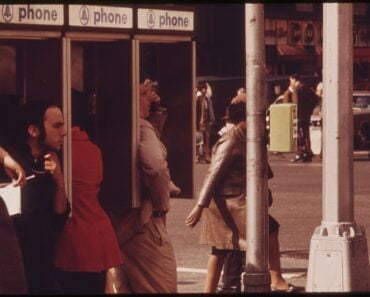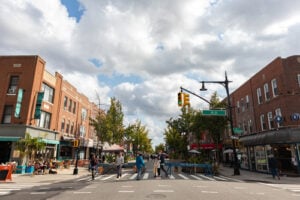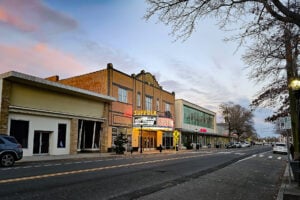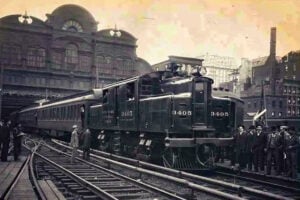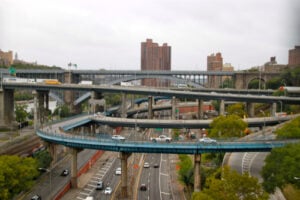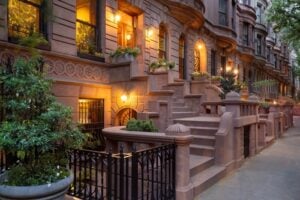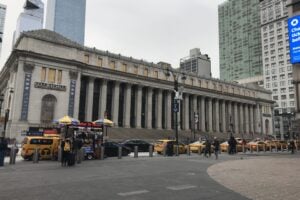
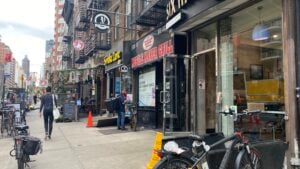
First Avenue near East 72nd Street on Manhattan’s Upper East Side. Photo by Brian Kachejian © 2026
Manhattan may be one island, but its neighborhood names read like a condensed history of New York City. Dutch farms, English estates, Revolutionary War forts, immigrant enclaves, old markets, vanished villages, rail yards, famous families, real estate campaigns, and even a few modern acronyms all survive on the map.
Some of these names reach back more than three centuries, while others were created within living memory. Together, they show how Manhattan repeatedly reinvented itself without completely erasing what came before. This guide follows the stories behind 75 Manhattan neighborhood and historic place-names, from Harlem and Greenwich Village to Dimes Square, Roosevelt Island, and the lost community of Seneca Village.
1. Harlem
Origin: Established in 1658 as the Dutch outpost of Nieuw Haarlem (New Haarlem), named in honor of the historic city of Haarlem in the Netherlands.
The Story: Director-General Peter Stuyvesant chartered the northern settlement in 1658 to secure the island against indigenous raids and encourage agricultural development. When the English seized New Netherland in 1664, they anglicized the name to Harlem. It transitioned from a rural farming village to an affluent 19th-century suburb, before the expansion of elevated rail lines in the early 20th century transformed it into the global capital of African American culture, literature, and the Harlem Renaissance.
2. Greenwich Village
Origin: The Greenwich name appears in late-17th-century records; its exact derivation is not completely settled.
The Story: Before the English name became established, the area included the Lenape settlement of Sapokanican and was known during Dutch rule as Noortwyck, or the northern district. The earliest known reference to Greenwich dates to 1696 in the will of Yellis Mandeville. One long-standing explanation connects the name with the Dutch Groenwijck, meaning “Green District,” while other historical accounts emphasize the English form that became standard. By the 1820s and 1830s, Greenwich was rapidly urbanizing, and the name Greenwich Village became firmly associated with the neighborhood.
3. Chelsea
Origin: Named after the country estate of retired British Major Thomas Clarke (1700–1776), who named his property after the Royal Hospital Chelsea (the military veterans’ hospital in London).
The Story: In 1750, Major Thomas Clarke purchased a 94-acre parcel of farmland stretching from the Hudson River to modern Eighth Avenue, between 19th and 24th Streets. Clarke’s grandson, the biblical scholar and developer Clement Clarke Moore (author of “A Visit from St. Nicholas”), inherited the estate in 1813. Moore subdivided the family orchards and pastures in the 1830s into residential building lots, permanently applying the estate name Chelsea to the district.
4. SoHo
Origin: A geographic acronym for South of Houston Street, closely associated with planner Chester Rapkin.
The Story: The district had long been a manufacturing and warehouse area when planner Chester Rapkin prepared his influential 1962 study, The South Houston Industrial Area. Rapkin’s work helped demonstrate the economic value of the district and became central to later preservation efforts. The short name SoHo caught on as artists moved into large loft spaces and preservationists fought plans that threatened the cast-iron district, including the proposed Lower Manhattan Expressway.
5. Tribeca
Origin: An acronym for Triangle Below Canal Street.
The Story: The name TriBeCa emerged in the mid-1970s through City Planning studies and the creation of the Special Lower Manhattan Mixed Use District. Although the area described by the name was never literally a perfect triangle, the acronym quickly spread to the larger district south of Canal Street between Broadway and the Hudson River. Former commercial and warehouse buildings were increasingly converted to residential lofts, giving the old market and industrial district a new neighborhood identity.
6. Hell’s Kitchen (Clinton)
Origin: 19th-century criminal and journalistic vernacular for the tenement district west of Eighth Avenue.
The Story: The term appeared in print in The New York Times in September 1881, describing a notorious tenement block on West 39th Street. A famous municipal legend credits veteran NYPD Patrolman “Dutch Charley” with coining the moniker while watching a riot with a rookie officer; when the rookie remarked that the neighborhood was as hot as hell, Charley replied: “Hell’s a mild climate. This is Hell’s Kitchen.” Modern civic groups and real estate entities frequently use the historic name Clinton (honoring Governor DeWitt Clinton) to describe the area.
7. Bowery
Origin: Anglicization of the 17th-century Dutch word bouwerij, meaning “farm” or “homestead.”
The Story: The wide diagonal avenue (the oldest continuous thoroughfare in Manhattan, following an ancient indigenous trail) connected the colonial fort at the southern tip of the island to the agricultural country estates (bouweries) to the north. Most notably, it led directly to Peter Stuyvesant’s private 62-acre farm, Bouwerij No. 1. Over the centuries, the street evolved from a rural highway into an 1850s theatrical hub, a Gilded Age skid row, and the 1970s birthplace of American punk rock at CBGB.
8. Gramercy (Gramercy Park)
Origin: Derived from the old Dutch place-name Crommashie, associated with a curved stream or landscape feature.
The Story: New York City Landmarks records trace Gramercy to the Dutch Crommashie. The name is associated with the word krom, meaning curved, and messie, meaning a small knife, apparently describing the course of a stream in the area. In 1831, lawyer and developer Samuel B. Ruggles purchased Gramercy Farm and adjoining property, laid out streets, and reserved the central square as a private park for surrounding residents. The result was one of Manhattan’s most distinctive residential enclaves.
9. Inwood
Origin: The name Inwood replaced the older northern Manhattan place-name Tubby Hook in 1864.
The Story: For much of the 18th and early 19th centuries, this part of northern Manhattan was known as Tubby Hook. New York City Landmarks records state that the northwestern area was renamed Inwood in 1864. The reason the new name was chosen is less firmly documented than the date of the change, so later explanations connecting it directly to the phrase “in the woods” are best treated as interpretation rather than established fact. The neighborhood’s wooded landscape survives most dramatically in Inwood Hill Park.
10. Washington Heights
Origin: A late-19th-century neighborhood name associated with the Revolutionary War forts of northern Manhattan, especially Fort Washington.
The Story: During the American Revolution, the high ground of northern Manhattan was fortified with Fort Washington and several related defenses. New York City Landmarks records show that the area had acquired the name Washington Heights by the 1880s. The neighborhood remained relatively rural until improved transit, particularly the IRT subway in the early 20th century, accelerated apartment construction and population growth.
11. Lower East Side (LES)
Origin: Direct geographic descriptor for the southeastern section of Manhattan Island below 14th Street and east of the Bowery.
The Story: Originally comprised of the colonial estates of the Delancey and Rutgers families, the area developed rapidly during the mid-19th century into the densest residential tenement district in the world. As millions of German, Eastern European Jewish, and Italian immigrants moved through its tenements, streets like Orchard, Grand, and Delancey became the undisputed cultural and commercial epicenter of the American immigrant experience.
12. Upper East Side (UES)
Origin: Geographic quadrant descriptor for the residential district spanning east of Central Park from 59th Street to 96th Street.
The Story: Long an expanse of rural market farms, country estates, and rocky bluffs known as the Common Lands, the Upper East Side was transformed into “Millionaire’s Row” along Fifth Avenue following the construction of Central Park in the late 1850s. Rapid residential expansion was accelerated by the construction of the Third and Second Avenue Elevated lines, making it the premier residential seat of New York’s industrial and banking fortunes.
13. Upper West Side (UWS) & Bloomingdale
Origin: Geographic quadrant descriptor, historically known as Bloomingdale (from the Dutch Bloemendaal, meaning “Valley of Flowers”).
The Story: In the 17th century, Dutch settlers named the rolling western pastures Bloemendaal after a tulip-growing village in the Netherlands. The unpaved Bloomingdale Road (modern Broadway) ran the length of the west side. In the late 19th century, the opening of Central Park, the 1884 construction of The Dakota apartment building, and the completion of the Ninth Avenue Elevated railroad spurred massive rowhouse and apartment tower construction, cementing the name Upper West Side.
14. Morningside Heights
Origin: Named in the 1890s to highlight its position atop the dramatic eastern cliffs of Morningside Park, which caught the early morning sunrise.
The Story: Historically known during the colonial era as Vandewater’s Heights and the site of the 1776 Revolutionary War Battle of Harlem Heights, the high plateau was home to the Bloomingdale Insane Asylum in the 19th century. In the 1890s, when Columbia University, the Cathedral of St. John the Divine, and St. Luke’s Hospital acquired the plateau, university leaders and civic boosters successfully promoted the name Morningside Heights to distinguish this intellectual acropolis from surrounding neighborhoods.
15. Financial District (FiDi) & Wall Street
Origin: Modern real estate acronym (FiDi), anchored by Wall Street, named after the literal 17th-century defensive palisade wall erected in 1653.
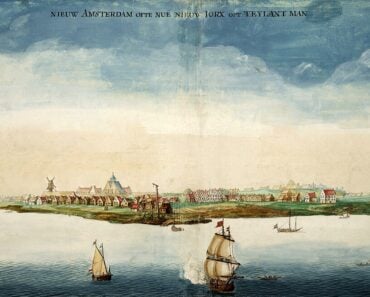
The Story: Under orders from Director-General Peter Stuyvesant, Dutch colonists built a 12-foot-tall wooden palisade wall along the northern border of New Amsterdam to defend against potential attacks by English forces and Native Americans. The dirt path along the inside of the rampart was called de Waal Straat. Following the removal of the wall in 1699 and the signing of the Buttonwood Agreement in 1792, the district evolved into the global capital of banking and securities trading.
16. Meatpacking District (Gansevoort Market)
Origin: Industrial descriptive name referencing the dozens of wholesale meat slaughterhouses and packing plants that occupied the district from the 1880s onward.
The Story: Historically centered around the Gansevoort Market (named after Revolutionary War Colonel Peter Gansevoort) and the western piers of the Hudson River, the district was zoned in the late 19th century for heavy commercial food handling. Hundreds of meatpackers and cold-storage facilities operated along the cobblestone streets using overhead freight rail tracks (the High Line) until the late 20th century, when artists, high fashion boutiques, and nightlife venues transformed the industrial brick buildings.
17. Battery Park City
Origin: Named for its location beside The Battery at the southern end of Manhattan.
The Story: The Battery Park City Authority was created in 1968 to oversee construction of a new community on Manhattan’s Lower West Side. During the 1970s, 92 acres of new land were created by extending the shoreline into the Hudson River. Fill excavated from the nearby World Trade Center site was used along with material dredged from the Hudson River bed. A 1979 master plan then guided development of the residential, commercial, and public-space neighborhood known as Battery Park City.
18. East Village
Origin: A 1960s real estate and counterculture designation coined to distinguish the area from the traditional Lower East Side.
The Story: For over a century, the neighborhood between 14th Street and Houston Street east of Fourth Avenue was regarded simply as the northern portion of the immigrant Lower East Side. In the 1960s, bohemian artists, beatnik poets, and underground musicians moved into the low-cost tenements, while real estate developers and independent publications (like The Village Voice) began promoting the name East Village to link the area’s identity to the cultural and artistic prestige of Greenwich Village to the west.
19. Chinatown
Origin: Cultural-ethnic descriptive name designating the concentrated enclave of Chinese immigrant merchants and residents established in the late 19th century.
The Story: During the late 19th century, increasing numbers of Chinese immigrants settled in Lower Manhattan, including people who had moved east after facing anti-Chinese violence and discrimination in the American West. Businesses and community institutions became concentrated around streets including Mott, Pell, and Doyers. Manhattan’s Chinatown grew into one of the oldest and most important Chinese-American communities in the United States and remains a major center of Chinese culture and commerce in New York City.
20. Little Italy
Origin: Cultural-ethnic designation for the 19th- and early-20th-century enclave settled predominantly by immigrants from Southern Italy and Sicily.
The Story: Beginning in the 1880s, hundreds of thousands of Italian immigrants settled along the narrow tenement blocks of Mulberry, Mott, and Elizabeth Streets, organizing their living quarters by their home villages in Italy (such as Neapolitans on Mulberry Street and Sicilians on Elizabeth Street). The neighborhood became globally renowned for its bakeries, espresso cafes, imported food markets, and the historic Feast of San Gennaro, established on Mulberry Street in September 1926.
21. NoHo
Origin: Real estate geographical acronym: North of Houston Street.
The Story: Coined by real estate promoters and preservationists in the late 1970s as a direct counterpart to the successful rebranding of SoHo to the south. The neighborhood—bounded by Houston Street, Astor Place, Broadway, and Bowery—encompasses the historic 1830s Colonnade Row on Lafayette Street and grand 19th-century mercantile cast-iron and stone buildings that were converted from light manufacturing into high-end residential lofts.
22. Nolita
Origin: A mid-1990s real estate marketing acronym: North of Little Italy.
The Story: Throughout the 20th century, the narrow blocks along Mulberry, Mott, and Prince Streets between Broome and Houston were considered the northern heart of Little Italy (anchored by the historic Old St. Patrick’s Cathedral, built in 1815). As older Italian-American families relocated and upscale clothing boutiques and cafes moved into the historic storefronts during the mid-1990s, real estate brokers coined the catchy acronym Nolita to establish a distinct, trendy identity.
23. Flatiron District
Origin: Named after the wedge-shaped Flatiron Building at Broadway, Fifth Avenue, and 23rd Street.
The Story: The area around Madison Square had earlier been associated with Ladies’ Mile, entertainment, hotels, publishing, and later the toy and wholesale trades. During the late 20th century, Flatiron District became the common name for the surrounding neighborhood, borrowing the identity of Daniel Burnham’s famous 1902 triangular skyscraper. The name helped unify an area that had previously been described through several overlapping commercial districts.
24. NoMad
Origin: Real estate marketing acronym coined in 1999: North of Madison Square Park.
The Story: Centered along Broadway and Fifth Avenue between 25th and 30th Streets, the area was historically the glamorous heart of Gilded Age hotel culture and entertainment (home to the original Madison Square Garden, the Hoffman House, and Tin Pan Alley). After decades of operating primarily as a wholesale import and printing district, real estate promoters and hotel developers in 1999 coined the acronym NoMad to rebrand the historic Beaux-Arts commercial corridor into a luxury boutique hotel and residential district.
25. Hudson Yards
Origin: Named for its location near the Hudson River and the Metropolitan Transportation Authority’s West Side rail yards.
The Story: For much of the 20th century, the far West Side around the rail yards was dominated by transportation infrastructure, manufacturing, auto-related uses, parking facilities, and vacant or underused land. New York City and the MTA began planning the modern Hudson Yards redevelopment in the early 2000s. The project included rezoning, the extension of the No. 7 subway, new streets and open spaces, and platforms that allow buildings to rise above active Long Island Rail Road tracks. The name now applies both to the large redevelopment and to the broader surrounding district.
26. Dimes Square
Origin: A 2010s micro-neighborhood name derived from Dimes, an influential cafe opened on Division Street in 2013.
The Story: Located at the triangular intersection where Chinatown meets the Lower East Side along Canal, Division, and Ludlow Streets, the enclave historically comprised modest wholesale storefronts and Chinese family businesses. Following the 2013 opening of Dimes restaurant, the surrounding blocks attracted young artists, writers, podcasters, skate culture figures, and independent galleries, prompting local publications and residents to dub the micro-enclave Dimes Square.
27. Lenox Hill
Origin: Named after Scottish immigrant merchant Robert Lenox (1759–1839) and his 30-acre country farm, Five Mile Post Farm.
The Story: In 1818, wealthy shipping merchant Robert Lenox purchased 30 acres of rolling, rocky farmland situated five miles north of City Hall between modern 68th and 74th Streets, Fifth Avenue, and Third Avenue. The highest geological ridge on the property became known as Lenox Hill. His son, philanthropist James Lenox, donated large parcels of the family estate to establish the Lenox Library (which later merged to form the New York Public Library) and Presbyterian Hospital, establishing the permanent name for this Upper East Side medical and residential district.
28. Carnegie Hill
Origin: Named after industrialist and philanthropist Andrew Carnegie, whose Fifth Avenue mansion became the neighborhood’s defining landmark.
The Story: Andrew Carnegie purchased land at Fifth Avenue and 91st Street in 1898 and built his mansion between 1899 and 1903. New York City Landmarks records say the surrounding area became known as Carnegie Hill soon after the mansion was erected. Carnegie’s move helped push fashionable Fifth Avenue development farther north and encouraged other prominent families to build nearby. The mansion is now the Cooper Hewitt, Smithsonian Design Museum.
29. Sugar Hill (Harlem)
Origin: A 1920s Harlem cultural metaphor: where life was “sweet” and affluent African Americans enjoyed the “sweet life.”
The Story: Situated on the high rocky bluff of Hamilton Heights between roughly 145th and 155th Streets, the neighborhood was lined with grand row houses and substantial apartment buildings. During the Harlem Renaissance and the decades that followed, the district became a prestigious address for African American professionals, artists, musicians, and civil rights leaders, including figures associated with buildings such as 409 and 555 Edgecombe Avenue. Its reputation for prosperity and cultural achievement helped make the name Sugar Hill famous far beyond Harlem.
30. Hamilton Heights
Origin: Named after Founding Father Alexander Hamilton (1757–1804), who built his country estate here in 1802.
The Story: In 1802, Alexander Hamilton completed his two-story Federal-style country home, The Grange, on a 32-acre wooded estate overlooking the Hudson River in northern Manhattan. Designed by architect John McComb Jr., The Grange was where Hamilton spent the final years of his life before his fatal duel with Aaron Burr in 1804. When the surrounding ridge was subdivided for grand brownstones and the campus of the City College of New York (CCNY) in the late 19th century, the neighborhood was named Hamilton Heights.
31. Stuyvesant Town & Peter Cooper Village
Origin: Named in honor of Peter Stuyvesant (final Dutch Director-General) and industrialist-philanthropist Peter Cooper (1791–1883).
The Story: Built between 1945 and 1947 by the Metropolitan Life Insurance Company as private housing for returning World War II veterans, the complex was erected on the site of the demolished 19th-century “Gas House District” tenements. The name Stuyvesant Town honored the Dutch colonial leader whose historic 17th-century farm encompassed the land, while the adjacent Peter Cooper Village honored the inventor, industrialist, and founder of the tuition-free Cooper Union for the Advancement of Science and Art.
32. Sutton Place
Origin: Named after merchant and real estate developer Effingham B. Sutton (1817–1891).
The Story: In 1875, Sutton constructed a row of brownstones along a disconnected stretch of Avenue A between East 57th and 58th Streets. The Sutton name became associated with the street, and in 1883 the Board of Aldermen approved changing the name of Avenue A between 57th and 60th Streets to Sutton Place. The area later became one of Manhattan’s most exclusive residential enclaves as wealthy New Yorkers remodeled and rebuilt properties overlooking the East River.
33. Marble Hill
Origin: Named after the vast deposits of Inwood marble quarried from the hill for 18th- and 19th-century construction.
The Story: Geologically part of the bedrock formations of northern Manhattan, Marble Hill was famous for its high-grade dolomite marble quarries that supplied stone for major New York buildings. In 1895, the construction of the Harlem River Ship Canal physically separated Marble Hill from Manhattan Island, turning it into a temporary island. In 1914, the old, twisting Spuyten Duyvil Creek to the north was filled in, physically attaching Marble Hill to the Bronx mainland—though by law and municipal charter, it remains an official neighborhood of the Borough of Manhattan.
34. Hudson Square
Origin: A 1990s real estate designation referencing its proximity to the Hudson River and the historic St. John’s Park freight terminal.
The Story: Historically the site of St. John’s Park (an exclusive early-19th-century residential square that was later replaced by the Hudson River Railroad’s freight terminal), the area evolved into New York’s primary printing and graphic arts manufacturing center in the 1920s. Following the decline of physical printing presses, the Trinity Church real estate portfolio rezoned and rebranded the massive daylight masonry warehouses in the late 1990s as Hudson Square, attracting major digital media and technology companies.
35. Turtle Bay
Origin: One of Manhattan’s oldest waterfront place-names; its exact etymology remains uncertain.
The Story: A small East River cove once occupied this part of Midtown East. One explanation holds that Turtle Bay referred simply to the turtles found in and around the sheltered inlet. Another long-standing theory connects the name to a Dutch word such as deutel, describing a bent blade or peg and perhaps the shape of the cove. Because both explanations appear in historical accounts, the safest conclusion is that the precise origin cannot be stated with certainty. The neighborhood later became internationally known as the home of the United Nations Headquarters.
36. Two Bridges
Origin: A geographic descriptor defining the waterfront enclave nestled directly between the anchorages of the Brooklyn Bridge (1883) and the Manhattan Bridge (1909).
The Story: Historically part of the colonial Rutgers family farm and the maritime shipyards along the East River, this low-lying slice of the Lower East Side was long defined by timber piers, dry docks, and tenement blocks housing dockworkers and sailors. In the mid-20th century, the construction of public housing developments and the elevated approaches of both massive suspension bridges permanently physically enclosed the area, cementing the distinct local identity of Two Bridges.
37. Strivers’ Row (St. Nicholas Historic District, Harlem)
Origin: A 1920s cultural moniker reflecting the ambitious, upwardly mobile African American professionals (“strivers”) who purchased these architectural gems.
The Story: Built between 1891 and 1893 by developer David H. King Jr., these four unified rows of neo-Renaissance townhouses on West 138th and 139th Streets (designed by premier architects including McKim, Mead & White) were originally marketed to wealthy white residents. During the 1920s Harlem Renaissance, as the neighborhood opened to Black ownership, they attracted prominent leaders, musicians, and doctors—including Eubie Blake, W.C. Handy, and Congressman Adam Clayton Powell Jr.—earning the lasting title Strivers’ Row.
38. Alphabet City (East Village / Loisaida)
Origin: Named for Manhattan’s lettered Avenues A, B, C, and D.
The Story: The lettered avenues were included in the Commissioners’ Plan of 1811 for the widened eastern side of Manhattan. By the late 20th century, the blocks around Avenues A through D were widely known as Alphabet City. The area was also central to Puerto Rican and Nuyorican culture. The name Loisaida, a Spanglish rendering of “Lower East Side,” was popularized in the 1970s by poet and community activist Bittman “Bimbo” Rivas and became an enduring cultural name for the neighborhood.
39. Manhattanville (West Harlem)
Origin: Named in 1806 as an independent suburban industrial village along the Hudson River valley.
The Story: Founded around a deep geological valley known as the Manhattan Hollow (where 125th Street hits the Hudson River), Manhattanville was established in 1806 by prominent merchants including Jacob Schieffelin. The village thrived due to its natural deep-water wharf, breweries (such as the Yuengling Manhattan Brewery), and early rail freight lines, operating as an independent crossroads before being fully integrated into Upper Manhattan’s street grid.
40. Tudor City
Origin: An architectural and marketing name created by developer Fred F. French, referencing the project’s Tudor-inspired design.
The Story: Beginning in 1925, the Fred F. French Company assembled a large site on the East Side near 42nd Street and transformed an area of tenements and industrial uses into a planned apartment community. The buildings used Tudor-inspired ornament, landscaped private parks, and a unified architectural identity, producing the name Tudor City. Completed largely between the late 1920s and early 1930s, the development became one of New York’s pioneering large-scale urban residential complexes.
41. Astor Row (Harlem)
Origin: Named after the prominent Astor family, specifically the estate of William Backhouse Astor Sr. (1792–1875).
The Story: Situated along the south side of West 130th Street between Fifth and Lenox Avenues, this rare row of 28 semi-detached brick houses was constructed between 1880 and 1883 by architect Charles Buek on land owned by the Astor estate. Notable for their unique wooden front porches and deep garden setbacks, the homes stood out from standard New York brownstones and served as an early luxury anchor in Central Harlem.
42. Radio Row (Historical Lower West Side)
Origin: Industrial trade moniker describing the massive concentration of electronic parts and radio equipment retailers along Cortlandt Street.
The Story: During the early and mid-20th century, Cortlandt Street and surrounding blocks became famous for a dense concentration of radio, electronics, surplus-parts, and repair businesses. New Yorkers and visitors came to Radio Row looking for everything from vacuum tubes to complete radios and televisions. The commercial district was condemned and demolished during the 1960s to clear land for construction of the original World Trade Center.
43. Five Points (Historical Lower Manhattan)
Origin: A practical topographical name describing the five-cornered intersection formed by the convergence of Anthony (Worth), Orange (Baxter), and Cross (Mosco/Park) Streets.
The Story: Created in the early 1800s when the city drained and filled the polluted, freshwater Collect Pond, the spongy landfill soon settled, causing nearby wooden tenements to sink and rot. The resulting low rents turned Five Points into America’s most notorious 19th-century slum, characterized by desperate poverty, gang violence (the Dead Rabbits and Bowery Boys), and legendary mixed-race tap dance halls (such as Pete Williams’s Almack’s), before the city systematically condemned and cleared the district to build the modern Civic Center and Foley Square courthouses.
44. Minetta / Minetta Brook (Greenwich Village)
Origin: A Native-derived place-name associated with Minetta Brook; historical spellings and proposed translations vary.
The Story: Long before the modern street grid, a natural stream crossed what became Greenwich Village and flowed toward the Hudson River. The stream and the surrounding area became known by forms of the Minetta name. As Manhattan developed, much of the watercourse was placed underground in sewers and culverts. The old name survives in Minetta Street and Minetta Lane, preserving a reminder of the neighborhood’s earlier landscape.
45. San Juan Hill (Historical Upper West Side)
Origin: A name that appeared around the turn of the 20th century and may have referred to Black veterans who came to the area after the Spanish-American War and the Battle of San Juan Hill.
The Story: San Juan Hill developed into an important African American and Afro-Caribbean community on Manhattan’s West Side and became closely associated with ragtime, jazz, nightlife, and Black cultural life. Portions of the neighborhood were cleared for public housing beginning in the 1940s, and a much larger area was later demolished through the Lincoln Square urban-renewal project that made way for Lincoln Center for the Performing Arts and surrounding development.
46. Sniffen Court (Murray Hill)
Origin: Named after 19th-century architect and builder John E. Sniffen.
The Story: Tucked away in an alleyway on East 36th Street between Third and Lexington Avenues, this private cobblestone mews was developed between 1863 and 1864 by John E. Sniffen. Originally constructed as a cluster of two-story Romanesque Revival carriage houses and stables for the wealthy Gilded Age families of Murray Hill, the stables were converted in the 1920s into private artist studios and single-family townhouses, remaining one of Manhattan’s smallest designated historic districts.
47. Mount Morris (Mount Morris Park Historic District, Harlem)
Origin: Named after Mount Morris Park (renamed Marcus Garvey Park in 1973), which preserved a high, natural rocky hill.
The Story: In the 1830s, the city attempted to cut through the massive, 70-foot-tall outcropping of Manhattan schist along Fifth Avenue. Due to the extreme cost of blasting the rock, the city halted street construction and established Mount Morris Square in 1840. The surrounding blocks developed in the late 19th century into a premier residential neighborhood of Queen Anne, Romanesque Revival, and Neo-Grec townhouses.
48. Sylvan Terrace (Washington Heights)
Origin: Named in the 1880s from the Latin root silva (meaning “forest” or “wooded grove”), combined with its position as a private cobblestone drive.
The Story: Originally the private carriage driveway leading from the Kingsbridge Road to the historic 1765 Morris-Jumel Mansion (Manhattan’s oldest surviving residential house), the land was subdivided in 1882 by developer James E. Ray. Ray built 20 matching, narrow wooden-frame rowhouses with ornate canopied porches along the cobblestones, creating a preserved 19th-century architectural corridor.
49. Garment District (Fashion District)
Origin: Industrial trade descriptor for the epicenter of American clothing manufacturing and wholesale fashion design.
The Story: Between 1910 and the late 1920s, much of New York’s clothing and textile industry relocated from the Lower East Side to high-rise loft buildings along Seventh Avenue (later co-named Fashion Avenue) and nearby streets between roughly 34th and 42nd Streets. The district became one of the most important centers of American garment manufacturing, design, wholesaling, and fashion.
50. Herald Square & Greeley Square
Origin: Named after two of New York’s most influential 19th-century newspapers and their publishers: The New York Herald and Horace Greeley’s New York Tribune.
The Story: In 1894, the New York Herald (owned by James Gordon Bennett Jr.) moved its headquarters to a grand Stanford White-designed building at the intersection of Broadway, Sixth Avenue, and 34th Street, prompting the city to name the northern intersection Herald Square. The triangular park immediately to the south was named Greeley Square in honor of Horace Greeley, founder of the rival Tribune, anchoring the district that became famous for massive flagship department stores like Macy’s and Gimbels.
51. Times Square (Longacre Square)
Origin: Named in April 1904 in honor of The New York Times, which built its new headquarters tower at the intersection.
The Story: Throughout the 19th century, the wide intersection of Broadway and 42nd Street was called Longacre Square (named after the Long Acre carriage and horse-trading district in London) and served as the center of the city’s commercial livery trade. On April 8, 1904, at the request of Times publisher Adolph S. Ochs, Mayor George B. McClellan Jr. signed an ordinance renaming the plaza Times Square to celebrate the completion of the iconic 25-story Times Tower (One Times Square) and the opening of the first subway line.
52. Little Syria (Historical Lower West Side)
Origin: Cultural-ethnic designation for the Arabic-speaking Christian immigrant community from Greater Syria (modern-day Lebanon, Syria, and Palestine).
The Story: Beginning in the late 1880s, Arab Christian immigrants settled along Washington Street between Battery Place and Rector Street. The neighborhood served as the intellectual, literary, and commercial heart of the Arab-American diaspora, where poets like Kahlil Gibran and Ameen Rihani lived and published their works. Most of the neighborhood was razed in the 1940s to construct the Brooklyn-Battery Tunnel approach ramps.
53. Pomander Walk (Upper West Side)
Origin: Named after the romantic 1910 British stage comedy Pomander Walk by Louis N. Parker.
The Story: In 1921, Irish immigrant theater owner and developer Thomas Healy purchased a plot of land on West 95th Street between Broadway and West End Avenue. Healy planned to build a luxury hotel, but while raising capital, he hired architects King & Campbell to build a temporary, charming European-style mews: 27 Tudor-style miniature two-story cottages flanking a narrow, locked pedestrian walkway. Healy died before the hotel could be built, leaving this fairytale English enclave permanently preserved.
54. Diamond District
Origin: Industrial trade descriptor for the concentrated global marketplace of gem diamond cutting, polishing, and wholesale trade.
The Story: Historically centered in Lower Manhattan around Maiden Lane, New York’s diamond trade moved uptown during the 20th century and became concentrated on West 47th Street between Fifth and Sixth Avenues. European Jewish diamond merchants and gem cutters fleeing Nazi persecution helped reshape the trade in New York during the 1930s and 1940s. The block developed into one of the world’s best-known centers for diamond and jewelry businesses.
55. Madison Square
Origin: Named in 1814 in honor of James Madison (1751–1836), fourth President of the United States and “Father of the Constitution.”
The Story: Formally opened as a public park in 1847 along Fifth Avenue and 23rd Street, Madison Square was the epicenter of Gilded Age wealth, luxury hotels, and sporting entertainment. It gave its name to the historic Madison Square Garden (which operated on the northeast corner of the park from 1879 until moving to 50th Street and Eighth Avenue in 1925), as well as the world’s most famous sports and entertainment arena brand.
56. Union Square
Origin: Named in the early 19th century to denote the union of the two principal highways of Manhattan: Bloomingdale Road (Broadway) and the Bowery (Fourth Avenue).
The Story: Designated as a public square in the Commissioner’s Plan of 1811 because the acute angle of the two major north-bound thoroughfares made standard rectangular building lots impossible, it was officially named Union Place to mark the junction of roads (rather than a reference to the Federal Union or labor unions). Dedicated as a park in 1839, it evolved into New York’s primary public forum for massive political protests, labor rallies, and the historic April 1861 mass gathering supporting the defense of Fort Sumter.
57. Dorrance Brooks Square Historic District (Harlem)
Origin: Named for Dorrance Brooks Square, which honors Private Dorrance Brooks, a Black soldier of the 369th Infantry who died in World War I.
The Story: The small park at West 136th Street was dedicated to Dorrance Brooks in 1925, becoming the first public place in New York City named for an African American. In 2021, the Landmarks Preservation Commission designated the surrounding Dorrance Brooks Square Historic District, encompassing blocks of late-19th- and early-20th-century row houses, apartment buildings, and institutions with important connections to the Harlem Renaissance and civil rights history.
58. Washington Square (Greenwich Village)
Origin: Named in honor of George Washington when the former burial ground was converted into a military parade ground in the 1820s.
The Story: Beginning in 1797, the site served as a potter’s field and burial ground. In 1826, the city converted the land into the Washington Square Military Parade Ground, beginning its transformation into the public square and park known today. Elegant Greek Revival houses soon rose along Washington Square North. The temporary Washington Arch erected for the centennial of George Washington’s inauguration in 1889 was replaced by the permanent marble arch completed in the early 1890s.
59. Koreatown (K-Town)
Origin: Cultural-ethnic commercial designation for the concentrated hub of Korean-owned businesses and restaurants centered on West 32nd Street.
The Story: Beginning in the late 1970s and 1980s with the opening of a Korean bookstore and a few traditional restaurants along West 32nd Street between Broadway and Fifth Avenue, the district’s proximity to the Empire State Building and the Garment District attracted a dense cluster of businesses. By the 1990s, the street developed a unique multi-tiered commercial layout, with 24-hour restaurants, bakeries, karaoke bars, and beauty shops stacked several stories high inside dense commercial buildings, officially designated as Korea Way.
60. Manhattan Valley (Upper West Side)
Origin: Topographical name referencing the natural low basin between the high rocky plateaus of the Upper West Side and Morningside Heights.
The Story: Historically known in 18th-century land records as The Hollow Way (the site where the fighting began during the 1776 Battle of Harlem Heights), the valley was crossed by unpaved country roads and wooden farmhouses. In the late 19th century, charitable institutions like the New York Cancer Hospital (now 455 Central Park West) were built here. In the mid-20th century, community organizers and housing advocates adopted the name Manhattan Valley to establish a unified neighborhood identity focused on community preservation and affordable housing.
61. Murray Hill
Origin: Named after merchant Robert Murray (1721–1786) and his family estate.
The Story: Robert Murray purchased land in this section of Manhattan in the 18th century, and the elevated property became known as Murray Hill. A famous Revolutionary War tradition holds that his wife, Mary Lindley Murray, entertained British officers at the family home in September 1776, delaying them while American troops escaped northward. The story has become part of New York folklore, although its details are difficult to document conclusively. During the 19th century, Murray Hill developed into an affluent residential neighborhood.
62. Little Germany (Kleindeutschland / “Dutchtown”)
Origin: A cultural and linguistic name for the enormous German-speaking immigrant community of the Lower East Side and present-day East Village.
The Story: Beginning in the 1840s, German immigrants created a dense network of residences, shops, churches, newspapers, beer gardens, social clubs, and cultural organizations east of the Bowery. Known as Kleindeutschland, or Little Germany, it became one of the most important German communities in the United States. The General Slocum disaster of June 15, 1904, killed more than 1,000 people, many from the neighborhood, and accelerated demographic changes already underway as German-American families moved farther uptown and into other boroughs.
63. St. Mark’s Place (Historic Cultural District)
Origin: Named after the historic St. Mark’s Church in-the-Bowery, built in 1799 atop the family chapel of Peter Stuyvesant.
The Story: Covering the three-block stretch of East 8th Street between the Bowery and Avenue A, this corridor transformed from early 19th-century German social halls into the bohemian epicenter of the 20th century. It housed Leon Trotsky’s print shop, Andy Warhol’s Exploding Plastic Inevitable at the Dom, and the rock club The Electric Circus. In the 1970s and 1980s, St. Mark’s Place became the undisputed national capital for punk rock, underground fashion, street markets, and alternative record stores.
64. The Tenderloin (Historical Midtown Vice District)
Origin: A late-19th-century slang name for a Midtown district associated with theaters, gambling, prostitution, nightlife, and police corruption.
The Story: The name is traditionally attributed to NYPD Captain Alexander “Clubber” Williams, who supposedly remarked after being transferred to a more lucrative precinct that he had been eating chuck steak and would now get “tenderloin.” Whether the famous wording was recorded exactly as later retold is uncertain, but the Tenderloin name became firmly associated with the vice and entertainment district that stretched through parts of Midtown before the theater business migrated toward Longacre and Times Squares.
65. Astor Place
Origin: Named in honor of fur and real estate magnate John Jacob Astor (1763–1848).
The Story: Built along the junction where Broadway, Fourth Avenue, and Lafayette Street meet, the plaza was home to the elite Astor Place Opera House. On May 10, 1849, the square became the site of the Astor Place Riot, a deadly class clash between working-class Bowery crowds backing American actor Edwin Forrest and upper-class patrons backing British Shakespearean actor William Charles Macready. The state militia opened fire on the crowd, killing over 20 people and permanently reshaping New York’s cultural divisions.
66. Ladies’ Mile Historic District
Origin: A 19th-century name for the fashionable retail corridor where New York women shopped at major dry-goods stores and department stores.
The Story: After the Civil War, Broadway and Sixth Avenue between roughly 14th and 23rd Streets developed into New York’s premier shopping district. Major establishments included Arnold Constable, Lord & Taylor, B. Altman & Co., and Siegel-Cooper. The concentration of elaborate cast-iron and masonry stores helped give the corridor the name Ladies’ Mile. Most of the great retailers later moved farther uptown, but many of their buildings survive within the designated historic district.
67. Lincoln Square
Origin: Named in 1906 when the city applied Lincoln Square to the junction of Broadway and Columbus Avenue near West 65th Street; the person or source behind the name is uncertain.
The Story: The origin of the Lincoln name has never been conclusively established. It is often assumed to honor Abraham Lincoln, although historical accounts have also proposed a local landowner. The surrounding district was radically transformed by mid-20th-century urban renewal and construction of Lincoln Center for the Performing Arts, which made Lincoln Square one of New York’s best-known cultural districts.
68. Hudson Heights (Northern Washington Heights)
Origin: A modern neighborhood name created in 1992 by a local property-owner group for the northwestern section of Washington Heights.
The Story: The high bluffs west of Broadway and north of roughly 181st Street had long been part of Washington Heights and are known for Fort Tryon Park and a large concentration of Art Deco apartment houses. The name Hudson Heights was created by the Hudson Heights Owners’ Coalition in 1992 and subsequently gained wider use in real estate and media. Its relatively recent origin makes it very different from older Manhattan names rooted in colonial geography.
69. Tin Pan Alley (West 28th Street)
Origin: A journalistic metaphor describing the clatter of dozens of upright pianos heard through open windows, which sounded like tin pans banging together.
The Story: Coined in the early 1900s (credited to songwriter/journalist Monroe Rosenfeld), the name defined the single block of West 28th Street between Broadway and Sixth Avenue. Between 1885 and the 1920s, this block was the absolute epicenter of the American sheet-music publishing industry, where composers and lyricists like George Gershwin, Irving Berlin, and Scott Joplin wrote the foundational songs of the Great American Songbook.
70. South Street Seaport
Origin: Named after South Street, the historic maritime thoroughfare known in the 19th century as the “Street of Ships.”
The Story: Developed in the early 1800s along the East River waterfront, South Street’s piers were crowded with packet ships, merchant vessels, warehouses, counting houses, and maritime businesses. Anchored by historic Schermerhorn Row and the Fulton Fish Market, which operated in the district until moving to Hunts Point in 2005, the seaport played a major role in New York City’s rise as an international center of commerce.
71. Rose Hill
Origin: Named after the 130-acre Rose Hill Farm purchased in 1747 by John Watts (1715–1789).
The Story: John Watts, a wealthy merchant and loyalist colonial official, named his country farm after his family’s ancestral home in Scotland. The estate spanned the East Side between modern 21st and 30th Streets, from Fourth Avenue to the East River. Though long integrated into the street grid between Murray Hill and Gramercy, the historic name Rose Hill was formally revived in the late 20th century by civic groups and real estate entities to identify the residential neighborhood east of Madison Square.
72. Knickerbocker Village
Origin: Named after Washington Irving’s fictional character Diedrich Knickerbocker, which became the universal symbol of Old New York.
The Story: Located between the Manhattan and Brooklyn Bridges on the site of the notorious 19th-century “Lung Block” tenements (named for extreme tuberculosis rates), Knickerbocker Village was constructed in 1934 by developer Fred F. French. It was the first housing development in the United States to receive federal funding through the Reconstruction Finance Corporation, creating an iconic multi-building middle-class brick enclave.
73. Columbus Circle
Origin: Named for the monument to Christopher Columbus erected in 1892 during commemorations of the 400th anniversary of his first Atlantic voyage.
The Story: The traffic circle sits at the southwest corner of Central Park where Broadway meets Eighth Avenue, Central Park West, and 59th Street. The Columbus monument, designed by sculptor Gaetano Russo, was unveiled in 1892 and gave the circle its lasting name. Columbus Circle later became an important transportation and commercial hub and is the official point from which highway distances to and from New York City are measured.
74. Roosevelt Island (Historical Blackwell’s / Welfare Island)
Origin: Renamed Roosevelt Island in 1973 in honor of President Franklin D. Roosevelt; previously known as Blackwell’s Island and Welfare Island.
The Story: The island passed to the Blackwell family during the colonial era and became known as Blackwell’s Island. New York City purchased it in 1828 and used it for hospitals, an almshouse, a penitentiary, and other municipal institutions. It was renamed Welfare Island in 1921. A state-led redevelopment plan began taking shape around 1970, and the island was renamed Roosevelt Island in 1973. The first residents of the new planned community moved in during 1975, and the design emphasized a largely pedestrian-oriented environment rather than a completely car-free one.
75. Seneca Village (Historical Central Park)
Origin: The origin of the name Seneca Village is uncertain; theories connect it either to the Seneca people or to other cultural references familiar to early residents.
The Story: Seneca Village began in 1825 when free Black New Yorkers started purchasing property in what is now the western side of Central Park. By 1855, the community had about 225 residents, roughly two-thirds Black and one-third Irish, along with three churches and a school. Property ownership gave some Black male residents access to voting rights under discriminatory New York laws of the period. When New York City acquired the land for Central Park through eminent domain, residents were displaced and the village disappeared by 1857.
For more on Manhattan neighborhoods and places, read our history and visitor guide to Greenwich Village, history of SoHo, guide to Little Italy, and 10 Oldest Neighborhoods in New York City.
Sources
New York City Landmarks Preservation Commission — Manhattan Historic Districts
NYC Landmarks Preservation Commission — Greenwich Village Historic District Extension
NYC Landmarks Preservation Commission — Gramercy Park Historic District Extension
NYC Landmarks Preservation Commission — Washington Heights History
NYC Landmarks Preservation Commission — Park Terrace West–West 217th Street Historic District
NYC Landmarks Preservation Commission — Tribeca South Historic District
NYC Landmarks Preservation Commission — Andrew Carnegie Mansion
NYC Landmarks Preservation Commission — Dorrance Brooks Square Historic District
Battery Park City Authority — History of Battery Park City
Roosevelt Island Operating Corporation — Roosevelt Island History
Central Park Conservancy — Seneca Village History
National Park Service — Greenwich Village Historic District