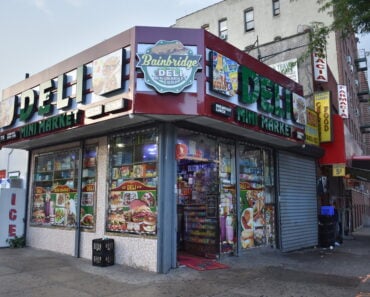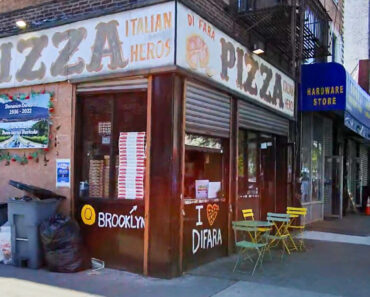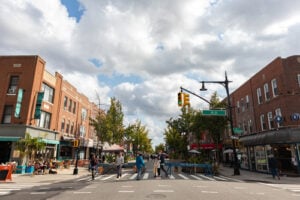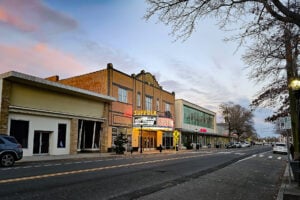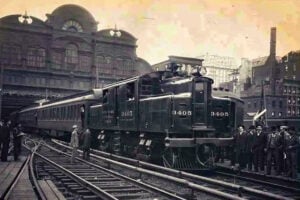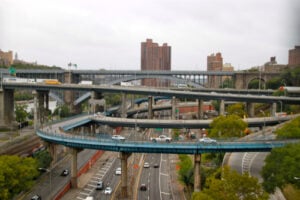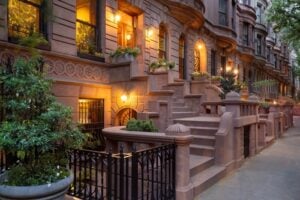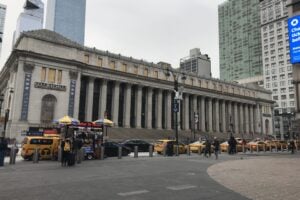
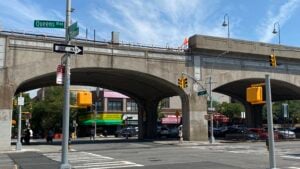
Caption: Queens Boulevard beneath the elevated train in Sunnyside, Queens. Photo by Brian Kachejian © 2026
Queens is New York City’s largest borough by land area, and its neighborhood names reflect more than three centuries of settlement, transportation, real estate development, industry, and changing geography. I love Queens. There is so much cultural diversity. I spent many years working in very friendly Queens nightclubs and eating breakfasts at diners along Queens Blvd after gigs. One of my earliest memories of New York City life was attending the World’s Fair in 1964. That’s something you dont forget, and I’m reminded of it every day I drive past the relics that still remain in Flushing. As for neighborhood names, some preserve Dutch and Native roots, while others came from country estates, railroad stations, developers, seaside resorts, and planned communities.
This guide looks at the stories behind 45 Queens neighborhood and historic place-names, from Flushing and Astoria to Jamaica, the Rockaways, Steinway, and Meadowmere.
1. Flushing
Origin: An English version of the Dutch name Vlissingen, a city in the Netherlands.
The Story: The settlement was established under Dutch rule in 1645 but was populated largely by English settlers. The Dutch name Vlissingen became Flushing in English usage. The community later became famous for the Flushing Remonstrance of 1657, an important early statement in support of religious liberty. Flushing also grew into a major center of horticulture and nursery cultivation during the 18th and 19th centuries.
2. Astoria
Origin: Named for wealthy merchant John Jacob Astor (1763–1848).
The Story: The area was long known as Hallet’s Cove after early landowner William Hallet. In the 1830s, developer Stephen A. Halsey promoted the village and supported renaming it Astoria in hopes of attracting investment from John Jacob Astor. Astor never became the great local benefactor supporters had hoped for, but the name endured. Astoria later became an important center of filmmaking, and its history is explored further in our visit to the Museum of the Moving Image in Queens.
3. Long Island City
Origin: A municipal name reflecting the community’s position as a western commercial and transportation center on Long Island.
The Story: Long Island City was incorporated in 1870 from part of the old Town of Newtown. It brought together Astoria and several hamlets, including Hunters Point, Ravenswood, and Blissville. The independent city developed into a major rail, ferry, manufacturing, and industrial center before becoming part of the consolidated City of New York in 1898. The Long Island City name survived as the identity of the western Queens district.
4. Sunnyside & Sunnyside Gardens
Origin: The Sunnyside name traces to the Bragaw family, early landowners whose farm was known as Sunnyside.
The Story: Sunnyside remained a rural area of farms and marshland before transportation improvements brought intensive development to western Queens. In 1924, the City Housing Corporation purchased land there for Sunnyside Gardens, an influential planned residential community designed around garden-city principles. Architects and planners including Clarence Stein and Henry Wright helped create low-rise housing organized around shared landscaped spaces.This is my favorite Queens neighborhood and that’s why I featured it in the photo above.
5. Woodside
Origin: A mid-19th-century name associated with the wooded character of the area.
The Story: Members of the Kelly family were among the landowners who helped establish the local identity, and newspaperman John Andrew Kelly used “Woodside” in writings about the area during the 1850s and 1860s. Developer and publisher Benjamin W. Hitchcock later subdivided large tracts and aggressively marketed building lots beginning in the late 1860s. Woodside grew rapidly with rail and streetcar connections and became one of western Queens’ major residential neighborhoods.
6. Jackson Heights
Origin: Named for Jackson Avenue, an important local road associated with John C. Jackson, combined with the prestigious real estate term “Heights.”
The Story: The Queensboro Corporation, led by Edward A. MacDougall, began developing former farmland in the Trains Meadow section of Queens after acquiring large tracts beginning around 1910. Jackson Heights became nationally influential for its garden apartments and garden homes, which combined dense urban housing with landscaped interior courtyards and open space. The opening of rapid transit helped transform the planned development into a major Queens neighborhood.
7. Forest Hills & Forest Hills Gardens
Origin: A 1906 real estate name referring to nearby Forest Park and the area’s relatively high ground.
The Story: The area had previously been known as Whitepot. In 1906, the Cord Meyer Development Company purchased roughly 600 acres and renamed the community Forest Hills. A few years later, the Russell Sage Foundation developed Forest Hills Gardens as a planned garden suburb. Its winding streets, Tudor-style architecture, and landscaped design made it one of the best-known planned communities in Queens.
8. Kew Gardens
Origin: Named after the famous Kew Gardens in England.
The Story: Developer Albon P. Man and members of his family developed the community from land associated with the older Richmond Hill area. The new neighborhood adopted the English garden name as developers promoted an attractive suburban community served by the Long Island Rail Road. The Tudor and English-inspired architecture that became associated with Kew Gardens reinforced the name.
9. Jamaica
Origin: Derived from a Native place-name recorded in several forms, including Jameco and Yamecah.
The Story: English settlers established a village under Dutch authority in 1656. The Dutch called the settlement Rustdorp, but the Native-derived Jamaica name ultimately prevailed after English control began in 1664. Historical sources offer different interpretations of the original Native word, so translations such as “beaver” should be treated cautiously. Jamaica became one of the principal towns of Queens County and developed into a major transportation and commercial center.
10. Bayside
Origin: A descriptive name referring to the community’s location beside Little Neck Bay.
The Story: Queens Community Board 11 traces the Bayside name to Judge Lawrence in the 1820s, who used it to distinguish the area near the bay from Flushing. The neighborhood remained rural for much of the 19th century before railroad service encouraged suburban development. Bayside later attracted prominent actors, theatrical figures, and wealthy residents drawn to its waterfront setting.
11. Whitestone
Origin: Traditionally associated with a conspicuous white stone or light-colored rock along the waterfront.
The Story: Early deeds and local tradition refer to “the white stone” as a landmark used in describing property near the shoreline. The farming village that developed in the area eventually adopted the Whitestone name. For a time, part of the community was also known as Clintonville, but Whitestone became the lasting neighborhood identity.
12. College Point
Origin: Named after St. Paul’s College, an Episcopal school established on the peninsula in the 1830s.
The Story: The area had previously been known by names including Lawrence’s Neck and Tew’s Neck. Reverend William Augustus Muhlenberg established St. Paul’s College there in 1835. Although the school did not survive, the College Point name did. Later in the 19th century, industrialist Conrad Poppenhusen helped transform College Point into an important manufacturing center.
13. Maspeth
Origin: Derived from the old Native place-name recorded as Mespat, Maspacht, and similar spellings.
The Story: Europeans attempted to establish a settlement at Mespat in 1642, making it one of the earliest colonial settlements within present-day Queens. The community was disrupted during conflict between Dutch colonists and Native peoples but was later resettled. The Native-derived name survived in anglicized form as Maspeth. Proposed translations of the original word vary, so no single English meaning can be treated as certain.
14. Elmhurst
Origin: A late-19th-century replacement for the older name Newtown.
The Story: Newtown had been one of the major historic towns of Queens for more than two centuries. In the 1890s, developer Cord Meyer acquired substantial property in the area and promoted residential development. The community adopted the more picturesque name Elmhurst in 1897, shortly before the old town government disappeared with the creation of Greater New York in 1898.
15. Corona
Origin: From corona, meaning “crown,” with the neighborhood promoted as the “crown of Queens County.”
The Story: The community was originally known as West Flushing. Historical accounts credit resident and future postmaster Thomas Waite Howard with proposing the name Corona because he believed the growing community could become the crown of Queens County. The post office adopted Corona in 1872. The neighborhood later became closely associated with Flushing Meadows-Corona Park and institutions such as the New York Hall of Science.
16. Ridgewood
Origin: A neighborhood name associated with the elevated wooded ridge along the Brooklyn-Queens border; its precise origin remains disputed.
The Story: Several explanations have been proposed for Ridgewood, including its relationship to the ridge of the Harbor Hill Moraine, nearby Ridgewood Reservoir, and older geographic references to the wooded ridge separating portions of Brooklyn and Queens. By the early 20th century, Ridgewood had become the accepted name for the rapidly developing neighborhood of brick row houses north of the Brooklyn line.
17. Middle Village
Origin: A geographic name for a settlement located between larger communities along the old road between Williamsburg and Jamaica.
The Story: A small village developed along the Williamsburgh and Jamaica Turnpike, the road now largely represented by Metropolitan Avenue. Its location between the western and eastern population centers helped produce the straightforward name Middle Village. The neighborhood later became especially well known for the large cemeteries established around it during the 19th century.
18. Glendale
Origin: A 19th-century suburban development name that replaced the older local designation Fresh Ponds.
The Story: The area had long been rural farmland associated with Fresh Ponds. During the 19th century, real estate development and improved transportation encouraged a more suburban identity, and Glendale became the lasting community name. Historical accounts commonly connect the name with developer John C. Schooley and Glendale, Ohio, although the surviving documentation is not as strong as it is for many other Queens neighborhood names.
19. Woodhaven
Origin: Adopted in 1853 to replace the earlier name Woodville.
The Story: Developer John R. Pitkin promoted a settlement called Woodville in the 1830s. Because another New York post office already used that name, the Queens community changed its name to Woodhaven in 1853. The wooded setting made the new name appropriate. Rail connections and major industries later helped turn Woodhaven into a substantial residential and commercial community.
20. Ozone Park
Origin: A late-19th-century promotional name designed to suggest fresh, healthful air.
The Story: Developers Benjamin W. Hitchcock and Charles C. Denton began subdividing farmland in the area in the early 1880s. They called the development Ozone Park to market the idea of fresh air and cooling breezes from Jamaica Bay and the Atlantic. Rail access helped the new suburban community grow, and the unusual name became permanent.
21. Howard Beach
Origin: Named for real estate developer William J. Howard.
The Story: Howard acquired marshland near Jamaica Bay around the turn of the 20th century and developed waterfront property for homes, recreation, and summer use. Canals and basins became important features of the community. The Howard family name combined naturally with the shoreline location to create Howard Beach. The neighborhood sits near one of Queens’ most important transportation landmarks, John F. Kennedy International Airport.
22. Rockaway Beach & The Rockaways
Origin: Derived from a Native place-name recorded in many spellings, including forms such as Reckowacky.
The Story: The Rockaway name predates European resort development by centuries and is associated with the Native people and coastal geography of the peninsula. Scholars and historians have offered several translations of the original term, including references to sandy land or a place belonging to a people, but its precise meaning remains uncertain. During the 19th century, the Rockaways became one of New York’s premier seaside resort districts.
23. Far Rockaway
Origin: A geographic name distinguishing the eastern section of the Rockaway peninsula from other Rockaway communities.
The Story: Far Rockaway developed at the eastern end of the peninsula near the Nassau County line. The name was already established before the community was incorporated as a village in 1888. Railroad service helped turn Far Rockaway into both a resort and a year-round commercial center. The former village became part of Queens after the reorganization that followed New York City consolidation.
24. Breezy Point
Origin: A descriptive coastal name for the windswept western end of the Rockaway peninsula.
The Story: The exposed point where the Atlantic Ocean, New York Harbor, and Jamaica Bay meet was long characterized by shifting sand and strong sea breezes. Seasonal communities of fishermen and summer residents developed there during the early 20th century. The straightforward Breezy Point name became attached to the settlement and remains one of the best-known community names in the Rockaways.
25. Belle Harbor
Origin: A promotional seaside name adopted for an early-20th-century residential development.
The Story: Developers transformed part of the central Rockaway peninsula into a planned residential community around the beginning of the 20th century. The name Belle Harbor conveyed the attractive waterfront setting and helped distinguish the development from the more intensely commercial resort areas farther east. The neighborhood remains one of several distinct communities that make up the Rockaway peninsula.
26. Neponsit
Origin: A Native-derived place-name adopted for a planned residential community on the Rockaway peninsula.
The Story: Neponsit developed in the early 20th century between Belle Harbor and Jacob Riis Park. Historical sources commonly interpret the name as referring to a place between waters, an apt description for land bordered by the Atlantic Ocean and Jamaica Bay, although Native-language translations of old place-names should be treated cautiously unless supported by contemporary linguistic evidence.
27. Arverne / Arverne-by-the-Sea
Origin: A name created by developer Remington Vernam from a version of his own name.
The Story: Vernam developed a major seaside community on the Rockaway peninsula during the late 19th century. The unusual name Arverne is widely explained as a stylized adaptation of “R. Vernam.” Hotels, cottages, rail service, and beachfront recreation made Arverne a popular resort before 20th-century redevelopment dramatically changed the community. The modern Arverne by the Sea development revived the historic name.
28. Dutch Kills
Origin: A Dutch colonial waterway name using kil, the Dutch word for a creek or channel.
The Story: Dutch Kills originally referred to a tidal tributary of Newtown Creek and later to the surrounding western Queens area. The name survived even after industrial development, rail construction, and street grids transformed the landscape. Nearby Sunnyside Yard, built by the Pennsylvania Railroad in the early 20th century, became one of the dominant transportation features of this part of Queens.
29. Hunters Point
Origin: Named for the Hunter family, which owned property on the East River point during the 19th century.
The Story: The waterfront point had earlier been known by other names, including Dominie’s Hook. The Hunter family acquired property there, and the name Hunters Point became established as the district was subdivided and developed. In 1861, the Long Island Rail Road moved its western terminal to Hunters Point, accelerating the growth of the ferry, rail, industrial, and residential community.
30. Ravenswood
Origin: A romantic 19th-century real estate name adopted for a planned residential enclave on the East River.
The Story: Developers began laying out Ravenswood during the 1830s, when wealthy New Yorkers were attracted to the rural waterfront north of Hunters Point. The exact inspiration for the name is uncertain. A frequently repeated theory connects it to the literature of Sir Walter Scott, but that explanation is better treated as tradition than documented fact. Industry later replaced many of the early estates.
31. Blissville
Origin: Named after entrepreneur and developer Neziah Bliss (1790–1856).
The Story: Bliss was deeply involved in the development of both Greenpoint and western Queens. He acquired land near Newtown Creek and helped promote roads, transportation, industry, and real estate development. The small industrial community that grew along the creek took the name Blissville, preserving his role in the development of the area.
32. Steinway
Origin: Named for the Steinway family and the Steinway & Sons piano company.
The Story: William Steinway purchased hundreds of acres in northern Astoria during the 1870s for a vast piano factory complex. The company also developed housing, transportation, and community facilities for workers, creating Steinway Village. Although the surrounding district is often considered part of Astoria, the Steinway name remains deeply embedded in northern Queens.
33. Queens Village
Origin: Evolved from the earlier local name Queens, with “Village” added to distinguish the community from the borough and county.
The Story: The area had previously been known as Little Plains and Brushville. Residents adopted the name Queens during the 19th century. After the creation of the Borough of Queens made that name potentially confusing, the Long Island Rail Road and local usage increasingly adopted Queens Village during the early 20th century.
34. Douglaston & Douglaston Manor
Origin: Named for the Douglas family, major landowners in the area.
The Story: George Douglas acquired a large estate on the Little Neck peninsula during the 19th century. His son William P. Douglas later became closely associated with the community and local railroad development. The Douglaston name was applied to the settlement and station. In the early 20th century, developers transformed portions of the former estate into Douglaston Manor, a planned residential enclave whose winding streets and architecture remain distinctive.
35. Little Neck
Origin: A geographic name for the smaller peninsula beside Little Neck Bay, contrasted with Great Neck farther east.
The Story: The Little Neck name appears in early colonial geography and distinguishes the Queens peninsula from larger Great Neck in present-day Nassau County. The bay later became famous for shellfishing. The term littleneck clam became associated with the prized small hard-shell clams harvested in the area, helping spread the local place-name far beyond Queens.
36. Malba
Origin: An acronym formed from the surnames of five investors associated with the Malba Land Company.
The Story: The residential development was created in the early 20th century along the waterfront west of Whitestone. The name MALBA was formed from the surnames Maycock, Avis, Lewis, Bolton, and Avis. The planned community developed as a low-density residential enclave with views toward the East River and Whitestone shoreline.
37. Beechhurst
Origin: An early-20th-century residential place-name using “hurst,” an old word associated with a wooded rise.
The Story: Beechhurst occupies the northeastern Queens waterfront between Whitestone and Little Bay. Large estates and summer residences once characterized the area before subdivisions and apartment development changed the landscape. The neighborhood name evokes the wooded, suburban character developers hoped to preserve and promote, although the specific claim that it was named for a particular grove of beech trees is difficult to document conclusively.
38. Auburndale
Origin: Named after Auburndale, Massachusetts, home of developer L. H. Green.
The Story: In 1901, the New England Development & Improvement Company purchased farmland between Flushing and Bayside and began laying out a commuter suburb. Company president L. H. Green came from Auburndale, Massachusetts, and the Queens development adopted the same name. Long Island Rail Road service helped establish the new community.
39. Fresh Meadows
Origin: An old agricultural place-name distinguishing inland fresh meadows from the salt meadows nearer Flushing Bay.
The Story: The Fresh Meadows name appears on maps long before modern housing development. The area remained largely agricultural into the 20th century and later became home to the Fresh Meadow Country Club. In 1946, the New York Life Insurance Company purchased the golf course property and developed a large planned residential community whose name extended the older Fresh Meadows identity.
40. Hollis
Origin: Named after Hollis, New Hampshire, the hometown associated with developer Frederick W. Dunton.
The Story: The area had previously been part of eastern Jamaica. During the late 19th century, developer Frederick W. Dunton purchased farmland and promoted a new suburban village served by the Long Island Rail Road. He gave the community the name Hollis, drawing on his family connection to the New Hampshire town.
41. St. Albans
Origin: A late-19th-century suburban name associated with the English place-name St. Albans.
The Story: The area developed from farmland in southeastern Queens during the late 19th century. By the 1890s, streets and building lots were being laid out under the St. Albans name. During the mid-20th century, St. Albans became especially important in African American cultural history and was home to prominent musicians, entertainers, athletes, and professionals.
42. Rosedale
Origin: A late-19th- or early-20th-century suburban name that replaced older associations with Foster’s Meadow and Springfield.
The Story: Rosedale grew from farmland along the eastern edge of Queens near Nassau County. Railroad access encouraged residential development, and the Rosedale name became established as the older farming community gave way to suburban streets and houses. Stories connecting the name specifically to wild roses are widely repeated but are difficult to establish with certainty.
43. Laurelton
Origin: A suburban development name associated with the early-20th-century growth of southeastern Queens.
The Story: Large-scale development accelerated after real estate interests, including projects associated with William H. Reynolds, promoted new residential communities along improved railroad routes. The Laurelton name became attached to the district as farmland was subdivided for houses. Claims that the name came directly from native mountain laurel are plausible but not firmly documented enough to state as fact.
44. Springfield Gardens
Origin: Developed from the much older place-name Springfield, with “Gardens” added during 20th-century suburban development.
The Story: Springfield was an old southeastern Queens farming community whose landscape included streams, ponds, and wetlands. Residential development accelerated during the 1920s, and the community became known as Springfield Gardens in 1927. Long Island Rail Road service and new housing helped transform the former rural district into a residential neighborhood.
45. Meadowmere & Meadowmere Park
Origin: A descriptive name combining meadow with mere, an old English word for a lake or body of water.
The Story: Meadowmere sits at the extreme southeastern edge of Queens beside Hook Creek and the Nassau County line. Its low-lying marsh and waterfront geography make the name especially appropriate. The small Queens neighborhood is connected across Hook Creek with Meadowmere Park in Nassau County, creating one of the most unusual neighborhood boundaries in the New York City region.
For more Queens history, read our History of Shea Stadium in Queens, History of the U.S. Open in Queens, History of New York’s LaGuardia Airport, and History of New York’s John F. Kennedy International Airport. You can also explore our guide to the 10 Oldest Neighborhoods in New York City.
Sources
New York City Municipal Archives — Historical Records of Queens Towns and Villages
Queens Community Board 8 — Flushing History
New York City Landmarks Preservation Commission — Development of Long Island City and Astoria
New York City Landmarks Preservation Commission — Jackson Heights Historic District
New York City Landmarks Preservation Commission — Sunnyside Gardens
Queens Community Board 6 — Forest Hills History
Queens Community Board 11 — Bayside and Northeast Queens Community History
Queens Community Board 9 — Kew Gardens, Woodhaven, Ozone Park, and Richmond Hill
Queens Community Board 14 — The Rockaways and Broad Channel
Queens Community Board 7 — Flushing, Whitestone, College Point, Malba, and Beechhurst
New York State Senate — Woodhaven Historical Resolution
New York State Senate — Ozone Park History
Queens Community Board 2 — Sunnyside
Queens Community Board 2 — Woodside