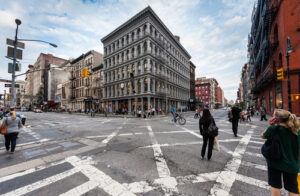
Photo: Julien Hautcoeur / Shutterstock.com
SoHo is famous for three things that seem almost contradictory when placed side by side: 19th-century cast-iron architecture, the downtown art world that transformed old manufacturing lofts into studios and homes, and the fashion and retail culture that later made those same streets some of the most recognizable shopping blocks in New York City.
The neighborhood’s name means “South of Houston Street,” but SoHo existed long before the name did. During the 19th century, the area became a major commercial and manufacturing district filled with warehouses, dry-goods businesses, workshops, and loft buildings. By the middle of the 20th century, many of those buildings had become underused and were regarded as fire hazards. Artists then began occupying the inexpensive lofts, helping save a district that planners and developers had repeatedly considered for demolition or redevelopment.
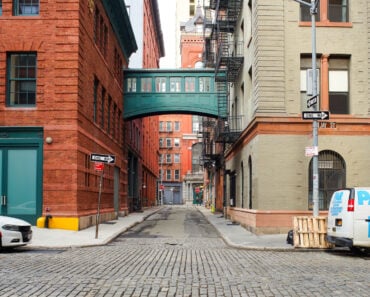
Today, SoHo is one of the best places in New York to see how a neighborhood can change without completely erasing its physical past. The cast-iron facades, large loft windows, loading-era architecture, and stone-paved side streets remain even as the uses behind them have changed dramatically.
What Is SoHo NYC Known For?
SoHo is best known for its cast-iron buildings, historic lofts, art-world history, shopping, architecture, and distinctive Lower Manhattan streetscape.
Visitors come to walk streets such as Greene, Mercer, Wooster, Prince, and Spring; see some of the finest surviving cast-iron commercial architecture in the United States; visit cultural spaces such as the Judd Foundation and The Drawing Center; and browse stores occupying former industrial loft buildings.
That mixture of architecture, art history, and retail is what makes SoHo different from a conventional shopping district. The stores are important, but the buildings containing them are a major part of the attraction.
Where Is SoHo in New York City?
SoHo is in Lower Manhattan. The name literally refers to the area south of Houston Street.
Neighborhood boundaries in New York are rarely absolute, but SoHo is generally understood as lying between Houston Street to the north and Canal Street to the south, with the historic core extending roughly between West Broadway and Crosby Street. Broader modern descriptions sometimes extend toward Sixth Avenue on the west and Lafayette Street on the east.
The official SoHo-Cast Iron Historic District has its own legally defined boundaries, which do not perfectly match every informal definition of the neighborhood. The original National Register district was described as roughly bounded by West Broadway, Houston Street, Crosby Street, and Canal Street. New York City later expanded its landmark district in 2010.
How Did SoHo Get Its Name?
SoHo means “South of Houston Street.”
The modern neighborhood name emerged during the early 1960s around a major planning study of what was then called the South Houston Industrial Area. Urban planner Chester Rapkin was asked to examine the economic condition of the district at a time when some civic groups regarded its aging loft buildings as obsolete and suitable for clearance.
Rapkin’s study, The South Houston Industrial Area, was prepared in 1962 and published in 1963. It argued that the neighborhood still contained economically important small manufacturers and thousands of jobs and that its old buildings continued to serve useful purposes.
Rapkin is widely credited with helping originate the SoHo name, although the published report itself used “South Houston” rather than consistently calling the district SoHo. Artists and neighborhood advocates increasingly adopted the shortened name later in the 1960s, and it stuck.
The name became one of New York’s most influential geographic abbreviations and helped popularize the idea of creating neighborhood names from location-based shorthand.
Why Is Houston Street Pronounced “HOW-stun”?
Visitors frequently pronounce Houston Street like Houston, Texas. New Yorkers pronounce the Manhattan street HOW-stun.
The street name predates the Texas city and has a different namesake and history. The pronunciation is one of those small New York details that quickly identifies whether someone is familiar with Lower Manhattan.
What Was SoHo Before It Became an Art District?
Before the art galleries and boutiques, the area evolved through several very different periods.
Parts of what became SoHo were residential during the early 19th century. As New York’s commercial district expanded northward, Broadway and the surrounding streets became increasingly important for retail, wholesale trade, and manufacturing.
By the middle and later decades of the 19th century, merchants and manufacturers needed large buildings with open floor space, abundant daylight, and impressive street facades. Cast-iron-fronted commercial buildings became an ideal solution.
Dry-goods firms, textile and apparel businesses, metalworking concerns, and other manufacturers occupied the district. Buildings that later became highly desirable loft residences were originally working commercial structures designed for production, storage, display, and wholesale trade.
Why Does SoHo Have So Many Cast-Iron Buildings?
Cast iron transformed commercial architecture during the 19th century because decorative architectural components could be manufactured in foundries, repeated from molds, transported to a construction site, and assembled more efficiently than comparable carved-stone ornament.
The technology also allowed building fronts to use relatively slender structural and decorative members surrounding large window openings. Those large windows brought valuable daylight deep into commercial and manufacturing lofts during an era when artificial lighting was limited and expensive.
Cast-iron fronts could imitate elaborate Renaissance, Italianate, Classical, and other historic architectural styles. Columns, arches, cornices, window surrounds, and decorative details that looked expensive could be repeated across a facade from standardized cast pieces.
New York City’s Municipal Archives describes Lower Manhattan as containing the largest concentration of full and partial cast-iron facades anywhere in the world. SoHo preserves the most famous surviving concentration of that architectural landscape.
The E.V. Haughwout Building and the First Otis Passenger Elevator
One of SoHo’s most important buildings stands at 488-492 Broadway at Broome Street.
The E.V. Haughwout & Company Building opened in 1857 as an elegant store selling china, crystal, silver, and other luxury goods. Its five-story cast-iron facade, designed by architect John P. Gaynor, became one of the great early monuments of cast-iron commercial architecture.
The building also made transportation history. On March 23, 1857, Elisha Otis installed his company’s first passenger elevator there. The safety technology Otis had famously demonstrated several years earlier helped make passenger elevators practical and eventually changed the height and internal organization of commercial buildings around the world.
The Haughwout Building survives today and remains one of the best places to begin an architectural walk through SoHo.
SoHo Becomes “Hell’s Hundred Acres”
By the middle of the 20th century, the neighborhood’s reputation had changed dramatically.
Manufacturing patterns were shifting, many loft buildings were aging, and some properties contained dangerous fire conditions. In 1960, New York City Fire Commissioner Edward F. Cavanagh Jr. began referring to a broad Lower Manhattan industrial area that included today’s SoHo as “Hell’s Hundred Acres.”
The nickname reflected genuine concern about fires in old loft and manufacturing structures. Several serious fires had killed firefighters and workers, and officials warned about combustible materials, inadequate fire protection, and deteriorating buildings.
The phrase later became shorthand for the bleak reputation of the district before artists, preservationists, and new residents transformed its public image.
The Lower Manhattan Expressway Threatens the Neighborhood
SoHo’s buildings also faced a threat far larger than fire or industrial decline.
For decades, proposals circulated for a Lower Manhattan Expressway, commonly known as LOMEX, that would have carried major automobile traffic across Lower Manhattan between river crossings and highways. Robert Moses became the plan’s most powerful advocate during the postwar era.
Versions of the expressway would have required extensive demolition across neighborhoods south of Houston Street, including areas in and around what became SoHo and Little Italy.
The expressway was never built. Opposition came from residents, preservationists, businesses, artists, civic groups, and political leaders over many years. SoHo’s survival cannot be credited to one group alone, but defeating large-scale clearance proposals was essential to preserving the building stock that later made the neighborhood famous.
Chester Rapkin’s Study Helps Change the Argument About SoHo
Another important turning point came when planner Chester Rapkin examined the South Houston Industrial Area for the City Planning Commission.
At the time, some redevelopment advocates described the neighborhood as obsolete. Rapkin found something more complicated. The old loft buildings still housed numerous small businesses and thousands of workers, including many jobs held by lower-income and minority New Yorkers.
His findings challenged the assumption that old industrial buildings had no economic value simply because they looked outdated. That argument helped create room for preservation and gradual reuse rather than wholesale clearance.
Artists Move Into SoHo’s Industrial Lofts
During the 1960s, artists increasingly discovered the same physical features manufacturers had once valued: enormous open rooms, high ceilings, large windows, freight elevators, and relatively inexpensive floor space.
The problem was that these were manufacturing buildings, not legal apartment houses. Artists frequently worked and slept in lofts where residential occupancy was not permitted.
In 1968, the SoHo Artists Association formed to organize artists, lobby city government, oppose evictions, and seek legal recognition for living and working in industrial lofts. The Smithsonian’s Archives of American Art preserves the association’s records and documents its role in the neighborhood’s transformation.
What Was the Artist-in-Residence Law?
New York gradually changed its regulations to recognize the reality that artists were living and working in former manufacturing space.
In 1971, the city’s Zoning Resolution was amended to permit qualifying Joint Living-Work Quarters for Artists in parts of SoHo. The rules required eligible occupants to meet artist requirements and allowed large industrial lofts to function legally as combined studios and homes under specific conditions.
These rules became one of the defining features of SoHo’s history, but the regulatory story did not stop in 1971. New York State’s Loft Law later created another framework for legalizing residential occupancy in certain commercial and manufacturing buildings.
Then, in December 2021, New York City adopted the SoHo/NoHo Neighborhood Plan and created the Special SoHo-NoHo Mixed Use District. New conversions to Joint Living-Work Quarters for Artists are no longer permitted within that special district, while existing qualifying units can continue and may follow a regulated path toward conventional residential use.
So the old statement that only certified artists may legally live in SoHo no longer describes the neighborhood as a whole.
Donald Judd and 101 Spring Street
Few places explain the artist-loft era better than 101 Spring Street.
Artist Donald Judd purchased the five-story cast-iron building at Spring and Mercer Streets in 1968. Constructed in 1870, the building became his New York residence and studio and a place where he developed his influential ideas about the permanent installation of art within architecture.
The Judd Foundation restored the building and opened it to the public in 2013. The artworks, furniture, and objects remain installed according to Judd’s approach, making 101 Spring Street one of the most direct surviving connections to the period when artists transformed SoHo lofts into a new form of urban living and working.
Gordon Matta-Clark, FOOD, and SoHo’s Experimental Art Scene
SoHo’s art history extended far beyond private studios.
Gordon Matta-Clark became closely associated with the neighborhood’s experimental art community. In 1971, Matta-Clark and a group of artists founded FOOD, a restaurant on Prince Street that became an informal social and working center for artists.
Artist-run galleries, cooperative spaces, performance sites, and unconventional exhibitions flourished throughout SoHo during the 1970s. The neighborhood became internationally associated with Minimalism, conceptual art, performance, large-scale installation, and new approaches to the relationship between art and architecture.
SoHo Becomes a Historic District
As artists were changing the interiors, preservationists were fighting to protect the exteriors.
New York City’s Landmarks Preservation Commission designated the SoHo-Cast Iron Historic District in 1973, formally recognizing the architectural importance of the neighborhood’s cast-iron buildings and streetscape.
In 1978, the SoHo Cast-Iron Historic District was designated a National Historic Landmark. The National Park Service recognizes its national importance for architecture and commerce.
New York City expanded the local historic district in 2010, bringing additional blocks and buildings under Landmarks Preservation Commission protection.
How SoHo Changed From Art District to Shopping District
The very qualities that attracted artists eventually made SoHo attractive to a much wealthier market.
Artists restored lofts, galleries drew visitors, preservation protected the architecture, restaurants and stores followed the crowds, and real estate values climbed. By the 1980s and 1990s, SoHo was becoming as famous for shopping as it had been for art.
Many pioneering galleries moved to Chelsea and other neighborhoods as rents increased. Large retail spaces replaced some galleries at street level, while former manufacturing and artist lofts became highly valuable residences.
This transformation is one of the classic New York examples of gentrification: a neighborhood considered obsolete became culturally desirable, and that success dramatically increased the cost of remaining there.
What Is SoHo Known For Today?
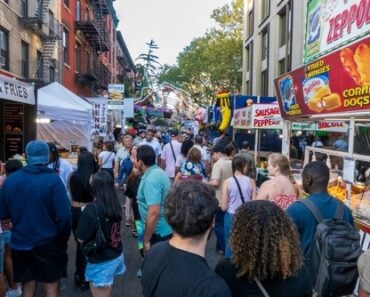
Modern SoHo is best known as a major shopping, architecture, dining, and sightseeing district.
Broadway carries large stores and heavy pedestrian traffic, while Prince and Spring Streets contain a mixture of fashion, design, restaurants, and smaller retail spaces. Greene, Mercer, and Wooster Streets offer some of the strongest architectural views, particularly where long rows of cast-iron facades remain visually intact.
Although the gallery world is no longer concentrated in SoHo as it was during the 1970s, art has not disappeared. The Judd Foundation at 101 Spring Street preserves one of the neighborhood’s most important artist spaces, and The Drawing Center at 35 Wooster Street continues to present exhibitions devoted to drawing and contemporary visual culture.
Are SoHo’s Streets Really Cobblestone?
Several SoHo streets retain the rough stone paving that visitors commonly call cobblestones. In New York, the historic roadway material is often more precisely described as Belgian block or granite block, although even city agencies sometimes use “cobblestone” as the familiar general term.
Wooster Street, Greene Street, and other side streets are particularly associated with the stone-paved appearance that has become part of SoHo’s visual identity.
The combination of stone roadway, loading-era loft buildings, metal fire escapes, cast-iron storefronts, and large windows gives these streets their unmistakable character.
Best Places to See SoHo’s Cast-Iron Architecture
Greene Street: One of the finest streets for seeing long sequences of cast-iron loft facades.
Wooster Street: Historic loft buildings, stone paving, and cultural spaces make this another essential architectural walk.
Mercer Street: Offers a strong mixture of cast-iron architecture, former artist buildings, and modern retail.
488 Broadway: The E.V. Haughwout Building is one of the most historically important individual cast-iron buildings in New York.
101 Spring Street: Donald Judd’s former home and studio combines cast-iron architecture with the history of SoHo’s artist-loft movement.
What Should You See in SoHo?
A first visit should combine architecture, art history, and the commercial streets that define SoHo today.
- Begin at the E.V. Haughwout Building at Broadway and Broome Street. Look closely at the repeating cast-iron facade and remember that Otis installed his first passenger elevator here in 1857.
- Walk west on Broome Street and north through Greene and Wooster Streets. These blocks provide some of the neighborhood’s strongest cast-iron streetscapes.
- Visit The Drawing Center at 35 Wooster Street. Check its current exhibition schedule before visiting.
- Continue toward 101 Spring Street. The Judd Foundation offers visits to Donald Judd’s preserved home and studio; advance planning is recommended.
- Walk Prince and Spring Streets. This is where SoHo’s architectural past and modern shopping identity are most visibly intertwined.
- Finish along Broadway. The avenue shows how 19th-century commercial architecture has been repeatedly adapted for new generations of New York retail.
Is SoHo Still an Art Neighborhood?
Yes, but not in the same way it was in the 1970s.
The era when dozens of experimental galleries and inexpensive artist lofts dominated the district is over. Much of the commercial art market migrated elsewhere as SoHo rents climbed.
What remains is the physical and institutional legacy of that period: preserved artist spaces, historic lofts, cultural organizations, galleries, design businesses, and a neighborhood identity still inseparable from contemporary art.
Is SoHo Worth Visiting?
SoHo is worth visiting even for people who have no interest in shopping.
The neighborhood functions as an outdoor architectural museum. Few places allow visitors to walk through such a dense concentration of 19th-century commercial buildings while also seeing the physical spaces associated with New York’s postwar art world.
The strongest visit is one that looks above the storefronts. Ground-floor tenants change constantly, but the columns, cornices, window bays, loading buildings, and loft facades tell a much longer story.
More New York Fashion and Cultural History
Readers interested in the fashion industry that helped make New York an international style capital can continue with our History of New York Fashion Week.
Sources
New York City Landmarks Preservation Commission, SoHo-Cast Iron Historic District and 2010 Extension.
National Park Service, SoHo Cast-Iron Historic District National Historic Landmark records.
New York City Municipal Archives, Lower Manhattan architectural drawings and cast-iron history.
Chester Rapkin, The South Houston Industrial Area, New York City Planning Commission, 1963.
Smithsonian Archives of American Art, SoHo Artists Association Records, 1968-1978.
New York City Department of Buildings and Department of City Planning, SoHo/NoHo zoning and Joint Living-Work Quarters for Artists.
Judd Foundation, 101 Spring Street.
The Drawing Center, 35 Wooster Street.
Otis Worldwide, company history and the 1857 Haughwout passenger elevator.
Library of Congress, Historic American Buildings Survey, E.V. Haughwout & Company Building.
SoHo History at a Glance
| Period | What Happened |
|---|---|
| Early 1800s | Parts of the future SoHo district develop as residential and commercial streets north of the older city center. |
| 1840s-1890s | Commercial and manufacturing expansion produces the cast-iron and loft architecture for which SoHo is now famous. |
| 1857 | The E.V. Haughwout Building opens at Broadway and Broome Street with Otis’s first passenger elevator. |
| 1960 | Fire Commissioner Edward F. Cavanagh Jr. uses the name “Hell’s Hundred Acres” for the fire-prone Lower Manhattan loft district. |
| 1962-1963 | Chester Rapkin studies the South Houston Industrial Area, helping challenge plans for wholesale clearance and contributing to the emergence of the SoHo name. |
| Late 1960s | Artists increasingly occupy inexpensive manufacturing lofts and organize to protect their ability to live and work there. |
| 1971 | New York zoning is amended to permit qualifying Joint Living-Work Quarters for Artists in SoHo. |
| 1973 | New York City designates the SoHo-Cast Iron Historic District. |
| 1978 | The SoHo Cast-Iron Historic District becomes a National Historic Landmark. |
| 1980s-1990s | Rising real estate values and retail expansion accelerate SoHo’s transition from gallery district to major shopping destination. |
| 2010 | New York City expands the SoHo-Cast Iron Historic District. |
| 2021 | The SoHo/NoHo Neighborhood Plan creates a new mixed-use zoning framework and changes the future of artist-only live/work regulation. |
| Today | SoHo remains internationally known for cast-iron architecture, shopping, art history, historic lofts, and Lower Manhattan street life. |
Published August 12, 2026.
What Is SoHo Known For? History, Cast-Iron Architecture & Evolution article published on ClassicNewYorkHistory.com © 2026