
Long before Batman fought crime in comic-book panels or caped crusaders watched over fictional skylines, New York City had already claimed Gotham as one of its most mysterious and enduring nicknames.
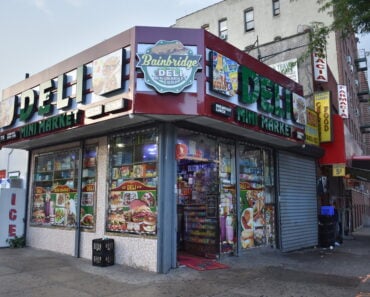
Today, the name appears throughout the city in places such as Gotham Comedy Club, Gotham Hall, and the Gotham Lounge inside the Peninsula New York. It also survives in the wider metropolitan area through Gotham FC and in New York history through institutions such as the early Gotham Base Ball Club.
But where did the name actually come from? Was it invented by comic-book creators in the twentieth century, or does it have much older roots?
The answer reaches back more than two centuries to a satirical periodical published in 1807 by Washington Irving and his collaborators. Behind Irving’s joke stood an even older English legend about a village whose residents supposedly pretended to be fools to outsmart a king.
Here is the history of how New York City became known as Gotham.
Direct Answer: Who First Called New York Gotham?
The New York City nickname Gotham is credited to Washington Irving, the author later celebrated for “The Legend of Sleepy Hollow” and “Rip Van Winkle.”
Irving attached the name Gotham to New York in the November 11, 1807, issue of Salmagundi, a satirical periodical he created with his brother William Irving and their friend James Kirke Paulding. The writers published under several fictional names, including Launcelot Langstaff and Will Wizard.
Gotham was not originally intended as a dark or heroic name. Irving used it to mock New York’s politics, culture, and self-important social elite. The joke only makes sense once you know the English folklore behind it.
The English Roots of Gotham
Gotham is the name of a real village in Nottinghamshire, England. Its name comes from Old English words commonly interpreted as meaning “goat homestead” or “goat village.”
By the late Middle Ages, Gotham had also become famous through stories about the “Wise Men of Gotham.” The title was ironic. The villagers in these tales behaved like fools, although their foolishness sometimes concealed a clever purpose.
The best-known legend involves King John. One version says the king planned to travel through Gotham, which could have turned the route into a royal highway and burdened the village with its upkeep. Another version says he wanted to establish a royal hunting lodge and impose restrictive forest laws.
According to the story, the villagers decided that the safest response was to pretend that the entire community had gone mad. When the king’s representatives arrived, they supposedly found residents attempting ridiculous tasks. Later versions of the tales described them trying to drown an eel, rolling cheeses downhill so they could find their own way to market, and building a fence around a tree to keep a cuckoo from escaping.
The officials concluded that Gotham was populated by fools and advised the king to stay away. The villagers escaped the royal intrusion, proving that there may have been wisdom hidden beneath their apparent madness.
Whether any part of the story actually happened is impossible to establish. It belongs to English folklore, not verified medieval history. What matters is that Gotham became a familiar literary name for a community of people who believed themselves wise while behaving foolishly.
Washington Irving Turns Gotham Into New York
By 1807, New York City was growing rapidly as a center of commerce, politics, and social ambition. Its wealthy merchants, politicians, theatergoers, and fashionable families provided perfect material for a young satirist.
Washington Irving, William Irving, and James Kirke Paulding created Salmagundi; or, The Whim-Whams and Opinions of Launcelot Langstaff, Esq. & Others to make fun of the city’s manners and pretensions. The irregular periodical produced twenty issues between January 1807 and January 1808.
Irving borrowed Gotham from the English tales because the comparison suited his purpose. By calling New York Gotham and its residents Gothamites, he was comparing the supposedly sophisticated city to a legendary village of fools.
The first attachment of Gotham to New York appeared in the issue dated November 11, 1807. Later that month, Salmagundi published “Of the Chronicles of the Renowned and Antient City of Gotham,” which described New York through the exaggerated language of a mock medieval chronicle.
What began as a literary insult proved too memorable to disappear. The nickname outlived the joke, the magazine, and Irving himself. Over time, Gotham lost much of its mocking edge and became a dramatic, dignified, and sometimes affectionate synonym for New York City.
Why the Nickname Survived
Gotham worked because it could mean different things to different generations. Irving’s readers understood the reference to foolish villagers. Later writers used the word because it sounded literary and grand. Newspaper columnists found it more colorful than repeating New York City over and over again.
The name also possesses a darker sound that seems to fit the city’s narrow streets, towering buildings, political scandals, nighttime energy, and constant air of mystery. That atmosphere eventually made Gotham an ideal name for the fictional home of Batman.
By the time comic books adopted it, Gotham had already been associated with New York for more than 130 years.
How Gotham Became Batman’s City
Batman debuted in Detective Comics #27 in 1939. The earliest stories used New York references, but the character’s home had not yet received the permanent fictional identity readers know today.
Gotham City was first identified in Batman #4, cover-dated Winter 1940. The issue referred to the Gotham Gazette, establishing the name of Batman’s city and separating his world from literal New York.
Writer Bill Finger later recalled that he considered names such as Civic City, Capital City, and Coast City. While searching a New York telephone directory, he noticed Gotham Jewelers and realized that Gotham City provided the right balance. It sounded like a real place, but it was broad enough to belong to readers everywhere.
The decision allowed Batman’s city to borrow New York’s scale, architecture, congestion, wealth, corruption, and danger without being restricted by the geography of the actual five boroughs. Different writers and artists could reshape Gotham to fit each story.
Comic-book Gotham became darker and more gothic over time, but it did not create New York’s nickname. Batman inherited a name Washington Irving had attached to the city in 1807.
New York and the Two Meanings of Gotham
The real New York and Batman’s fictional Gotham now reinforce each other. When New Yorkers use Gotham, they may be referring to Irving’s historic nickname, the city’s nocturnal personality, or the comic-book metropolis. All three meanings have become intertwined.
The familiar comparison that Metropolis resembles New York by day while Gotham resembles New York at night captures the difference perfectly. Metropolis represents the city’s brightness, speed, and optimism. Gotham represents its shadows, secrets, gargoyles, alleys, and danger.
That darker image did not erase Irving’s original satire. It added another layer to a nickname that had already survived for more than a century.
Historic and Modern Uses of Gotham in New York
The name moved far beyond literature and comic books. Baseball historian William Wheaton later recalled helping organize the Gotham Base Ball Club in New York in 1837, placing the nickname within the earliest history of organized baseball.
The Gotham Hotel opened on Fifth Avenue in 1905. Its landmark building later became the Peninsula New York, where the Gotham name still survives in the hotel’s Gotham Lounge.
Gotham Gazette covered New York government, politics, and public policy from 1999 through 2023. Although it is no longer updated, its archive preserves another major civic use of the nickname.
The name remains alive in current institutions and businesses, including Gotham Comedy Club in Chelsea and Gotham Hall near Herald Square. In the wider New York metropolitan region, Gotham FC uses the nickname for a professional women’s soccer team representing New York and New Jersey.
Each example draws on the same idea: Gotham is not merely another name for a place. It suggests a version of New York filled with personality, drama, ambition, and history.
Classic New York History Fact: Irving Also Gave Us Knickerbocker
Gotham was not Washington Irving’s only lasting contribution to New York’s identity.
In 1809, Irving published the satirical A History of New-York from the Beginning of the World to the End of the Dutch Dynasty under the fictional name Diedrich Knickerbocker. The supposed Dutch historian became so closely associated with old New York families that Knickerbocker developed into a nickname for New Yorkers themselves.
The name later inspired the New York Knickerbockers basketball team, better known as the Knicks. That means Washington Irving helped give New York both Gotham and Knickerbocker, two names that remain woven into the city’s culture.
Why New York Is Called Gotham at a Glance
| Era | Meaning | Key Source or Figure |
|---|---|---|
| Medieval England | A village associated with comic tales about apparently foolish residents | The folklore of the Wise Men of Gotham |
| 1807 | A satirical nickname for New York City and its social elite | Washington Irving and Salmagundi |
| Nineteenth and early twentieth centuries | A literary and journalistic synonym for New York City | Newspapers, writers, businesses, and civic culture |
| Winter 1940 | The fictional metropolis that became Batman’s permanent home | Bill Finger, Bob Kane, and Batman #4 |
| Today | A historic New York nickname and a global symbol of a dark urban metropolis | New York culture and the Batman franchise |
More Washington Irving and New York City History
For more on the writer who gave New York the Gotham nickname, explore our look at the life of Washington Irving, Sleepy Hollow, and the American short story. Readers can also discover how Irving’s fictional Diedrich Knickerbocker influenced the name of the city’s basketball team in our complete history of the New York Knicks, or browse our New York History Article Directory.
Updated August 3, 2026.
Why Is New York Called Gotham? History of the Iconic Nickname article published on ClassicNewYorkHistory.com © 2026