
Feature Photo: Debby Wong / Shutterstock.com
Where do we begin when covering the complete history of the New York Yankees? When it comes to a team that’s rich with history, there are few that can hold a candle to what they’ve accomplished. The New York franchise that became the Yankees began play in 1903, growing out of the American League’s short-lived Baltimore club of 1901 and 1902. Since arriving in New York, the Yankees have become one of the most successful and recognizable franchises in professional sports. Despite all the ups and downs, one thing the Yankees have never had a problem providing is entertainment, whether it’s intentional or not.
American League Baseball
Prior to becoming a major league, the American League was originally known as the Western League. Its powerful president, Ban Johnson, reorganized the circuit and declared it a major league in 1901, challenging the already established National League.
Johnson wanted an American League team in New York City, but the National League’s New York Giants strongly opposed the idea. Instead, the new American League operated a team in Baltimore in 1901 and 1902. The Orioles’ manager and part owner was John McGraw. Neither McGraw nor Johnson got along, and when McGraw left during the 1902 season to manage the National League’s Giants, several Baltimore players followed or were transferred elsewhere. The Baltimore operation collapsed by the end of the season.
The Highlanders
In 1903, peace between the American and National leagues helped clear the way for an American League franchise in New York. Frank J. Farrell and William S. Devery purchased the rights to the defunct Baltimore franchise and moved the club to Manhattan.
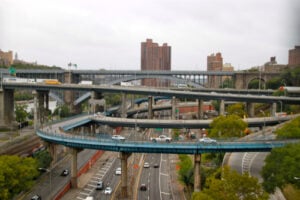
The team’s new ballpark was constructed at Broadway and 168th Street in Washington Heights. Because the site was one of the highest points in Manhattan, the team became known as the New York Highlanders and the ballpark as Hilltop Park. The nickname “Yankees” also began appearing in newspapers as early as 1904 because it was shorter and easier to fit into headlines.
As the Highlanders, the team finished second in the American League in 1904, 1906, and 1910. One of its important early rivals was Boston’s American League club, which officially adopted the Red Sox name in 1908. That rivalry would eventually become one of the most famous in American sports.
Family Feud
The rivalry between the Highlanders and the New York Giants had roots in John McGraw’s departure from Baltimore. Even though the two teams competed in different leagues, McGraw’s Giants and the American League newcomers became natural New York rivals.
When a section of the Polo Grounds, home of the Giants, was destroyed by fire in 1911, the Giants temporarily played their home games at Hilltop Park. For roughly two months, the supposedly hostile neighbors had to share space before the rebuilt Polo Grounds was ready.
After the Highlanders’ lease at Hilltop Park ended, the team moved into the Polo Grounds in 1913 and shared the stadium with the Giants through 1922. The club officially adopted the name New York Yankees in 1913, although newspapers and fans had been using the Yankees nickname for years.
Financial problems eventually led Farrell and Devery to sell the Yankees in January 1915 to Colonel Jacob Ruppert and Colonel Tillinghast L’Hommedieu Huston for $1.25 million. Miller Huggins became manager before the 1918 season, and Ed Barrow joined the organization as business manager in 1920. Ruppert eventually bought out Huston’s share in 1922, leaving Ruppert in control of the club as the Yankees entered the era that would transform them forever.
The Bold and the Bambino
The transaction that changed the New York Yankees, the Boston Red Sox, and baseball itself came when the Yankees acquired Babe Ruth from Boston. The deal was announced after the 1919 season and became official in January 1920. The Yankees paid $125,000 for Ruth’s contract and also provided a substantial loan secured by Fenway Park.
What Babe Ruth did for the New York Yankees and for baseball was legendary. His home-run power attracted enormous crowds, helped move baseball away from the dead-ball era, and turned the Yankees into one of the biggest attractions in the sport. The Yankees soon began drawing more spectators than the Giants, even while playing as tenants in the Giants’ own ballpark.

Photo:Nathaniel Fein, Public domain, via Wikimedia Commons
The Yankees reached their first World Series in 1921, losing to the Giants. The two clubs met again in 1922, with the Giants winning once more. By then, the Yankees’ success and growing attendance had made their tenancy at the Polo Grounds increasingly uncomfortable.
Rather than moving far from Manhattan, the Yankees built a monumental new ballpark in the Bronx. Yankee Stadium stood just across the Harlem River from the Polo Grounds, close enough that the two rival stadiums remained visible from opposite sides of the river.
Establishing an Era
Ruppert’s decision to surround the organization with capable baseball men such as Huggins and Barrow helped transform the Yankees. Babe Ruth provided the superstar attraction, but the organization around him built a club capable of winning year after year.
When the Yankees opened their newly built Yankee Stadium on April 18, 1923, a reported crowd of approximately 74,200 filled the new ballpark. The Yankees defeated the Boston Red Sox 4-1, and Babe Ruth hit the first home run in the stadium’s history.
There’s a reason why the old Yankee Stadium became known as “The House That Ruth Built.” Ruth’s popularity had helped create the need for a stadium far larger than anything the Yankees had previously called home. Yankee Stadium became one of the most recognizable sports venues in the world.
After losing the 1921 and 1922 World Series to the Giants, the Yankees finally defeated their New York rivals in 1923. The victory gave the Yankees their first World Series championship and announced that New York baseball had entered a new era.
Murderer’s Row
The 1927 New York Yankees produced one of the most celebrated lineups in baseball history. Known as Murderer’s Row, the club won 110 games and swept the Pittsburgh Pirates in the World Series. Babe Ruth hit sixty home runs, establishing a major league single-season record that stood until Roger Maris hit sixty-one in 1961.
While Ruth was wowing the crowd with home runs, teammate Lou Gehrig enjoyed a magnificent season of his own, batting in 175 runs and hitting forty-seven home runs. Gehrig was named the American League’s Most Valuable Player. Ruth and Gehrig helped lead the Yankees to another World Series championship in 1928.
Joe McCarthy became manager in 1931 and soon guided another great Yankees era. In 1932, the Yankees swept the Chicago Cubs in the World Series. That series produced one of baseball’s enduring legends: Babe Ruth’s supposed “called shot” at Wrigley Field. Whether Ruth actually pointed to center field to predict his home run has been debated ever since, but the story became part of baseball folklore.
Hellos and Goodbyes
After the 1934 season, Babe Ruth left the Yankees and joined the Boston Braves in 1935. His stay there was brief, and he retired during the season. The Yankees were already preparing for a new generation.
Lou Gehrig had spent years starring alongside Ruth and became one of the greatest players in franchise history in his own right. Then another superstar arrived. The Yankees purchased Joe DiMaggio from the San Francisco Seals in 1934, and he made his major league debut in 1936.
From 1936 through 1939, DiMaggio helped lead the Yankees to four consecutive World Series championships. Gehrig remained an essential part of the first three. In 1939, however, his legendary streak of 2,130 consecutive games ended as amyotrophic lateral sclerosis forced him from the lineup.
On July 4, 1939, the Yankees honored Gehrig at Yankee Stadium and retired his number 4, making it the first uniform number retired by a Major League Baseball team. His famous farewell speech remains one of the most emotional moments in sports history. Gehrig died on June 2, 1941, at only thirty-seven years old.
That same summer, Joe DiMaggio produced one of baseball’s most enduring records with a hit in fifty-six consecutive games. The streak ended on July 17, 1941, in Cleveland. Months later, the United States entered World War II, and baseball, like the rest of the country, was profoundly affected by the war.
Transfers
In January 1945, the estate of Jacob Ruppert sold the Yankees for $2.8 million to a partnership of Larry MacPhail, Dan Topping, and Del Webb. MacPhail ran the club’s business operations until after the Yankees won the 1947 World Series, when he sold his interest to Topping and Webb.
World War II had disrupted careers throughout baseball. Joe McCarthy’s long tenure as Yankees manager ended during the 1946 season. Bucky Harris took over in 1947 and immediately led New York to another World Series championship.
Casey Stengel replaced Harris before the 1949 season. At first, some wondered whether Stengel was the right man for the job. He answered those doubts in spectacular fashion.
Taking the Mantle
From 1949 through 1953, the Yankees won five consecutive World Series championships, a major league record that still stands. Joe DiMaggio retired after the 1951 season, but another generation of Yankees had already begun taking shape.
Mickey Mantle made his major league debut in 1951 and joined a roster that also included Yogi Berra and, before long, Whitey Ford as a full-time star. Together with a deep supporting cast, they carried the Yankees through another extraordinary period of success.
Damn Yankees
The Cleveland Indians prevented the Yankees from winning a sixth consecutive American League pennant in 1954. New York won 103 games, but Cleveland won 111 and captured the pennant. The season inspired Douglass Wallop’s novel The Year the Yankees Lost the Pennant, which became the basis for the hit musical Damn Yankees.
The Yankees returned to the World Series in 1955 but lost to the Brooklyn Dodgers, who finally defeated their Bronx rivals after years of frustration. Redemption came in 1956 when Don Larsen threw the only perfect game in World Series history, defeating Brooklyn in Game 5 at Yankee Stadium.
The 1957 World Series ended in disappointment when the Yankees lost to the Milwaukee Braves. That same year, the Brooklyn Dodgers and New York Giants played their final seasons in New York before moving to Los Angeles and San Francisco. Beginning in 1958, the Yankees became New York City’s only Major League Baseball team until the Mets arrived in 1962.
The 1950s had been another remarkable Yankees decade. The team appeared in eight World Series and won six championships during the decade.
Too Little Too Late
The Yankees entered the 1960s still loaded with talent. Roger Maris arrived from the Kansas City Athletics before the 1960 season and immediately made an impact, hitting thirty-nine home runs, driving in 112 runs, winning a Gold Glove, and earning the American League Most Valuable Player Award.
In 1961, Mickey Mantle and Roger Maris became known as the M&M Boys as they chased Babe Ruth’s single-season home-run record. Mantle’s pursuit ended because of illness and injury, while Maris kept going. On October 1, 1961, Maris hit his sixty-first home run in the final game of the season.
The achievement generated controversy because the American League schedule had expanded from 154 to 162 games. Commissioner Ford Frick said records accomplished under the longer schedule should be distinguished from those set under the old schedule. Contrary to a long-running baseball myth, Major League Baseball never officially placed an asterisk next to Maris’ record.

Photo: New York Yankees, Public domain, via Wikimedia Commons
The Yankees won the 1961 World Series and repeated as champions in 1962. The 1962 season was also the first for the New York Mets. Before moving into Shea Stadium, the Mets played their first two seasons at the Polo Grounds.
The Yankees defeated the San Francisco Giants in the 1962 World Series, but the championship would be their last for fifteen years. They won the American League pennant again in 1963 and 1964 but lost the World Series to the Los Angeles Dodgers and St. Louis Cardinals.
Going Downhill
After the 1964 season, the aging Yankees entered a long decline. CBS purchased eighty percent of the team for $11.2 million in November 1964 and later acquired the remaining shares.
The 1965 Yankees finished 77-85, their first losing season since 1925. In 1966, they fell to last place in the American League for the first time since 1912.
The Yankees struggled to replace an aging championship core. The amateur draft, expansion, changing player-development systems, and years of uneven decisions all played roles in a decline that made the powerhouse of the 1950s and early 1960s look increasingly distant.
Steinbrenner’s Saga
On January 3, 1973, a group of investors led by George M. Steinbrenner III purchased the Yankees from CBS. Steinbrenner became the managing general partner and would eventually emerge as the dominant figure in the ownership group.
One of the organization’s biggest challenges was the deteriorating condition of Yankee Stadium. New York City and the Yankees agreed on a major reconstruction of the old ballpark. While the work was underway, the Yankees played the 1974 and 1975 seasons at Shea Stadium. The remodeled Yankee Stadium reopened in 1976.
Steinbrenner also introduced a strict grooming policy for uniformed personnel. For nearly fifty years, Yankees players were required to keep their hair neatly trimmed and were prohibited from wearing beards. That famous rule finally changed in February 2025, when Hal Steinbrenner announced that players and uniformed personnel could wear well-groomed beards.
Another major move came after the 1974 season when pitcher Catfish Hunter was declared a free agent following a contract dispute with the Oakland Athletics. The Yankees signed him to a then-record five-year contract. Hunter’s signing became one of the most important early examples of baseball’s rapidly changing player market.
Mad Mad World
Billy Martin became Yankees manager during the 1975 season and led the team back to the World Series in 1976. The Cincinnati Reds and their Big Red Machine lineup swept the Yankees, but New York’s return to the Fall Classic signaled that the club was once again a serious championship contender.
Then came Reggie Jackson. After spending the 1976 season with the Baltimore Orioles, Jackson signed a five-year contract with the Yankees in November 1976.
The 1977 Yankees won the World Series, but the season became just as famous for the clashes among Jackson, manager Billy Martin, captain Thurman Munson, and Steinbrenner. Jackson’s three home runs in Game 6 of the World Series made him “Mr. October” and gave the Yankees their first championship since 1962.
The drama continued in 1978. Martin and Jackson clashed again, and Martin ultimately resigned as manager in July before Bob Lemon took over. The Yankees then completed one of baseball’s great comebacks, overcoming a fourteen-game deficit against Boston and winning a one-game playoff at Fenway Park on Bucky Dent’s famous home run. New York went on to defeat the Dodgers in the World Series for a second straight championship.
Making matters even more interesting were the incredibly zealous fans who packed Yankee Stadium. The combination of the team’s internal feuds, Steinbrenner’s volatility, and the rough image of the Bronx during the late 1970s inspired the nickname “the Bronx Zoo.”
Twisted Fates
Despite all the turmoil, the Yankees maintained a winning track record. In September 1978, New York swept a four-game series at Fenway Park by scores of 15-3, 13-2, 7-0, and 7-4. The humiliation became known as the “Boston Massacre” and helped erase Boston’s once-commanding division lead.
Billy Martin returned to manage the Yankees in 1979, but the decade ended with tragedy. On August 2, 1979, Yankees captain Thurman Munson died in an airplane accident in Ohio at only thirty-two years old.
The Yankees immediately retired Munson’s number 15 and kept his locker empty. When the new Yankee Stadium opened in 2009, that locker was moved into the Yankees Museum.
Several days after Munson’s death, the Yankees flew to Canton, Ohio, for his funeral and returned to New York for a game against the Baltimore Orioles that night. Bobby Murcer, one of Munson’s closest friends, drove in all five Yankees runs in an emotional 5-4 victory, hitting a three-run home run and then delivering the game-winning two-run single.
Strikes and Deals
The Yankees won the American League East in 1980 under manager Dick Howser but lost the AL Championship Series to the Kansas City Royals. Reggie Jackson hit .300 with forty-one home runs, one of his best seasons in pinstripes.
Before the 1981 season, the Yankees signed Dave Winfield to a ten-year contract. A disagreement over the interpretation of the contract eventually grew into one of Steinbrenner’s ugliest feuds with a player.
The 1981 season was interrupted by a players’ strike centered largely on the owners’ demand for compensation when clubs lost free agents. The season resumed with a split-season playoff format. The Yankees reached the World Series but lost to the Los Angeles Dodgers.
Those Damn Yankees
The 1980s became a frustrating decade for Yankees fans. The team often had talented players and regularly posted winning records, but it did not return to the World Series after 1981.
Steinbrenner’s constant pressure to win immediately led to repeated managerial changes and aggressive trades. Young pitchers who later became successful elsewhere, including Doug Drabek, Al Leiter, and José Rijo, passed through the organization during a period when the Yankees too often sacrificed long-term development for short-term solutions.
By 1990, the Yankees had fallen to last place. Around the same period, fans increasingly taunted the Boston Red Sox with chants of “1918,” a reference to Boston’s last World Series championship. The right-field bleachers also developed the loud, organized fan culture that became associated with the Bleacher Creatures.
Adding to the drama, Steinbrenner paid gambler Howard Spira for damaging information about Dave Winfield. Major League Baseball Commissioner Fay Vincent barred Steinbrenner from the Yankees’ day-to-day management in 1990. Steinbrenner returned to control of the club in 1993.
During Steinbrenner’s absence, general manager Gene Michael and manager Buck Showalter emphasized player development and resisted trading away the organization’s best young talent. That change helped create the foundation for the dynasty that followed.
In 1994, the Yankees had the best record in the American League when a players’ strike ended the season in August and canceled the postseason. In 1995, New York reached the playoffs for the first time since 1981 but lost a dramatic Division Series to the Seattle Mariners.
Torre, Torre
Joe Torre became Yankees manager before the 1996 season, replacing Buck Showalter. Rookie shortstop Derek Jeter won the American League Rookie of the Year Award, while young players such as Andy Pettitte and Mariano Rivera became central pieces of a new championship team.
The Yankees won the American League East and then defeated the Atlanta Braves in the 1996 World Series. It was the franchise’s first championship since 1978 and the beginning of another Yankees dynasty.
After the 1997 season, general manager Bob Watson stepped down and Brian Cashman took over. The 1998 Yankees then produced one of the greatest seasons in baseball history, winning an American League-record 114 regular-season games.
David Wells threw a perfect game on May 17, 1998. The Yankees then won eleven postseason games, sweeping the San Diego Padres in the World Series and finishing the year with 125 total victories between the regular season and postseason.
The Yankees won another championship in 1999 and then met the New York Mets in the 2000 World Series. The Yankees defeated the Mets in five games, winning their third consecutive World Series and fourth championship in five seasons.
21st Century Boys
2001 was a year unlike any other in New York. After the terrorist attacks of September 11, baseball became one of the places where the city gathered and tried to find some sense of normalcy. The Yankees reached the World Series and played several unforgettable games at Yankee Stadium, but the Arizona Diamondbacks won the championship in Game 7.
Derek Jeter earned the nickname “Mr. November” after hitting a walk-off home run just after midnight in Game 4, which had begun on October 31 and ended in the first World Series game ever completed in November.
The 2002 Yankees won 103 games and the American League East but did not reach the World Series. The eventual champion Anaheim Angels eliminated New York in four games in the Division Series.
In 2003, the Yankees defeated Boston in a classic seven-game AL Championship Series, highlighted by Aaron Boone’s walk-off home run in the eleventh inning of Game 7. The Yankees then lost the World Series to the Florida Marlins in six games.
In 2004, the Yankees added Alex Rodriguez and won another division title. Their season ended in one of the most painful collapses in franchise history when Boston became the first Major League Baseball team to overcome a three-games-to-none deficit in a best-of-seven series. The Red Sox then swept St. Louis in the World Series to win their first championship since 1918, finally ending the so-called Curse of the Bambino.
Alex Rodriguez won the American League Most Valuable Player Award in 2005, becoming the first Yankee to win the award since Don Mattingly in 1985. The Yankees continued winning division titles, but the World Series remained out of reach.
In 2006, the Yankees won the American League East for the ninth consecutive season. That October brought tragedy when pitcher Cory Lidle died after the small aircraft he was piloting crashed into a Manhattan apartment building.
Movement
Joe Torre left the Yankees after the 2007 season when the two sides could not reach agreement on a new contract. Former Yankees catcher Joe Girardi became the new manager.
2008 marked the final season at the original Yankee Stadium. The final game took place on September 21, when the Yankees defeated the Baltimore Orioles. Derek Jeter addressed the crowd afterward as the organization said goodbye to a ballpark that had defined generations of New York baseball.
When the Yankees began play in the new Yankee Stadium in 2009, the season ended in the best possible way. New York defeated the Philadelphia Phillies in six games to win the franchise’s twenty-seventh World Series championship.
The 2010s
The 2010 season brought the deaths of three major figures from Yankees history. Legendary public-address announcer Bob Sheppard died on July 11. Principal owner George Steinbrenner died on July 13. Former Yankees player and manager Ralph Houk died on July 21.
The Yankees remained competitive throughout the decade but could not return to the World Series. In 2011, they became the first team in Major League history to hit three grand slams in one game when Robinson Canó, Russell Martin, and Curtis Granderson accomplished the feat against the Oakland Athletics.
The 2012 Yankees won the American League East and reached the AL Championship Series, where the Detroit Tigers swept them in four games.
In 2013, injuries and age caught up with much of the roster. Mariano Rivera retired at the end of the season, and Derek Jeter followed after 2014. Alex Rodriguez missed the entire 2014 season after an arbitrator reduced Major League Baseball’s Biogenesis-related suspension from 211 games to 162 games plus the postseason.
The Yankees returned to the postseason in 2015 but lost the American League Wild Card Game to the Houston Astros. A year later, the front office made a dramatic decision to trade veterans and rebuild around younger players.
That transition quickly produced results. Aaron Judge emerged as a superstar in 2017, hitting fifty-two home runs and winning the American League Rookie of the Year Award. The Yankees reached Game 7 of the AL Championship Series before losing to Houston.
New York returned to the postseason in 2018 and lost to Boston in the Division Series. In 2019, the Yankees won 103 games and reached the AL Championship Series, only to lose again to Houston.
The Judge Era
The pandemic-shortened 2020 season consisted of only sixty regular-season games. The Yankees reached the postseason but lost the Division Series to the Tampa Bay Rays.
In 2021, the Yankees won ninety-two games but lost the American League Wild Card Game to the Boston Red Sox. The owners then locked out the players after the collective bargaining agreement expired in December, delaying the start of the 2022 season.
Once baseball resumed, Aaron Judge produced one of the greatest individual seasons in Yankees history. In 2022, Judge hit sixty-two home runs, breaking Roger Maris’ American League and Yankees single-season record. Judge won the American League Most Valuable Player Award, and the Yankees won ninety-nine games and the AL East before being swept by Houston in the AL Championship Series.
Judge was named Yankees captain before the 2023 season, becoming the first player to hold the title since Derek Jeter. The season itself was a disappointment. New York finished 82-80 and missed the postseason for the first time since 2016.
Back to the World Series
The Yankees responded in 2024 by returning to the top of the American League. With Aaron Judge and Juan Soto anchoring the lineup, New York won ninety-four games and captured the AL East. Judge hit fifty-eight home runs and won his second American League Most Valuable Player Award unanimously.
More importantly for the franchise, the Yankees defeated Kansas City in the Division Series and Cleveland in the AL Championship Series to win their forty-first American League pennant. It was their first trip to the World Series since 2009.
The opponent was the Los Angeles Dodgers. New York fell behind three games to none before winning Game 4 behind Anthony Volpe’s grand slam. In Game 5, the Yankees built a 5-0 lead but committed a series of defensive mistakes during a disastrous fifth inning. Los Angeles came back to win 7-6 and captured the World Series in five games.
The Yankees returned to the postseason in 2025. Aaron Judge delivered another remarkable year, winning his first American League batting title with a .331 average while hitting fifty-three home runs. He went on to win his third American League Most Valuable Player Award.
New York defeated the Boston Red Sox in three games in the 2025 American League Wild Card Series. The season ended in the Division Series, where the Toronto Blue Jays defeated the Yankees three games to one.
Today’s Yankees
The New York Yankees remain controlled by the Steinbrenner family through Yankee Global Enterprises. Hal Steinbrenner serves as managing general partner and chairperson, while Brian Cashman continues as senior vice president and general manager.
As the calendar turns toward September 2026, the Yankees remain in the American League postseason race. The season is still underway, so the final chapter of 2026 has yet to be written.
The franchise’s record now includes twenty-seven World Series championships and forty-one American League pennants. No Major League Baseball team has won more World Series titles.
The Yankees’ history is filled with names that became larger than the sport itself: Babe Ruth, Lou Gehrig, Joe DiMaggio, Mickey Mantle, Yogi Berra, Whitey Ford, Phil Rizzuto, Thurman Munson, Reggie Jackson, Don Mattingly, Mariano Rivera, Derek Jeter, and Aaron Judge, among so many others. For more than a century, the Yankees have been part of New York history as much as baseball history.

Photo: Andrew F. Kazmierski / Shutterstock.com
Readers who want to continue exploring Yankees history can visit our complete history of Yankee Stadium, see how the original Yankee Stadium was constructed in 1923, look back at Bobby Murcer’s three-home-run game at Yankee Stadium in 1973, and explore the complete history of the New York Mets.
Sources
New York Yankees — Official Historical Timeline
New York Yankees — Year-by-Year Results
New York Yankees — Franchise Awards
MLB.com — Yankees 2024 Season and World Series Run in Review
MLB.com — 2025 Postseason History
New York Yankees — 2025 Facial Hair Policy Change
MLB.com — 2026 Major League Standings
Complete History Of The New York Yankees – ClassicNewYorkHistory.com © 2026
ClassicNewYorkHistory.com claims ownership of all its original content and Intellectual property under United States Copyright laws and those of all other foreign countries. No one person, business or any organizations is allowed to republish any of our original content anywhere on the web or in print without our permission.