Standing above Park Avenue with traffic flowing beneath its grand archway, the Helmsley Building is one of Manhattan’s most recognizable skyscrapers. Originally built as the New York Central Building during the great railroad era, this architectural landmark has witnessed nearly a century of New York City’s growth, surviving changing owners, changing names, and dramatic transformations while remaining one of Midtown Manhattan’s defining landmarks.

Photo: Phil Roeder from Des Moines, IA, USA, CC BY 2.0 <https://creativecommons.org/licenses/by/2.0>, via Wikimedia Commons
The first issue one encounters when writing the history of many of New York City’s famous buildings is what name to give the article. The problem is that many of these famous buildings have been bought and sold over time, resulting in various name changes. New Yorkers tend to stick to one name for a building. However, that name tends to refer to the time period in which they grew up. The Helmsley Building is a great example of a building that goes by different names among New Yorkers from various generations. The building was originally named the New York Central Building when it was first erected in the 1920s. In the 1950s, the building was renamed the New York General Building. Twenty years later, it underwent another name change in the 1970s, becoming The Helmsley Building. It’s safe to say that most New Yorkers under 60 refer to the building as the Helmsley Building.
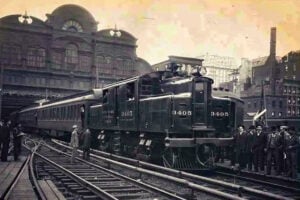
Transport has been at the forefront of every flourishing city since the birth of the United States. Leading the way was the development of the railroads. In New York City, the New York Central Railroad connected the city to upstate New York, Boston, and other Northeastern cities, as well as some in the Midwest. It was a vital connection that heavily contributed to the growth of New York City. Originally, the train lines were led by big steam locomotives. However, these coal-powered locomotives eventually caused issues in the tunnels they passed through into New York City. In the early 1900’s, steam locomotives were banned from entering the tunnels. New York City then developed electric lines that extended into mid-Manhattan, and a new terminal, Grand Central Terminal, was built. Just like in the Old West, life sprouts heavily around train stations. The area around Grand Central Terminal was marked for big-time development.
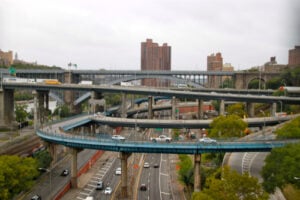
The area surrounding Grand Central Terminal was named Terminal City. This was on Park Avenue between 41st and 46th streets. Buildings were proposed and roadways enhanced. Out of this development of Terminal City came plans for a large building on Park Avenue, with the viaduct roadway built during the construction of Grand Central Terminal to run beneath the new building, connecting the north and south sides of Park Avenue. The project utilized resources from both the private owners of Grand Central Terminal and city government.
The New York City architecture firm of Warren and Wetmore was hired to design the new building. Warren and Wetmore had already been responsible for designing many well-known buildings and public transportation hubs on the East Coast of the United States as well as many buildings in Canada. The firm would play a significant role in the development of buildings in Manhattan in the 1920s and 30s. Construction began on what would become the New York Central Building in December of 1926. It took a long time to complete the New York Central Building; it was not until September of 1929 that it was finally finished. The New York Central Building was breathtaking when first completed. At 540 feet tall, it was a symbol of the power of the New York Central Railroad. The Railroad bragged that their building was taller than the Washington Monument. (1)
When the New York Central Railroad went bankrupt in the 1950s, the New York Central Building was sold and renamed the New York General Building. The story everyone loves to tell is how the new owners of the building saved money by replacing the G and E in Central with a C and T on the building’s nameplate. The ownership of the New York General Building would be transferred to Harry Helmsley when Helmsley’s company, Helmsley-Spear Management, purchased the building in 1977. Harry Helmsley was a powerful New York Real Estate mogul. In 1954, Helmsley had purchased the Lincoln Building in New York City. Seven years later, Harry Helmsley would purchase the most famous building in New York City that we all know as the Empire State Building.
After purchasing the New York General Building, Harry Helmsley poured money into the fifty-year-old building, completely refurbishing its interior and exterior. The original green roof of the New York General Building was completely gilded, as well as many of the building’s other structures. Harry Helmsley’s second wife, Leona, convinced Harry Helmsley to rename the building The Helmsley Building. Leona Helmsley would eventually earn the nickname the “Queen of Mean” for the way she treated staff. Together with her husband, Harry Helmsley, the two would have a huge impact on New York’s hotel business, buying and managing hotels in New York and Florida. Their hotels in New York included the Park Lane Hotel, the Helmsley Palace Hotel, and the New York Helmsley Hotel.
While the couple celebrated their success in real estate, they found themselves in big trouble with the government over tax-evasion charges in the late 1980s. Leona was found guilty and would spend just nineteen months in prison. In 1997, Harry Helmsley passed away. A year later, Leona Helmsley sold the Helmsley Building to Max Capital Management. The two hundred and twenty-five million dollar sale included an agreement that the new owners could not rename the building. Max Capital Management would spend $50 million on renovations to the Helmsley Building during the years it owned the property. One of the most significant changes the new owners made was to remove the gilding that Harry Helmsley had installed on the rooftop and other exterior sections of the Helmsley Building.
In 2005, seven years after Max Capital Management purchased the building from The Helmsleys for 225 million dollars, it sold it for almost 500 million dollars more, at a sale price of 705 million dollars. It was sold to a foreign state-owned investment firm, Istithmar World, of the government of Dubai, United Arab Emirates. Two years later, in 2007, Goldman Sachs purchased the building for just over a billion dollars. Goldman Sachs would not celebrate the huge profits that previous owners had received. The recession that began in 2008 would take its toll on the New York Real Estate Market. Goldman Sachs held onto the building for 8 years and then sold it in 2015 for $ 1.2 billion to the Real Estate firm RXR Realty.
While the Helmsley Building has stood its ground since 1928, the construction of the Pan Am Building in 1963 has cast a large shadow, quite literally, over the Helmsley Building from the south. Most people who drive under the Helmsley Building from Park Ave North, or who simply cross the street or walk the sidewalks in front of the Helmsley Building, are often drawn to the size of the Pan Am Building, which has been called the MetLife Building since 1981. The further one goes north and looks back at the Helmsley Building, the smaller it becomes as the MetLife Building rises above it. That’s the story of New York City Buildings. What was once one of the largest buildings in the city will be dwarfed by a new one rising up around it.

Photo: Brian Kachejian ©2020

Photo: Paul Hermans, CC BY-SA 4.0 <https://creativecommons.org/licenses/by-sa/4.0>, via Wikimedia Commons
The Helmsley Building is just one chapter in the remarkable story of Midtown Manhattan’s growth during the twentieth century. If you enjoy exploring New York City’s architectural history, continue with our features on Grand Central Terminal, the neighboring MetLife Building, the iconic Empire State Building, the Chrysler Building, and the magnificent original Pennsylvania Station. Together, these landmarks tell the story of how New York City’s skyline became one of the most recognizable in the world.
Updated July 4 2026
Works cited:
(1)New York Central Building (now Helmsley Building) – NYC.gov. (n.d.). Retrieved from http://s-media.nyc.gov/agencies/lpc/lp/1297.pdf