Few buildings in New York City have had a greater influence on American entertainment than the Ed Sullivan Theater. From introducing The Beatles to America and hosting unforgettable performances by Elvis Presley and The Doors to becoming the longtime home of David Letterman and Stephen Colbert, the theater has witnessed some of the most iconic moments in television and music history. Standing on Broadway in Midtown Manhattan, the Ed Sullivan Theater remains one of New York’s most celebrated entertainment landmarks.
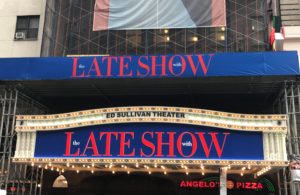
Photo: Brian Kachejian ©2017
The History Of The Ed Sullivan Theater
The history of the Ed Sullivan Theater in New York is quite remarkable, having spanned nearly a century. It has welcomed countless legendary performers through its doors, including The Beatles, The Rolling Stones, Eminem, Jay-Z, and Elvis Presley. It was on The Ed Sullivan Show that The Beatles made their first live television appearance in the United States. Many famous musicians have credited that performance with inspiring them to pursue careers in music.
Forty-five years after The Beatles made their historic American debut, Paul McCartney returned to perform an outdoor concert atop the theater’s marquee. Other artists including Jay-Z, Phish, Eminem, and Dave Matthews Band have also performed rooftop concerts at the theater.
When Jim Morrison Defied Television Censorship
One of the theater’s most famous stories centers on Jim Morrison and The Doors. Following the band’s rehearsal, one of the show’s producers visited their dressing room to express concern about the lyric “Girl, we couldn’t get much higher“ from “Light My Fire.” Producers feared sponsors would interpret the lyric as promoting drug use and asked Morrison to change it to “Girl, we couldn’t get much better.”
When the live broadcast reached that famous moment, Morrison looked directly into the camera and deliberately sang the original lyric. The controversy reflected a much broader cultural clash of the late 1960s. Jim Morrison was not the only performer to challenge the show’s standards. The producers also clashed with Mick Jagger and The Rolling Stones as well as Elvis Presley over censorship concerns.
From Hammerstein’s Theater To CBS Studio 50
The building has enjoyed many different lives throughout its history. It has served as a Broadway theater, radio studio, nightclub, and television production studio. Among the programs produced here have been The Ed Sullivan Show, The Merv Griffin Show, Late Show with David Letterman, and today, The Late Show with Stephen Colbert.
Originally opened in November 1927 by Arthur Hammerstein, the venue was first known as Hammerstein’s Theater. It hosted stage productions before CBS acquired a long-term lease during the 1930s. As television emerged, the building evolved into CBS-TV Studio 50 in 1950 after previously serving as CBS Radio Playhouse No. 1.
Ed Sullivan arrived at Studio 50 in 1953, launching one of the most successful television programs in American history. In recognition of Sullivan’s enormous success, CBS officially renamed the building the Ed Sullivan Theater in 1967. Throughout its long history, the venue has also been known as the Manhattan Theater, Hammerstein’s Theater, Billy Rose’s Music Hall, CBS Radio Playhouse, Radio Theater No. 3, CBS-TV Studio 50, and finally, the Ed Sullivan Theater.
A New Era With David Letterman
Although CBS’s original lease expired in 1981, the network purchased the building outright in 1993 for more than $4 million. Millions more were invested in restoring and modernizing the historic theater. Extensive renovations prepared the building for the arrival of David Letterman’s Late Show, while preserving many of the theater’s historic architectural details. The renovated theater accommodates approximately 400 audience members.
A Lasting New York Landmark
The Ed Sullivan Theater remains one of New York City’s most treasured entertainment landmarks. Millions of viewers have watched groundbreaking performances and historic television moments broadcast from this stage. While The Ed Sullivan Show ended in 1971, the theater’s influence has continued through successive generations of performers, hosts, and audiences.
More than fifty years after Ed Sullivan first welcomed America into Studio 50, the theater continues to produce nationally televised entertainment while standing as a living reminder of New York City’s remarkable contribution to American television and popular culture.
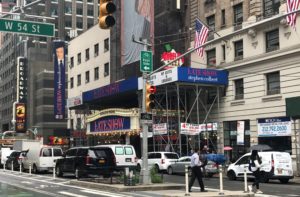
Photo: Brian Kachejian ©2017
For a great article on censorship and the role the Ed Sullivan Theater played during those times, check out the ClassicRockHistory.com feature below.
https://www.classicrockhistory.com/elvis-presley-censorship-and-the-power-of-the-people/
The Ed Sullivan Theater is located just a short walk from Times Square in the borough of Manhattan, New York City.
Related Articles
If you enjoyed this history of the Ed Sullivan Theater, continue exploring New York City’s legendary entertainment landmarks with our articles on Radio City Music Hall, Carnegie Hall, Times Square, The History of Broadway, and Grand Central Terminal.
Updated June 29, 2026.