New York City has always been home to movements that challenged the status quo, but few places captured the wild spirit of 1960s counterculture like the New York Yippie Museum at 9 Bleecker Street. Built around the legacy of Abbie Hoffman, Jerry Rubin, Anita Hoffman, Paul Krassner, Aron “Pie Man” Kay, and the Youth International Party, the museum became a reminder of a time when politics, protest, theater, music, and rebellion all collided in the streets of New York. For anyone interested in the history of New York activism, the Yippie Museum stood as one of the city’s most colorful and defiant cultural landmarks.
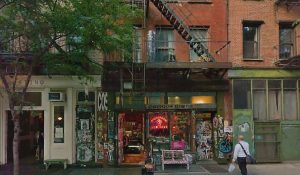
New York Yippie Museum
The Birth Of The Yippies
The sixties were a time for change, a time for peace, and a time for every purpose under heaven. At the forefront of this change were many of counterculture’s greatest figures, such as Abbie Hoffman, Jerry Rubin, Anita Hoffman, Phil Ochs, Aron “Pie Man” Kay, and many more. These people decided that the country their parents created was not theirs, and they were going to drop the old to create a new, better one. Through this frantic, psychedelic, screaming, drug-soaked revolution, a new political party would be created, known as the Yippies.
The Yippies, as they were known, were named and created by Abbie Hoffman and Paul Krassner. A play on the word “hippies,” the Yippies set out to shake up the system and change it for good. To add a more serious tone to the jovial party, Abbie Hoffman’s wife, Anita, came up with the term “Youth International Party,” and thus the Yippies, or the Youth International Party, were born.
The group would spread throughout the country and up into Vancouver, creating an army of tie-dye soldiers who fought under the Yippie flag, a pot leaf over a red star upon a black background. These pranksters would become part of the New Left and would go on to make history with their theatrical political stunts.
Political Theater And The Chicago 7
Throughout the sixties, the Yippies made a name for themselves, pulling off such ludicrous stunts as throwing a mixture of fake and real dollar bills off the visitors’ ledge at the New York Stock Exchange, shaming those who scrambled to pick them up.
They would also be connected to the infamous Chicago 7, which started as the Chicago 8 until Bobby Seale was bound and gagged in court, only to be found guilty of contempt of court at his own trial sometime later. This trial stemmed from the supposed antics, lack of permit to protest, “intent to incite violence,” and crossing state lines that the Yippies were accused of during the 1968 Democratic Convention in Chicago, Illinois.
The party would continue its theatrical political protests throughout the decades, even after Abbie Hoffman went underground to avoid charges against him. This created a need for the group, an even stronger one than before, as their daily dealings continued.
9 Bleecker Street Becomes A Yippie Hub
This need brought the group to purchase and operate a building on the Bowery of New York City. 9 Bleecker became the headquarters and hub for New York Yippies. Originally run by Abbie Hoffman, the building was soon taken over by other members of the party, such as Aron Kay and AJ Weberman.
9 Bleecker became the Yippie Museum and Café, and during its heyday featured open mic nights, a separate operating café, instructional courses, political activism, music, and more. The Yippie Museum and Café featured leftist memorabilia from around the world, history lessons, and displays on counterculture and Yippie ideals and history.
The building was a buzzing house of left hope and memory, adorned with memories of incense, peppermints, activism, and an exuberant amount of marijuana. The museum was, at one point, the best place to be if you were a Yippie or someone who did not like their hair to be worn too short.
The End Of The Yippie Museum
Acting as a pillar of counterculture history and spirit, the museum and operating café sadly lost its battle with high mortgage rates in 2014 after the café had closed its doors in 2013. After some time, the building was bought and became home to a popular Bowery boxing club by the name of Overthrow.
The interior of the building artfully retained much of its Yippie and revolutionary 1960s decor, causing tourists to continue to come view it. Though the museum lost its building, its Facebook page remains, as does the original spirit and motto of those who created it all. Many of the original Yippies and museum directors still live in the area and still spread the Yippie word, keeping the fight and spirit of a time past well and alive.
More New York Counterculture And History Stories
If you enjoy stories about New York City counterculture and historic places, take a look at our features on Café Wha?, Little Italy, Times Square, and Robert Moses and New York City.
Article updated June 28, 2026.