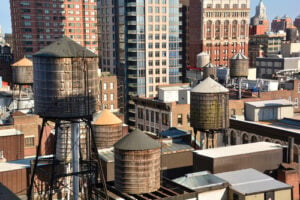

Feature Photo: Hannahgoldstein at English Wikipedia, CC BY 3.0 <https://creativecommons.org/licenses/by/3.0>, via Wikimedia Commons
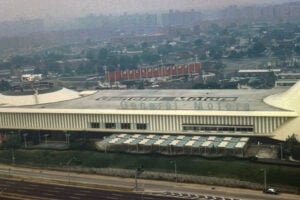
St. George Theatre is located in the historic St. George District of Staten Island, close to the ferry terminal. This 1,903-seat theatre has played a significant role in entertaining residents of Staten Island over the years. However, since its construction in 1928, it has faced several tribulations, achieved a lot of success, and seen new owners throughout its existence. Here’s more about the history of Staten Island’s St. George theatre.
Construction
Solomon Brill conceived the construction of the St.George Theatre. He owned several theatres on Staten Island and fifteen other theatres in New York. He intended to build a state-of-the-art showhouse that would compete with Manhattan’s showhouses and bring exceptional vaudevilles to Staten Island.
Construction took off in August 1928 and was completed a year later. He then opened it to the public on December 4, 1929. The total cost was $2 million since the construction included an attached office complex to the theatre.
St. George Theatre stood out from its competitors. It featured unique architecture, such as an advanced cooling and heating system, velvet seats, grand staircases, and the largest cantilevered balconies. It also features a Wurlitzer organ worth $2500.
Change of Ownership
Solomon Brill operated St. George Theatre for three years and sold it to Joseph Kohn. Joseph Kohn would later sell it to the Fabian Theatre chain in 1938. They ran St. George Theatre until 1973 when their company broke up.
After the Fabian Theatre Chain broke up, one of its former general managers took over the operation of St. George theatre until 1976. He couldn’t manage to run it and had to pass it to Victoria Theatre, a group of young entrepreneurs. This group intended to reinstate St. George Theatre to a place that hosts live stage performances and movie screenings. However, they only managed to run it for almost a year. Despite this short span, they managed to screen some of the most amazing shows and hosted diverse music acts.
After the departure of Victoria Theatre, St. George theatre owners tried running it as a movie house. Unfortunately, they failed in their attempt, eventually leading to its closure in 1978. For over ten years, it changed hands among entrepreneurs who tried setting up various businesses to revive it, including a nightclub, an antique showroom, and a dinner theatre, but none succeeded. In the 1990s, St. George theatre owners made another attempt to reopen it as a performance art center. It hosted a couple of performances but didn’t last long. The owners ultimately gave up on it.
It, therefore, remained closed for the better of the late 1990s and early 2000s until 2003, when it was used to film the movie finale of School of Rock. It remained closed until 2004, when Mrs. Rosemary Capozzalo, a prominent local dance educator, sought to save it from being torn down. She and her daughters started a non-profit organization for this theatre. She even donated her life savings, which were over a million dollars.
The theatre was in a dreadful state with no orchestra seats, no carpeting, no plumbing, and no sound system. However, despite being in this state, Mrs. Rosemary restored it within twelve weeks, thanks to the support of the community, elected officials, and business leaders. St. George Theatre was now transformed into a beautiful and thriving place. Another major revamp was made in 2017, including adding a LED marquee and renovation of the mezzanine seating at $5.2 million.
Architects and Interior Design
St. George Theatre’s leading architect was Eugene DeRosa, and James Whitford was his assistant. James was also the designer of Victory Theatre, Liberty Theatre, and Ritz Theatre, which were in Staten Island then, although none exist today.
Nester Castro designed St. George Theatre’s interior. He was the art director for the Libman- Spanjar Corporation, which had designed many of the theatres in Time Square. He used a mixture of Italian and Spanish styles, featuring unique designs of intricate wood carving, a grand chandelier line in the lobby, and a massive mural at the entrance. His interior designs also featured sculptural figures and fountains throughout the building.
One of the things that stood out in this theatre is its perfect acoustic. Even today, a performer standing below its six-story proscenium can speak to someone on the upper balcony without raising their voice.
St. George Theatre’s original design was a 2,876-seat structure planned for the Radio-Keith-Orpheum vaudeville circuit. However, before its completion in 1929, a spotlight and projection booth was added to its interior, making it possible to screen films and host live performances.
Featured Performances, Artists, and Screening
St. George Theatre has hosted several performances and screenings over the years. Its opening movie was “So This is College,” which starred Cliff Edward, Robert Montgomery, and Elliot Nugent. Its first stage act was a performance by Blossom Seely and Benny Fields. It also featured movies and vaudevilles featuring renowned performers like Kate Smith, Guy Lombardo, and Al Jolson.
Unfortunately, this theatre stopped live stage performances in 1934 but was reintroduced in the 1940s. Many renowned artists have performed here, including Cyndi Lauper, Adam Lambert, Chris Daughtry, and Dennis DeYoung. It has also hosted renowned comedians, such as Michael Che, Lily Tomlin, Steve Martin, Chris Rock, and Bill Cosby.
Since its reopening in 2004, it has featured different films and concerts. In December 2008, it was used as a scene for the TV show Gossip Girl. In 2012, it was featured in the filming of Steven Speilberg’s show Smash. It was also part of the VH1’s concert series Super Bowl Blitz in 2014 and hosted a live stage performance by Staten Island’s Harbor Lights Theater Company. It now hosts several events, including live stage performances and movie screenings. It’s also a local cultural center that hosts activities such as stand-up comedy, architectural tours, education programs, and children’s shows.
The Lowdown
St. George Theatre is an iconic architecture that defines New York’s journey in live stage performances and movie screenings. It has endured its fair share of tribulations but has outlived many theatres that existed then. Many attempts have also been made to revive it and failed, but thanks to Mrs. Rosemary, residents of Staten Island have a theatre to host all kinds of performances and screenings. So next time you visit Staten Island, make a point to visit this magnificent landmark and maybe get a movie ticket and enjoy sitting in a place with such a rich history.
Feature Photo: Hannahgoldstein at English Wikipedia, CC BY 3.0 <https://creativecommons.org/licenses/by/3.0>, via Wikimedia Commons
History of Staten Island’s St. George Theatre ClassicNewYorkHistory.com ©2022
ClassicNewYorkHistory.com claims ownership of all its original content and Intellectual property under United States Copyright laws and those of all other foreign countries. No one person, business or any organizations is allowed to republish any of our original content anywhere on the web or in print without our permission.