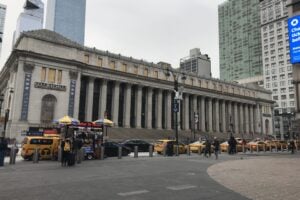
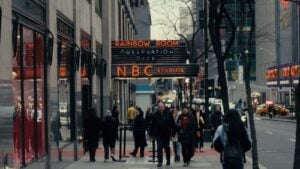
NBC Studios at Rockefeller Center in Midtown Manhattan, New York City. Photo: 4kclips / Shutterstock
New York City was the center of American television variety during the medium’s formative decades. Long before the industry became concentrated in Southern California, live programs poured out of converted Broadway theaters, Rockefeller Center studios, Brooklyn soundstages, and other New York production facilities. The city’s vaudeville traditions, Broadway performers, jazz and popular music scenes, comedy writers, dancers, orchestras, and live audiences all helped shape what television variety would become.
This is a list of variety shows with a substantial New York City production history. Some spent their entire runs in New York, while others used the city for only part of their national run before moving elsewhere. Because many early programs were broadcast live or recorded on videotape or kinescope rather than photographed on film, “produced in New York City” is more accurate than calling every one of them “filmed” in New York.
The list is arranged chronologically by the beginning of each show’s run or New York production era rather than as a ranking.
1. Texaco Star Theater / The Milton Berle Show (1948–1956)
- New York Production: NBC Studio 6B at Rockefeller Center and later the Center Theatre.
- Why It Matters: Milton Berle became television’s first great mass-audience comedy star through this live Tuesday-night variety show. The first Berle-hosted Texaco Star Theater telecast originated from Studio 6B in 1948, and the program later used the Center Theatre near Rockefeller Center. Berle’s broad vaudeville comedy, celebrity guests, musical acts, costumes, and willingness to do almost anything for a laugh helped earn him the nickname “Mr. Television.”
2. Toast of the Town / The Ed Sullivan Show (1948–1971)
- New York Production: Originally broadcast from the Maxine Elliott Theatre before moving to CBS Studio 50 at 1697 Broadway in 1953. Studio 50 was renamed the Ed Sullivan Theater in 1967.
- Why It Matters: Ed Sullivan created one of television’s most influential variety showcases by putting comedians, opera singers, Broadway performers, dancers, novelty acts, and popular musicians on the same Sunday-night stage. Elvis Presley made three famous appearances on Sullivan’s program in 1956 and 1957, while The Beatles’ February 9, 1964 appearance became one of the defining moments of American television and popular music.
3. Arthur Godfrey’s Talent Scouts (1948–1958)
- New York Production: CBS Studio 50 in Manhattan.
- Why It Matters: Adapted from Godfrey’s radio program, Arthur Godfrey’s Talent Scouts became one of television’s earliest major talent competitions. Performers were introduced by the people who had “discovered” them, and studio-audience response helped determine the winner. During the 1951–52 season, the program reached number one in the television ratings and remained a major CBS attraction through much of the decade.
4. Admiral Broadway Revue (1949)
- New York Production: International Theatre at 5 Columbus Circle.
- Why It Matters: This short-lived but historically important live revue brought together Sid Caesar, Imogene Coca, Max Liebman, and a young writing staff that helped point the way toward the golden age of television comedy. Broadcast simultaneously on NBC and DuMont, the program mixed elaborate production numbers, music, sketches, and Broadway-style spectacle. Caesar, Coca, and Liebman soon carried that approach into Your Show of Shows.
5. Arthur Godfrey and His Friends (1949–1959)
- New York Production: CBS Studio 50 and other CBS New York facilities.
- Why It Matters: Godfrey’s relaxed delivery, ukulele playing, musical guests, regular performers, informal conversation, and famously conversational commercials made him one of early television’s most powerful personalities. The prime-time variety series complemented his radio work and Talent Scouts, making Godfrey a dominant presence across CBS during the 1950s.
6. Your Show of Shows (1950–1954)
- New York Production: International Theatre at Columbus Circle and later the Center Theatre near Rockefeller Center.
- Why It Matters: Sid Caesar and Imogene Coca turned live sketch comedy into an art form on this 90-minute Saturday-night NBC series. Carl Reiner and Howard Morris joined them on camera, while a celebrated writing staff included Mel Brooks, Neil Simon, Lucille Kallen, and Mel Tolkin. Movie parodies, domestic sketches, pantomime, music, and live comedy made the program a model for generations of sketch television.
7. The Kate Smith Hour (1950–1954)
- New York Production: Hudson Theatre and NBC New York facilities.
- Why It Matters: NBC launched The Kate Smith Hour as a weekday afternoon variety program in 1950. The network later identified it as the first network daytime television show. Smith’s booming voice anchored a mix of music, comedy, interviews, dramatic segments, and guest appearances at a time when television was still inventing the daytime schedule.
8. The Colgate Comedy Hour (1950–1955)
- New York Production: New York broadcasts originated from facilities including the International Theatre and NBC’s Colonial Theatre, while other editions came from the West Coast.
- Why It Matters: NBC built this expensive Sunday-night variety franchise as a direct competitor to Ed Sullivan. Rather than relying on a single permanent host, the show rotated major comedy stars and teams. Its New York editions featured the kind of live musical performances, physical comedy, ad-libbed chaos, and large-scale staging that defined early network variety.
9. Broadway Open House (1950–1951)
- New York Production: NBC New York facilities, including the Hudson Theatre during the program’s run.
- Why It Matters: Created under NBC executive Pat Weaver, Broadway Open House is widely remembered as network television’s first late-night comedy-variety series. Jerry Lester, Morey Amsterdam, Dagmar, and musical director Milton DeLugg helped create a loose, unpredictable hour of comedy, music, conversation, and spontaneous stage business that anticipated the late-night formats NBC would later develop with Tonight.
10. Your Hit Parade (1950–1959)
- New York Production: NBC studios in Manhattan, including Studio 6A, Studio 8H, the Colonial Theatre, and the Ziegfeld Theatre during different periods of the run.
- Why It Matters: Long before televised countdown programs and music videos, Your Hit Parade turned the week’s most popular songs into elaborate live production numbers. Singers including Dorothy Collins, Snooky Lanson, Gisele MacKenzie, and Russell Arms repeatedly performed current hits with new sets, costumes, choreography, and arrangements, making the show one of television’s first great weekly music showcases.
11. Cavalcade of Stars / The Jackie Gleason Show (1950–1964 New York Runs)
- New York Production: DuMont’s Adelphi Theatre and later CBS Studio 50.
- Why It Matters: Jackie Gleason took over Cavalcade of Stars in 1950 and quickly became one of television’s biggest personalities. His New York variety programs mixed comedy characters, music, guest stars, orchestra numbers, and the June Taylor Dancers. Most important, the live variety format became the birthplace of Ralph and Alice Kramden and the sketches that eventually grew into The Honeymooners.
12. The Ernie Kovacs Show (New York Network Runs: 1952–1956)
- New York Production: CBS and NBC New York facilities during portions of Kovacs’s national television run.
- Why It Matters: Ernie Kovacs treated television itself as a comic prop. Instead of simply putting a stage act in front of cameras, he experimented with framing, visual distortion, sound, editing, music, graphics, and bizarre recurring characters. His New York network programs helped establish a kind of visual and surreal television comedy that later influenced performers and producers far beyond the traditional variety format.
13. Stage Show (1954–1956)
- New York Production: CBS Studio 50 at 1697 Broadway.
- Why It Matters: Produced by Jackie Gleason and hosted by big-band leaders Tommy and Jimmy Dorsey, Stage Show mixed swing-era entertainment with the emerging sounds of rock and roll. Its place in music history was secured when Elvis Presley made his first national television appearance on the program on January 28, 1956. He ultimately appeared on the show six times.
14. Caesar’s Hour (1954–1957)
- New York Production: NBC’s Century Theatre and other New York facilities.
- Why It Matters: After Your Show of Shows, Sid Caesar continued his live sketch-comedy tradition with a longer-form hour built around ambitious parodies and recurring characters. Carl Reiner, Howard Morris, and Nanette Fabray joined Caesar on camera, while writers included Larry Gelbart and a young Woody Allen. The show carried New York’s writer-driven live-comedy tradition deeper into the 1950s.
15. The Perry Como Show / Kraft Music Hall (New York Era: 1956–1963)
- New York Production: NBC’s Ziegfeld Theatre and other New York studios.
- Why It Matters: Perry Como’s calm, conversational style provided a striking contrast to the frantic energy of many early variety hosts. Beginning in 1956, his weekly program originated from NBC’s new color television facilities at the Ziegfeld Theatre. Como combined popular songs, comedy, Broadway guests, vocal groups, and relaxed audience interaction in one of the era’s most polished musical-variety productions.
16. The Nat King Cole Show (New York Era: 1956–1957)
- New York Production: Early episodes originated in New York, including broadcasts from the Colonial Theatre, before the production later shifted to California.
- Why It Matters: Nat King Cole became the first major Black entertainer to host a national network variety series. The program showcased Cole’s singing and piano playing alongside guest appearances by major performers. Despite strong artistic support, the show struggled to secure national sponsorship at a time when many advertisers were unwilling to back a Black host, making its short run a major chapter in television and civil-rights history.
17. The Steve Allen Show (New York Era: 1956–1959)
- New York Production: Hudson Theatre and other NBC New York facilities.
- Why It Matters: Steve Allen’s prime-time variety program combined jazz, comedy, celebrity appearances, sketches, and the celebrated “Man on the Street” ensemble that included Don Knotts, Louis Nye, and Tom Poston. One of its most famous broadcasts came on July 1, 1956, when Elvis Presley appeared in formal evening clothes and sang “Hound Dog” to a basset hound.
18. The Big Record (1957–1958)
- New York Production: CBS New York studios.
- Why It Matters: Hosted by Patti Page, The Big Record was a live CBS musical-variety series built around current recording stars and popular songs. The program presented Page alongside major guest vocalists and musicians and was kinescoped for West Coast audiences, making it a strong example of the live New York music television that still flourished in the late 1950s.
19. The Garry Moore Show (1958–1964; 1966–1967)
- New York Production: CBS Studio 50 in Manhattan during the prime-time run.
- Why It Matters: Garry Moore’s genial hosting style anchored a mixture of comedy, music, sketches, guest stars, and recurring features. The show’s greatest long-term legacy may be its role in making Carol Burnett a national television star. She joined the cast in 1959 and developed the sketch-comedy skills that later powered her own landmark variety series.
20. The Bell Telephone Hour (1959–1968)
- New York Production: NBC’s Brooklyn studios and other New York facilities.
- Why It Matters: Adapted from the long-running radio program, The Bell Telephone Hour brought classical music, opera, ballet, jazz, and Broadway performers to network television with unusually ambitious production values. Its first television broadcast in January 1959 originated from NBC’s large Brooklyn studio and featured performers including Harry Belafonte, Renata Tebaldi, and the New York City Ballet.
21. The Jimmy Dean Show (1963–1966)
- New York Production: ABC Studio One at the Elysee Theatre on West 58th Street.
- Why It Matters: Jimmy Dean brought country music into a Manhattan television studio at a moment when the genre still had limited national exposure on prime-time television. The program mixed musical guests, comedy, and Dean’s easygoing personality. It also gave Jim Henson’s Rowlf the Dog a regular national television platform years before The Muppet Show.
22. The Sammy Davis Jr. Show (1966)
- New York Production: Primarily NBC’s Brooklyn studios, with the premiere taped in Los Angeles to accommodate Elizabeth Taylor and Richard Burton.
- Why It Matters: Sammy Davis Jr. brought singing, dancing, impressions, comedy, interviews, and big-band entertainment to an hour-long NBC prime-time series. Most episodes were produced in Brooklyn, where Davis welcomed guests including Judy Garland, the Supremes, Milton Berle, Diahann Carroll, and Sarah Vaughan. The program also represented another important step in the gradual expansion of opportunities for Black hosts on network television.
23. Saturday Night Live (1975–Present)
- New York Production: NBC Studio 8H at 30 Rockefeller Plaza.
- Why It Matters: Created by Lorne Michaels in 1975, Saturday Night Live reinvented television variety for a younger late-night audience by combining live sketch comedy, musical guests, short films, topical satire, and celebrity hosts. Studio 8H has remained the show’s home for more than half a century, turning one Rockefeller Center studio into one of the most famous production spaces in American television.
24. Showtime at the Apollo (1987–2008; later revivals)
- New York Production: Apollo Theater, 253 West 125th Street in Harlem.
- Why It Matters: The syndicated series brought the Apollo’s famous stage and Amateur Night tradition to national television. Professional singers, comedians, dancers, and emerging performers shared the bill, while notoriously demanding Apollo audiences remained part of the spectacle. The show extended one of Harlem’s defining entertainment traditions into the television era.
25. Sunday Night / Night Music (1988–1990)
- New York Production: Chelsea Television Studios in New York City.
- Why It Matters: Hosted by David Sanborn, with Jools Holland as co-host during the first season, this late-night music series ignored conventional genre boundaries. Jazz, rock, soul, experimental music, world music, and singer-songwriters were deliberately mixed together, often ending in collaborations that could not have happened on a conventional promotional program. Its guest combinations made it one of the most adventurous New York music shows of its era.
Quick Reference: 25 Television Variety Shows Produced in New York City
| Show | Run / NYC Era | Primary NYC Production Location | Variety Legacy |
|---|---|---|---|
| Texaco Star Theater / The Milton Berle Show | 1948–1956 | Studio 6B / Center Theatre | Made Milton Berle television’s first mass-audience comedy star |
| Toast of the Town / The Ed Sullivan Show | 1948–1971 | Maxine Elliott Theatre / CBS Studio 50 | America’s defining Sunday-night variety showcase |
| Arthur Godfrey’s Talent Scouts | 1948–1958 | CBS Studio 50 | Early national talent competition and ratings powerhouse |
| Admiral Broadway Revue | 1949 | International Theatre | Early Broadway-style TV revue and precursor to Your Show of Shows |
| Arthur Godfrey and His Friends | 1949–1959 | CBS Studio 50 / CBS New York | Music, comedy, conversation, and live commercials |
| Your Show of Shows | 1950–1954 | International Theatre / Center Theatre | Foundational live sketch-comedy series |
| The Kate Smith Hour | 1950–1954 | Hudson Theatre / NBC New York | Pioneering network daytime variety |
| The Colgate Comedy Hour | 1950–1955 NYC broadcasts | International / Colonial Theatre | Rotating comedy and musical variety spectacular |
| Broadway Open House | 1950–1951 | NBC New York / Hudson Theatre | Pioneering late-night comedy-variety |
| Your Hit Parade | 1950–1959 | Studio 8H / Ziegfeld / other NBC studios | Weekly hit songs staged as elaborate live production numbers |
| Cavalcade of Stars / The Jackie Gleason Show | 1950–1964 NYC runs | Adelphi Theatre / CBS Studio 50 | Introduced Gleason’s characters and The Honeymooners sketches |
| The Ernie Kovacs Show | 1952–1956 NYC network runs | CBS / NBC New York | Experimental visual television comedy |
| Stage Show | 1954–1956 | CBS Studio 50 | Big-band variety and Elvis Presley’s national TV debut |
| Caesar’s Hour | 1954–1957 | Century Theatre | Ambitious live sketch and musical comedy |
| The Perry Como Show / Kraft Music Hall | 1956–1963 NYC era | Ziegfeld Theatre / NBC New York | Polished musical variety and early weekly color television |
| The Nat King Cole Show | 1956–1957 NYC era | Colonial Theatre / NBC New York | Groundbreaking network variety series hosted by a major Black star |
| The Steve Allen Show | 1956–1959 NYC era | Hudson Theatre / NBC New York | Jazz, sketches, celebrity comedy, and Man on the Street routines |
| The Big Record | 1957–1958 | CBS New York | Live musical variety hosted by Patti Page |
| The Garry Moore Show | 1958–1964; 1966–1967 | CBS Studio 50 | Helped launch Carol Burnett’s television career |
| The Bell Telephone Hour | 1959–1968 | NBC Brooklyn Studios | Opera, ballet, classical music, jazz, and Broadway on network TV |
| The Jimmy Dean Show | 1963–1966 | ABC Studio One / Elysee Theatre | Country music showcase and early national home for Rowlf the Dog |
| The Sammy Davis Jr. Show | 1966 | NBC Brooklyn Studios | Prime-time singing, dancing, comedy, and celebrity variety |
| Saturday Night Live | 1975–Present | Studio 8H, 30 Rockefeller Plaza | Long-running live sketch, music, and topical variety institution |
| Showtime at the Apollo | 1987–2008; later revivals | Apollo Theater | National showcase of Apollo talent and Amateur Night tradition |
| Sunday Night / Night Music | 1988–1990 | Chelsea Television Studios | Eclectic late-night music collaborations across genres |
Readers interested in more New York television and entertainment history can continue with our History of NBC Studios at Rockefeller Plaza, History of the Ed Sullivan Theater, History of New York’s Apollo Theater, and History of Kaufman Astoria Studios in Queens, New York.