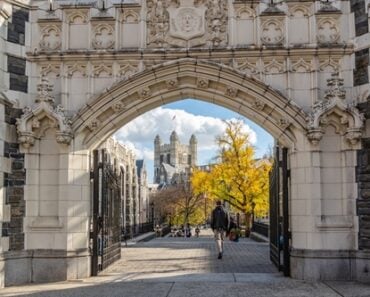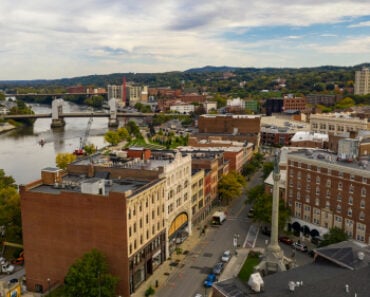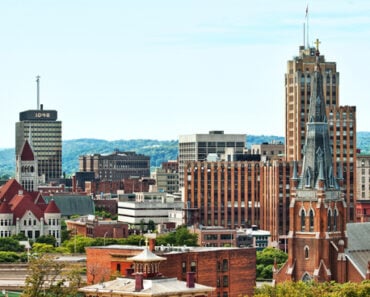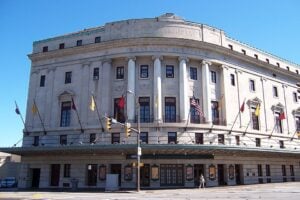
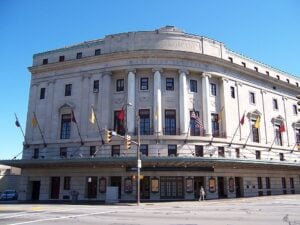
The historic Eastman Theatre in Rochester, New York, an important landmark in Upstate New York’s musical history. Photo: Matthew D. Wilson / Wikimedia Commons, CC BY-SA 2.5.
When people talk about New York’s contribution to American music, the conversation usually begins in New York City. There is certainly no shortage of history there, from the jazz clubs of Harlem and the folk singers of Greenwich Village to the birth of hip-hop in the Bronx. Yet some of the most recognizable voices and influential instrumentalists in American music came from places far beyond the five boroughs. Buffalo, Rochester, Syracuse, Jamestown, Cortland, Ithaca, and smaller communities across Upstate New York all played a part in shaping musicians who eventually became known around the world.
There is no single sound that defines Upstate New York. Buffalo developed a rich musical culture through its churches, neighborhood clubs, working bands, and jazz community. Rochester produced major performers while also becoming an important center for musical education through the Eastman School of Music. In Syracuse and Central New York, musicians learned their craft through school programs, local radio, college audiences, and the bars and dance halls where regional bands could build a following before anyone outside the area knew their names.
Those local beginnings were often far removed from the glamorous image of the music business. A young Rick James discovered the possibilities of R&B and rock while growing up in Buffalo. Lou Gramm sang with Rochester bands before becoming the voice of Foreigner. Ronnie James Dio spent years performing in and around Cortland before his name became synonymous with heavy metal. In Jamestown, Natalie Merchant joined the group that would become 10,000 Maniacs, proving that an important alternative rock band did not have to originate in Manhattan or Los Angeles.
Upstate New York’s musical influence also reaches well beyond rock and pop. Rochester gave the world jazz composer and flugelhorn player Chuck Mangione, legendary drummer Steve Gadd, and jazz-age bandleader Cab Calloway. Syracuse was the birthplace of Jimmy Van Heusen, whose songs became standards for Frank Sinatra and Bing Crosby. Meanwhile, the region’s long tradition of independent bands helped develop musicians who later moved into punk, experimental rock, progressive metal, blues, and modern popular music.
Geography is an important part of these stories. Some artists were born in Upstate New York and left while they were young. Others spent their childhoods here, went to local schools, played their first shows in the region, or built bands with friends before moving away. Those distinctions matter, and the connections in this article are identified rather than treating every musician as though they had the same hometown experience.
Here are 25 famous musicians with documented roots in Upstate New York, and the hometown stories behind the recordings and performances that made them famous.
1. Rick James (Buffalo)
Rick James was born James Ambrose Johnson Jr. in Buffalo in 1948, and his childhood on the city’s East Side exposed him to the mix of gospel, jazz, R&B, and street-level musical energy that would eventually shape his recordings. His early years were turbulent, and he attended schools in the Buffalo area before leaving his formal education behind. James joined the U.S. Naval Reserve while still a teenager but went absent without leave and fled to Canada. That decision, however disastrous for his military situation, led to an unexpected turning point in his musical life.
In Toronto, he became involved with the Mynah Birds, a rock and soul group whose lineup included a young Neil Young. A connection with Motown followed, although James’s military difficulties interrupted his plans. He eventually returned to recording and assembled the Stone City Band, developing the hard-driving blend of funk, rock, and R&B heard on songs such as “You and I,” “Give It to Me Baby,” and “Super Freak.” His album Street Songs became a defining release of the early 1980s. Despite all the cities associated with his career, the foundation of Rick James’s musical identity was formed in Buffalo.
2. Ani DiFranco (Buffalo)
Ani DiFranco was born and raised in Buffalo, where she began developing her voice as a guitarist, songwriter, and independent-minded performer at a remarkably young age. She studied at the Buffalo Academy for Visual and Performing Arts and began playing publicly while still in her teens. Rather than waiting for a major record company to decide what sort of artist she should become, DiFranco took control of her recordings and career. Her decision to establish Righteous Babe Records became a defining part of her story, setting her apart from a music business built largely around corporate labels.
DiFranco’s recordings combined folk, punk, jazz, and intensely personal songwriting, and albums such as Not a Pretty Girl and Dilate helped establish her fiercely independent reputation. Buffalo remained important to her even after her audience expanded internationally. She purchased and restored the former Asbury Delaware United Methodist Church building, transforming it into the arts and music complex known as Babeville. For DiFranco, the city that nurtured her earliest performances became a place where she could invest in the next generation of artists.
3. John Rzeznik (Buffalo)
John Rzeznik was born in Buffalo in 1965 and grew up in a working-class neighborhood where life was not always easy. Both of his parents died while he was young, and his older sisters helped raise him. He attended McKinley Vocational High School, where guitar and songwriting became increasingly important. Buffalo’s rock clubs offered a place to learn how a band actually worked, from loading equipment and playing late-night sets to finding an audience that would return the following weekend. In the mid-1980s, Rzeznik helped establish the Goo Goo Dolls with bassist Robby Takac and drummer George Tutuska.
The group’s earliest records sounded much rougher than the radio hits that later made the Goo Goo Dolls famous. The band gradually developed a more melodic approach, breaking through with “Name” and reaching an even larger audience with “Iris,” written for the film City of Angels. Albums such as A Boy Named Goo and Dizzy Up the Girl transformed Rzeznik into one of the best-known American rock songwriters of his generation. His success was the result of years of work in the Buffalo music scene, not an overnight discovery.
4. Brian McKnight (Buffalo)
R&B singer, songwriter, and producer Brian McKnight was born in Buffalo in 1969 and grew up in a family in which singing and church music were part of everyday life. He attended Sweet Home High School in the Buffalo suburb of Amherst and developed his abilities as a vocalist and multi-instrumentalist while still young. His background in gospel helped shape the harmonies and emotional delivery that would distinguish his recordings, even when his music later moved firmly into contemporary R&B and adult pop.
McKnight broke through in the 1990s with songs including “One Last Cry” and “Anytime,” followed by “Back at One,” one of the best-known recordings of his career. In addition to his vocal performances, he became respected for his songwriting, arranging, and instrumental skills. His ballads were often built around piano, guitar, and carefully layered harmonies rather than elaborate production alone. McKnight’s career eventually reached international audiences, but his musical beginnings were rooted in the Buffalo area and the tradition of family and church music that surrounded him there.
5. Grover Washington Jr. (Buffalo)
Grover Washington Jr. was born in Buffalo in 1943 and grew up in a household where jazz was never far away. His father played saxophone and collected records, while his mother sang in a church choir. As a young musician, Washington listened to established jazz artists and absorbed the sounds of Buffalo’s local clubs, including the city’s important African American jazz community. He began performing professionally while still a teenager and eventually left Western New York to tour and serve in the U.S. Army.
Washington became an enormously influential figure in soul jazz, jazz-funk, and the accessible instrumental style later widely known as smooth jazz. Albums including Mister Magic and Winelight brought him major commercial success, while his recording of “Just the Two of Us” with Bill Withers crossed into the pop mainstream. His playing had a warmth and lyrical quality that made even complex instrumental passages immediately recognizable. Although Philadelphia became closely associated with his adult career, the musical education that made him possible began in Buffalo.
6. Cory Wells (Buffalo)
Cory Wells, born Emil Lewandowski in Buffalo in 1941, grew up in a family with strong musical ties. He performed with local groups as a young man and later served in the U.S. Air Force, continuing to sing during that period. Back in Buffalo, he worked with the Vibratos before heading west to pursue a professional career. In Los Angeles, members of that earlier circle became part of Cory Wells and the Enemys, a group active on the Southern California club scene.
Wells eventually joined Danny Hutton and Chuck Negron to form the three-vocalist lineup of Three Dog Night. The band became one of the biggest hitmakers of the late 1960s and early 1970s, with Wells featured prominently on recordings including “Mama Told Me (Not to Come),” “Never Been to Spain,” and “Shambala.” Each of the singers brought a distinct personality to the group, and Wells’s powerful, soulful delivery was essential to its sound. Before the hits and arena tours, he was another young performer learning his craft in the music scene around Buffalo.
7. Willie Nile (Buffalo)
Willie Nile was born Robert Anthony Noonan in Buffalo in 1948 and grew up in a large Irish Catholic family surrounded by music. His home introduced him to a wide range of sounds, from popular standards and classical compositions to the rock and folk records that eventually attracted him. He studied music and became interested in songwriting before moving to New York City, where the East Village music scene gave him new opportunities to perform.
Nile’s self-titled debut album appeared in 1980 and established him as a thoughtful, energetic rock songwriter. Although the music industry did not always make his career easy, he continued recording and performing, building a devoted following through albums such as Streets of New York and The Innocent Ones. Bruce Springsteen and Pete Townshend are among the well-known musicians who have praised or supported his work. Nile’s music often carries the feel of New York street life, but his beginnings and his early musical influences belong to Buffalo.
8. Natalie Merchant (Jamestown)
Natalie Merchant was born in Jamestown, New York, in 1963 and grew up in the Chautauqua County area, far from the record-company offices normally associated with launching a rock career. She developed an interest in folk music, poetry, and socially conscious songwriting while she was young. As a teenager, she began singing with local musicians in a group known as Still Life. The band evolved into 10,000 Maniacs, whose early members were part of the Jamestown music community rather than an established national industry scene.
With Merchant as lead singer, 10,000 Maniacs became one of the most admired American alternative rock groups of the 1980s and early 1990s. Albums such as In My Tribe, Blind Man’s Zoo, and Our Time in Eden helped bring their thoughtful lyrics and melodic arrangements to a broad audience. After leaving the band, Merchant launched a successful solo career with Tigerlily, featuring songs such as “Carnival” and “Wonder.” Her path from Jamestown to international recognition remains one of the strongest examples of an Upstate New York band creating its own musical identity.
9. Lou Gramm (Rochester)
Lou Gramm was born Louis Andrew Grammatico in Rochester in 1950, and his rise to fame began with years of performing in local bands. Before becoming known as the voice of Foreigner, he worked as a drummer and singer with Rochester groups including Poor Heart and Black Sheep. Black Sheep developed a substantial regional following, secured recording contracts, and released two albums in the mid-1970s. The group was opening for Kiss when a serious accident involving its equipment truck on the New York State Thruway disrupted the band’s momentum.
Not long afterward, Gramm joined guitarist Mick Jones in the group that became Foreigner. His powerful, unmistakable voice drove hits including “Cold as Ice,” “Hot Blooded,” “Juke Box Hero,” “Waiting for a Girl Like You,” and “I Want to Know What Love Is.” He also enjoyed solo success with songs such as “Midnight Blue.” Gramm’s records became fixtures of classic rock radio, but his story is particularly meaningful in Rochester, where audiences heard his singing long before Foreigner sold millions of albums.
10. Chuck Mangione (Rochester)
Chuck Mangione was born in Rochester in 1940, and few musicians on this list have a stronger connection to their hometown’s musical institutions. His father was an enthusiastic jazz fan who welcomed visiting musicians into the family home, giving Chuck and his brother Gap opportunities to hear and meet extraordinary performers. The brothers formed the Jazz Brothers while still young, and Chuck later graduated from Rochester’s Eastman School of Music in 1963. He eventually returned as a member of the faculty and helped expand the school’s jazz education program.
Mangione’s warm flugelhorn sound and gift for melody brought jazz to an audience far beyond traditional jazz clubs. His instrumental “Feels So Good” became a major popular hit, while earlier works such as Friends & Love connected his compositions with the Rochester Philharmonic Orchestra. He also performed at the closing ceremonies of the 1980 Winter Olympics in Lake Placid. Mangione died in Rochester in July 2025, leaving a career that was internationally celebrated but never disconnected from the city where he learned, taught, and played.
11. Cab Calloway (Rochester)
Cab Calloway was born in Rochester on December 25, 1907. His family moved to Baltimore during his childhood, so his Rochester connection is principally his birthplace rather than the city in which he developed his professional reputation. Calloway became interested in singing, dancing, and theatrical performance at a young age. His combination of musical talent and commanding showmanship eventually carried him into the jazz and nightclub world of Chicago and New York.
Calloway became one of the great bandleaders of the swing era, particularly through his performances at Harlem’s Cotton Club. His signature recording, “Minnie the Moocher,” introduced generations of listeners to his exuberant call-and-response singing. He remained a theatrical presence well beyond the big-band years, appearing on stage and in films, including The Blues Brothers. The flamboyant entertainer is often remembered as a Harlem jazz figure, but the first chapter of his life began in Rochester.
12. Steve Gadd (Rochester and Irondequoit)
Steve Gadd was born in Rochester in 1945 and grew up in nearby Irondequoit, where he developed into an exceptional drummer while still young. Encouraged by a relative who played drums, he started studying percussion as a child and eventually graduated from Eastridge High School. He attended the Manhattan School of Music before continuing his education at Rochester’s Eastman School of Music. During his early career, Gadd performed with musicians from Rochester’s active jazz scene, including Chuck and Gap Mangione.
Gadd became one of the most sought-after studio drummers in modern recording history. His instantly recognizable work can be heard on Paul Simon’s “50 Ways to Leave Your Lover” and Steely Dan’s “Aja,” along with recordings by countless other major artists. His skill is not simply speed or technical complexity; he has an exceptional ability to create drum parts that become part of a song’s identity. The Rochester area helped train a musician whose influence would eventually be heard in jazz, rock, pop, and fusion recordings around the world.
13. Kim Gordon (Rochester)
Kim Gordon was born in Rochester in 1953 while her father was teaching at the University of Rochester. Her family moved to California when she was still young, so she did not grow up in the Rochester rock scene in the way that Lou Gramm or Steve Gadd did. Nevertheless, the city remains her birthplace and part of her family’s early history. Gordon eventually became interested in visual art and experimental music, influences that were crucial to the direction of her later career.
As a founding member of Sonic Youth, Gordon helped reshape the possibilities of alternative rock through unusual guitar textures, unconventional song structures, and an artistic approach that resisted mainstream expectations. Albums such as Daydream Nation and Goo became landmarks of American independent rock. Gordon later continued working as a musician, visual artist, and writer, including the publication of her memoir Girl in a Band. Her connection to Rochester is an early-life one, but her place in modern music history is substantial.
14. Brann Dailor (Rochester)
Brann Dailor was born in Rochester in 1975 and developed his drumming abilities through the region’s underground rock and metal scene. He played with the Rochester-based technical metal band Lethargy, where complicated rhythms and demanding arrangements provided an early showcase for his talent. Dailor’s musical interests extended beyond metal alone, drawing on the adventurous drumming of progressive rock and a fascination with unusual song structures.
He eventually became a founding member of Mastodon, the Atlanta-based metal band whose sound combines enormous guitar riffs with progressive arrangements and ambitious storytelling. Albums including Leviathan, Crack the Skye, and Emperor of Sand earned the group international recognition, while Dailor became one of its vocalists as well as its drummer. Mastodon won a Grammy Award for Best Metal Performance for “Sultan’s Curse.” Long before that level of recognition, Dailor was developing his highly individual approach to drumming in Rochester’s heavy music community.
15. Lydia Lunch (Rochester)
Lydia Lunch was born Lydia Anne Koch in Rochester in 1959. Her early life was difficult, and she left the city as a teenager, eventually becoming involved in the experimental art and music scene of downtown Manhattan. The move led her into a community that rejected commercial rock formulas and conventional ideas about performance. As the singer of Teenage Jesus and the Jerks, Lunch became one of the most confrontational voices associated with New York’s late-1970s No Wave movement.
Her work expanded into solo records, spoken-word performances, writing, photography, and film. She collaborated with numerous underground musicians, including members of Sonic Youth, and remained known for an uncompromising artistic vision. Lunch’s recordings were never designed to fit comfortably alongside conventional radio singles, but their influence extended deeply into noise rock, experimental music, and alternative culture. Although Manhattan is central to the story of her career, she began life in Rochester.
16. Teddy Geiger (Rochester)
Teddy Geiger was born in Rochester in 1988 and showed musical ability while still a child, learning guitar and piano and recording songs at home. She attended McQuaid Jesuit High School and began attracting attention as a teenage singer-songwriter. Her early career broke through with “For You I Will (Confidence),” which introduced her to a national pop audience in the mid-2000s. Yet performing her own songs was only one part of Geiger’s musical interests.
Geiger later developed a highly successful career as a songwriter and producer working with other artists. Her collaborations with Shawn Mendes included the hits “Stitches” and “Treat You Better,” helping establish her as a significant figure behind modern pop recordings. She has also continued releasing her own music. Geiger’s path from a Rochester teenager writing songs and experimenting with recordings to a major songwriter illustrates how far Upstate musical talent can travel without losing the importance of its early beginnings.
17. Post Malone (Syracuse)
Post Malone was born Austin Richard Post in Syracuse in 1995 and spent his early childhood in Central New York. His father had worked as a DJ, exposing him to different kinds of music. The family moved to the Dallas area when Austin was nine, after his father accepted a job connected to the Dallas Cowboys. Because Malone developed much of his later musical identity in Texas, many fans are surprised to learn that the first years of his life were spent in Syracuse.
Post Malone’s career took off with “White Iverson” and continued through enormous hits such as “Rockstar,” “Circles,” and “Sunflower.” His recordings have moved among hip-hop, pop, rock, and country influences, making him difficult to confine to one genre. His later interest in country music broadened an already remarkably successful career. He is not an example of an artist who came up through Syracuse clubs, but his birthplace and childhood give Central New York a genuine place in his biography.
18. Ronnie James Dio (Cortland)
Ronnie James Dio was born Ronald James Padavona in Portsmouth, New Hampshire, in 1942, but grew up in Cortland, New York. He attended Cortland High School and began performing with local musicians long before his name was known to heavy metal audiences. His earliest groups evolved through several names, including the Electric Elves and Elf. What makes Dio’s Central New York connection especially interesting is that it can be traced through documented performances, not simply childhood memories. Newspaper advertisements from 1970 place his band at Cortland High School, SUNY Cortland, and venues in Ithaca, Auburn, and other communities.
Dio later became the lead singer of Rainbow, joined Black Sabbath for albums including Heaven and Hell, and formed his own band, Dio. His extraordinary voice helped define heavy metal classics such as “Holy Diver” and “Rainbow in the Dark.” Before those records, he had spent years singing in regional groups, working through changing musical fashions and refining his craft in front of local audiences. The Cortland and Ithaca performances offer a remarkable picture of a future metal legend learning his business in the clubs and school gymnasiums of Upstate New York.
19. Jimmy Van Heusen (Syracuse)
Jimmy Van Heusen was born Edward Chester Babcock in Syracuse in 1913 and began writing songs while still in high school. He was interested in radio as well as music, appearing on a local Syracuse station while still a teenager. His professional name came from the Van Heusen clothing brand, which he adopted as he began establishing himself as a performer and songwriter. He went on to attend Cazenovia College and Syracuse University before moving to New York City to pursue music professionally.
Van Heusen became one of the most accomplished composers of the Great American Songbook, writing for film, television, Broadway, and popular singers. His collaborations with lyricists Johnny Burke and Sammy Cahn produced songs including “Swinging on a Star,” “Come Fly with Me,” “All the Way,” and “My Kind of Town.” Bing Crosby and Frank Sinatra became especially important interpreters of his work. The standards are so closely associated with their famous singers that it is easy to overlook the composer from Syracuse who helped create them.
20. Martin Sexton (Syracuse)
Martin Sexton was born in Syracuse in 1966 and grew up in a large family in Central New York. His early musical interests ranged across folk, soul, blues, and rock, and he developed the remarkably flexible voice that became his greatest asset. He began writing and performing while young, but the next important stage of his career came when he moved to Boston and started playing on street corners and at open-mic performances. Those experiences helped him build a following through direct contact with audiences rather than through a carefully planned record-company campaign.
Sexton’s independent debut, In the Journey, helped introduce his music, and later recordings including Black Sheep and The American established him as a distinctive singer-songwriter. His performances shift easily from intimate acoustic passages to full-throated, soul-influenced singing. He has remained especially admired as a live performer, where his improvisational instincts and vocal range can be heard most clearly. Syracuse was the place where those early musical interests took shape, even though his career later developed in other cities.
21. Jon Fishman (Syracuse area)
Jon Fishman was born in Philadelphia in 1965 but grew up in the Syracuse area, particularly the suburb of DeWitt. He attended Jamesville-DeWitt High School and developed a love of drumming that drew on classic rock, progressive music, and adventurous rhythms. After graduating in 1983, he enrolled at the University of Vermont. There, he met the musicians with whom he would build one of the most devoted live audiences in American rock.
Fishman became the drummer and one of the founding members of Phish, a band celebrated for extended improvisations, changing set lists, and concerts that often take songs far beyond their recorded versions. His drumming allows the group to move among rock, funk, jazz, and more complicated rhythmic ideas without losing its sense of momentum. The band’s name itself is associated with Fishman’s nickname. Although Phish formed in Vermont, the drummer whose playing became central to its sound learned his early musical lessons in the Syracuse area.
22. Joey Belladonna (Oswego)
Joey Belladonna was born Joseph Bellardini in Oswego in 1960, growing up in a small Lake Ontario city far removed from the California and New York City clubs usually associated with the beginnings of thrash metal. He developed a strong interest in rock singing, drawing inspiration from bands that combined powerful guitars with memorable vocal melodies. That preference for melody became one of his most distinctive qualities when he joined Anthrax in the mid-1980s.
With Belladonna as lead singer, Anthrax released influential albums including Spreading the Disease, Among the Living, and Persistence of Time. The band’s aggressive rhythms and rapid guitar playing made it one of thrash metal’s defining acts, but Belladonna’s clear, high-reaching vocals gave Anthrax a sound that differed from many of its contemporaries. The group eventually joined Metallica, Slayer, and Megadeth in the category commonly called thrash metal’s Big Four. Belladonna’s birthplace in Oswego is a notable Upstate connection in the history of heavy music.
23. Sam Harris (Ithaca)
Sam Harris grew up in Ithaca, a Finger Lakes college town with an active arts community and a strong tradition of musical education. His brother Casey Harris is also a musician, and the two developed their interests in performance while young. Sam played with friends in the Ithaca area, including guitarist Noah Feldshuh, before those early musical relationships eventually developed into the group known as X Ambassadors. The band’s professional lineup came together more fully after members moved to New York City, but the personal and musical connections began in Ithaca.
As lead singer of X Ambassadors, Harris became known for a powerful voice that could move between rock, soul, and electronic-influenced pop. Songs such as “Renegades,” “Unsteady,” and “Jungle” brought the band a wide audience, with “Renegades” becoming especially familiar through radio and advertising. The group’s success took it to major stages and international tours, but its beginnings were rooted in the friendships and musical experiences of a Finger Lakes hometown.
24. Joe Bonamassa (New Hartford and Utica)
Joe Bonamassa was born in New Hartford, near Utica, in 1977 and began playing guitar when he was only four years old. His father introduced him to recordings by major blues and rock guitarists, and the young musician developed an extraordinary command of the instrument. He performed around Upstate New York and neighboring Pennsylvania while still a child, using the name Smokin’ Joe Bonamassa. By the age of 12, he had earned the opportunity to open for B.B. King, including an appearance at Rochester’s Lilac Festival in 1989.
Bonamassa grew into one of the best-known blues-rock guitarists of his generation, recording a long series of successful solo albums and performing with artists whose work he had admired as a child. His playing blends traditional electric blues with the heavier sound of British blues-rock musicians such as Eric Clapton and Jeff Beck. He also helped establish the Keeping the Blues Alive Foundation to support music education. His early career is an especially vivid Upstate story: a remarkable young guitarist from the Utica area traveling to weekend shows while still having to be back in school during the week.
25. Maria Brink (Schenectady)
Maria Brink was born and raised in Schenectady, New York, where she faced substantial personal and financial difficulties while growing up. She became a mother at a young age and worked to support her family while pursuing music. Brink’s early years in the Capital Region were far from the polished world of major-label rock, and her path into professional performance required persistence through circumstances that could easily have ended her ambitions. Eventually, she moved to Los Angeles to seek a larger musical opportunity.
Brink became the lead singer of In This Moment, a band known for combining heavy metal with industrial, gothic, and theatrical elements. Albums such as Blood, Black Widow, and Ritual helped establish the group’s national following. Brink’s powerful vocals and elaborate live presentation made her one of modern metal’s most recognizable performers. Her story, from a difficult upbringing in Schenectady to international rock stages, shows how the Capital Region contributed to a completely different side of American music from the jazz, funk, and pop traditions represented elsewhere in this article.
These 25 musicians came from different generations and built careers in remarkably different styles of music. Some were raised in Buffalo neighborhoods or trained in Rochester schools; others began in Syracuse, Jamestown, Cortland, Oswego, Ithaca, or the Mohawk Valley. A few left Upstate New York before their musical careers even began. Taken together, their stories show that the region’s contribution to American music cannot be reduced to one genre or one city. From church choirs and jazz clubs to local rock bands, school auditoriums, recording studios, and concert stages, Upstate New York has been part of the making of an extraordinary range of music.
For more stories about the people and places of the region, read our articles on 25 famous people you didn’t know were from Upstate New York, famous people from Buffalo, famous people from Rochester, and famous people from Syracuse.
Even more articles on Upstate NY…
25 Famous Movies You Didn’t Know Were Filmed in Upstate New York
10 Lost Railroads of Westchester, the Hudson Valley & Upstate New York
25 Lost Electronics, Stereo & Hi-Fi Stores Across Upstate New York