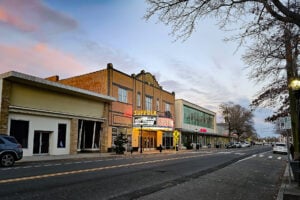
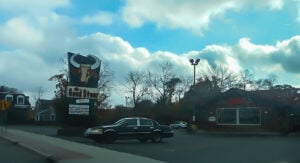
The Good Steer restaurant in Lake Grove, Long Island. The longtime Route 25 restaurant was one of the best-known dining landmarks in Suffolk County.
Long Island has always had restaurants that were much more than places to eat. They were the places where a family went after a Little League game, where grandparents took everyone for Sunday dinner, where high school friends celebrated a graduation, and where couples returned year after year for anniversaries. For those who grew up in Nassau and Suffolk counties during the second half of the 20th century, the names of certain restaurants can bring back an entire period of their lives.
The changes began long before the shopping centers and restaurant chains that now dominate so many Long Island roads. Older villages supported hotels, inns, taverns, and family dining rooms. After World War II, the suburban population exploded, and restaurants followed the new highways and neighborhoods. Sunrise Highway, Jericho Turnpike, Middle Country Road, and Old Country Road became important dining corridors. Some establishments served generations of customers at the same address, while others were part of regional chains that once seemed to be everywhere.
Long Island’s restaurants also developed their own personalities. You could watch a Lionel train deliver a hamburger in Huntington, eat fried chicken in a log cabin in Baldwin, dine beside airplanes at Republic Airport, or sit in a building that had been a working grist mill or an old Quaker home. These places were not interchangeable. Their food, dining rooms, signs, and proprietors gave them identities that stayed in people’s memories long after the doors shut.
Finding out exactly where some of these restaurants stood is not always easy. A number of their buildings have been demolished, renamed, or replaced by other businesses. Others have left behind menus, advertisements, newspaper articles, historical society records, and memories from former customers. The locations below identify a former street address when it can be established, or the original road and community when that is the most reliable surviving description.
These are 25 famous Long Island restaurants we miss because their original dining rooms are gone. Some were family-owned businesses that closed after generations. Others were regional chains whose Long Island locations disappeared. The names may live on in photographs and memories, but you can no longer walk through the doors of these restaurants and have the meal you remember.
1. The Good Steer (Lake Grove)
Former location: 2810 Middle Country Road (Route 25), Lake Grove.
I had to start with this one. If you remember the Good Steer, and you should because it has not been closed for too long, then you will remember driving by it and that incredible smell that they would pump out into the street that would lasso you into that parking lot and into that restaurant because you just had to eat what you smelled. It was those onion rings, oh Lord help me, those onion rings. And those burgers were probably the greatest hamburgers I’ve ever had in my life.
The Good Steer was one of those Long Island restaurants that almost seemed inseparable from the road on which it stood. The McCarroll family opened it in 1957, as the communities around Lake Grove were growing into the suburbs familiar today. Over the decades, the restaurant expanded from its hamburger-stand beginnings into a sprawling family dining establishment. Its neon steer sign, wooden interiors, and familiar menu were part of the experience. Customers remembered the thick burgers, onion rings, barbecue, and the signature Cheese Dream.
The McCarroll family operated the business for 65 years, and generations of customers returned with their own children and grandchildren. Rising food, utility, and other operating costs eventually made it impossible to continue. The Good Steer served its final customers on July 9, 2022. The closing was particularly painful because it was not simply another restaurant disappearing from a commercial strip. For many families in the Smithtown and Lake Grove area, it was where birthdays, reunions, and ordinary Friday nights had taken place for decades.
2. Raay-Nor’s Cabin (Baldwin)
Former location: 550 Sunrise Highway, Baldwin.
Raay-Nor’s Cabin was a South Shore landmark remembered for Southern-style fried chicken, corn fritters, and the atmosphere of a country log cabin in the middle of suburban Nassau County. Its history reaches back to the 1940s, when the building on Sunrise Highway became a destination for people who wanted a different kind of meal from the usual luncheonette or diner. The rustic appearance mattered almost as much as the food. The restaurant’s combination of familiar service and recipes made a trip to Baldwin feel like a family tradition.
The original cabin closed in 2005, but the story did not end there. The owners of the Maliblue restaurant in Lido Beach revived Raay-Nor’s chicken through limited engagements, even bringing back a former chef to teach the old preparations. Those special events are not a reopening of the old Sunrise Highway dining room, which is gone as Raay-Nor’s Cabin. They do, however, show how deeply a restaurant can remain part of Long Island’s memory when people are still eager to taste its food more than two decades later.
3. Hamburger Choo Choo (Huntington)
Former location: Corner of Main Street and New Street, Huntington Village.
Hamburger Choo Choo offered something that children never forgot: hamburgers and other food arriving on the flatbed cars of a model train that traveled around the counter. The Lionel train system turned an ordinary luncheonette meal into entertainment. Families could visit for hamburgers, French fries, milkshakes, or egg creams, but the little train was the real attraction. Its Main Street corner location made it a memorable part of shopping or spending an afternoon in Huntington Village.
On March 20, 1982, a fire broke out after grease ignited near the restaurant’s grill. A later account by the Halesite Fire Department describes how flames spread through the old wooden building and into neighboring shops. The restaurant was destroyed and never returned. It is a particularly well-documented piece of lost Huntington history: not only do former customers remember the train, but the community’s fire-service records preserve the event that ended one of the village’s most unusual eateries.
4. My Pi (Hicksville, Massapequa, and Huntington)
Former Long Island locations: Hicksville, opened in 1977; Massapequa, opened in 1980; and Huntington, opened in 1985.
For Long Islanders accustomed to New York-style pizza, My Pi offered a very different experience. The restaurant introduced diners to Chicago-style deep-dish pizza, with thick crusts, substantial toppings, and pies that required more time in the oven than a typical New York slice. My Pi was originally a Chicago company, but its franchised Long Island restaurants attracted customers who wanted something unusual without traveling to Manhattan or another state.
The company’s own historical location list identifies the three Long Island openings, making it possible to distinguish the different communities rather than relying on vague memories of a My Pi somewhere near a shopping mall. The Long Island locations eventually disappeared as the business contracted. The last remaining My Pi in Chicago closed in June 2025. For former customers on Long Island, the name recalls a period when deep-dish pizza was a novelty, not something easily found among countless competing pizza styles.
5. Cooky’s Steak Pub (Hicksville)
Former location: 400 Old Country Road, Hicksville.
Cooky’s Steak Pub was built around an approach to family dining that seemed perfectly suited to Long Island in the 1970s, 1980s, and early 1990s. The restaurant offered substantial meals, steakhouse favorites, and the kind of generously stocked salad bar that became a selling point for an entire generation of casual dining chains. Many former customers especially remember the banana bread. It was not just another side dish; for some, it is the first thing that comes to mind when Cooky’s name is mentioned.
A surviving 1993 advertisement in the Hicksville Illustrated News places Cooky’s at 400 Old Country Road and promotes a family takeout dinner with chicken, shrimp, salads, soup, and a loaf of banana bread. That advertisement provides something better than a vague recollection: a documented address and an actual example of what the restaurant was selling near the end of its era. Cooky’s eventually disappeared from the Long Island dining scene, but its food and generous portions remain part of the nostalgia for the old suburban steak pub.
6. 56th Fighter Group Restaurant (East Farmingdale)
Former location: Republic Airport, off Route 110, East Farmingdale.
The 56th Fighter Group Restaurant made dining out feel like visiting a World War II exhibit. Located beside the runways at Republic Airport, it was filled with aviation memorabilia and designed to resemble a wartime headquarters. Diners could look toward the airfield, listen to music from an earlier era, and enjoy the unusual setting of a restaurant connected to the aviation history of Farmingdale. Its name honored the fighter group that flew Republic-built P-47 Thunderbolts during the war.
The restaurant opened in the 1980s and became especially popular for celebrations, Sunday brunch, and meals where the surroundings mattered as much as the menu. It closed on August 12, 2012, after approximately 28 years. Reporting at the time indicated that a lease-renewal agreement could not be reached. The location had a natural historical connection: Republic Aviation had made Farmingdale an important center of wartime aircraft production. The restaurant was part dinner destination and part reminder of that industrial and military past.
7. Sun Ming Restaurant (Huntington Station)
Former location: 1000 West Jericho Turnpike, at Round Swamp Road, Huntington Station.
For more than four decades, Sun Ming was one of the familiar Chinese restaurants on the Jericho Turnpike corridor. Its large building at the corner of Round Swamp Road was a recognizable landmark, and families came for traditional American Chinese dishes such as wonton soup, egg rolls, spare ribs, and fried rice. The restaurant had a long history on the property: local historical research traces several earlier establishments in the building before it became Sun Ming in the 1960s.
Sun Ming closed in 2009. The former restaurant building remained vacant afterward, becoming a conspicuous reminder of a place that had once served generations of local customers. Contemporary business reporting identified the address and documented both the closure and the difficulty of finding a new use for the property. Restaurants like Sun Ming were an important part of Long Island’s older family-dining landscape, where an evening of Chinese food might be as much a weekly ritual as a special occasion.
8. Wetson’s (Levittown and Other Long Island Communities)
Original Long Island location: Levittown, with additional restaurants across Nassau and Suffolk counties.
Long before national hamburger chains occupied so many Long Island intersections, Wetson’s had developed its own local fast-food identity. Brothers Herb and Errol Wetanson opened the first restaurant in Levittown in 1959, drawing inspiration from the original McDonald’s operation in California. The timing was ideal. Levittown and surrounding suburbs were filled with young families, automobiles, and shoppers looking for inexpensive meals served quickly.
Wetson’s became known for hamburgers, fries, bright signs, and the mascots Wetty and Sonny. The chain expanded across Long Island and into other parts of the metropolitan region, eventually operating dozens of locations. National competitors with enormous advertising budgets steadily crowded the market, and Wetson’s disappeared during the 1970s. Its story is a distinctive chapter in Long Island’s postwar suburban history because the restaurant concept grew directly from the needs and habits of the region’s new neighborhoods.
9. Beefsteak Charlie’s (Multiple Long Island Locations)
Former locations: Several restaurants in Nassau and Suffolk counties, including locations remembered in the Huntington and Merrick areas.
Beefsteak Charlie’s represented a particular era of steakhouse dining when abundance was an essential part of the advertisement. It was famous for big salad bars, peel-and-eat shrimp, and promotions that included unlimited beer, wine, or sangria with qualifying meals. The attraction was not fine dining in the traditional sense. It was the promise that a family could go out for steaks and get what seemed like an extraordinary amount of food for the price.
The restaurants were part of a larger metropolitan chain rather than a uniquely Long Island business, but former diners across the Island remember them vividly. As the chain changed ownership and later struggled financially, the familiar Beefsteak Charlie’s signs disappeared. It remains one of the clearest examples of a restaurant concept whose very name recalls a vanished period in American casual dining, when an elaborate salad bar could be the main reason to choose a steakhouse.
10. The Jolly Fisherman (Roslyn)
Former location: 25 Main Street, Roslyn, overlooking the Roslyn Duck Pond.
The Jolly Fisherman and Steak House became one of Nassau County’s best-known special-occasion restaurants after the Scheiner family took over in 1957. Diners remembered the seafood, attentive service, and unusual sense of continuity. Its location beside the Roslyn Duck Pond gave it a setting that felt removed from the surrounding traffic, while its dining room preserved the atmosphere of an old-fashioned restaurant where families might return for decades. The traditional relish tray and generous breadbasket were part of the experience.
The Jolly Fisherman closed in June 2023 after a 66-year run under the Scheiner family. The building was leased to Pietro’s, a Manhattan restaurant that opened there later that year, although that venture also closed in 2024. Roslyn’s historic Main Street setting remained, but one of the village’s longest-running dining identities was gone. The Roslyn Landmark Society has documented both the building and the restaurant’s history, including its place in the surrounding historic commercial district.
11. Maine Maid Inn (Jericho)
Former location: 4 Old Jericho Turnpike, Jericho.
There were few Long Island dining rooms with a setting as historically rich as the Maine Maid Inn. The restaurant operated in the former Valentine Hicks house, an early Jericho building associated with the area’s Quaker community and the antislavery movement. Local historians have connected the house with the Underground Railroad, including a concealed stairway believed to have been used to shelter people escaping enslavement. The building’s historical importance was much older than its years as a restaurant.
The Maine Maid name originally belonged to another property across Jericho Turnpike before moving to the Hicks house around 1950. Diners who came for American meals and celebrations were therefore eating in a structure that had witnessed several different chapters of Long Island history. The restaurant closed in 2009. Although the historic building later attracted restoration and reuse proposals, the Maine Maid Inn itself belongs to the Island’s restaurant past. Its location is recorded by the Town of Oyster Bay among the town’s designated landmarks.
12. Bavarian Inn (Lake Ronkonkoma)
Former location: On the shoreline of Lake Ronkonkoma, Suffolk County.
The Bavarian Inn was remembered as both a German restaurant and a major banquet and wedding destination. Its lakeside setting gave receptions and dinners a memorable backdrop, and people traveled there for the combination of traditional food, large celebrations, and the view across Lake Ronkonkoma. Former employees and customers later recalled weddings, birthdays, and family gatherings that had taken place in the large restaurant over many decades.
Flooding eventually made the property unusable, and the business closed around 2007. The abandoned building deteriorated badly and attracted repeated complaints as it stood beside the lake. In September 2013, demolition crews began taking down the structure. Contemporary television reporting captured the conflicting emotions: some neighbors welcomed the removal of a dangerous, neglected building, while others mourned the disappearance of a place that had hosted some of the most important family celebrations of their lives.
13. Beau Sejour (Bethpage)
Former location: The intersection of Stewart Avenue and Central Avenue, Bethpage, formerly known as Central Park, Long Island.
Long before today’s restaurant corridors developed, Beau Sejour attracted people who wanted an elegant country dinner outside New York City. Its history reached back to the early 1900s, and it became known for French-influenced cooking, attractive grounds, and careful service. In the 1930s, The New Yorker praised the restaurant’s food and hospitality. The kind of dishes that attracted attention included guinea hen, wild rice, homemade preserves, and freshly baked bread. This was destination dining in an era when a drive into Nassau County could still feel like a trip to the country.
The Wilson family operated Beau Sejour for decades, and historical accounts connect it with prominent visitors as well as generations of ordinary Long Island diners. A later New Yorker review placed the restaurant about a mile east of Route 107 on Central Avenue. The old restaurant closed in the 1970s, and local historical research records its demolition in 1974. Beau Sejour deserves a place on this list not simply because people remember it, but because vintage advertisements and published restaurant criticism preserve a remarkable picture of how Long Islanders dined before the great suburban restaurant boom.
14. Guy Lombardo’s East Point House (Freeport)
Former location: The southern end of South Grove Street, now Guy Lombardo Avenue, on Freeport’s waterfront.
Guy Lombardo’s East Point House combined the glamour of a famous bandleader with the recreational boating culture of Freeport. The restaurant had previously operated as Liota’s East Point House before Lombardo became involved and lent his name to it. The connection was natural. Lombardo was not only an extraordinarily successful musician whose New Year’s Eve broadcasts became an American tradition, but also an enthusiastic speedboat racer with strong ties to Freeport.
The restaurant’s waterfront location allowed diners to enjoy the boating activity that had helped make Freeport’s southern end a destination. A historic postcard preserved by the Freeport Memorial Library shows East Point House and Lombardo in his speedboat, Tempo. The dining establishment eventually disappeared, but the street’s name and local archival photographs preserve its history. East Point House is an especially unusual Long Island restaurant story because music, celebrity, waterfront recreation, and local business all came together in one place.
15. Riverbay Seafood Bar & Grill (Williston Park)
Former location: 700 Willis Avenue, Williston Park.
Riverbay was a familiar Nassau County destination for traditional seafood prepared without excessive fuss. Its background reached back to the Poll family’s earlier involvement with Pappas, the well-known Brooklyn seafood restaurant. A related restaurant opened in Williston Park in 1980 and became Riverbay in 1989. Customers came for fish, shellfish, and the feeling of a classic metropolitan seafood house transplanted into a Long Island neighborhood. Over time, the restaurant updated its menu while maintaining a loyal following.
Riverbay received recognition in local restaurant surveys and became a place where families returned for seafood dinners over many years. It closed in February 2013, and the owners pursued a different use for the property. Its address can be established through archived restaurant listings and food-service inspection records. The closure ended a restaurant tradition that linked Long Island dining with an older New York seafood culture, when restaurants built their reputations around fresh fish and reliable preparation rather than novelty.
16. Baldwin Coach Diner (Baldwin)
Former location: 790 Sunrise Highway, Baldwin.
The Baldwin Coach Diner was one of those dependable South Shore landmarks where breakfast might turn into a long conversation and the waitress might already know what a regular planned to order. Opened in 1964 by Peter Kanaras and his partners George Tsotsos and Tommy Matthews, it became a family business serving generations of people along Sunrise Highway. Its familiar booths, counter service, and large dining rooms were part of the experience. The menu mixed diner staples such as pancakes, omelets, sandwiches, and coffee with the substantial lunches and dinners that made Long Island diners destinations at any hour.
For decades, relatives worked alongside one another to keep the restaurant running. Trissy Kanaras-Navas and her brother John Kanaras later took responsibility for the business, and longtime employees became familiar faces to customers. The death of John in March 2025 was followed by the family’s difficult decision to close. The final day was April 10, 2025, ending 61 years of operation. The Baldwin Coach was not simply a restaurant with a long history; it was one of those places where strangers could sit down alone and still find a sense of community.
17. Canterbury Ales (Huntington)
Former location: 314 New York Avenue, Huntington Village.
Canterbury Ales developed a loyal following in Huntington with the look and feeling of an English pub. Dark wood, stained glass, cozy tables, and a painted Tudor-style exterior gave the building a distinctive appearance. Inside, the atmosphere was warm and informal. Its menu and beer selection made it a favorite with local residents who wanted something different from a conventional American restaurant, and it remained part of village life for more than 36 years.
Owner Billy Hoest announced the restaurant’s closure on August 26, 2013. His farewell message described the emotional and financial difficulty of ending a business that had occupied so much of his life. The building later became Sur Argentinean Steakhouse, and the exterior mural that had helped define Canterbury Ales was eventually painted over. The restaurant’s story is a reminder that even when a historic village building remains in use, the atmosphere and memories of the business it once housed cannot simply be recreated.
18. John Duck’s Restaurant (Southampton)
Former location: 15 Prospect Street, Southampton Village.
John Duck’s was one of the great old names in Southampton dining, a restaurant whose history reached back to the days before the Hamptons became internationally associated with luxury real estate and fashionable summer crowds. John Westerhoff founded the original family restaurant in Eastport around 1900, and the family later established its Southampton dining room in 1946. Its traditional atmosphere and substantial meals attracted residents, visitors, and generations of local families. The setting was unmistakably old-fashioned, with wood-paneled rooms and the kind of service that made people feel they were returning to a familiar house rather than entering a fashionable new restaurant.
The restaurant became especially associated with duck dishes, including duckling with Bing cherries, as well as other American classics. The Westerhoff family maintained the tradition across several generations, giving John Duck’s an extraordinary continuity in a resort region where restaurants frequently changed names and owners. The Southampton restaurant closed in 2008. Other establishments later occupied its Prospect Street building, but the original John Duck’s dining room and the family traditions behind it were gone. Few Long Island restaurant stories reach across so much of the 20th century.
19. Linck’s Log Cabin Inn (Centerport)
Former location: Route 25A, Centerport.
Linck’s Log Cabin Inn was a North Shore institution whose setting was part of its attraction. Families visited the rustic restaurant on Route 25A for hearty meals in a log-cabin atmosphere, and its stone fireplace helped give winter visits a special appeal. The business was established well before the postwar era. A Linck’s matchbook dating from approximately the 1940s survives in the Hofstra University Library’s Long Island Studies Institute collections, providing a tangible record of the establishment.
Linck’s had already closed before the fire that destroyed the old building in 1981. An account published by the Centerport Fire Department describes the blaze as a major event in local firefighting history. Former customers remember the restaurant’s position along the North Shore road as well as the building itself. Its story illustrates how easily the physical evidence of a beloved old restaurant can disappear, leaving photographs, matchbooks, fire records, and memories to preserve what once stood there.
20. Mac’s Steakhouse (Huntington)
Former location: 12 Gerard Street, Huntington Village.
Mac’s Steakhouse offered a more formal dining experience than many of the other restaurants in this collection. It became known for classic steakhouse service, substantial cuts of beef, and the sort of dining room where people celebrated anniversaries, entertained business guests, or went out for a special evening. Its Gerard Street location placed it close to the restaurants and shops that helped make Huntington Village a regional dining destination.
Mac’s closed in 2020, and the address later became home to The Farm Italy, which opened in 2023. Unlike restaurants that vanished because an entire building was demolished, Mac’s is remembered in a space that has continued to serve diners under a new name. That is part of the changing restaurant history of Huntington: a familiar storefront can remain while the menu, clientele, and traditions associated with an earlier business become part of the village’s past.
21. Big Barry’s (Rocky Point, Lake Grove, and Huntington)
Former locations: Route 25A in Rocky Point, opened in 1977; Route 25 in Lake Grove, opened in 1980; and Huntington, opened in 1983.
Big Barry’s made an enormous impression with its Western theme, inexpensive meals, and elaborate decorations. The restaurants were designed to resemble an Old West setting, with rustic details, novelty signs, and a playful approach to the menu. Customers remember being served large salads and substantial portions in an environment that was meant to make a family meal feel like a little adventure. The owner’s public persona, the restaurant advertising, and the buildings themselves were part of the concept.
Vintage advertisements in Stony Brook University’s student newspaper preserve the addresses by road and the restaurant’s actual menu prices, including dishes with names suited to its cowboy theme. Newsday later documented the opening sequence for Rocky Point, Lake Grove, and Huntington, and reported that founder Barry Layne sold the restaurants in 1994. Big Barry’s is a particularly good example of why historical advertising matters: it reveals the old restaurant’s personality far more clearly than a modern one-sentence description ever could.
22. Shiki Japanese Restaurant (Babylon Village)
Former location: 233 East Main Street, Babylon Village.
Shiki Japanese Restaurant was part of the period when sushi dining was becoming more familiar in suburban Long Island communities. Located on East Main Street in Babylon Village, it served Japanese dishes including sushi, sashimi, and cooked entrees to customers who increasingly sought out restaurants beyond the conventional Italian, Chinese, and American choices that had long dominated many suburban dining corridors.
A 1997 restaurant review in an archived local publication identifies Shiki’s Babylon address and also lists another Shiki location in Smithtown. Later business directories record the Babylon establishment as closed, with another Japanese restaurant occupying its former East Main Street address. Shiki was not the only Japanese restaurant on Long Island, but it belongs to an important chapter in the Island’s food history, when restaurant choices in communities such as Babylon became much more diverse.
23. The Schooner (Port Jefferson)
Former location: South side of West Broadway (Route 25A), near Port Jefferson Harbor.
It would have been difficult to mistake The Schooner for an ordinary waterfront restaurant. Its building actually began life as a sailing yacht named Ilikamo, which brothers Charles and Elmer Mapp discovered in a Riverhead boatyard and brought to Port Jefferson. After placing the vessel on land, they converted it into a restaurant without stripping away the ship’s recognizable character. The Schooner opened in October 1946, and its white hull and tall masts became one of the most unusual sights along West Broadway. At night, electric lights outlined the sails for motorists and people out on the water.
The early menu included short-order favorites with nautical names. A subsequent owner, Rose Ceperano, bought the establishment in 1949 and expanded its kitchen, dining space, and menu. At different times it operated seasonally and appeared under the name Tom’s Schooner. The restaurant remained a Port Jefferson landmark until the property changed hands and the old vessel was demolished in April 1968. A different restaurant building subsequently took its place. The Schooner belongs on a list of lost Long Island restaurants for a very simple reason: the original dining room was literally a ship, and nothing quite like it remains.
24. Golden Coach Diner (Huntington)
Former location: 350 West Jericho Turnpike, Huntington.
The Golden Coach Diner stood along Jericho Turnpike for 45 years, becoming one of Huntington’s familiar places for breakfasts, late-night meals, coffee, and conversations that lasted long after the plates had been cleared. Harry Korines opened the diner in 1980, building a business that relied on regular customers and family participation. Like the best Long Island diners, it served people who did not necessarily need a special occasion to eat there. A booth could be the place to meet friends, bring the family after an event, or spend a little time before heading home.
After Harry’s death, his wife and co-owner Maria Korines faced the difficult task of continuing the restaurant without him. In April 2025, the Korines family announced that Maria would retire and that the diner would close. The Golden Coach served its last customers on April 14, 2025. Former patrons shared stories about the years they had spent there and the people they had come to know. Its closing was another reminder that Long Island’s classic diners were often family institutions as much as they were businesses.
25. Don Ricardo’s (Babylon Village)
Former location: 94 East Main Street, Babylon Village.
Don Ricardo’s was a favorite South Shore destination for Mexican and Spanish food, colorful surroundings, and an indoor courtyard that helped give the restaurant its distinctive character. Ricardo and Monica Benavides opened the business in 1989, developing a following that lasted for three decades. Customers returned for family dinners, celebrations, and margaritas in a setting that felt different from almost anything else on Babylon’s Main Street.
The Benavides family announced their retirement in 2019, and Don Ricardo’s served its final dinner on June 13 of that year. News reports described long lines of customers who wanted one more meal before the doors closed. The address has since housed other restaurant concepts, but the old Don Ricardo’s interior and the relationship its owners had with their regular customers made it difficult to replace. For many Babylon residents, it remains one of the most fondly remembered restaurants the village has lost.
It is tempting to think of these restaurants only in terms of their food, but the addresses tell an equally important story. Some stood on roads that were once surrounded by open land and later became crowded shopping corridors. Others occupied historic buildings, waterfront properties, or the main streets of established villages. Some vanished in fires or were demolished; some closed after decades of rising costs; and some simply gave way to a new restaurant at the same address. Together, they trace a history of how Long Islanders lived, traveled, and spent time with their families.
For more memories of New York’s restaurants and businesses, read our articles on 10 classic New York restaurants we miss the most, the history of Chock Full o’Nuts coffee shops and lunch counters, and the history and memories of Bohack’s grocery stores.