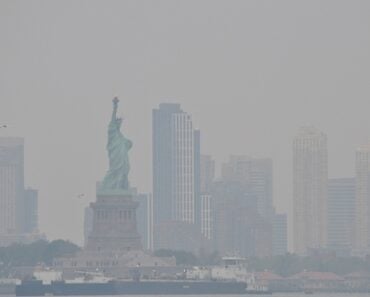

New York City and Chicago compared by population, land area, density, and metropolitan size.
Ask a Chicagoan and a New Yorker to settle the difference between their two cities, and you will not get a conversation. You will get a debate that has been running for decades and shows no sign of stopping.
It shows up everywhere. It showed up on the basketball court every spring in the 1990s, when Michael Jordan’s Bulls stood between Patrick Ewing’s Knicks and a championship in some of the most physical, personal playoff series the NBA has ever produced. Those were exciting games, but as a New Yorker, usually pretty painful. It shows up on the baseball map too, with the Yankees and White Sox representing one side of each city’s identity and the Mets and Cubs forming a strange mirror image, two franchises that spent generations carrying the frustrations of their fans before eventually breaking through. It shows up, perhaps most passionately of all, on a plate. Ask a New Yorker about deep-dish pizza, and you will get a lecture about why a casserole is not pizza. Ask a Chicagoan about a folded slice, and you will get an equally firm lecture in return.
All of that is real, and all of it is glorious, but none of it settles the question examined here. Sports rivalries and pizza opinions are exactly that, opinions. What can be settled with actual numbers is the more basic question beneath the rivalry: Is Chicago bigger than New York City, by how much, and according to which measurement?
The answer depends on whether “bigger” means population, land area, total municipal area, population density, or metropolitan reach. Every one of those measurements tells a slightly different story. However, when Chicago and New York City are compared within their official municipal boundaries, New York City is larger by every major measure used in this article.
Is Chicago Bigger Than New York City?
No. New York City has a substantially larger population, covers more land, occupies a larger total municipal area, has a much higher population density, and anchors a metropolitan area with more than twice the population of Chicagoland.
The latest completed U.S. Census Bureau estimates place New York City’s population at 8,584,629 and Chicago’s at 2,731,585. Those figures are estimates for July 1, 2025. The geographic measurements come from the 2020 Census, which lists New York City with 300.45 square miles of land and Chicago with 227.73 square miles.
New York City vs. Chicago at a Glance
| Measurement | New York City | Chicago | Larger City |
|---|---|---|---|
| 2025 city population estimate | 8,584,629 | 2,731,585 | New York City |
| Land area | 300.45 square miles | 227.73 square miles | New York City |
| Total municipal area | Approximately 472.4 square miles | Approximately 234.5 square miles | New York City |
| Estimated population density | Approximately 28,573 people per square mile | Approximately 11,995 people per square mile | New York City |
| 2025 metropolitan-area population | 20,112,448 | 9,434,123 | New York metropolitan area |
| United States city population rank | 1 | 3 | New York City |
The density figures above were calculated by dividing each city’s 2025 population estimate by its 2020 land area. Municipal boundaries do not usually change from year to year, while population estimates are updated annually.
Population: New York City Is More Than Three Times Larger
Population produces the clearest difference between the two cities. New York City’s estimated population exceeds Chicago’s by 5,853,044 people. Put another way, New York City has approximately 3.14 times as many residents as Chicago.
New York City remains the most populous city in the United States, a position it has held in every federal census since the first national census in 1790. Chicago ranks third, behind New York City and Los Angeles.
New York City’s population is distributed among five boroughs: Brooklyn, Queens, Manhattan, the Bronx, and Staten Island. Chicago is divided into 77 officially recognized community areas, although those community areas are not separate municipal governments. Both cities contain neighborhoods with powerful identities, but New York’s five-borough structure creates a particularly large and varied city within one municipal government.
Land Area: New York City Also Covers More Ground
Chicago can appear larger from certain perspectives because of its broad street grid, extensive bungalow neighborhoods, and long Lake Michigan shoreline. Official land measurements tell a different story.
New York City contains 300.45 square miles of land, compared with Chicago’s 227.73 square miles. That makes New York City approximately 31.9 percent larger than Chicago by land area.
The difference comes partly from New York City’s unusual geography. Its boundaries encompass five boroughs spread across islands, peninsulas, and the mainland. Queens and Brooklyn occupy the western end of Long Island, Manhattan and Staten Island are islands, and the Bronx is connected to the mainland United States.
Chicago’s municipal form is more compact. It extends along the southwestern shore of Lake Michigan and spreads inland through a largely continuous street grid. Its shape may feel broad and uninterrupted, but the city contains roughly 72.7 fewer square miles of land than New York City.
Total Area: Water Makes the Difference Even Greater
Total municipal area includes both land and water located within official city boundaries. New York City’s total area is approximately 472.4 square miles, including nearly 172 square miles of water. Chicago’s total area is approximately 234.5 square miles, including about 6.8 square miles of water.
New York City’s water territory includes portions of New York Harbor, Jamaica Bay, the East River, the Hudson River, Long Island Sound, and other waterways surrounding the five boroughs. Chicago sits beside Lake Michigan, but most of the lake itself is not contained within the city’s municipal boundary.
Total area can be useful for understanding municipal geography, but land area is the more meaningful figure when comparing where residents live and where buildings, roads, parks, and other physical development can be placed.
Population Density: New York City Is Far More Crowded
New York City’s larger population is packed into a land area only about one-third larger than Chicago’s. Using the 2025 population estimates and the 2020 land figures, New York City has an estimated density of approximately 28,573 people per square mile. Chicago’s comparable figure is approximately 11,995 people per square mile.
That makes New York City roughly 2.38 times as densely populated as Chicago.
The contrast can be seen in the cities’ housing patterns. New York City contains enormous concentrations of apartment buildings, high-rise towers, row houses, and older multifamily structures. Manhattan represents the most extreme version of that density, but heavily populated sections of Brooklyn, Queens, and the Bronx also place large numbers of residents within relatively small areas.
Chicago has a dense downtown and many compact neighborhoods, particularly around the Loop, the Near North Side, Lakeview, and transit corridors. Farther from the center, however, large sections of the city contain two-flats, three-flats, bungalows, detached houses, industrial areas, and lower-density residential blocks. Those neighborhoods reduce Chicago’s citywide population density.
Metropolitan Population: New York’s Regional Reach Is More Than Twice as Large
City-limit comparisons do not capture the full economic and cultural reach of either city. Both are centers of much larger metropolitan regions that cross county and state boundaries.
The Census Bureau’s 2025 estimate places the New York-Newark-Jersey City metropolitan area at 20,112,448 residents. That region includes New York City and surrounding communities in New York and New Jersey.
The Chicago-Naperville-Elgin metropolitan area had an estimated population of 9,434,123. Chicagoland extends from northeastern Illinois into northwestern Indiana and includes a wide suburban and exurban belt.
The New York metropolitan area is therefore approximately 2.13 times as populous as the Chicago metropolitan area. New York remains the largest metropolitan area in the United States, while Chicago remains one of the nation’s largest and most economically important urban regions.
Why Chicago Can Sometimes Feel Bigger
Statistics do not always match a visitor’s visual impression. Chicago may feel more expansive because its street grid spreads continuously across broad sections of relatively flat land. Major roads often run in long, straight lines, and the skyline can be seen from great distances across the city and along Lake Michigan.
New York City is geographically fragmented. Water separates the boroughs, and the city is experienced through bridges, tunnels, ferries, subway lines, and separate neighborhood centers. A visitor who spends most of a trip in Manhattan may forget that Brooklyn, Queens, the Bronx, and Staten Island are all part of the same city.
Chicago’s downtown also presents a powerful and concentrated skyline. The Loop, the Chicago River, and the lakefront create a visual scale that can make the city seem equal to or larger than New York. New York’s much greater population and land area become clearer only when the complete five-borough city is considered.
Which City Has the Larger Downtown?
There is no single federal measurement defining the geographic boundaries of a downtown. Chicago’s central business district is commonly associated with the Loop and surrounding areas, while New York contains several major business centers rather than one downtown district.
Lower Manhattan functions as the city’s historic downtown, but Midtown Manhattan contains an even larger concentration of offices, hotels, theaters, transportation hubs, and skyscrapers. Downtown Brooklyn, Long Island City, and other business districts add to New York City’s decentralized urban structure.
Chicago’s Loop is one of the most clearly defined downtown districts in the United States. It is compact, architecturally dramatic, and surrounded by major neighborhoods and transportation routes. New York, however, contains a larger overall concentration of population, employment, buildings, and commercial activity spread across several central districts.
Is London Bigger Than New York City?
London provides a useful reminder that city comparisons depend on boundaries. Greater London covers approximately 607 square miles, nearly twice New York City’s land area. Its population is approximately 9.1 million, placing it close to New York City’s population.
Because Greater London spreads a similar number of residents across considerably more land, New York City is much more densely populated. However, Greater London and New York City are governed and defined differently, so the comparison is not perfectly equivalent.
The same problem appears whenever cities around the world are ranked. Some municipal boundaries include vast suburban or rural territory, while others contain only a compact urban core. City-proper statistics should therefore be compared separately from metropolitan-area statistics.
Frequently Asked Questions
Is Chicago bigger than New York City by population?
No. The Census Bureau’s 2025 estimates place New York City at 8,584,629 residents and Chicago at 2,731,585. New York City has approximately 3.14 times Chicago’s population.
Is Chicago bigger than New York City by land area?
No. New York City contains 300.45 square miles of land, while Chicago contains 227.73 square miles. New York City is approximately 31.9 percent larger by land area.
Is Chicago more densely populated than New York City?
No. Using the latest population estimates and official land-area figures, New York City has approximately 28,573 residents per square mile, compared with approximately 11,995 in Chicago.
Which metropolitan area is larger?
The New York-Newark-Jersey City metropolitan area is larger. Its estimated 2025 population was 20,112,448, compared with 9,434,123 for the Chicago-Naperville-Elgin metropolitan area.
Which city is larger: New York, Los Angeles, or Chicago?
By population, New York City ranks first, Los Angeles ranks second, and Chicago ranks third. By land area, Los Angeles is the largest of the three at 469.49 square miles, followed by New York City at 300.45 square miles and Chicago at 227.73 square miles.
What is the final answer?
New York City is bigger than Chicago by population, land area, total municipal area, population density, and metropolitan population. Chicago remains one of the largest and most influential cities in the United States, but every principal measurement used here gives the size advantage to New York.
More About New York City
Continue exploring the size, landscape, and character of New York City with our guides to getting around all five boroughs, the ten tallest buildings in New York City, and the history of the Brooklyn Bridge.
Published July 30, 2026.