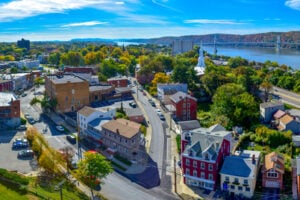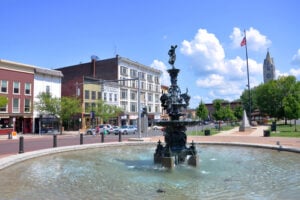
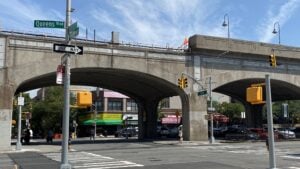
Sunnyside, Queens Photo by Brian Kachejian
The Neighborhoods Your Broker Never Mentions
Every year, some fresh-faced twenty-something moves to New York with a duffel bag, a dream, and a budget that a real estate agent laughs at over the phone. Every year, that same person eventually discovers what generations of New Yorkers already know. The best-kept secret in this city was never a doorman building in Chelsea. It is a rent-stabilized two-bedroom above a Dominican bakery in Inwood, or a prewar co-op in the Bronx where your grandmother’s friends still play dominoes in the courtyard.
Finding an affordable apartment in New York City often feels like hunting for a needle in a haystack the size of a haystack. Manhattan’s median rent climbed above $5,000 during 2026, while the citywide median asking rent approached $4,000. Budget-conscious renters, young professionals, and lifelong New Yorkers who refuse to leave are all looking in the same direction, north and outward, toward the Bronx, Upper Manhattan, and the farther reaches of Brooklyn and Queens.
Here is the good news nobody puts in the glossy real estate ads. You do not always have to trade culture, green space, or subway access for a lower rent check. Some of the most architecturally distinctive, food-obsessed, and genuinely lived-in neighborhoods in this city remain less expensive than the central Manhattan market. This is not a list of consolation prizes. This is a list of neighborhoods that helped build New York and are still holding the line while the rest of the city loses its mind over square footage.
The NYC Rental Equation: Value vs. Commute
Every seasoned New York renter knows the classic tradeoff by heart. You pay in dollars, or you pay in minutes. There is no secret loophole or neighborhood that gives everyone a five-minute commute to Midtown and a rent check under $2,000. The city simply does not work that way.
The ten neighborhoods below can cost substantially less than central Manhattan while keeping renters connected to the subway, Metro-North, or NYC Ferry. None of them requires a car for daily life, although the convenience of individual apartments varies greatly by distance from a station. Every neighborhood also has its own personality, food scene, architecture, and history, which is more than you can say for a lot of glass boxes.
Rent figures below are estimated asking-rent ranges for one-bedroom apartments observed during 2026, not guaranteed medians. Inventory can be thin in several of these neighborhoods, and advertised rents can change quickly. Commute times are approximate and depend on the exact station, time of day, transfers, and service changes.
| Neighborhood | Borough | Estimated 1BR Asking Range | Primary Transit | Approximate Midtown Trip |
|---|---|---|---|---|
| Parkchester | The Bronx | $1,900 to $2,200 | 6 and peak-direction <6> | 35 to 45 minutes |
| Inwood | Manhattan | $2,500 to $2,800 | A and 1 | 30 to 40 minutes |
| Flatbush | Brooklyn | $2,700 to $3,200 | 2, 5, B, and Q, depending on location | 35 to 50 minutes |
| Bay Ridge | Brooklyn | $2,500 to $2,900 | R and NYC Ferry | 45 to 55 minutes by subway |
| Ridgewood | Queens | $2,800 to $3,300 | M and L | 30 to 45 minutes |
| Pelham Bay | The Bronx | $2,200 to $2,900 | 6 | 50 to 60 minutes |
| Washington Heights | Manhattan | $2,800 to $3,300 | A, C, and 1 | 20 to 35 minutes |
| Sunnyside | Queens | $2,600 to $3,000 | 7 | 15 to 25 minutes |
| Sunset Park | Brooklyn | $2,400 to $2,900 | D, N, and R | 30 to 45 minutes |
| Riverdale | The Bronx | $2,300 to $2,900 | Metro-North, express buses, and local buses to the 1 | 25 to 35 minutes by Metro-North |
1. Parkchester, The Bronx
Estimated 1BR Asking Rent: $1,900 to $2,200
Transit: 6 train at Parkchester and Castle Hill Avenue; peak-direction <6> express service stops at Parkchester.
Approximate Midtown Trip: 35 to 45 minutes.
Parkchester is not merely an affordable pocket of the Bronx. It is a genuine piece of American housing history. Built by the Metropolitan Life Insurance Company and opened in stages beginning in 1940, Parkchester was one of the country’s largest planned residential developments, a self-contained city within a city created to give working-class New Yorkers modern apartments with light, air, shops, and green space.
Walk through today and you will find more than 12,000 apartment units spread across 171 red-brick buildings, arranged around landscaped courtyards, fountains, and terracotta sculptures depicting everything from soldiers to circus animals. The neighborhood still functions much as its designers intended, with a major commercial district along Metropolitan Avenue and a tight-knit, multigenerational community. Add the 6 train, the peak-direction express stop at Parkchester, and the BxM6 express bus, and you get one of the strongest rent-to-convenience ratios in New York City.
2. Inwood, Upper Manhattan
Estimated 1BR Asking Rent: $2,500 to $2,800
Transit: A and 1 trains.
Approximate Midtown Trip: 30 to 40 minutes, depending on the station and destination.
Inwood sits at the northern tip of Manhattan, and parts of it feel as though they belong to a different city. Inwood Hill Park preserves Manhattan’s last natural forest and its last natural salt marsh, along with hiking trails, glacial formations, and archaeological evidence of centuries of Indigenous activity.
The housing stock is a huge part of the draw. Inwood is filled with spacious prewar buildings offering generous room dimensions, real hallways, and actual bedroom doors, features that renters farther downtown often pay much more to obtain. The neighborhood carries a strong Dominican cultural identity, with lively bodegas, produce stands, and restaurants along Dyckman Street and Broadway. History buffs will also encounter the traditional story that associates this area with Peter Minuit’s 1626 purchase of Manhattan, although historians treat the precise location and details as legend rather than settled fact.
3. Flatbush, Brooklyn
Estimated 1BR Asking Rent: $2,700 to $3,200
Transit: 2, 5, B, and Q trains, depending on the section of Flatbush.
Approximate Midtown Trip: 35 to 50 minutes.
Flatbush is enormous, historic, and impossible to sum up in one sentence, which is exactly its charm. It developed from one of Brooklyn’s original Dutch settlements and remains one of the borough’s most culturally layered areas.
Renters can find prewar brick buildings, postwar elevator buildings, and smaller multifamily homes, although prices and subway access vary dramatically from one section to another. The neighborhood’s Caribbean communities, particularly Haitian, Jamaican, and Trinidadian, have built one of the richest food and cultural corridors in Brooklyn, with roti shops, jerk restaurants, bakeries, and markets lining the avenues. Prospect Park sits near its northern edge, while the restored Kings Theatre, a 1929 movie palace turned concert venue, remains one of the borough’s architectural showpieces.
4. Bay Ridge, Brooklyn
Estimated 1BR Asking Rent: $2,500 to $2,900
Transit: R train and NYC Ferry service from the Bay Ridge landing.
Approximate Midtown Trip: 45 to 55 minutes by subway. Ferry travel is better suited to Lower Manhattan and the East Side, depending on the schedule.
Bay Ridge feels like a small coastal town that accidentally became attached to New York City. Framed by the Verrazzano-Narrows Bridge, which was the world’s longest suspension bridge when it opened in 1964, and by the waterside paths of Shore Road Park, the neighborhood offers a quieter rhythm than many parts of Brooklyn.
The housing stock includes brick row houses, limestone homes, and sturdy prewar elevator buildings. The Scandinavian and Italian heritage of earlier generations remains visible, while newer Middle Eastern communities have added bakeries, restaurants, markets, and cultural institutions to 3rd and 5th Avenues. NYC Ferry service gives residents another option, but schedules and route patterns should always be checked before treating the boat as a daily commute.
5. Ridgewood, Queens
Estimated 1BR Asking Rent: $2,800 to $3,300
Transit: M and L trains.
Approximate Midtown Trip: 30 to 45 minutes, depending on the station and transfer.
Ridgewood sits along the Brooklyn-Queens border beside Bushwick and has spent years absorbing some of North Brooklyn’s artistic energy. It is no longer the bargain it once was, but its rents can still compare favorably with Williamsburg, Greenpoint, and central Bushwick.
The neighborhood contains several historic districts filled with rows of brick and terracotta houses built during the late 19th and early 20th centuries. Its old-world backbone now shares the sidewalk with newer restaurants, bars, coffee shops, and music spaces. German and Polish businesses remain part of the landscape, while the M train connects the neighborhood with Midtown and the L connects it with Williamsburg and Manhattan’s 14th Street corridor.
6. Pelham Bay, The Bronx
Estimated 1BR Asking Rent: $2,200 to $2,900
Transit: 6 train at Pelham Bay Park, plus local and express buses.
Approximate Midtown Trip: 50 to 60 minutes by subway.
Pelham Bay sits in the northeastern Bronx beside the city’s largest public park. Pelham Bay Park covers roughly 2,772 acres, making it more than three times the size of Central Park.
Renters find a mix of low-rise apartment buildings, multifamily homes, and newer developments. The park offers wooded trails, shoreline, athletic fields, and access to Orchard Beach, although reaching the beach itself generally requires a bus or additional travel from the subway terminal. City Island is also nearby, offering seafood restaurants, marinas, and a nautical atmosphere that feels far removed from the rest of New York City.
7. Washington Heights, Upper Manhattan
Estimated 1BR Asking Rent: $2,800 to $3,300
Transit: A, C, and 1 trains.
Approximate Midtown Trip: 20 to 35 minutes, with the A offering the fastest trips from express stations.
Washington Heights offers one of the strongest commute-to-space combinations in Manhattan. Renters should pay close attention to the exact station, however, because the neighborhood is large, hilly, and served by both express and local routes.
The neighborhood takes its name from Fort Washington, the Revolutionary War stronghold that once stood near Manhattan’s highest natural point. Today, Washington Heights is home to one of the country’s largest Dominican communities, with restaurants, street vendors, bodegas, and music shaping daily life. Fort Tryon Park and The Met Cloisters provide dramatic Hudson River views, while many side streets contain prewar apartment buildings with high ceilings, hardwood floors, and larger rooms than renters typically find downtown.
8. Sunnyside, Queens
Estimated 1BR Asking Rent: $2,600 to $3,000
Transit: 7 train.
Approximate Midtown Trip: 15 to 25 minutes.
Sunnyside remains one of the more practical choices for renters who want a short trip to Midtown without paying Long Island City prices. The 7 train reaches Grand Central quickly, although most neighborhood stations are local stops and service disruptions can change the equation. My Uncle Harry lived here for 40 years right across the street from Wendays, which still stands on the corner. I love this neighborhood.
The neighborhood’s architectural centerpiece is Sunnyside Gardens, a planned community built during the 1920s and influenced by the English Garden City movement. Shared courtyards, common green space, and low-rise homes give the landmarked district a distinctive character. Around Queens Boulevard and Skillman Avenue, old-school Irish pubs (I used to play with my band in many of them), Turkish restaurants, bakeries, and Colombian and Ecuadorian businesses create a food scene that is much larger than the neighborhood’s compact size would suggest.
9. Sunset Park, Brooklyn
Estimated 1BR Asking Rent: $2,400 to $2,900
Transit: D, N, and R trains.
Approximate Midtown Trip: 30 to 45 minutes.
Sunset Park takes its name from the hilltop park at its center, where a clear evening can deliver one of the best free views of Lower Manhattan, New York Harbor, and the Statue of Liberty.
The neighborhood contains several communities within one set of borders. Brooklyn’s Chinatown stretches along 8th Avenue, while a large Latino community anchors much of 5th Avenue with taquerias, bakeries, shops, and cultural organizations. The industrial waterfront, once dominated by Bush Terminal, now includes Industry City’s restored warehouse complex. Express D and N service from selected stations can keep Manhattan trips manageable, while the R provides local service through the neighborhood.
10. Riverdale, The Bronx
Estimated 1BR Asking Rent: $2,300 to $2,900
Transit: Metro-North’s Hudson Line, BxM express buses, and local buses connecting with the 1 train at Van Cortlandt Park-242nd Street.
Approximate Midtown Trip: 25 to 35 minutes from Riverdale Station to Grand Central, not including travel to the station.
Riverdale might be the closest thing New York City offers to suburban living without leaving the five boroughs. Overlooking the Hudson River and the New Jersey Palisades, the neighborhood is defined by green hills, winding roads, apartment complexes, private homes, and a level of quiet that feels unusual this close to Manhattan. In the old days, the smell of the Stella Dora factory would ruin everyone’s diets.
The area’s mid-century co-op buildings and historic estates give Riverdale a different texture from much of the Bronx. Wave Hill, a public garden and cultural center on a former estate, offers sweeping Hudson River views. The Metro-North ride can be fast, but renters should calculate the walk, bus ride, or Hudson Rail Link trip to Riverdale Station before judging the full commute. The 1 train does not run through Riverdale itself.
5 Pro Tips for Renting in NYC’s More Affordable Neighborhoods
Know Who Hired the Broker
Under New York City’s FARE Act, a landlord or the landlord’s agent cannot charge a prospective tenant for a broker the tenant did not hire. A renter can still choose to hire a broker and pay that broker’s fee. Ask for the required written list of charges before signing anything.
Prioritize the Right Transit, Not Just the Nearest Station
Living farther away becomes much easier when the nearest station offers express service or a direct route to your regular destination. Test the actual trip during the hours you expect to commute, and check weekend service if you work outside a traditional Monday-through-Friday schedule.
Check Co-op and Condo Rentals
Neighborhoods including Riverdale, Sunnyside, and Parkchester contain many co-op and condominium buildings. Individual owners sometimes offer stable, well-maintained rentals, although applicants may face board packages, fees, interviews, or longer approval times.
Use the City’s Affordable-Housing Portals
NYC Housing Connect lists affordable rental and homeownership lotteries. Mitchell-Lama Connect lists open waiting-list lotteries and provides information about existing waiting lists. Renters who suspect that an apartment is rent-stabilized can also request its rent history from New York State Homes and Community Renewal.
Visit at Different Times of Day
A neighborhood on a quiet Tuesday morning can feel completely different on a Friday night or during the morning rush. Walk the blocks around the building more than once, listen for noise, check the station route, and test the trip before signing a lease.
Fun NYC Real Estate Fact
Parkchester was one of the largest planned residential developments in the United States when it opened during the early 1940s. More than 80 years later, its red-brick buildings, landscaped grounds, shops, and transit access continue to make it one of New York City’s most recognizable examples of large-scale, middle-income urban planning.
Updated July 31, 2026.
Check out our other NYC artciels on neighborhoods and apartments such as 10 Oldest Neighborhoods in New York City and The 10 Largest Cities in New York State by Population.