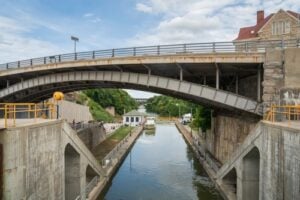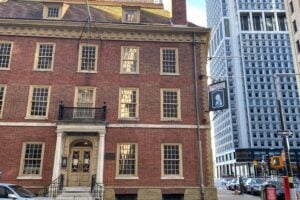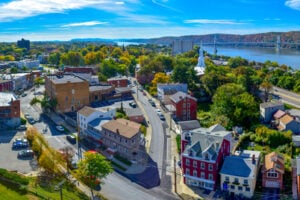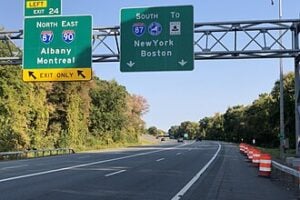
An acre is an acre everywhere, exactly 43,560 square feet, but nowhere does that fixed measurement produce a stranger price gap than New York. In the North Country, an acre may hold timber, pasture, or a hunting cabin; in Manhattan, the same footprint can support hundreds of thousands of buildable square feet once zoning and development rights enter the equation. The difference is not simply rural versus urban. It is the story of how New York turns soil into farms, suburbs, towers, and, eventually, tradable air.
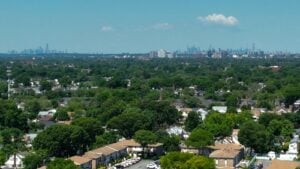
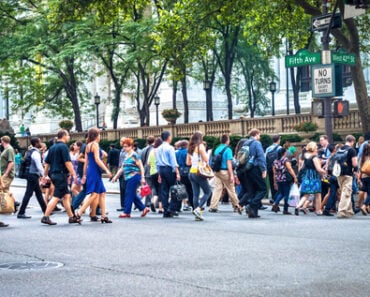
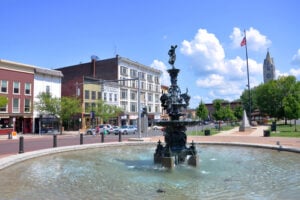
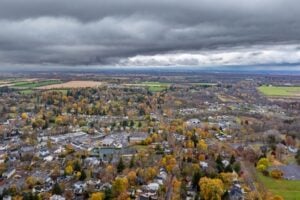
Land values rise dramatically across New York as rural and suburban acreage gives way to the dense development of New York City.
The Great Empire State Land Divide
There is no honest single answer to the question of what an acre costs in New York. The state contains working farmland, Adirondack timber tracts, Hudson Valley estates, Long Island building lots, and Manhattan development sites. Each belongs to a different market, and each is valued according to a different combination of location, access, zoning, improvements, and development potential.
That distinction matters because an acre measures area, not usefulness. A remote acre without legal road access, electricity, a successful septic test, or the right to build may sell for a fraction of an acre near a village, highway, commuter station, lake, or municipal sewer line. In New York City, the comparison becomes even more complicated because developers are usually buying the right to construct floor area rather than a simple piece of open ground.
The most useful way to understand New York land prices is to separate three different measurements: official agricultural values, current asking prices for land and rural property, and urban development-site values calculated through zoning.
The Best Statewide Benchmark: Agricultural Land
The most recent annual figures available from the United States Department of Agriculture place New York’s average farm real estate value at $4,300 per acre. That figure represents the estimated market value of all land and buildings used for agricultural production, so it is not a raw-vacant-land average.
The USDA placed New York cropland at an average of $4,010 per acre and pastureland at $1,950 per acre. These figures provide a useful statewide agricultural baseline, but they do not describe residential building lots, waterfront parcels, wooded recreational land, or properties located within commuting distance of New York City.
| New York Agricultural Measure | Average Value Per Acre | What It Measures |
|---|---|---|
| Farm Real Estate | $4,300 | Land and buildings used for agricultural production |
| Cropland | $4,010 | Land used for crops, hay, and qualifying conservation uses |
| Pastureland | $1,950 | Land normally used for grazing livestock |
New York’s agricultural assessment values should not be confused with market prices. Those state-issued values exist for property-tax calculations and agricultural exemptions; the state specifically warns that they are not estimates of what farmland would sell for on the open market.
What Current Land Listings Show
Current asking prices sit above the USDA agricultural benchmark because online land inventories combine many types of property. They may include hunting tracts, lakefront parcels, buildable lots, farms with houses and barns, estate properties, and land carrying development potential.
Across New York, Land.com reports a statewide median asking price of approximately $10,110 per acre for its advertised inventory. That number is useful as a market snapshot, but it is not a closed-sale average and should not be treated as the value of every acre in the state.
The county examples below demonstrate how rapidly advertised prices rise as land moves from the remote North Country toward the Hudson Valley, Westchester County, and Long Island. These are listing medians rather than completed-sale figures, and they will change as properties enter and leave the market.
| County | Region | Median Asking Price Per Acre |
|---|---|---|
| St. Lawrence | North Country | $3,634 |
| Chautauqua | Western New York | $6,297 |
| Oneida | Mohawk Valley and Central New York | $6,971 |
| Livingston | Finger Lakes | $12,448 |
| Saratoga | Capital Region | $21,214 |
| Dutchess | Hudson Valley | $27,042 |
| Ulster | Hudson Valley and Catskills | $35,082 |
| Westchester | Lower Hudson Valley | $104,852 |
| Suffolk | Long Island | $111,703 |
What an Acre Means Across Upstate New York
North Country and Adirondacks
The lowest advertised prices are often found in the North Country, where large wooded parcels may be purchased for recreation, hunting, timber, or seasonal use. Price depends heavily on year-round road access, utilities, surveyed boundaries, timber value, wetlands, and whether the property lies within an area governed by Adirondack Park land-use restrictions.
A low price per acre can be misleading when a parcel lacks legal access or cannot support a conventional septic system. Lake frontage, an existing cabin, electric service, or a maintained town road can move the value far above the regional baseline.
Western New York and the Finger Lakes
In Western New York and the Finger Lakes, agricultural value is shaped by soil quality, drainage, field size, barns, water access, and proximity to processors and farm markets. Vineyard land near the Finger Lakes, lakefront acreage, and parcels close to growing communities can sell at prices that bear little resemblance to ordinary pasture or remote woodland.
This region illustrates the difference between agricultural productivity and residential demand. A highly productive farm may be valued through its earning potential, while a smaller parcel near a lake or village may command more per acre because it can support a home, vacation property, or subdivision.
Mohawk Valley and Capital Region
Land values rise where rural acreage meets suburban growth. In Oneida County and much of the Mohawk Valley, undeveloped acreage may remain comparatively affordable. In Saratoga County and communities closer to Albany, access to Interstate 87, employment centers, utilities, and desirable school districts can create a substantial development premium.
Two parcels of the same size can therefore have radically different prices. A site with public water, sewer, road frontage, and residential zoning may be worth several times more than an isolated tract requiring wells, septic systems, and costly site preparation.
Hudson Valley
The Hudson Valley combines working farms, historic estates, small towns, commuter communities, and luxury second-home markets. Dutchess and Ulster counties demonstrate how proximity to Metro-North, the New York State Thruway, the Hudson River, and popular village centers can raise asking prices far beyond the statewide agricultural average.
Large acreage may still appear inexpensive on a per-acre basis when much of the property is steep, wet, protected, or difficult to subdivide. Smaller buildable parcels near transportation and established communities often carry the highest per-acre prices.
Long Island
Long Island operates under a different level of scarcity. Nassau County is heavily developed, and Suffolk County combines suburban growth, preserved farmland, vineyards, waterfront property, and the luxury markets of the East End. A single countywide number cannot capture the difference between an inland agricultural parcel and an oceanfront building site in the Hamptons.
Waterfront access, flood risk, local zoning, development rights, farmland-preservation restrictions, and the availability of sewers all influence the price. On smaller residential lots, the implied value per acre can become enormous even when no one would describe the property as acreage.
Why New York City Is Not Really an Acre Market
Vacant one-acre parcels rarely trade in Manhattan. Development sites are usually evaluated according to the amount of floor area that zoning allows a buyer to construct. The standard measurement is price per buildable square foot, sometimes described as price per zoning floor area.
New York City defines Floor Area Ratio, or FAR, as the total floor area on a zoning lot divided by the area of that lot. A one-acre site contains 43,560 square feet of lot area. If zoning permits an FAR of 10, that acre can theoretically support 435,600 square feet of zoning floor area before other restrictions and design requirements are considered.
Unused development rights are commonly called air rights. They represent the difference between the floor area already built on a zoning lot and the maximum floor area permitted by zoning. In certain circumstances, those rights can be transferred or combined with neighboring property, making the value of the site dependent on far more than the ground beneath it.
What a Manhattan Acre Could Be Worth
A Manhattan property-sales report placed average development-site pricing at approximately $384 per buildable square foot during the third quarter of 2025. Applying that figure to a hypothetical full acre shows why urban land calculations can produce staggering numbers.
| Assumed FAR | Buildable Floor Area on One Acre | Illustrative Value at $384 Per Buildable Square Foot |
|---|---|---|
| 4 | 174,240 square feet | Approximately $66.9 million |
| 6 | 261,360 square feet | Approximately $100.4 million |
| 10 | 435,600 square feet | Approximately $167.3 million |
| 12 | 522,720 square feet | Approximately $200.7 million |
These figures are illustrations, not appraisals. They do not mean that every Manhattan acre is worth between $67 million and $201 million. The market price per buildable square foot changes by neighborhood, permitted use, scale, financing conditions, demolition requirements, landmark restrictions, affordable-housing obligations, environmental conditions, and the shape of the site.
The calculation also shows why multiplying finished condominium prices by 43,560 square feet produces a misleading answer. A condominium’s sale price includes the completed building, construction costs, financing, design, amenities, marketing, and developer profit. It is not the price of the underlying land.
Brooklyn and Queens Development-Site Values
Outer-borough development sites are also priced according to buildable floor area, although values vary widely by neighborhood and zoning. A 38,500-buildable-square-foot site in Crown Heights sold for $10.1 million in 2025, equal to approximately $262 per buildable square foot.
That transaction demonstrates the urban formula. The buyer was not simply purchasing the lot’s physical footprint. The price reflected the amount and type of construction that the zoning permitted, the site’s Brooklyn location, and the expected value of the completed project.
New York Acre Costs at a Glance
| Measure | Price Per Acre or Equivalent | Important Limitation |
|---|---|---|
| New York farm real estate average | $4,300 per acre | Includes agricultural land and buildings |
| New York cropland average | $4,010 per acre | Agricultural-use benchmark |
| New York pasture average | $1,950 per acre | Agricultural-use benchmark |
| Statewide advertised land median | Approximately $10,110 per acre | Asking prices across mixed property types |
| St. Lawrence County advertised median | Approximately $3,634 per acre | Current listing snapshot |
| Ulster County advertised median | Approximately $35,082 per acre | Current listing snapshot |
| Suffolk County advertised median | Approximately $111,703 per acre | Current listing snapshot covering varied properties |
| Hypothetical Manhattan acre at FAR 10 | Approximately $167.3 million | Illustration using a $384-per-buildable-square-foot benchmark |
Five Factors That Determine New York Land Prices
- Zoning and development rights: The legal right to build houses, apartments, stores, offices, or industrial space can matter more than the physical size of a parcel.
- Road access and utilities: Public roads, electricity, water, sewer connections, wells, and septic suitability can transform the economics of a property.
- Location and transportation: Prices generally rise near employment centers, highways, Metro-North, the Long Island Rail Road, navigable waterfronts, and established village centers.
- Physical and environmental conditions: Wetlands, steep slopes, flood zones, soil quality, contamination, timber, and water frontage all influence value.
- Existing improvements: Houses, barns, cabins, fencing, driveways, wells, and commercial structures can make a listing’s price per acre impossible to compare with vacant land.
Frequently Asked Questions
How many square feet are in an acre?
One acre contains exactly 43,560 square feet.
Where is the cheapest land in New York?
Some of the lowest advertised per-acre prices are found in the North Country and parts of Western New York and the Southern Tier. Remote recreational and timber parcels are usually less expensive than buildable residential land, lakefront property, or acreage near growing communities.
Why does the USDA average look lower than online listings?
The USDA figures measure agricultural real estate, cropland, and pasture. Online listing sites contain a broader mixture of properties, including houses, barns, waterfront acreage, estate land, and parcels with residential or commercial development potential.
Is an acre in Manhattan really worth more than $100 million?
It can be under the right zoning and market assumptions, but there is no universal Manhattan price per acre. Urban development sites are valued through permitted buildable floor area, location, use, and development rights. A hypothetical acre with high FAR can produce a nine-figure valuation, while a heavily restricted site could be worth substantially less.
What should a buyer check before purchasing New York land?
A buyer should confirm the survey, deeded access, zoning, permitted uses, wetlands, flood status, utilities, well and septic feasibility, taxes, agricultural or conservation restrictions, mineral and timber rights, and the cost of reaching the desired building site. A listing price alone does not reveal whether the land can be used as intended.
More New York Land and Development History
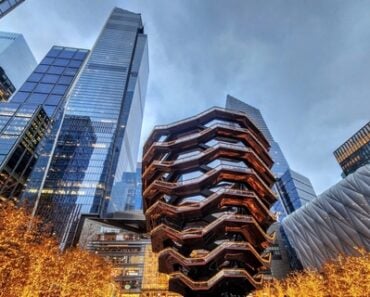
Readers interested in how land values and development changed the state can continue with our history of the Jacob K. Javits Convention Center and the rise of Hudson Yards, our look at how Levittown transformed Long Island, our history of the Erie Canal, and the story behind New York’s fascination with the Flatiron Building.
Updated July 30, 2026.