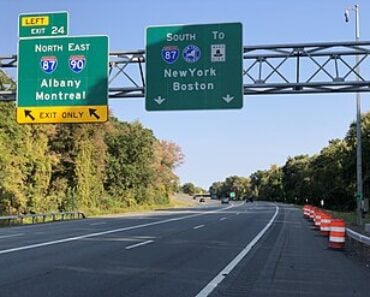
Featured Photo by Brian Kachejian
If you’re visiting New York City for the first time, you probably have many questions about the best way to get around. First, we need to define exactly what we mean by “New York City.”
Most travelers who come to New York are headed straight to Manhattan. They don’t call it Manhattan; they call it New York City. They aren’t wrong; Manhattan is part of New York City. However, NYC is actually made up of five boroughs: Manhattan, Brooklyn, the Bronx, Queens, and Staten Island.
All of the boroughs are accessible by subway, with the exception of Staten Island, which you can only reach by bridge or boat. It’s an island, but unlike Manhattan Island, there are no subway lines or underwater driving tunnels connecting it to the rest of the city. Yet, it is still proudly New York City.
Most tourists are primarily interested in Manhattan, though with some exceptions, Brooklyn and Queens have become more popular lately thanks to food blogs and travel sites. Nonetheless, Manhattan remains the “big cheese.” Tourists want to see the Statue of Liberty, the Empire State Building, St Patrick’s Cathedral, and Times Square. Those are the wonders they see on television and in the movies.
In this article, I’m going to explain the different ways that tourists—and locals—can get around Manhattan. I’ll count them down from my least favorite to my absolute top recommendation. I was born in lower Manhattan at a hospital called Manhattan General. It’s no longer there, but I still am. I’m offering this advice based on 65 years of living, working, and playing in New York. I will never leave because it’s the greatest city in the world to me. So, here we go…
Yellow Taxis
This is my least favorite form of transportation around Manhattan for one huge reason: I don’t trust the drivers. They can spot a tourist while you’re still on the plane, and some will try to rip you off. Yes, they are regulated, and you will see all sorts of official signs inside the cab. But these drivers are pros. Many cabs are dirty, the driving can be crazy, and they aren’t always easy to flag down. Before Uber, this was the only game in town if you wanted a private car without paying for a limousine.
I do feel bad for the owners. They paid a fortune for taxi medallions (the official right to own a cab). The fact that people can now drive for Uber just by filling out an app and a city registration form and paying pennies compared to medallion prices, is pretty unfair. But that’s life.
Now, not all of them are bad; there are plenty of honest taxi drivers. Plus, taking a New York City Yellow Cab is a classic tourist experience. You might enjoy it, or at least get a good story out of it. But as someone who lives here? I can’t remember the last time I took one.
Private Limousine Service
If you have the money, this is a beautiful way to get around, but it’s not practical for most people. The only time I recommend a private limo or car service is for airport transfers—picking you up at the airport to drop you at your hotel, and taking you back at the end of your trip. If you’re spending all that money to vacation here, it’s worth a little extra to avoid the airport hassle. It is not easy to get to Manhattan from JFK or LaGuardia airports. It’s slightly easier from JFK because of the AirTrain, but it can still be very confusing for newcomers.
CitiBike
You might be surprised by how many people use CitiBikes, though it’s mostly locals commuting to work. They aren’t really designed for tourists, but if you’re an avid cyclist, you might enjoy it. (I have a very in-depth article on how the system works right here on the site if you’re interested). Is Riding A Citi Bike In NYC Safer Than Riding A Personal Bicycle?
Just know that it is probably the most dangerous way to get around. You have to navigate through millions of pedestrians, buses, and aggressive cars on every single street. It’s not meant for a family ride, but if you’re traveling solo and can handle chaotic city cycling, it’s a fabulous way to see the views.
New York City Buses (MTA)
When you arrive in NYC, you will constantly see people trying to sell you tickets for open-top tourist buses, especially around Times Square. Those are not the buses I’m talking about. I’m talking about the public city buses operated by the Metropolitan Transportation Authority (MTA).
At $2.90 a ride, it’s a great deal. They aren’t always comfortable; they can get packed, and the rides are bumpy. It can also be confusing to figure out the routes if you don’t know the city. You can track routes on the MTA Bus Time website or use the more user-friendly MTA TrainTime App, which covers both subways and buses.
While buses are tougher to navigate than the subway, they are much more accessible because you board right from the sidewalk, no underground stairs required. They also feel a bit safer at night. Best of all, buses accept contactless credit cards and phone payments (OMNY), so you don’t need cash or a special metro card. In the old days, the real old days, you needed tokens, but that’s a story for another day!
Uber / Rideshares
If you’re in Manhattan, you are never more than 1 to 2 minutes away from an Uber. That’s how many rideshare cars are on the road. It’s not cheap; the average ride runs $20 to $30 depending on traffic and distance, but you can split that tab if you’re traveling with friends. Uber is incredibly convenient, and because the app is worldwide, you probably already know how to use it. Car cleanliness and driver friendliness vary wildly. If you don’t mind spending the money, it’s the easiest door-to-door option, though traffic can make it take longer than the subway.
The Subway
The subway is the absolute fastest way to get around, especially in Manhattan. A lot of people are scared to ride the trains because of what they see on the news. But when you compare the millions of people who ride every day to the actual number of incidents, the subway is remarkably safe.
I have been riding them my whole life. Of course, anything can happen anywhere, so you must always stay aware of your surroundings. It is not the place to keep your eyes glued to your phone (though you’ll see plenty of locals doing exactly that). Ultimately, there is no faster way to get from uptown to downtown or crosstown than the subway. It’s cheap, and the grid maps are easy to learn.
Walking
If you’re a tourist, the best way to discover what New York has to offer isn’t from a TikTok video or a TV show; it’s by getting out on the pavement. There is something to discover on every single block.
Navigating is simple: Avenues run north and south, streets run east and west. It’s a basic grid. It changes a bit when you get down into neighborhoods like Greenwich Village or lower Manhattan, but Google Maps or Apple Maps will keep you on track. Just stay alert, especially at night; high-traffic areas are perfectly fine, but use extra caution in quieter, isolated sections.
When you walk, you don’t have to worry about transit schedules; you just step out and go. It’s my absolute favorite way to travel the city. Unless, of course, I have to get from 72nd Street and 1st Avenue all the way down to Mulberry Street in Little Italy. Then, I’m going to hop on the Q train and be there in 10 minutes instead of walking for an hour. But then again, if you have the time, why not walk it?