Photo by shutterupeire@Shutterstock
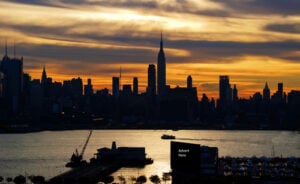
Few events expose the sheer scale and vulnerability of New York City quite like a widespread power failure. When electricity disappears in a metropolis of millions, subway trains stop, elevators stall, traffic signals go dark, airports and businesses are disrupted, and the familiar skyline can change in seconds.
Three blackouts stand apart in modern New York history: the Northeast Blackout of 1965, the New York City Blackout of 1977, and the Northeast Blackout of 2003. The first and third were massive regional failures that swept into New York from far beyond the five boroughs. The 1977 outage was different. It was centered on the Consolidated Edison system and became inseparable from the fiscal crisis, crime, fires, and social tensions of 1970s New York.
Each blackout began for different reasons, but together they changed the way utilities and regulators think about interconnected electric systems, emergency operations, vegetation management, operator awareness, and mandatory reliability standards.
The 1965 Northeast Blackout: The Night the Lights Went Out
Date: November 9, 1965
Scope: Approximately 30 million people across much of the Northeast and Ontario, Canada
Duration: Outages lasted as long as 13 hours in some areas
The great blackout began during the evening rush hour. At about 5:16 p.m., a backup protective relay opened one of five 230-kilovolt transmission lines carrying power north from a generating station in Ontario toward the Toronto area. The relay operated when loading exceeded its 375-megawatt setting, a setting that operating personnel did not know was in place.
Electricity immediately shifted onto the remaining four lines. Within only 2.5 seconds, those lines tripped in succession. The disturbance then spread through the interconnected transmission network, causing lines and generating units to disconnect automatically as the power system became unstable.
The result was one of the largest electrical failures North America had ever experienced. Virtually all of New York State, Connecticut, Massachusetts, and Rhode Island were affected, along with portions of Pennsylvania and New Jersey and substantial areas of Ontario.
New York City Goes Dark During Rush Hour
For New York City, the timing could hardly have been worse. The outage struck while hundreds of thousands of people were commuting home. Con Edison records that approximately 800,000 subway riders were trapped when trains lost power. Traffic backed up throughout the city, and both John F. Kennedy International Airport and LaGuardia Airport were closed.
Thousands of people were also stranded in elevators, office buildings, railroad terminals, and other parts of the city’s transportation network. Yet the 1965 blackout became remembered for a comparatively calm civic response. Accounts from the period describe New Yorkers helping one another, directing traffic, sharing flashlights and candles, and making their way through a city that suddenly had none of its normal electric illumination.
Power returned gradually. Some areas recovered after only a few hours, while other customers remained without electricity into the following morning.
How the 1965 Blackout Changed the American Power Grid
The technical lesson of 1965 was enormous. The blackout demonstrated that an interconnected electric system could spread a local failure across a vast geographic region with extraordinary speed.
In June 1968, the electric utility industry established the National Electric Reliability Council, known as NERC, in response to the blackout and recommendations from the Federal Power Commission. The organization developed regional coordination practices and reliability guidance intended to reduce the chance that another disturbance would cascade across the continent.
The rules were still largely voluntary, however. It would take another enormous blackout nearly four decades later to push the United States toward federally enforceable bulk-power reliability standards.
The 1977 New York City Blackout
Date: July 13–14, 1977
Scope: Most of New York City and parts of the Con Edison service area, affecting approximately 9 million people
Duration: Outages lasted as long as 26 hours
The blackout of 1977 was very different from the regional collapse of 1965. This time, the failure centered on the Con Edison system itself.
The sequence began during a thunderstorm on the night of July 13. Two 345-kilovolt transmission lines between Buchanan South and Millwood West in northern Westchester County suffered a lightning-related fault and tripped out. The resulting breaker operations also isolated the Indian Point No. 3 generating unit from its load, causing the unit to trip.
Approximately eighteen and a half minutes later, another lightning strike affected two more 345-kilovolt lines. One returned to service almost immediately, while the other did not. Additional transmission problems followed. One overloaded line later sagged into a tree and tripped, more interconnections were lost, and the Con Edison system became increasingly isolated from neighboring power systems.
Once the remaining external ties could no longer support the system, New York City did not have enough generation inside the isolated Con Edison network to meet demand. The system collapsed.
Why the 1977 Blackout Became So Infamous
The blackout arrived during one of the most difficult periods in modern New York City history. The city had only recently survived a devastating fiscal crisis. Unemployment and crime were major concerns, many neighborhoods were suffering from abandonment and disinvestment, and New Yorkers were living through the fear surrounding the Son of Sam shootings.
What I remember most about the blackout was just how hot it was. We were in the middle of a heat wave, and most of us assumed the lights went out because of the heat. As teenagers, there was never much to do in the city at night but just hang out. It’s what we just kept doing in the streets. You didn’t hang out in your apartment growing up as kids in the city; you hung out outside all the time. So it didn’t change much as far as where we hung around. It just meant that the drinks would be warm.
When the lights disappeared, widespread looting and arson erupted in numerous neighborhoods. Bushwick, Bedford-Stuyvesant, Crown Heights, parts of the Bronx, and other commercial districts were hit especially hard.
Federal and contemporary accounts put the scale of the destruction at 1,616 stores damaged during looting and rioting. The Fire Department responded to 1,037 fires, including fourteen multiple-alarm fires. Police made 3,776 arrests, creating what was then the largest mass arrest in the city’s history.
A congressional study estimated property damage from the blackout and resulting disorder at more than $300 million in 1977 dollars.
The 1977 Blackout at Shea Stadium
One of the most memorable scenes occurred at Shea Stadium, where the New York Mets were playing the Chicago Cubs. The game was in progress when the power disappeared, leaving the stadium dark and forcing the game to be suspended.
The event became one of the strange cultural footnotes of the blackout. While entire neighborhoods were dealing with darkness, fires, looting, stranded passengers, and disabled infrastructure, thousands of baseball fans suddenly found themselves sitting inside a powerless stadium in Queens.
The 2003 Northeast Blackout
Date: August 14–15, 2003
Scope: Approximately 50 million people in the northeastern and midwestern United States and Ontario, Canada
New York City restoration: Con Edison restored power to parts of the city within seven hours, with the entire city restored by the following night
On the afternoon of August 14, 2003, New York City went dark again. This time the problem had begun hundreds of miles away in Ohio.
The official U.S.-Canada investigation found that the blackout was not caused by one simple equipment failure. It developed from a combination of inadequate situational awareness, failures in computer alarm systems, inadequate vegetation management, transmission-line contacts with trees, and failures by grid operators and reliability coordinators to recognize and contain rapidly deteriorating conditions.
At FirstEnergy’s control center in Ohio, an alarm-processing program began malfunctioning shortly after 2:14 p.m. Operators did not realize that their alarm system had failed. Later in the afternoon, several heavily loaded transmission lines contacted trees and tripped. With operators lacking an accurate picture of what was happening, power flows shifted onto neighboring facilities and overloaded more of the grid.
At approximately 4:10 p.m., the disturbance accelerated into a massive cascade. Within minutes, electric systems across parts of Ohio, Michigan, Pennsylvania, New York, New Jersey, Massachusetts, Connecticut, and Ontario were affected.
New York City After 9/11 Faces Another Sudden Crisis
The 2003 blackout struck less than two years after the September 11 attacks, so the abrupt loss of power naturally caused immediate anxiety. Officials quickly worked to make clear that the outage was an electrical failure rather than a terrorist attack.
New York’s subway system stopped, elevators stalled, traffic lights went dark, and commuters poured onto streets and bridges to make their way home on foot. The Brooklyn Bridge, Manhattan Bridge, and other East River crossings became enormous pedestrian routes as people left Manhattan.
The social atmosphere was dramatically different from 1977. Although the disruption was enormous, New York did not experience anything resembling the widespread looting and arson that had defined the earlier blackout.
Con Edison began restoring parts of New York City within about seven hours. Full restoration took until the following night.
Why the 2003 Blackout Changed Grid Regulation
The 2003 blackout exposed weaknesses that could no longer be addressed solely through voluntary industry rules. The U.S.-Canada Power System Outage Task Force concluded that mandatory and enforceable reliability standards were essential to reducing the risk and scale of future cascading blackouts.
Congress responded through the Energy Policy Act of 2005, which added new reliability provisions to federal law and gave the Federal Energy Regulatory Commission authority over mandatory reliability standards for the bulk-power system.
NERC was subsequently certified as the nation’s Electric Reliability Organization. In March 2007, FERC approved the first set of mandatory and enforceable national reliability standards.
How New York’s Electric Grid Has Changed
The New York electric system that exists today is far more heavily monitored, regulated, and engineered for redundancy than the systems that failed in 1965 and 1977. Con Edison’s dense underground networks in much of New York City contain multiple sources of supply and substantial redundancy, while regional grid operators operate under mandatory reliability standards designed to prevent local problems from becoming uncontrolled cascades.
That does not mean blackouts have disappeared. Heat waves, storms, equipment failures, flooding, and local electrical problems can still interrupt service. New York’s enormous demand for electricity also continues to grow as transportation and buildings become increasingly electrified.
In 2026 alone, Con Edison announced a record $3.9 billion investment in its electric delivery system across New York City and Westchester County. The work includes new cable, transformers, and substation equipment intended to improve reliability during periods of extreme summer demand.
What the Three Great Blackouts Taught New York
The three blackouts reveal different weaknesses in different generations of the electric system.
The 1965 blackout demonstrated the danger of cascading failures across a rapidly expanding interconnected grid. The 1977 blackout showed how multiple transmission losses, equipment problems, and inadequate generation inside an isolated system could bring New York City down. The 2003 blackout proved that sophisticated computer systems were only as useful as the information they gave operators and the procedures used to act on that information.
They also reveal something about New York itself. A blackout does more than switch off lights. It tests transportation, policing, firefighting, communications, hospitals, businesses, neighborhoods, and millions of individual people simultaneously.
When the power disappears, the electric grid suddenly becomes visible because nearly everything else stops working.
More New York City Infrastructure History
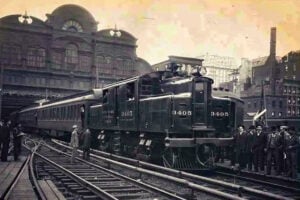
Readers interested in the system behind these outages can continue with our Why Electricity Costs So Much in New York: The History of Con Edison and the Power Grid. The 1965 outage stranded commuters throughout the transportation system, including around Grand Central Terminal. The 1977 blackout famously interrupted a Mets game at Shea Stadium, while the 2003 commuter exodus turned crossings such as the Brooklyn Bridge into pedestrian routes out of Manhattan.
Sources
North American Electric Reliability Corporation, History of NERC
U.S. Congress, The Consolidated Edison Blackout, 1977
Con Edison, 200 Years of Energizing New York
New York City, Brooklyn Community Board 4, History of Bushwick
Federal Energy Regulatory Commission, Mandatory Reliability Standards for the Bulk-Power System
Con Edison, $3.9 Billion in Electric System Upgrades for Summer 2026
The Great New York City Blackouts at a Glance
| Blackout | Primary Cause | Scale | New York Impact | Major Legacy |
|---|---|---|---|---|
| 1965 Northeast Blackout | Protective relay operation followed by cascading transmission failures | About 30 million people | Rush-hour transit collapse; approximately 800,000 subway riders trapped; outages up to 13 hours | NERC established in 1968 in response to the blackout |
| 1977 New York City Blackout | Lightning-related transmission losses followed by additional line and interconnection failures | About 9 million people | Up to 26 hours; widespread looting, fires, and 3,776 arrests | Major scrutiny of Con Edison operations and restoration procedures |
| 2003 Northeast Blackout | Tree contacts, failed alarm systems, and failures of situational awareness and grid coordination in Ohio | About 50 million people | Subway shutdown, mass pedestrian commute, full NYC restoration by the following night | Energy Policy Act of 2005 and mandatory federal reliability standards |
Published August 18, 2026.
The Great New York City Blackouts: History of the 1965, 1977, and 2003 Power Outages article published on ClassicNewYorkHistory.com © 2026