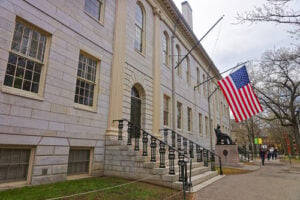
Brewster, New York, is one of Putnam County’s most charming villages, blending Revolutionary War history, railroad heritage, and small-town character just ninety minutes north of New York City. From the legendary ride of Sybil Ludington and the exploits of patriot spy Enoch Crosby to the arrival of the railroad and the village’s bustling Main Street, Brewster has played an important role in New York’s history while maintaining the welcoming atmosphere that continues to attract residents and visitors today.

Photo: DanTD [CC BY-SA 4.0 (https://creativecommons.org/licenses/by-sa/4.0)]
Brewster New York History: Revolutionary Times
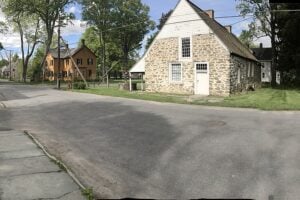
Putnam County was home to teenage heroine Sybil Ludington, who made her famous midnight ride through the countryside to warn that nearby Danbury, Connecticut, had been attacked by the British. Although she never achieved the national fame of Paul Revere, Sybil remains a local legend throughout Brewster and Putnam County. Another Revolutionary War hero closely associated with Brewster is Enoch Crosby, whose remarkable exploits are believed to have inspired James Fenimore Cooper’s novel The Spy. Crosby is honored with both monuments and a road bearing his name.
The stories surrounding Crosby’s service vary depending on the source. One account claims that John Jay recruited him to spy on British forces. Another suggests that Crosby gathered valuable intelligence while repairing boots for British soldiers in his cobbler shop near Danbury. Regardless of which version is most accurate, Crosby became one of the area’s most respected Revolutionary War figures. After the war, he returned to his home in Brewster and was later buried in Gilead Cemetery in nearby Carmel.
Brewster New York History: The Railroad
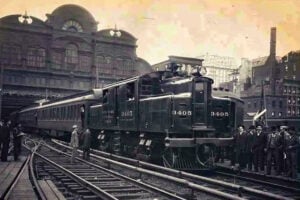
Walter Brewster, the man for whom the village is named, recognized the importance of rail transportation long before many others. In 1848, he donated land to the New York and Harlem Railroad for the construction of a station. Over the years, the railroad evolved through Penn Central, Conrail, and eventually Metro-North Railroad. The present station, completed in 1939, features beautiful Tudor-style architecture highlighted by its iconic clock tower. Today, it continues to serve commuters, while Putnam Transit buses also operate from the station.

Photo: DanTD [CC BY-SA 4.0 (https://creativecommons.org/licenses/by-sa/4.0)]
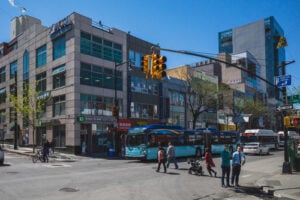
Brewster New York History: Main Street
Putnam County’s First Movie Theater
Residents of Putnam County were thrilled when their first movie theater opened in 1923. The New Brewster Theater, located at Main and Park Streets, charged just thirty cents for adult admission. Renovated as the Cameo/Ritz in 1935, it eventually gave way to the larger Cameo Theater, which opened on Main Street in 1939. Seating more than 500 patrons, the Cameo became the area’s premier movie house until larger multiplex theaters opened in nearby Carmel in the early 1970s. Generations of local residents fondly remember walking from the theater to Bob’s Diner after a movie.
Although the Cameo Theater closed in 1997, moviegoers still have nearby entertainment at Empire Cinema on Route 22.
Brewster New York History: Television Fame With That Girl
Anyone who watched television during the 1960s remembers That Girl starring Marlo Thomas. The show’s lead character, Ann Marie, left her hometown of Brewster to pursue an acting career in New York City while her parents remained in the village. Brewster became nationally recognized through the series, much as Cocoa Beach did through I Dream of Jeannie. The community has also welcomed actors from daytime television and served as a filming location for productions including Law & Order.

Photo: Public Domain Wikimedia Commons
Brewster New York History: Present Day
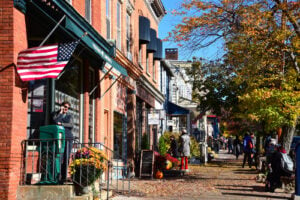
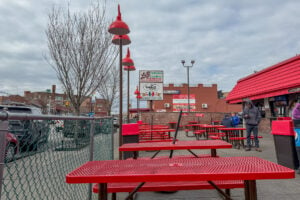
Much of Brewster’s historic character remains intact. The train station still welcomes commuters every day, Bob’s Diner continues serving customers across the street, and the Eagle Eye Thrift Shop remains a favorite stop for bargain hunters. The village has grown considerably through the construction of new homes and condominiums, yet historic landmarks such as the Walter Brewster House on Oak Street continue preserving Brewster’s rich heritage. Built in 1850 and designated a historic landmark in 1980, the home honors the man whose vision helped shape the community.
No matter how many commuters pass through each day or how many businesses come and go, Brewster’s rich history makes every walk along its Main Street feel like a trip back to a simpler time.
Related Articles
If you enjoyed learning about Brewster, continue exploring Putnam County and the Hudson Valley with our articles on Sybil Ludington, New York’s Revolutionary Heroine, Ghosts and Good Times at the Carmel Smalley Inn, The History of the Croton Dam, The History of the Hudson River, and Grand Central Terminal.
Updated June 29, 2026.