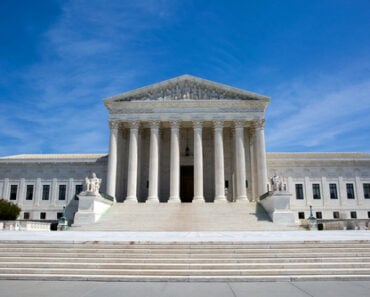
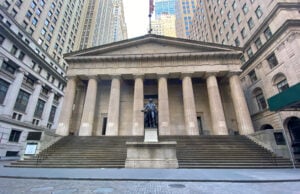
Federal Hall National Memorial on Wall Street in Lower Manhattan. The first U.S. Senate met at this site in 1789, inside the original building that was demolished in 1812. Photo by Brian Kachejian.
New York’s two seats in the United States Senate have been occupied by Revolutionary War veterans, party organizers, former governors, diplomats, labor reformers, and some of the most recognizable figures in American politics. The first Congress met in New York City in 1789, but New York’s own legislators initially deadlocked over whom to send. Rufus King finally took his oath on July 25, followed by Philip J. Schuyler on July 27. Their arrival began a continuous history of New York representation through the nation’s wars, economic crises, political realignments, and movements for civil rights.
For much of that history, voters did not elect senators directly. The New York State Legislature selected them, giving Albany’s party leaders enormous influence over who went to Washington. Disputes over federal patronage and party allegiance sometimes resulted in stalled elections or spectacular resignations, most famously the 1881 confrontation involving Roscoe Conkling and Thomas C. Platt. The 17th Amendment, ratified in 1913, provided for direct election by the people. James W. Wadsworth Jr., elected in 1914, was New York’s first senator chosen under that system.
This complete chronological list identifies all 59 individuals who have represented New York in the United States Senate since 1789, including the men who served only a few months and the two senators serving today. Each individual appears once, in order of first entering office; those who returned for another term have both periods of service shown. The New York connections refer to a birthplace, hometown, residence, or established political base, not necessarily a place of birth. These are United States senators representing New York in Washington, not members of the separate New York State Senate in Albany.
1. Rufus King
Served: 1789–1796; 1813–1825
New York connection: New York City and Jamaica, Queens; born in Massachusetts.
Rufus King was the first New York senator to take the oath of office, on July 25, 1789. A participant in the Constitutional Convention, he helped establish the procedures and authority of a Senate that was still defining its place in the new federal government. His first term took place during George Washington’s presidency, when disagreements over public debt, trade, and relations with Britain helped create the country’s first national political parties.
King resigned in 1796 to become the American minister to Great Britain and returned to the Senate in 1813. An enduring Federalist, he became an important opponent of the expansion of slavery during the Missouri debates. He argued against extending slavery into new states and territories, even as his party lost national influence. The King family home in Jamaica, Queens, preserves a connection between his political career and the New York community where he lived.
2. Philip J. Schuyler
Served: 1789–1791; 1797–1798
New York connection: Albany, New York.
Philip J. Schuyler took his Senate oath two days after Rufus King, becoming New York’s other inaugural senator. Born into a powerful Albany landowning family, he had commanded troops as a major general during the American Revolution and had already been involved in colonial and state politics. In the new Congress, Schuyler supported the Federalist vision of a stronger national government and engaged with the major financial debates facing the republic.
Schuyler was also Alexander Hamilton’s father-in-law, a family relationship closely tied to New York’s early partisan struggles. Aaron Burr defeated him when the legislature selected a senator in 1791, an episode that deepened the hostility between the two political camps. Schuyler regained a Senate seat in 1797 but resigned the following year because of ill health. His career linked Albany’s Revolutionary generation to the bitter emergence of party politics.
3. Aaron Burr
Served: 1791–1797
New York connection: New York City political and legal career; born in New Jersey.
Aaron Burr entered the Senate by defeating Philip Schuyler in the New York legislature in 1791. The victory made clear that state political coalitions, not popular statewide elections, determined Senate membership in the early republic. As tensions grew between Federalists and Democratic-Republicans, Burr cultivated a reputation as an exceptionally skilled political organizer and an opponent of the Hamilton-aligned Federalist establishment.
Burr’s Senate term preceded his election as vice president under Thomas Jefferson, the disputed presidential election of 1800, and his fatal 1804 duel with Alexander Hamilton. Those events have often overshadowed his service in Congress, but his Senate victory remains a landmark in New York’s early political rivalries. His career also showed how quickly a prominent national politician’s fortunes could change in the republic’s first decades.
4. John Laurance
Served: 1796–1800
New York connection: New York City; born in England.
John Laurance succeeded Rufus King after King resigned to become minister to Great Britain. Laurance was a lawyer and Revolutionary War veteran who had represented New York in the U.S. House of Representatives before moving to the Senate. His years in Washington coincided with worsening relations with France, the undeclared naval conflict known as the Quasi-War, and the fiercely contested Alien and Sedition Acts.
Laurance supported the Federalist administration of John Adams and briefly held a particularly notable Senate position: president pro tempore in December 1798. The Senate’s historical records identify him as the only New York senator to have held that office. He resigned in 1800, closing a federal career that reflected the strong Federalist presence in New York City during the nation’s early years.
5. John Sloss Hobart
Served: 1798
New York connection: New York City and the state judiciary.
John Sloss Hobart served one of the shortest Senate terms in New York history. He entered office in January 1798 after Philip Schuyler resigned, at a time when Federalists and their opponents were becoming more sharply divided over foreign policy and the powers of the national government. His Senate experience lasted barely three months, so his importance rests less on legislation than on the circumstances of his appointment.
Hobart was already an established New York jurist, having served on the state’s highest court under its earlier judicial system. He resigned his Senate seat in April to become a federal district judge, an appointment made during John Adams’s presidency. His rapid move from the legislature to the federal bench illustrates the small and interconnected circle of political and legal figures who dominated public life in the 1790s.
6. William North
Served: 1798
New York connection: Duanesburg and the Schenectady County area.
William North temporarily succeeded John Sloss Hobart in May 1798, during the international crisis between the United States and revolutionary France. His service lasted only until August, making him another early senator whose term can easily disappear from abbreviated historical lists. The appointment helped ensure that New York retained representation while its political leaders arranged a longer-term replacement.
North had served as an officer during the Revolutionary War and maintained close ties to Alexander Hamilton and other Federalists. His military background was especially relevant at a time when the federal government was preparing for possible wider conflict with France. After this brief Senate appointment, North remained connected to military and political affairs, while James Watson took over the seat.
7. James Watson
Served: 1798–1800
New York connection: New York City merchant and public official.
James Watson followed William North into the Senate in August 1798. A New York merchant with legislative experience, he served during the last years of the Adams administration, when the Federalist Party defended an expansive reading of federal power and faced increasingly organized opposition. Debates over relations with France and the administration’s domestic security policies formed the political background of his service.
Watson resigned in March 1800 to accept an appointment as naval officer of the Port of New York. Customs and port offices could carry substantial financial and political importance in a city whose economy depended on maritime commerce. His departure provides an early example of a New York senator leaving Washington for a federal position closely tied to the city’s commercial life.
8. Gouverneur Morris
Served: 1800–1803
New York connection: Morrisania, in what is now the Bronx.
Gouverneur Morris entered the Senate in 1800, shortly before the election that transferred power from the Federalists to Thomas Jefferson’s Democratic-Republicans. An outspoken Federalist, Morris opposed important parts of Jefferson’s program, particularly efforts to dismantle aspects of the federal judiciary established under the preceding administration. He stood for a strong national government as the political influence of his party began to recede.
Morris’s constitutional reputation had been established long before his Senate term. He represented Pennsylvania at the 1787 Constitutional Convention and played a central part in drafting the Constitution’s final language, including its preamble. Born into the Morrisania family in present-day Bronx territory, he remains an important link between New York history and the nation’s founding. His Senate term ended in 1803.
9. John Armstrong Jr.
Served: 1800–1802; 1803–1804 (two separate appointments in 1803–1804).
New York connection: Dutchess County and Rhinebeck; born in Pennsylvania.
John Armstrong Jr. first entered the Senate in November 1800 after John Laurance’s resignation and served until February 1802. After De Witt Clinton left the chamber, Armstrong returned in November 1803, resigned in February 1804, and then returned once more later that same month to occupy New York’s other Senate seat. This unusually complicated sequence unfolded as Jefferson’s administration was absorbing the Louisiana Purchase and redefining the country’s international position.
Armstrong was a Revolutionary War veteran and had previously served in Pennsylvania government before settling in Dutchess County. He left the Senate permanently in June 1804 to become United States minister to France. He later served as secretary of war under James Madison during the War of 1812. His repeated Senate appointments are a vivid reminder of how often vacancies and state legislative decisions reshaped New York’s early representation.
10. De Witt Clinton
Served: 1802–1803
New York connection: Born in Little Britain, Orange County; later mayor of New York City and governor.
De Witt Clinton occupied a Senate seat for less than two years, entering office in 1802 as Thomas Jefferson’s Democratic-Republicans consolidated power. A member of one of New York’s leading political families, Clinton was already deeply engaged in state politics and the expanding possibilities of American commerce and transportation. He left the Senate in 1803 to become mayor of New York City, where he believed he could exercise more direct influence.
Clinton’s enduring achievement came in New York State government. As governor, he championed the Erie Canal despite intense resistance, and the waterway’s completion in 1825 helped transform the state’s economy and the settlement of the interior. His short Senate career is therefore only one part of a larger public life. Readers can explore that legacy in our history of the Erie Canal.
11. Theodorus Bailey
Served: 1803–1804
New York connection: Poughkeepsie, Dutchess County.
Theodorus Bailey took office in March 1803, during the first term of President Thomas Jefferson. He had already represented New York in the House of Representatives and belonged to the Democratic-Republican movement that was displacing the Federalists. His brief Senate service came during the period of the Louisiana Purchase and growing debate about how the United States would administer its expanded territory.
Bailey resigned in January 1804 to become postmaster of New York City, a substantial federal position in a time when the postal service was central to communication, trade, and political organization. His move echoed the decisions of several early senators who saw significant opportunities outside the chamber. His name belongs on a complete roster even though his Senate tenure lasted less than a year.
12. John Smith
Served: 1804–1813
New York connection: Mastic, Town of Brookhaven, Long Island.
John Smith entered the Senate in February 1804 and remained until March 1813, serving through Thomas Jefferson’s second administration and the beginning of James Madison’s presidency. His years in office coincided with severe strains on American maritime commerce as Britain and France fought across Europe and interfered with neutral shipping. Those disputes had particular meaning for a senator representing a state with a major Atlantic port.
A Democratic-Republican from Long Island, Smith supported important administration policies during the escalating international crisis, including measures intended to protect American interests without an immediate full-scale war. His final year in office coincided with the beginning of the War of 1812. Unlike some of his contemporaries, Smith did not go on to a nationally famous cabinet post, but his nearly nine years in the chamber made him an enduring presence in the early New York delegation.
13. Samuel L. Mitchill
Served: 1804–1809
New York connection: New York City; born on Long Island.
Samuel L. Mitchill entered the Senate after John Armstrong Jr. resigned in 1804. He served during Jefferson’s presidency as international trade became a central concern, especially following British and French interference with American vessels. Before his Senate term, Mitchill had represented New York in the House and gained public attention for his views on science, industry, and the nation’s natural resources.
Mitchill was also a physician, naturalist, and scholar whose interests extended far beyond ordinary party politics. He helped advance scientific education in New York and became associated with the institutions and intellectual circles of the young city. His combination of medical, scientific, and legislative interests made him one of the more unusual members of New York’s early Senate delegation; he later returned to the House of Representatives.
14. Obadiah German
Served: 1809–1815
New York connection: Chenango County and Norwich.
Obadiah German represented New York from the opening of James Madison’s presidency through the end of the War of 1812. Although associated with the Democratic-Republicans, he opposed the declaration of war, reflecting fears in parts of New York that armed conflict would threaten commerce and expose the northern frontier to British attack. His position illustrates that regional economic and military concerns sometimes mattered more than party discipline.
German had roots in Chenango County politics and had served in the New York State Assembly before going to Washington. After his Senate term, he returned to state public life and later served as speaker of the Assembly. His career demonstrates how New York’s early senators moved between national questions and the practical interests of the communities that sent them into politics.
15. Nathan Sanford
Served: 1815–1821; 1826–1831
New York connection: New York City and Long Island.
Nathan Sanford first entered the Senate in 1815, just after the War of 1812, when Congress faced questions about tariffs, banking, and rebuilding commercial confidence. A lawyer and former federal prosecutor, he participated in the Senate’s expanding committee work and became chairman of important committees, including Finance. His first period of service ended in 1821 as factional divisions reshaped New York’s Democratic-Republican organization.
Sanford returned to the Senate in 1826 and subsequently chaired the Foreign Relations Committee. Between his two periods in Washington he served as chancellor of New York, then a leading judicial office in the state. His career combined state law, federal administration, and legislative leadership, and his return after several years away was an early example of the nonconsecutive Senate careers that appear throughout this complete list.
16. Martin Van Buren
Served: 1821–1828
New York connection: Kinderhook, Columbia County.
Martin Van Buren entered the Senate in 1821 as the political alliances of the early republic were splintering. A shrewd organizer rooted in Columbia County and Albany politics, he worked to build a disciplined coalition that could compete nationally. His network, often called the Albany Regency, played a major role in party organization and the emergence of the political movement that helped Andrew Jackson win the presidency in 1828.
Known as the Little Magician, Van Buren had an unusual understanding of how local party networks could translate into national political power. He chaired the Senate Judiciary Committee and became one of Jackson’s most important allies. Van Buren resigned after being elected governor of New York, then served as secretary of state and vice president before becoming the eighth president of the United States. His career connected a small Hudson Valley village to the formation of the modern Democratic Party.
17. Charles E. Dudley
Served: 1829–1833
New York connection: Albany, New York.
Charles E. Dudley succeeded Martin Van Buren following Van Buren’s election as governor of New York. Dudley entered the Senate at the beginning of Andrew Jackson’s presidency, when questions of federal banking, tariffs, and the rights of individual states were creating bitter political conflicts. His association with Van Buren’s Albany political organization placed him within one of the most influential Democratic networks in the country.
Before his Senate service, Dudley had worked in commerce and served in state and local government. He was not as nationally prominent as Van Buren, but his term demonstrates how the Albany Regency maintained its influence after its best-known leader left the chamber. Following his Senate career, Dudley returned to private life in Albany, where his family later became associated with civic and philanthropic work.
18. William L. Marcy
Served: 1831–1833
New York connection: Troy and Albany; born in Massachusetts.
William L. Marcy entered the Senate during the early Jackson administration and became an important defender of Democratic party organization. The period was marked by the struggle over the Bank of the United States and clashes over tariffs and federal authority. Marcy’s background in New York politics gave him firsthand knowledge of how patronage and appointments helped sustain party organizations in Albany and Washington.
Marcy became famous for defending the political principle usually summarized as “to the victor belong the spoils of the enemy.” That phrase linked his name to the spoils system, although its practices extended well beyond his own career. He left the Senate to become governor of New York, then went on to serve as secretary of war under James K. Polk and secretary of state under Franklin Pierce. Few senators from this period held so many important offices.
19. Silas Wright Jr.
Served: 1833–1844
New York connection: Canton, St. Lawrence County; born in Massachusetts.
Silas Wright Jr. was a central Democratic voice on federal finance during a time of enormous economic uncertainty. His Senate career included the Panic of 1837 and the continuing controversy over a national bank. As chairman of the Finance Committee, he supported Martin Van Buren’s Independent Treasury approach, placing him near the center of congressional arguments about government deposits, banking power, and economic stability.
Wright developed a reputation for integrity and an unwillingness to pursue office simply for prestige. In 1844 he declined the Democratic nomination for vice president and ran instead for governor of New York. His victory gave the Democrats a prominent statewide leader during a difficult election year. Although born in Massachusetts, Wright was firmly associated with the North Country community of Canton, where he had established his legal and political career.
20. Nathaniel P. Tallmadge
Served: 1833–1844
New York connection: Poughkeepsie and Dutchess County.
Nathaniel P. Tallmadge entered the Senate in 1833 as a Jacksonian Democrat, but his views gradually diverged from those of the president’s political successors. The Panic of 1837 and Martin Van Buren’s proposed Independent Treasury system intensified disagreements over how federal money should be managed. Tallmadge became associated with the Conservative Democrats, who opposed important financial policies advanced by their former allies.
His movement toward cooperation with Whigs reflected the instability of party identities in the years before the Civil War. Tallmadge remained in office until 1844, when he resigned to become governor of Wisconsin Territory. He had built a political career in Dutchess County before moving into national affairs, and his appointment to a western territorial governorship shows how New York politicians influenced regions far beyond the Empire State.
21. Henry A. Foster
Served: 1844–1845
New York connection: Rome, Oneida County.
Henry A. Foster temporarily occupied the Senate seat vacated when Silas Wright resigned to run for governor. His appointment came in November 1844, when the United States was deeply divided over the proposed annexation of Texas. Foster’s stay was short, lasting into January 1845, but he was a duly serving senator during a significant moment in the debate over territorial expansion and the possible spread of slavery.
Foster had served in the New York legislature and in the U.S. House of Representatives before his temporary Senate appointment. After leaving Washington, he continued his legal and political work in Central New York. His inclusion is important because a complete historical list must count even those appointed only to bridge the gap between a resignation and the selection of a successor.
22. Daniel S. Dickinson
Served: 1844–1851
New York connection: Binghamton and the Southern Tier; born in Connecticut.
Daniel S. Dickinson entered the Senate at the end of 1844 and held office during the Mexican-American War and the controversies that followed the acquisition of western territory. A powerful Democratic voice, he represented the party’s more conservative wing as it wrestled with questions involving the extension of slavery and the future of the Union. Those arguments became particularly intense during the debates that produced the Compromise of 1850.
Dickinson was associated with the Hunker faction of New York Democrats, who generally resisted the Free Soil wing of the party. He emphasized preserving the national party and opposing sectional disruption, positions that alienated antislavery Democrats. His political base was Binghamton, and his career illustrates the strong role played by Southern Tier politicians in the national debates preceding the Civil War.
23. John A. Dix
Served: 1845–1849
New York connection: Cooperstown, Albany, and New York City; born in New Hampshire.
John A. Dix served in the Senate through the Mexican-American War and the growing conflict over whether slavery could expand into territory acquired from Mexico. Although he had long belonged to New York’s Democratic establishment, he supported the Free Soil position against the extension of slavery. His political independence brought him into conflict with conservative Democrats and influenced his unsuccessful 1848 campaign for governor on the Free Soil ticket.
Dix’s career extended well beyond the Senate. He had served in the Army during the War of 1812 and later held high state offices; during the Civil War he returned to military service as a Union major general. He also became secretary of the treasury, minister to France, and ultimately governor of New York. His transition from the Albany Regency to Free Soil politics reflects the growing strains that slavery imposed on older party loyalties.
24. William H. Seward
Served: 1849–1861
New York connection: Born in Florida, Orange County; longtime home in Auburn.
William H. Seward was among the best-known antislavery politicians in the Senate during the decade before the Civil War. Previously governor of New York, he entered the chamber in 1849 and opposed the extension of slavery into western territories. His involvement in the debates over the Compromise of 1850 and the Kansas-Nebraska Act made him a national figure as the Whig Party weakened and the Republican Party rose in its place.
Seward’s argument that there was a moral “higher law” beyond the constitutional compromises over slavery became one of his best-known statements. He sought the Republican presidential nomination in 1860 but lost to Abraham Lincoln, under whom he served as secretary of state. Seward later negotiated the Alaska Purchase in 1867. His Auburn home and long public career remain central to Upstate New York’s connection with the Civil War era.
25. Hamilton Fish
Served: 1851–1857
New York connection: New York City.
Hamilton Fish entered the Senate in 1851 after serving as governor of New York. A Whig, he occupied a difficult political position as disagreement over slavery threatened to destroy the party’s national coalition. The Kansas-Nebraska Act and the rise of new political alliances forced Fish and his contemporaries to reconsider whether old party commitments could survive the escalating sectional confrontation.
Fish generally preferred moderate, constitutional approaches to political conflict. His greatest national influence came after his Senate service, when President Ulysses S. Grant appointed him secretary of state. Fish helped settle diplomatic disputes with Britain, including the Alabama claims that arose from British-built Confederate raiders. Although he is remembered primarily as a diplomat, his Senate term placed him in Washington during the critical years immediately preceding the Civil War.
26. Preston King
Served: 1857–1863
New York connection: Ogdensburg, St. Lawrence County.
Preston King took office as the crisis over slavery moved toward secession and civil war. An antislavery politician from the North Country, he had previously served in the House of Representatives and moved through shifting party alignments before becoming a Republican. His Senate term encompassed the Dred Scott decision, the election of Abraham Lincoln, and the outbreak of the Civil War in 1861.
King supported the Union cause and was associated with the Republican movement’s efforts to resist slavery’s expansion. His influence was especially important in organizing northern political support for the new party. After leaving the Senate he became collector of the Port of New York, another reminder of how powerful that federal position was in the state’s politics. He died in 1865, shortly after taking up the customs appointment.
27. Ira Harris
Served: 1861–1867
New York connection: Albany, New York.
Ira Harris entered the Senate in March 1861, replacing William H. Seward just as the country moved toward civil war. The Union government’s need to raise armies, pay for military operations, and respond to rebellion dominated congressional business throughout his term. Harris supported the Lincoln administration and represented a state that contributed substantial manpower, money, and industrial resources to the Northern war effort.
Before his election, Harris had been a New York legislator and state judge. His service coincided with the transformation of federal power during the Civil War and the beginning of Reconstruction after Confederate defeat. He did not win another term in 1867, losing political ground to the expanding influence of Roscoe Conkling. His Senate career remains closely identified with the extraordinary pressures of the war years.
28. Edwin D. Morgan
Served: 1863–1869
New York connection: New York City commercial and political career; born in Massachusetts.
Edwin D. Morgan entered the Senate after serving as New York’s governor during the first part of the Civil War. A prosperous merchant and Republican organizer, he had helped mobilize the state’s vast resources for the Union. His Senate term covered the final campaigns of the conflict, Lincoln’s assassination, and the fierce disagreements over the reconstruction of the former Confederate states.
Morgan had an extensive background in Republican Party organization and in the business world that connected New York to national commerce. During Reconstruction he navigated tensions between President Andrew Johnson and congressional Republicans over the rights of formerly enslaved people and the terms for restoring southern states to the Union. Although his influence eventually waned, he helped bridge the wartime governorship and the difficult politics of the postwar Senate.
29. Roscoe Conkling
Served: 1867–1881
New York connection: Born in Albany; political base in Utica.
Roscoe Conkling became one of the most powerful Republican senators of the Gilded Age. A commanding speaker and leader of the Stalwart faction, he exercised enormous influence over federal patronage in New York, especially appointments at the New York Custom House. His ability to reward political allies made him an exceptionally important figure in the state’s Republican organization during Reconstruction and the years that followed.
Conkling’s political career ended dramatically in 1881. After clashing with President James A. Garfield over a customs appointment, Conkling and Thomas C. Platt resigned their seats, hoping New York legislators would vindicate them by immediately returning them to Washington. Instead, the legislature elected replacements. Conkling’s miscalculation became one of the most famous patronage disputes in Senate history and underscored why civil service reform attracted growing public support.
30. Reuben E. Fenton
Served: 1869–1875
New York connection: Carroll and Jamestown, Chautauqua County.
Reuben E. Fenton entered the Senate after serving as New York’s governor. His term came during Reconstruction, as Republicans argued over the federal government’s responsibility to protect civil rights in the South and over the conduct of the Grant administration. Fenton had deep ties to Western New York and brought significant experience in state government and party leadership to Washington.
His political position became more difficult as he broke with the dominant Republican organization associated with Roscoe Conkling. Fenton aligned with Liberal Republican criticism of Grant in the early 1870s, weakening his standing among party regulars. He was not returned to the Senate after 1875. His career demonstrates how New York’s postwar Republican Party contained strong internal divisions even while it remained a major force in state government.
31. Francis Kernan
Served: 1875–1881
New York connection: Born in Tyrone, Schuyler County; established legal career in Utica.
Francis Kernan entered the Senate in 1875, becoming the first Democrat elected to represent New York in that chamber since the 1850s. His term followed the Panic of 1873, when unemployment, business failures, and disputes over currency dominated national economic discussion. Kernan had experience in Congress and in New York law, and he emerged as a leading Democratic voice during the waning years of Reconstruction.
A political ally of Samuel J. Tilden, Kernan was associated with Democratic efforts to challenge corruption and restore public confidence in government. He generally supported restrained federal spending and traditional financial policies. His Senate career ended in 1881, when Republican Thomas C. Platt took the seat. Kernan’s roots in Utica gave Central New York another prominent place in the politics of the Gilded Age.
32. Thomas C. Platt
Served: 1881; 1897–1909
New York connection: Owego, Tioga County.
Thomas C. Platt first served in the Senate for only a few months in 1881. He resigned alongside Roscoe Conkling during the confrontation with President Garfield over New York federal patronage, expecting the state legislature to reelect both senators. Instead, both were rejected. Platt spent years rebuilding his political influence and returned to the chamber in 1897, an extraordinary comeback after one of the most conspicuous failed maneuvers in Senate history.
Known as the Easy Boss, Platt became a master organizer of New York’s Republican Party. He was deeply involved in the political maneuvering that placed Governor Theodore Roosevelt on William McKinley’s vice-presidential ticket in 1900, partly to remove an independent reformer from Albany. McKinley’s assassination the following year brought Roosevelt to the presidency, creating an unintended national consequence for Platt and his allies. Platt remained a senator until 1909.
33. Warner Miller
Served: 1881–1887
New York connection: Hannibal, Oswego County, and Herkimer County.
Warner Miller took office after Thomas C. Platt’s 1881 resignation, entering a Senate caught between the old patronage system and growing demands for reform. A businessman involved in paper manufacturing, Miller belonged to the Republican wing opposed to Conkling’s Stalwart machine. He became associated with efforts to professionalize federal employment and supported the civil service changes adopted during Chester A. Arthur’s administration.
Miller’s time in office included the Pendleton Civil Service Reform Act of 1883, a landmark measure establishing merit-based federal appointments for certain positions. Although he supported reform, he still operated in the competitive political world of late-19th-century New York Republicanism. He failed to secure another Senate term in 1887 and later remained active in public affairs, including a campaign for governor.
34. Elbridge G. Lapham
Served: 1881–1885
New York connection: Farmington and Canandaigua, Ontario County.
Elbridge G. Lapham entered the Senate in July 1881 after the resignation of Roscoe Conkling. A Republican attorney and former member of the U.S. House of Representatives, Lapham arrived amid the turmoil caused by the confrontation between Conkling and President Garfield. His appointment marked a shift away from the powerful Stalwart senator and toward a different alignment within the New York Republican Party.
Lapham’s Senate term occurred during the assassination of Garfield, the succession of Chester A. Arthur, and the beginning of federal civil service reform. He was less nationally celebrated than Conkling, but his years in office formed part of that significant political transition. The state legislature selected William M. Evarts to succeed him in 1885. Lapham returned to legal work after his public career.
35. William M. Evarts
Served: 1885–1891
New York connection: New York City legal career; born in Massachusetts.
William M. Evarts entered the Senate with one of the most distinguished legal records of his generation. He had defended President Andrew Johnson in his impeachment trial, served as attorney general, and worked as secretary of state under Rutherford B. Hayes. As a senator, Evarts participated in debates over tariffs, commerce, and the changing responsibilities of the federal government in a rapidly industrializing country.
His Senate years included passage of the Interstate Commerce Act of 1887 and Sherman Antitrust Act of 1890, measures that signaled greater federal attention to railroad regulation and monopolistic practices. Known for his elaborate speeches and formidable command of law, Evarts represented an older style of Republican statesmanship. He retired after one term, concluding a long career across the judiciary-related work of government, executive administration, and the national legislature.
36. Frank Hiscock
Served: 1887–1893
New York connection: Pompey and Syracuse, Onondaga County.
Frank Hiscock took office in 1887 after representing Central New York in the House of Representatives. A Republican who supported protective tariffs and national economic development, he served during an era of bitter disagreements over how the federal government should regulate trade, collect revenue, and respond to the rising influence of large businesses. The debate over the McKinley Tariff of 1890 became one of the defining political issues of his term.
Hiscock belonged to the Republican establishment and generally supported policies intended to protect American manufacturers. His Senate career ended when Democrats held enough power in the New York legislature to select his successor. Although overshadowed by better-known political bosses, Hiscock was an important example of the influence that Syracuse and Onondaga County exercised in late-19th-century Republican politics.
37. David B. Hill
Served: 1892–1897
New York connection: Born in Havana, now Montour Falls, Schuyler County; political base in Elmira.
David B. Hill entered the Senate after serving as governor of New York, although he remained governor for a period after being elected to the federal seat and did not take his Senate oath until January 1892. His Washington years coincided with the Panic of 1893 and fierce national arguments over currency and economic policy. Hill became a prominent Democratic rival of President Grover Cleveland despite their shared party affiliation.
Hill was an experienced party tactician who defended aspects of traditional political organization against the growing civil service reform movement. His disagreements with Cleveland reflected divisions within the Democratic Party over patronage, leadership, and the country’s economic direction. A native of the Southern Tier region, Hill remained an influential New York political figure even after his single Senate term ended in 1897.
38. Edward Murphy Jr.
Served: 1893–1899
New York connection: Troy, Rensselaer County.
Edward Murphy Jr. became a senator in 1893 after establishing himself as a leading Democratic politician in Troy. His term opened during a severe national depression and encompassed the turbulent politics of the 1890s, including disputes over monetary standards, tariffs, and the Spanish-American War. Murphy represented a party organization closely connected to urban political networks and the business interests of the industrial Hudson Valley.
Before entering the Senate, Murphy had served as mayor of Troy and as chairman of the New York State Democratic Committee. His career illustrates how city-based political organizations could propel local leaders into national office when legislatures still selected senators. Republicans regained the seat in 1899, and Murphy returned to business and political work outside the Senate.
39. Chauncey M. Depew
Served: 1899–1911
New York connection: Peekskill, Westchester County, and New York City.
Chauncey M. Depew brought enormous business and legal experience to the Senate at the end of the 19th century. A longtime executive and attorney associated with the New York Central Railroad and Vanderbilt interests, he represented the world of large-scale transportation and finance at a time when Americans were increasingly questioning corporate influence over government. His Senate career bridged the Gilded Age and the Progressive Era.
Depew was celebrated for his public speaking and was frequently sought after for major civic occasions. His close business connections also drew scrutiny during investigations into the insurance industry and corporate practices. Those controversies damaged his standing, but his departure in 1911 ultimately followed an unsuccessful attempt to secure another term in the state legislature. His career embodied both the prestige and the controversies of business-oriented politics before direct Senate elections.
40. Elihu Root
Served: 1909–1915
New York connection: Clinton, Oneida County.
Elihu Root entered the Senate after an exceptionally prominent career as secretary of war and secretary of state. Born in Clinton, he was an influential lawyer and an authority on international relations. His single Senate term coincided with the Progressive Era split between conservative Republicans and Theodore Roosevelt’s supporters, and Root generally approached reform cautiously while defending established constitutional procedures.
Root’s greatest international distinction came from his efforts to promote arbitration and agreements among nations. He received the Nobel Peace Prize for 1912 while serving in the Senate; the award recognized work he had undertaken before and during his Senate years. He also opposed the 17th Amendment’s system of direct Senate elections. His career linked Central New York, cabinet-level diplomacy, and one of the country’s most important debates about international peace.
41. James A. O’Gorman
Served: 1911–1917
New York connection: New York City.
James A. O’Gorman was selected by the New York legislature in 1911 after a prolonged struggle to fill the seat vacated by Chauncey Depew. His election came just before ratification of the 17th Amendment, making him the last New York senator chosen under the old legislative system. A former judge and Democrat with ties to Tammany Hall, he represented a political world that was about to change dramatically.
O’Gorman’s years in Washington encompassed the first term of Woodrow Wilson, the Federal Reserve Act, and America’s debate over neutrality during the opening years of World War I. He combined Democratic party commitments with independent views on certain questions of presidential and federal authority. When his term ended in 1917, the system by which he had gained the office had already been replaced by direct statewide voting.
42. James W. Wadsworth Jr.
Served: 1915–1927
New York connection: Geneseo, Livingston County.
James W. Wadsworth Jr. became New York’s first directly elected U.S. senator after voters chose him in 1914. From Geneseo in the western Finger Lakes region, he entered the Senate as the country confronted the growing danger of World War I. He took a leading interest in defense readiness, military organization, and the responsibilities of the federal government as the United States prepared for and eventually entered the conflict.
Wadsworth helped shape military legislation, including the National Defense Act of 1920. A conservative Republican, he opposed the proposed constitutional amendment for women’s suffrage and also objected to national Prohibition, positions that crossed some of the usual political alliances of the period. He lost his reelection bid in 1926 but later returned to Congress as a member of the House of Representatives, continuing a long career in national defense policy.
43. William M. Calder
Served: 1917–1923
New York connection: Brooklyn, New York City.
William M. Calder entered the Senate in 1917 as the United States moved toward participation in World War I. A Brooklyn building contractor and former congressman, he paid particular attention to infrastructure, housing, and the ways federal policy affected industry and urban life. Wartime production and transportation gave such questions new urgency during his single Senate term.
Calder’s name became attached to the Standard Time Act of 1918, often called the Calder Act, which established federal time zones and introduced nationwide daylight saving time during World War I. The measure is a distinctive contribution by a New York senator to an issue that still affects daily life. Calder failed to win a second term in 1922, ending his Senate service as the country moved into the politics of the 1920s.
44. Royal S. Copeland
Served: 1923–1938
New York connection: New York City health commissioner; born in Michigan.
Royal S. Copeland entered the Senate after a medical career that included service as New York City’s health commissioner. His years in office covered the Roaring Twenties and the deepest years of the Great Depression. Unlike many senators with primarily legal or party backgrounds, Copeland brought a physician’s knowledge of public health into debates over consumer protection, medicines, and the federal government’s responsibility for safety.
Copeland was an important legislative figure in the movement that produced the Federal Food, Drug, and Cosmetic Act of 1938, a major expansion of federal oversight of medicines and consumer products. Although a Democrat, he sometimes differed with Franklin D. Roosevelt’s New Deal policies. He died in office in June 1938, shortly before the final enactment of the landmark food and drug law with which his name is associated.
45. Robert F. Wagner
Served: 1927–1949
New York connection: Immigrated from Germany and built his career in New York City.
Robert F. Wagner represented New York through the Great Depression, the New Deal, and World War II. His understanding of working-class life and his experience in New York government informed his approach to national social policy. With Franklin D. Roosevelt in the White House, Wagner became one of the Senate’s most important advocates for federal action to protect workers, stabilize the economy, and assist families struggling during the Depression.
The National Labor Relations Act of 1935, widely known as the Wagner Act, gave workers stronger protection for organizing and collective bargaining. Wagner was also a leading supporter of Social Security legislation and federal public housing. His Senate career had consequences far beyond New York because the laws he helped advance changed the relationship between American workers and the federal government. His son, Robert F. Wagner Jr., later became mayor of New York City, a story covered in our history of Mayor Robert F. Wagner Jr.
46. James M. Mead
Served: 1938–1947
New York connection: Mount Morris, Livingston County, and Buffalo.
James M. Mead was elected in 1938 to fill the seat left vacant by the death of Royal S. Copeland. A former Buffalo congressman, he arrived in the Senate as the United States was recovering from the Depression and preparing for the possibility of wider international conflict. Once the country entered World War II, questions about industrial production, government contracts, military spending, and the nation’s transportation system became central to his work.
Mead was a Democrat closely aligned with Franklin D. Roosevelt’s New Deal and was a strong supporter of organized labor. His Senate career included investigations into wartime production and the federal government’s handling of defense-related needs. In 1946, he gave up his Senate career to run for governor of New York, losing to Thomas E. Dewey. His defeat did not erase his role in the wartime Congress or his connections to Western New York politics.
47. Irving M. Ives
Served: 1947–1959
New York connection: Bainbridge, Chenango County, and Norwich.
Irving M. Ives entered the Senate in 1947 after helping to establish New York’s reputation for pioneering fair-employment protections. As a state legislator, he had played a leading role in the Ives-Quinn Act of 1945, which prohibited employment discrimination on specified grounds and became an influential state civil rights measure. His arrival in Washington came as postwar labor relations and the expanding Cold War reshaped national priorities.
Ives was a moderate Republican who supported civil rights and preferred practical bargaining to confrontational partisan politics. He participated in Senate debates involving labor law, including the Taft-Hartley era, while keeping a distinctive interest in the protections available to working people. His two terms placed a Central New York voice at the center of postwar efforts to balance business, labor, and civil liberties.
48. John Foster Dulles
Served: 1949
New York connection: Longtime New York legal and diplomatic career; born in Washington, D.C.
John Foster Dulles briefly represented New York in the Senate after Robert F. Wagner resigned because of declining health. Governor Thomas E. Dewey appointed him in July 1949, and he served until November, when he lost the special election to Herbert H. Lehman. His four-month tenure coincided with the creation of NATO and the rapid hardening of Cold War divisions between the United States and the Soviet Union.
Dulles was already a widely known foreign-policy adviser and international lawyer before his appointment. His best-known public service came afterward, when President Dwight D. Eisenhower selected him as secretary of state in 1953. Dulles became a central figure in American Cold War diplomacy, particularly in policies designed to contain Soviet influence. His brief Senate service is easy to overlook, but a complete list must include it.
49. Herbert H. Lehman
Served: 1949–1957
New York connection: New York City.
Herbert H. Lehman entered the Senate after serving as governor of New York and as a leading administrator of international relief following World War II. A New Deal Democrat, he arrived in Washington during the early Cold War, when lawmakers were debating civil liberties, national security, immigration, and the future of social programs. Lehman brought the experience of the governorship to an office that often required the same balance between national policy and the needs of New Yorkers.
Lehman became one of the Senate’s outspoken critics of Senator Joseph McCarthy’s methods and the attacks on civil rights that accompanied anticommunist investigations. He also advocated civil rights and immigration reform, arguing for a government more protective of individual liberties. His Senate years extended a public career that had already made him one of New York’s most recognizable liberal political figures.
50. Jacob K. Javits
Served: 1957–1981
New York connection: New York City.
Jacob K. Javits served in the Senate for nearly 24 years, becoming one of the most prominent moderate-to-liberal Republicans in American politics. A New York City lawyer and former state attorney general, he entered office as the civil rights movement gathered momentum. Javits supported the Civil Rights Act of 1964 and the Voting Rights Act of 1965, crossing party lines when he believed individual rights or national interests required it.
Javits was also influential in foreign affairs and in debates over the Vietnam War. He was a leading sponsor of the War Powers Resolution of 1973, which sought to define the balance of authority between Congress and the president in committing American forces abroad. His long career ended after he lost the 1980 Republican primary and then the general election. His name remains familiar to New Yorkers through the Jacob K. Javits Convention Center in Manhattan.
51. Kenneth B. Keating
Served: 1959–1965
New York connection: Lima, Livingston County, and Rochester.
Kenneth B. Keating represented New York during some of the most tense years of the Cold War. A former congressman and moderate Republican, he devoted considerable attention to national security and spoke publicly in 1962 about Soviet missiles and military activity in Cuba before the Cuban Missile Crisis came to dominate national headlines. His concerns illustrated the importance of intelligence and public debate during the confrontation between the United States and the Soviet Union.
Keating also supported major federal civil rights legislation, including the Civil Rights Act of 1964. His independent political identity helped distinguish him from more conservative Republicans, but he lost his reelection campaign that year to Robert F. Kennedy, whose national fame transformed the contest. After leaving the Senate, Keating represented the United States as ambassador to India and later Israel.
52. Robert F. Kennedy
Served: 1965–1968
New York connection: New York Senate representation and residence on Long Island; born in Massachusetts.
Robert F. Kennedy took office in January 1965 after serving as attorney general during the administrations of his brother, President John F. Kennedy, and Lyndon B. Johnson. His years as New York senator coincided with the civil rights movement, urban poverty, protests against the Vietnam War, and a national debate over the meaning of political and economic equality. Kennedy visited struggling neighborhoods and communities to draw attention to conditions he believed federal policy needed to address.
As the Vietnam War intensified, Kennedy became increasingly critical of the administration’s approach. In March 1968 he began campaigning for the Democratic presidential nomination, but he was assassinated in Los Angeles in June after winning the California primary. His Senate career was tragically short, yet his public work on poverty and civil rights left a powerful impression. He remains one of the most widely remembered national figures ever to hold a New York Senate seat.
53. Charles E. Goodell
Served: 1968–1971
New York connection: Jamestown and Chautauqua County; born in Pennsylvania.
Charles E. Goodell was appointed to the Senate in September 1968 to fill the vacancy caused by Robert F. Kennedy’s assassination. A Republican member of the U.S. House from Western New York, he entered the chamber at a moment when the Vietnam War was driving sharp divisions in American politics. Although appointed by a Republican governor, Nelson Rockefeller, Goodell soon became an outspoken critic of the war and supported legislative efforts to limit its expansion.
Goodell’s position created a bitter conflict with the Nixon administration and with conservatives in his own state. In the 1970 election, he faced both a Democratic opponent and Conservative Party candidate James L. Buckley. Buckley won the three-way contest, ending Goodell’s Senate career. Goodell’s story demonstrates how opposition to the Vietnam War could redraw familiar political boundaries within the Republican Party.
54. James L. Buckley
Served: 1971–1977
New York connection: New York City and New York State Conservative Party politics.
James L. Buckley entered the Senate after winning the 1970 election on the Conservative Party line, defeating a Democrat and incumbent Republican Charles Goodell in a three-way contest. His election demonstrated that a smaller political party could gain significant statewide power under unusual circumstances. Buckley’s years in office spanned the conclusion of the Vietnam War, the economic troubles of the 1970s, and the constitutional crisis surrounding Watergate.
A conservative advocate of limited government, Buckley became notable for calling for President Richard Nixon’s resignation in 1974 as evidence surrounding Watergate accumulated. He lost his 1976 reelection bid to Daniel Patrick Moynihan. Later he held positions in federal government and became a federal appellate judge, giving him an unusually wide-ranging career after his single Senate term.
55. Daniel Patrick Moynihan
Served: 1977–2001
New York connection: Raised in New York City; born in Oklahoma.
Daniel Patrick Moynihan arrived in the Senate with a remarkable background in scholarship, social policy, and federal service. He had held senior positions under four presidents and had become a well-known commentator on urban poverty and the role of government. In the Senate, he brought his research-oriented approach to debates over welfare, Social Security, tax policy, foreign affairs, and the condition of New York’s transportation and public infrastructure.
Moynihan’s 24-year tenure coincided with the end of the Cold War, changing urban economies, and increasingly partisan battles in Washington. He often challenged the assumptions of fellow Democrats as well as Republicans, cultivating a reputation for intellectual independence. His commitment to New York’s rail infrastructure is memorialized in the Moynihan Train Hall development at the historic James A. Farley Building in Manhattan.
56. Alfonse D’Amato
Served: 1981–1999
New York connection: Born in Brooklyn; political career in Nassau County, Long Island.
Alfonse D’Amato entered the Senate after the 1980 election that brought Ronald Reagan to the presidency. With a background in Nassau County government, D’Amato developed a political identity that combined national Republican positions with attention to the practical problems of New Yorkers. His nickname, Senator Pothole, reflected his reputation for constituent services and his willingness to press for local projects and federal assistance.
D’Amato served on committees dealing with finance and banking and became known for unusually long Senate floor speeches. In 1992 he conducted a marathon filibuster as part of a fight over jobs at Smith-Corona facilities in Upstate New York. His three-term career ended when Chuck Schumer defeated him in 1998. Despite their differing political parties, both men became known for highly visible approaches to representing New York interests in Washington.
57. Charles E. Schumer
Served: 1999–present
New York connection: Brooklyn, New York City.
Charles E. Schumer entered the Senate in January 1999 after serving in the House of Representatives. His tenure has encompassed the September 11 terrorist attacks, the financial crisis of 2008, the COVID-19 pandemic, and major federal disputes over infrastructure, immigration, the economy, and judicial appointments. He has long emphasized statewide constituent services and federal support for projects extending from New York City and Long Island to the North Country and Western New York.
Schumer became Senate Democratic leader in 2017, served as majority leader from 2021 to January 2025, and then returned to the minority-leader position. In 2023 he became New York’s longest-serving U.S. senator, surpassing Daniel Patrick Moynihan’s record. His career illustrates the growing importance of congressional leadership posts to New York’s position in national politics as well as the senator’s continuing responsibilities to individual communities.
58. Hillary Rodham Clinton
Served: 2001–2009
New York connection: Chappaqua, Westchester County; born in Illinois.
Hillary Rodham Clinton became the first woman elected to represent New York in the Senate when she took office in January 2001. Previously first lady of the United States, she entered the chamber with unusual national recognition. The September 11 attacks struck New York only months after the beginning of her term, and Clinton became an important advocate for federal recovery assistance and the health needs of people exposed to dangerous conditions at Ground Zero.
Clinton also worked to develop relationships in Upstate New York, focusing on agriculture, economic development, and communities that were far removed from Manhattan’s political and media world. She won a second Senate term in 2006, sought the Democratic presidential nomination in 2008, and resigned in January 2009 to become secretary of state under President Barack Obama. In 2016 she became the first woman nominated for president by a major U.S. political party.
59. Kirsten E. Gillibrand
Served: 2009–present
New York connection: Albany and Upstate New York.
Kirsten E. Gillibrand was appointed to the Senate in January 2009 after Hillary Clinton became secretary of state. Born in Albany, she had previously served in the House of Representatives from an Upstate New York district. She won the 2010 special election, then full Senate terms in 2012, 2018, and 2024. Her work has included military policy, veterans’ affairs, agricultural issues, and support for the communities affected by the September 11 attacks.
Gillibrand became an especially prominent advocate for changes in how the military handles sexual assault and other serious offenses. She helped advance reforms that placed certain prosecution decisions with independent military lawyers rather than the traditional chain of command. Her continued service alongside Schumer gives New York two long-serving Democratic senators whose respective backgrounds connect different parts of the state to the national government.
The Complete History of New York’s U.S. Senate Representation
These 59 men and women held one or both of New York’s two seats in the United States Senate, often during periods when national politics was undergoing enormous change. Some, including Schuyler, Burr, Van Buren, Seward, and Kennedy, became famous for events outside the Senate itself. Others left their strongest marks through legislation, diplomacy, government reform, or work on behalf of New York communities. Even the shortest tenures belong in the historical record, because each person formally represented the state in Washington.
For the official record of service dates and succession in both Senate seats, consult the U.S. Senate’s complete New York roster and its New York Senate historical timeline. The accompanying Biographical Directory of the United States Congress provides additional biographical information about individual members.
For more New York political and constitutional history, read our articles on 15 New York governors who ran for president, five U.S. presidents born in New York, and the New Yorkers who signed the Declaration of Independence and United States Constitution.