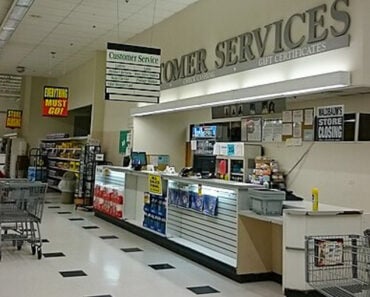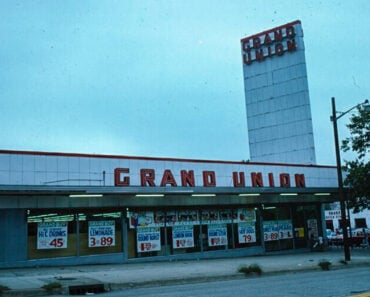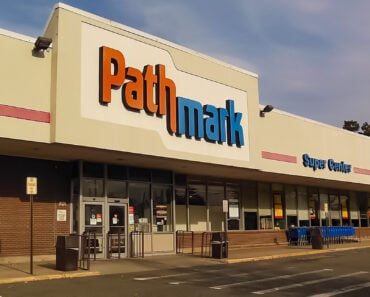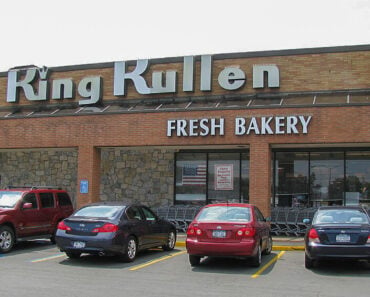
A&P is no longer in business as a supermarket chain. The Great Atlantic & Pacific Tea Company filed for Chapter 11 bankruptcy for the second time in July 2015, and its remaining supermarkets were sold or closed by November 25, 2015. The end came after 156 years in business. A&P had once been the largest grocery retailer in the United States, but decades of changing shopping habits, older stores, intense competition, costly restructuring, and the debt-heavy 2007 acquisition of Pathmark helped push the company toward its final collapse.
For generations of New Yorkers, few places were as much a part of everyday life as the neighborhood A&P Supermarket. More than just a grocery store, A&P was where families bought their weekly groceries, neighbors caught up, and employees became familiar faces for decades. From its beginnings in New York during the nineteenth century to its rise as America’s largest grocery chain, the history of A&P mirrors the changing story of American retail while preserving memories that countless New Yorkers still cherish today.

A&P Supermarket 1938 Public Domain via Creative Commons
What Did A&P Stand For?
A&P stood for the Great Atlantic & Pacific Tea Company. The roots of the business date to 1859 in New York City, when George F. Gilman and George Huntington Hartford entered the tea and coffee trade. By the early 1860s, the retail operation was known as the Great American Tea Company. In 1869, the business adopted the name Great Atlantic & Pacific Tea Company, reflecting ambitions that stretched from one coast of the United States to the other.
The company began with tea and coffee, not supermarkets. Over time, it added groceries, developed private-label products, opened hundreds and then thousands of stores, and became one of the most powerful retailers in American history.
What It Was Like to Work at A&P in 1981
This article examines the history of the legendary A&P supermarket chain and what it was like to work in one. A&P was one of the most loved grocery stores in New York history. The first half is written from a genuine first-hand perspective of what it was like to work at an A&P Supermarket. The second half looks back at the store’s long history.
While attending junior college in 1981, I applied for a job at the A&P Supermarket in Lake Grove. It was tough to find a job in 1981. The United States was entering the severe recession of 1981–82. Luckily, I walked in at the right time and got hired. I started in the meat department. I would eventually work in every department of the store, but the meat department was the most challenging.
The Old-School A&P Meat Department
There were two tough butchers of German descent in that meat department, and a wise-guy meat manager. They were tough, but they were genuine and fair. My job was to wrap the meat they cut, weigh it, and slap a price on it. This was all old school. Nothing came in prepackaged. It was like working at that meat plant where Rocky hit those sides of beef, only on a smaller scale. Big slabs of beef came in with crates full of chickens. Almost all of the meat cutting was done in that meat department. I would be sent to other stores on occasion, and it was all the same.
Some of the meat was cut on a huge band saw, but most was cut by hand by these three tough butchers. These guys were good. They would be talking really loud, almost screaming at each other, cutting the meat, swearing, screaming, laughing, talking war stories, work stories, old neighborhood stories, and more. All while swinging a big scary butcher knife nonstop with brilliant precision while never losing a finger or limb. It was cold. Their faces were red, and the cold air they breathed formed big clouds as they talked.
These butchers weren’t scared of anybody but the Board of Health inspectors. When those Board of Health inspectors came in, their personalities changed dramatically. These butchers were all union workers. They belonged to Local 342 Amalgamated Meat Cutters Union. Everyone who worked in the store belonged to that union. The union helped protect these butchers from nervous store managers to a certain extent, but there was no protection from the Board of Health, which was a good thing for all of us. If those inspectors found no violations, the butchers would be in the greatest mood for the rest of the day. However, if a violation was written up, the rest of the day would be a nightmare in that department.
The story of these butchers and how meat was processed in-store was symbolic of how old-school supermarkets like A&P served their customers. The meat department was lined with large glass windows that the butchers could slide open to talk to the customers. Some people would come in every day and ask the butchers to slice them a particular type of cut of meat. It was face-to-face contact. The butchers really cared about their work and their customers. I learned a lot about work ethic from those guys.
The customers would have conversations with the butchers. The customers looked forward to it, and it seemed so did many of the butchers. Many customers were older, in their 60s, 70s, and 80s. These people had been born in the early decades of the 1900s. This was an old way of doing things. A&P represented that old way. Of course, there are still supermarkets with butchers who have relationships with people, but this was different. This was the norm.
Eight O’Clock Coffee and the Smell of A&P
A&P had a large customer base that loved certain A&P brands. Standing at the top of that list was Eight O’Clock Coffee. While that brand can still be found in supermarkets, it was sold differently during the A&P days. At the front of the store were large coffee grinders. Customers would buy whole-bean bags of A&P coffee, and the cashiers would grind it for them.
Ask anyone who you think might remember the A&P supermarkets, and I guarantee you the first thing they will mention is how much they loved their coffee. Every day I went to work, I was hit by that incredible aroma of coffee when I entered the store. A different company is still producing Eight O’Clock Coffee, but in my opinion, it doesn’t smell or taste the same as it did when A&P sold it.

1922 Ad for Eight O Clock Coffee– Public Domain Great Atlantic and Pacific Tea Co. / Public domain
Eight O’Clock became an A&P trademark in 1919, although the company had sold coffee for decades before that. The coffee was once one of America’s best-selling brands. A&P began selling Eight O’Clock outside its own stores in 1979, and the brand became fully independent of A&P in 2003. Since 2006, Eight O’Clock Coffee has been part of Tata Consumer Products.
Working Throughout the A&P Store
I worked in every department of that A&P store. The deli department was much smaller than it is in stores like ShopRite or Stop & Shop. It was so small that most of the time it was only manned by one or two workers. As in most supermarket delis, ham, cheese, turkey, and roast beef were the most commonly sold cold cuts. However, there was a significant base of customers, usually those 60 and older, who would order old-school deli cold cuts like head cheese and liverwurst. Once again, it was that old customer base shopping for old-time products.
Back in the 1980s, grocery clerks at our store still used price guns to mark items. Scanning had not yet taken over our A&P. Clerks would get a sheet of prices and set the gun for the price and date. You were assigned one grocery gun, and if you lost it, you’d pay for it. When items went on sale, one would have to slap a new sticker over the old sticker with the sale price. Then, do it again when the item came off sale. It was a never-ending battle of stocking shelves and pricing items, all in real time.
Savvy customers would often try to peel the stickers off to see if there was a cheaper sticker underneath. New items were always placed in the back of the shelves behind the older items. Whenever I go grocery shopping, I know to reach toward the back of the shelves because that item is often fresher.
Every department had its own manager. Meat, produce, frozen, deli, front end, and so on. Most of these managers were full-time lifers. It was an excellent full-time job. The pay was good, there was always overtime, and there were benefits. Of course, if you were a department manager, you would always work way more hours than you should have.
Most people were dedicated and, of course, needed to make the numbers work in their departments so they would not be forced out by being sent to another store two hours from where they lived. It was a good job, but like many jobs, there was intense pressure, and I could see it on their faces every day.
The managers had to know precisely how much of a product to order and ensure all of it sold. They had to know their customer base well. What they liked, what they could afford, and what they would buy or ignore. That separated stores like A&P and that era from how supermarket chains operate now. It was on a much more personal level. That personal level is a great place to start when looking back at the history of the A&P supermarket chain.
When Was A&P Founded?
The roots of A&P date to 1859 in New York City. George F. Gilman and George Huntington Hartford built a tea and coffee business that cut out some of the traditional middlemen and sold products at competitive prices. The Great American Tea Company name emerged in the early 1860s, and in 1869 the operation became the Great Atlantic & Pacific Tea Company.
The company expanded from mail-order sales and tea-and-coffee stores into a much broader grocery business. By 1900, A&P operated hundreds of stores. The company was incorporated in 1902 and continued expanding at an extraordinary pace.
How A&P Became America’s Largest Grocery Chain
A&P’s great breakthrough came from scale. The company opened thousands of small neighborhood stores, bought huge quantities of merchandise, manufactured many of its own products, controlled distribution, and kept prices low.
By 1925, A&P operated roughly 14,000 stores. In 1930, the company reached its all-time store-count peak of 15,709 locations. For decades, A&P was the largest grocery retailer in the United States and, for a period, the largest retailer of any kind in the country.
The scale is difficult to imagine today. A&P was not simply a successful grocery chain. It was one of the dominant American corporations of its era.
A&P Private Labels and Vertical Integration
The company set the standard for many future retailers through vertical integration. A&P did not simply buy finished products from outside manufacturers and put them on shelves. It roasted coffee, operated bakeries, owned dairy and canning operations, controlled warehouses and distribution, and sold an enormous range of private-label goods.
Ann Page became one of A&P’s best-known private labels. Other famous names included Eight O’Clock, Bokar, Red Circle, and White House. Controlling so much of the supply chain gave A&P tremendous purchasing power and helped the company keep prices low.
A&P even entered publishing. The company launched Woman’s Day in 1937 as an inexpensive magazine offering recipes, household ideas, and other material that naturally connected with grocery shopping.
A&P Moves From Small Grocery Stores to Supermarkets
The rise of the modern supermarket eventually forced A&P to change the model that had made it successful. The company had built an empire of relatively small neighborhood grocery stores and was initially slow to embrace the larger self-service supermarket.
A&P opened its first supermarket-format store in Braddock, Pennsylvania, in 1937. The larger format quickly proved important. As supermarkets grew in popularity, A&P began closing many smaller stores and replacing them with fewer, larger locations.
That transition continued for decades. It also created one of the company’s long-term problems: competitors often built newer and larger supermarkets more aggressively, while A&P carried the burden of an enormous network of aging stores.
The Federal Government’s Antitrust Case Against A&P
A&P’s enormous size and buying power attracted federal antitrust scrutiny. In a major Sherman Act case decided in 1946, a federal court found A&P and several related companies guilty of conspiring to restrain trade and monopolize parts of interstate food commerce.
The legal battle continued for years. In 1954, A&P and the federal government entered a consent decree that restricted some of the company’s purchasing practices and required the dissolution of the Atlantic Commission Company, its large produce-buying subsidiary.
The government did not break A&P into separate regional supermarket companies, but the case demonstrated just how powerful the chain had become.
Who Owned A&P in Its Later Years?
After decades of Hartford family control, A&P became a public company in the 1950s. By the 1970s, the chain was struggling financially as newer supermarket competitors expanded and many A&P stores became dated.
In 1979, the West German retailer Tengelmann Group acquired majority control of A&P. The company then spent years restructuring its operations, closing stores, remodeling others, and trying different supermarket formats.
In 1986, A&P strengthened its position in the New York metropolitan area by acquiring Waldbaum’s and the Shopwell/Food Emporium organization. The stores generally kept their familiar names, so many shoppers did not necessarily realize they were owned by A&P.
Why Did A&P Close?
A&P did not fail because of one bad decision. The decline took decades. The company had been slow to move from small grocery stores to the larger supermarket format, carried many aging locations, faced powerful regional chains, and later competed against discount giants and supercenters.
The company repeatedly reorganized, closed stores, bought other chains, and tried to regain scale. Some moves helped temporarily. Others added costs and debt without fixing the deeper problems.
The most important late-stage decision came in 2007, when A&P acquired Pathmark for approximately $1.3 billion in cash, stock, and assumed or retired debt. Contrary to a claim in the previous version of this article, A&P did not go bankrupt in 2007. It completed the Pathmark acquisition in December of that year.
The deal created a larger supermarket company just as the Great Recession and increasingly fierce grocery competition put more pressure on the business. The added debt became a serious burden.
A&P filed for Chapter 11 bankruptcy protection in December 2010. It emerged from bankruptcy in 2012, but the turnaround did not last. The company filed for Chapter 11 again in July 2015 and began selling or closing its remaining stores.
When Did A&P Close for Good?
By November 25, 2015, A&P’s remaining supermarkets had either been sold or closed. The Great Atlantic & Pacific Tea Company had reached the end of a supermarket history that stretched back 156 years.
The company that once operated more than 15,000 stores and dominated the American grocery business disappeared from the supermarket landscape. Former A&P, Waldbaum’s, Pathmark, Food Emporium, and Super Fresh locations were sold to or replaced by companies including Stop & Shop, Acme, Key Food, ShopRite, and other operators.
Is A&P Still in Business Today?
The original Great Atlantic & Pacific Tea Company supermarket chain is gone. There are no A&P supermarkets operating as a continuation of the company that closed in 2015.
However, the A&P name itself has returned in a different form. A separate modern brand operation now sells A&P-branded coffee, tea, and related products online through A&P Coffee and Tea. That revival should not be confused with the return of the old supermarket chain.
There is another interesting twist. Pathmark, the chain A&P purchased in 2007, was later acquired by a different operator after A&P’s bankruptcy. The Pathmark name has since returned to supermarket use under separate ownership, including a new Pathmark Daily concept on Long Island in 2026.
What Happened to Eight O’Clock Coffee?
Eight O’Clock Coffee survived A&P. The brand became independent from A&P in 2003 and joined the Tata family of brands in 2006. It remains on the market today.
That makes Eight O’Clock one of the clearest surviving links to the old A&P experience. The supermarket chain is gone, but a product that generations of A&P customers remember grinding in the store is still being sold.
A&P Founder George Huntington Hartford
George Huntington Hartford was one of the central figures in building A&P from a tea and coffee business into a national retail empire. His sons, George L. Hartford and John A. Hartford, later led the company’s extraordinary twentieth-century expansion.

Public Domain
A&P Grocery Store on Third Avenue in Manhattan
The photograph below shows an A&P grocery store window display at 246 Third Avenue in Manhattan in 1938, during the period when the company was moving from its old neighborhood grocery format toward larger supermarkets.

Photo: Public Domain New York Public Library via Creative Commons
The A&P Legacy in New York
A&P became too large and too important to remember only as a failed corporation. For millions of people, it was part of ordinary life. It was the place where families bought groceries every week, where teenagers got their first jobs, where full-time employees built careers, and where customers knew the people behind the meat counter and at the register.
That is the A&P I remember. I remember the cold meat department, the butchers, the price guns, the department managers, the old customers buying liverwurst and head cheese, and that unmistakable smell of freshly ground Eight O’Clock Coffee when I walked into the store.
Companies rise and fall, and business historians can explain A&P through store counts, market share, mergers, and bankruptcies. Those things matter. But when you actually worked there, what stays with you are the people.
More New York Grocery and Retail History
If you enjoyed this look back at one of New York’s most beloved supermarket chains, continue exploring Classic New York History with our articles on the history and memories of Bohack Grocery Stores, the history of Chock Full o’Nuts coffee shops and lunch counters, Woolworth’s, and our look at how many bodegas are in New York City. Together, these stories preserve the stores, workers, products, and everyday experiences that shaped shopping and neighborhood life across New York.
Sources
(1) Sablik, Tim. “Recession of 1981–82.” Federal Reserve History. Accessed June 9, 2020.
Eisenstadt, P. E. (2005). The Encyclopedia of New York State. Syracuse, NY: Syracuse University Press.
A&P History at a Glance
| Year | Milestone |
|---|---|
| 1859 | The roots of the Great American Tea Company begin in New York City |
| 1869 | The business adopts the Great Atlantic & Pacific Tea Company name |
| 1902 | A&P is incorporated |
| 1919 | Eight O’Clock becomes the name of A&P’s famous coffee brand |
| 1925 | A&P operates roughly 14,000 stores |
| 1930 | Store count peaks at 15,709 |
| 1937 | A&P opens its first supermarket-format location in Braddock, Pennsylvania |
| 1946 | A federal court finds A&P and related companies guilty in a major Sherman Act antitrust case |
| 1954 | A&P enters a federal antitrust consent decree |
| 1979 | Tengelmann Group acquires majority control |
| 1986 | A&P acquires Waldbaum’s and Shopwell/Food Emporium |
| 2007 | A&P completes its $1.3 billion acquisition of Pathmark |
| 2010 | A&P files for Chapter 11 bankruptcy |
| 2012 | A&P emerges from bankruptcy |
| 2015 | A&P files for bankruptcy again; remaining supermarkets are sold or closed by November 25 |
| Today | The original supermarket chain is gone, while the A&P name has been revived separately for coffee and tea products |
Updated August 7, 2026.
A&P Supermarket History and Memories: What Happened to A&P? article published on ClassicNewYorkHistory.com © 2026