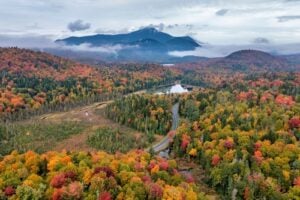
Little Cherry Patch Pond and Whiteface Mountain surrounded by autumn foliage in Adirondack Park, Upstate New York. Photo by pics721 / Shutterstock.
For generations, writers, musicians, actors, political leaders, and visual artists have looked beyond New York City and other centers of public life for something quieter. Upstate New York and the Hudson Valley offered them mountains, farmland, river towns, lakes, old houses, and enough distance from public attention to live and work at a different pace. Some came for summers and returned year after year. Others bought farms, built studios, or made permanent homes where they spent the final decades of their lives.
The twenty-five people in this article did not all retire in the conventional sense. Many continued writing, painting, recording, acting, teaching, or working for causes they believed in. What they shared was the decision to make a quieter part of New York an important part of their lives after fame had already arrived. From Mark Twain’s writing summers in Elmira and Bob Dylan’s years in Woodstock to Eleanor Roosevelt’s life at Val-Kill and James Earl Jones’s decades in Pawling, their stories reveal another side of New York: the places famous people chose when they wanted more privacy, more space, and room to live and work on their own terms.
Literary Masters and Visionary Authors
Mark Twain
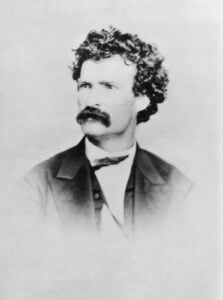
Everett Collection/ Shutterstock.com
Samuel Langhorne Clemens, better known as Mark Twain, spent many of the most productive summers of his life at Quarry Farm in Elmira. Beginning in the 1870s, Twain and his family regularly left their more hectic life in Hartford, Connecticut, for the hilltop property owned by his wife Olivia’s sister, Susan Crane. By then Twain was already a bestselling author, but the quiet of Elmira gave him the concentration to produce some of his greatest work. In the small octagonal study built for him on the property, he worked on The Adventures of Tom Sawyer, Adventures of Huckleberry Finn, Life on the Mississippi, The Prince and the Pauper, and A Connecticut Yankee in King Arthur’s Court. Quarry Farm was never Twain’s permanent retirement home, but for more than two decades it became one of the most important creative settings of his life.
John Burroughs
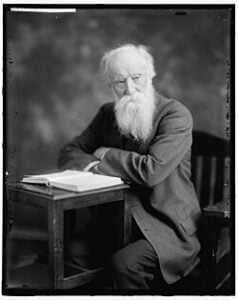
Harris & Ewing, photographer, Public domain, via Wikimedia Commons
Naturalist and essayist John Burroughs made the Hudson Valley the center of his adult life. After years of government employment and writing in the Washington, D.C., area, Burroughs settled at Riverby in West Park, Ulster County, where the Hudson River, orchards, birds, and changing seasons became part of his daily work. By 1895, his growing literary reputation was bringing increasing numbers of visitors, and Burroughs built a rustic cabin called Slabsides in the woods near Riverby as a quieter place to read, write, and observe nature. The simple bark-covered retreat became almost as famous as its owner. Burroughs wrote there, studied the natural world, and entertained visitors including Theodore Roosevelt, Henry Ford, and Thomas Edison, while helping turn the personal nature essay into an enduring American literary form.
Rod Serling
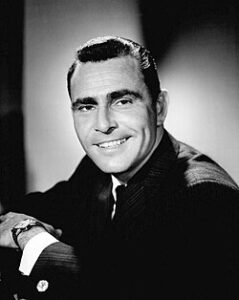
CBS Television-CBS Portrait by photographer Gabor Rona-mark is faint in spots., Public domain, via Wikimedia Commons
Rod Serling had already become one of the most recognizable writers in American television through The Twilight Zone when the Finger Lakes began drawing him back toward a quieter life. Serling had grown up in Binghamton, and by the early 1970s he was spending increasing amounts of time at his family’s cottage on Cayuga Lake while teaching at Ithaca College. The move away from Hollywood’s network battles and production machinery gave him something very different: students, water, familiar landscapes, and a more personal connection to writing. Serling taught at Ithaca College through the final years of his life and often welcomed students to the family home on the lake. He died in 1975 at only fifty, but the Finger Lakes had become an important part of the final chapter of one of television’s most imaginative voices.
James Fenimore Cooper
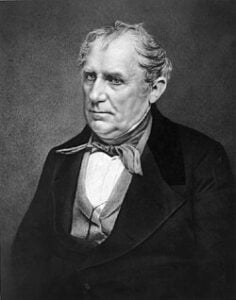
Mathew Benjamin Brady, Public domain, via Wikimedia Commons
James Fenimore Cooper had already become internationally famous by the time he returned to Cooperstown after years in New York City and Europe. Novels including The Pioneers, The Last of the Mohicans, and The Prairie had established him as one of the best-known American writers of his generation. After returning from Europe in 1833, Cooper made his home once again in the village founded by his father and remained there until his death in 1851. Cooperstown gave him distance from the literary and social worlds in which he had become famous, although he never stopped writing or arguing publicly about politics, culture, and American life. The forests, lake, and frontier history of central New York remained inseparable from the body of work that made him America’s first major novelist.
Edna St. Vincent Millay
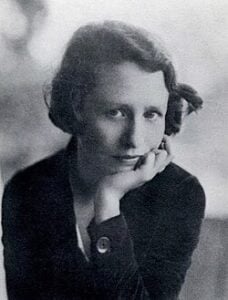
See page for author, Public domain, via Wikimedia Commons
By the time Edna St. Vincent Millay purchased an old berry farm in Austerlitz, Columbia County, in 1925, she was already a celebrated poet and Pulitzer Prize winner closely associated with the bohemian life of Greenwich Village. Millay wanted something quieter. She and her husband, Eugen Boissevain, transformed the property they named Steepletop into a sprawling country estate with gardens, fields, guest houses, a swimming pool, and a small writing cabin. The move did not end Millay’s career; it gave her a place in which to continue it at her own pace. She lived and worked at Steepletop for twenty-five years, writing, gardening, entertaining friends, and gradually making the Columbia County landscape part of the private world behind her very public literary reputation.
Russell Banks
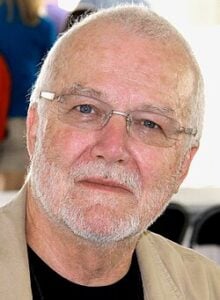
Larry D. Moore, CC BY 4.0 <https://creativecommons.org/licenses/by/4.0>, via Wikimedia Commons
Novelist Russell Banks found his lasting Upstate New York home in the Adirondacks. By the time he moved to Keene in 1987, Banks had already spent years building a serious literary career and had published works including Continental Drift. The mountains and small towns of the Adirondack region gave him both a home and a landscape that repeatedly entered his fiction. Banks later wrote about the emotional force of arriving in Keene and the sense that the region immediately became part of his imagination. He remained closely identified with the Adirondacks for the rest of his life, turning places around Keene, Au Sable Forks, North Elba, and the surrounding mountains into recurring settings for stories about class, family, isolation, and American life.
Toni Morrison
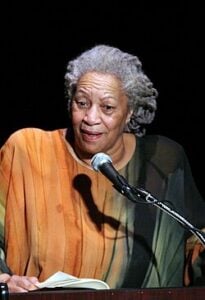
Angela Radulescu, CC BY-SA 2.0 <https://creativecommons.org/licenses/by-sa/2.0>, via Wikimedia Commons
Toni Morrison had already established herself as an important editor and novelist when she found the Hudson River home that gave her greater freedom to write. After the success of Song of Solomon in 1977, Morrison purchased a converted boathouse in Grand View-on-Hudson in Rockland County and moved there full time in 1983. The riverfront home became a private working space as her literary stature continued to grow. Morrison wrote through years that brought the publication of Beloved, the Pulitzer Prize, and eventually the Nobel Prize in Literature. Far from separating her from her work, the Hudson Valley gave Morrison the physical and mental space in which one of the great American literary careers continued to deepen.
Pioneers of Rock, Folk, and Modern Music
Bob Dylan

Christian Bertrand / Shutterstock.com
Bob Dylan’s move toward a quieter life in Woodstock came at one of the most intense moments of his career. By 1966, Dylan was internationally famous, touring relentlessly, releasing groundbreaking records, and living under constant public scrutiny. After his motorcycle accident that July, he largely withdrew from public appearances and settled into the Woodstock area with his family. Dylan later described wanting to get out of the “rat race,” and for several years the Catskills gave him exactly that opportunity. He continued writing, but the pace and atmosphere changed. In 1967, working informally with members of what became The Band, Dylan recorded the extraordinary collection of songs later known as The Basement Tapes. His Woodstock years were not retirement, but they became one of the most important quieter periods of his life and career.
Levon Helm

Adam McCullough / Shutterstock.com
Levon Helm fell in love with Woodstock while The Band was building its reputation there, and unlike many musicians who passed through the Catskills, he stayed. Helm maintained a home in Woodstock and in the early 1970s built the rustic house and barn that eventually became one of the most beloved music spaces in the region. After The Band’s original run ended, Woodstock remained Helm’s anchor through solo records, acting roles, financial hardship, fire, illness, and recovery from throat cancer. Beginning in 2004, his home became the site of the Midnight Rambles, intimate concerts that brought famous musicians and local listeners together in the same room. The country home Helm built for himself ultimately became a public celebration of community, roots music, and the Catskills.
Garth Hudson
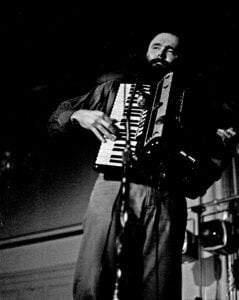
Heinrich Klaffs, CC BY-SA 2.0 <https://creativecommons.org/licenses/by-sa/2.0>, via Wikimedia Commons
Garth Hudson, the classically trained keyboardist and multi-instrumentalist whose organ, accordion, saxophone, and experimental textures helped define The Band’s sound, also made Woodstock his long-term home. Born in Ontario, Hudson came to the Catskills as The Band and Bob Dylan reshaped American roots music in the late 1960s. He remained a Woodstock resident for roughly fifty years, long after the group’s original era ended. Away from arena-scale rock stardom, Hudson continued recording, arranging, collecting instruments, and pursuing music with the same restless curiosity that had distinguished his work with The Band. He died in 2025, closing one of the longest personal connections between a major rock musician and the Woodstock community.
Giants of Stage and Screen
James Earl Jones
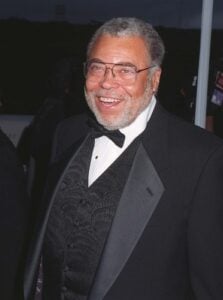
Featureflash Photo Agency / Shutterstock.com
James Earl Jones spent more than half a century building one of the most distinguished acting careers in American history, but his private life centered for decades on Pawling in Dutchess County. After discovering the area in the 1970s, Jones established a home there and became a familiar local presence rather than a distant celebrity. His neighbors knew the man who shopped, drove through town, supported local causes, and raised his family while continuing to work on Broadway, in film, and in television. Jones never truly disappeared from the stage or screen, but Pawling gave him a private counterweight to the fame attached to voices such as Darth Vader and Mufasa. He died at his Dutchess County home in 2024 at the age of ninety-three.
James Cagney
Elmer Fryer, Public domain, via Wikimedia Commons
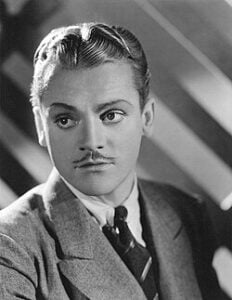
James Cagney became one of Hollywood’s most unmistakable stars through films such as The Public Enemy, Angels with Dirty Faces, White Heat, and the Academy Award-winning Yankee Doodle Dandy. Away from the screen, however, Cagney developed a deep attachment to his farm in Stanfordville in Dutchess County. During the long stretches when he stepped away from movie work, the farm offered the privacy and physical distance he wanted from the Hollywood machinery surrounding his name. Reports late in his life repeatedly described how strongly he wanted to return to the property whenever illness or travel took him away from it. Cagney died there in 1986, at the Upstate New York farmhouse he loved.
Statesmen, Reformers, and Inventors
Ulysses S. Grant
Everett Collection /Shutterstock
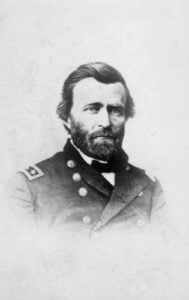
Ulysses S. Grant spent only the final weeks of his life at Mount McGregor in Saratoga County, but the mountain cottage became one of the most important places in his final chapter. Dying of throat cancer and financially devastated after the collapse of an investment firm, the former Union general and president came there in June 1885 to finish his memoirs and secure his family’s financial future. Unable to speak for much of the time, Grant continued writing and proofreading while sitting on the porch above the Hudson Valley. He completed the work only days before his death on July 23. Mount McGregor was not a retirement estate in the ordinary sense; it was the quiet place where Grant completed the book that restored his family’s fortunes and became one of the great American military memoirs.
Martin Van Buren
Mathew Benjamin Brady, Public domain, via Wikimedia Commons
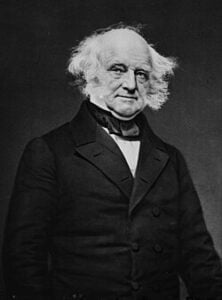
When Martin Van Buren left the White House in 1841, he returned to Columbia County and the estate he had purchased near his hometown of Kinderhook. He called it Lindenwald. The former president embraced the life of a gentleman farmer, overseeing an expanding agricultural property while remaining deeply involved in politics. His first years there were not a complete retirement—Van Buren would seek the presidency again—but Lindenwald increasingly became the place where he could step away from national office, live among family, write, farm, and return to the landscape of his youth. He remained connected to the estate until his death in 1862.
Eleanor Roosevelt
National Archives and Records Administration, Public domain, via Wikimedia Commons
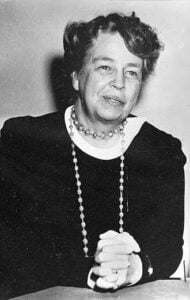
After Franklin D. Roosevelt’s death in 1945, Eleanor Roosevelt made Val-Kill in Hyde Park her permanent home. Unlike the formal Roosevelt mansion at Springwood, Val-Kill was a place she considered truly her own. From the modest Dutchess County property, Eleanor built an extraordinary second act that included chairing the United Nations Commission on Human Rights and helping shape the Universal Declaration of Human Rights. She welcomed political leaders, activists, students, family members, and friends while also finding time to write and walk the property. Val-Kill gave one of the most famous women in the world a private home without removing her from public life, making it both a personal home and a working center for her continued activism.
William H. Seward
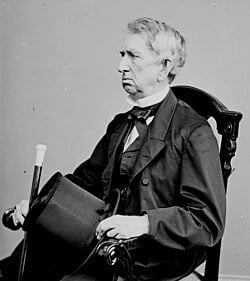
Mathew Brady, Public domain, via Wikimedia Commons
William H. Seward’s long political career took him from Albany to Washington, where he served as governor, senator, and secretary of state under Abraham Lincoln and Andrew Johnson. Through all of it, Auburn remained home. The South Street residence there was the only house Seward ever owned, and after leaving the State Department in 1869 he returned to it permanently. He had already helped guide Union diplomacy through the Civil War and negotiated the purchase of Alaska. In retirement, Seward traveled extensively, dictated and wrote about his journeys, and returned repeatedly to the Auburn house he had spent years enlarging for his family. He died there in 1872.
Harriet Tubman
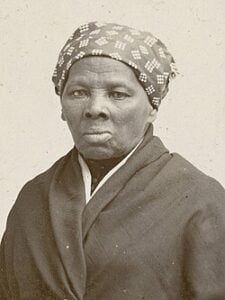
Horatio Seymour Squyer, Public domain, via Wikimedia Commons
Harriet Tubman’s life in Auburn was not a retreat from responsibility; it was the home base from which she continued a lifetime of service. In 1859, after becoming famous for repeatedly risking her life as a conductor on the Underground Railroad, Tubman purchased a seven-acre farm near Auburn from Frances Seward. The property gave her family a secure home while Tubman continued her Civil War service and later her work for women’s suffrage and humanitarian causes. As she grew older, she expanded her vision by creating the Harriet Tubman Home for the Aged. Tubman lived in the Auburn area until her death in 1913, turning her Upstate property into both a family home and a place of care for others.
Samuel F. B. Morse
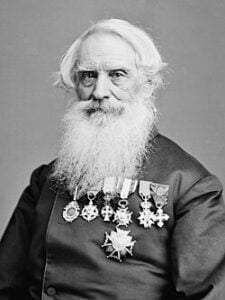
Mathew Benjamin Brady, Public domain, via Wikimedia Commons
Samuel F. B. Morse was already internationally known for his role in developing the telegraph when he purchased Locust Grove in Poughkeepsie in 1847. Using profits from the success of his invention, Morse acquired the Hudson River property and commissioned architect Alexander Jackson Davis to remodel the house into an Italianate villa. The estate became his country home, offering sweeping views of the Hudson and a quieter setting away from New York City. Morse continued to work, travel, paint, and involve himself in public controversies, but Locust Grove represented the kind of country life that success had finally allowed him to create. He remained connected to the property until his death in 1872.
Visual Artists, Sculptors, and Designers
Frederic Edwin Church
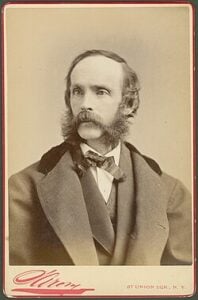
Napoleon Sarony, Public domain, via Wikimedia Commons
Frederic Edwin Church was already one of America’s most successful landscape painters when he began assembling the Columbia County property that became Olana. He purchased his first farm there in 1860 and gradually expanded the estate above the Hudson River. Working with architect Calvert Vaux, Church designed a remarkable Persian-inspired house after traveling through Europe and the Middle East, while also reshaping the surrounding land with roads, meadows, woods, orchards, and framed views. As rheumatism made painting increasingly difficult, the estate itself became one of Church’s greatest artistic projects. Olana remained his primary home through his later years, allowing a painter famous for monumental landscapes to live inside a landscape he had designed himself.
Thomas Cole
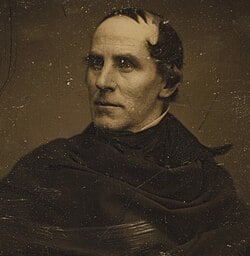
Mathew Benjamin Brady, Public domain, via Wikimedia Commons
Thomas Cole, the English-born painter who helped establish what became known as the Hudson River School, found both subject matter and a permanent home in the Catskills. Cole had been traveling to the region since the 1820s, and in 1836, after marrying Maria Bartow, he made Cedar Grove in Catskill his permanent residence. From there he continued painting, teaching, writing, and exploring the surrounding mountains and valleys until his death in 1848. Cedar Grove was not a place where Cole stopped working; it was the place where work and private life finally joined. Views of the Catskill Mountains helped anchor a movement that changed how Americans saw their own landscape.
Ellsworth Kelly
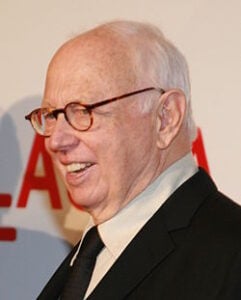
Jeremiah Garcia, CC BY 2.0 <https://creativecommons.org/licenses/by/2.0>, via Wikimedia Commons
By 1970, Ellsworth Kelly was already an internationally established artist with major museum acquisitions and exhibitions behind him. That March, he left New York City for Spencertown in Columbia County, purchasing and renovating an old farmhouse and establishing a studio in nearby Chatham. The move gave Kelly space unavailable in Manhattan and brought him into daily contact with the leaves, shadows, architecture, curves, and open forms that had always informed his visual thinking. He later built a studio beside his Spencertown home and continued expanding the property. Kelly spent the rest of his life working there, making his move Upstate one of the defining geographical shifts of his long career.
Philip Guston
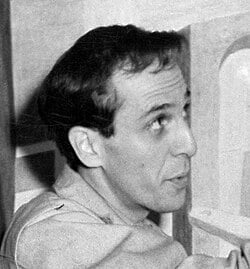
Archives of American Art, Public domain, via Wikimedia Commons
Philip Guston made one of the most consequential moves of his career when he relocated permanently to Woodstock in 1967. By then he had already become a major figure in Abstract Expressionism, but the quiet of the Catskills coincided with a profound reassessment of his art. In Woodstock, Guston gradually abandoned the lyrical abstraction that had brought him fame and returned to recognizable imagery, developing the strange, cartoon-like figures, objects, shoes, heads, and hooded forms that defined his controversial late work. The move away from New York City’s art scene did not quiet Guston’s ambition. It gave him the distance to risk changing almost everything about the way he painted.
Rockwell Kent
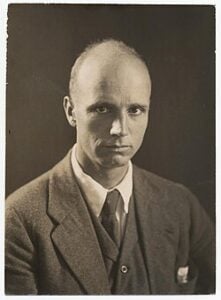
Smithsonian Institution from United States, No restrictions, via Wikimedia Commons
Painter, illustrator, printmaker, writer, and adventurer Rockwell Kent had already lived and worked in some of the world’s most remote places when he purchased a dairy farm near Au Sable Forks in the Adirondacks in 1927. He named the property Asgaard, meaning “home of the gods,” and it remained his home for the rest of his life. Kent continued painting, illustrating books, creating commercial designs, writing, farming, and participating in political causes, but the Adirondack property became the fixed point in a life defined by travel. The mountains and working landscape around Asgaard offered exactly the combination of solitude and physical labor that suited an artist whose work repeatedly returned to nature, isolation, and human endurance.
David Smith
Unknown photographer, Public domain, via Wikimedia Commons
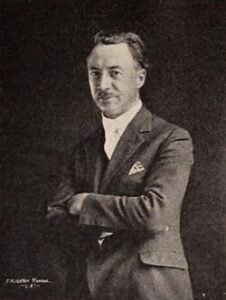
Sculptor David Smith left New York City for Bolton Landing on Lake George in 1940, moving with his first wife, artist Dorothy Dehner, to an eighty-six-acre former fox farm they had purchased years earlier. The rural property radically expanded what Smith could do. Instead of treating sculpture as an indoor object, he placed works across fields and hillsides, allowing changing light, weather, landscape, and distance to become part of how the sculptures were seen. Smith eventually called the property his “sculpture farm.” He continued working there until his death in 1965, and the relationship between his large steel constructions and the open Adirondack landscape became one of the defining images of postwar American sculpture.
Brice Marden
Kraemer.Chris, CC BY-SA 4.0 <https://creativecommons.org/licenses/by-sa/4.0>, via Wikimedia Commons
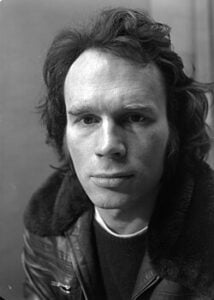
Brice Marden rose to prominence in the 1960s and 1970s as one of America’s most important abstract painters, but later in life the Hudson Valley became an essential part of his working world. Marden established a home and studio in Tivoli, where he continued painting while maintaining connections to the international art world. The privacy of the village and the scale of his studio gave him room to pursue the calligraphic lines, layered surfaces, and color relationships that defined his mature work. Marden remained active almost until the end of his life. When he died at his Tivoli home in 2023 at the age of eighty-four, his family noted that he had been painting in the studio only days earlier.
From Elmira and Auburn to Woodstock, Hyde Park, Cooperstown, Pawling, and the Adirondacks, these twenty-five lives show that choosing a quieter life did not mean giving up ambition, creativity, or public service. For many of them, Upstate New York and the Hudson Valley offered enough privacy and space to continue working on their own terms. The farms, cottages, studios, river houses, and mountain properties became places where public attention could recede while the work, relationships, and daily routines that mattered most could continue.
For more stories about the people and places beyond New York City, see our look at 25 Famous People You Didn’t Know Were From Upstate New York, explore Washington Irving, Sleepy Hollow, and the American Short Story, and visit The Beauty and History of Lake George.