Photo: Andriy Blokhin / Shutterstock.com
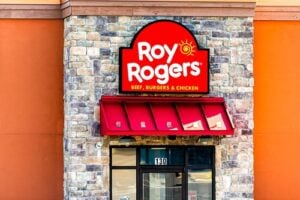
There was something about Roy Rogers that set it apart from the other fast-food restaurants New Yorkers grew up with in the 1970s and 1980s. You could go there for a roast beef sandwich, a hamburger or a dinner of fried chicken. And once you had your sandwich, you could head over to the Fixin’s Bar and load it up with the toppings you liked. For those who remember the western-themed restaurants, it is difficult to understand how a chain with such a distinctive identity could have virtually disappeared.
Whatever happened to Roy Rogers restaurants in New York? The chain began losing its presence after Marriott sold the business to Hardee’s in 1990. An unsuccessful effort to convert many Roy Rogers restaurants into Hardee’s was followed by the sale of hundreds of locations to competing chains. The last Long Island restaurant closed in 2010, although Roy Rogers continued serving travelers on the New York State Thruway for years afterward.
Unlike many of the restaurant chains that have disappeared from New York, however, Roy Rogers never went completely out of business. A family with ties to the original Marriott operation purchased the brand in 2002 and continues to operate and franchise restaurants. The story of what happened to Roy Rogers in New York is as much about the decisions of its former corporate owners as it is about the changing fast-food industry.
How Roy Rogers Restaurants Got Started
Roy Rogers was already a household name long before it appeared on a restaurant sign. The singing cowboy, born Leonard Franklin Slye, had starred in western movies and television programs, often alongside his horse Trigger and his wife, Dale Evans. Generations of American children knew him from the screen. Marriott recognized that the entertainer’s name could give a new restaurant chain an identity that customers would recognize immediately.
Marriott’s involvement in the restaurant business actually preceded its entry into the hotel business. The company grew out of the Hot Shoppes restaurants established by J. Willard Marriott and his wife Alice in the Washington, D.C., area. As it expanded into other kinds of hospitality, Marriott continued developing and acquiring restaurant concepts.
In the 1960s, Marriott acquired a roast beef restaurant business known as RoBee’s. Difficulties securing nationwide rights to that name helped lead to the decision to license the Roy Rogers name. In 1968, the first Roy Rogers restaurant opened in the Falls Church area of Virginia. Additional outlets followed, including conversions of some of Marriott’s existing Junior Hot Shoppes restaurants.
Roast Beef, Fried Chicken and the Fixin’s Bar
Although roast beef was at the heart of the original concept, Marriott expanded the menu in the early 1970s to include fried chicken and quarter-pound hamburgers. Those three items became the foundation of the restaurant’s identity. The Double R Bar Burger, a hamburger topped with ham and cheese, gave the chain another distinctive sandwich that customers could not easily find at competing restaurants.
Perhaps the most memorable innovation was the Fixin’s Bar, introduced in the mid-1970s. Customers could take a sandwich and add their own lettuce, tomatoes, onions, pickles and condiments. It was a small change from the usual fast-food routine, but one that gave customers much more control over their meals. Along with the western decor, it was one of the features that distinguished Roy Rogers from McDonald’s, Burger King and other familiar chains.
The broader menu mattered, too. A family did not have to agree on hamburgers or chicken before deciding where to eat. Roy Rogers could accommodate both preferences, along with customers who wanted roast beef. That combination helped the chain build a following in a crowded restaurant market.
Roy Rogers Expands Throughout the New York Region
By the early 1980s, Marriott was looking for ways to expand Roy Rogers without having to build every restaurant from scratch. An important opportunity arrived in 1982 when it acquired Gino’s, a restaurant company founded by former professional football players. Many Gino’s outlets were located in the densely populated northeastern states where Marriott wanted to expand.
The purchase cost Marriott approximately $48 million. Rather than maintain Gino’s as a competing brand, Marriott planned to convert a large portion of its fast-food restaurants to Roy Rogers. Other properties were sold, including restaurants that had served Kentucky Fried Chicken. The acquisition helped make Roy Rogers a much larger presence along the East Coast.
In New York City, the chain also benefited from the operations of the Riese family, whose restaurant organization controlled numerous dining establishments in Manhattan. Riese was particularly adept at bringing several restaurant brands together at a single location. Roy Rogers became part of a network that included everything from fast-food outlets to coffee shops and full-service restaurants. On Long Island, the chain competed for customers along the busy commercial roads that had become home to so many national restaurant brands.
Why Did Marriott Sell Roy Rogers?
In 1990, Marriott agreed to sell Roy Rogers to Hardee’s Food Systems for $365 million. The sale was part of a larger restructuring through which Marriott sought to concentrate its resources on hotels and contract services. The restaurant chain was profitable when Marriott decided to sell it, but it no longer fit the company’s long-term plans.
For Hardee’s, the acquisition offered an opportunity to gain a foothold in northeastern markets where its name was not as firmly established. Roy Rogers had grown to roughly 650 restaurants, with a particularly strong concentration in the eastern states. Hardee’s could acquire hundreds of established restaurant sites and reach customers who had previously been beyond much of its traditional territory.
But there was an important difference between buying a successful restaurant chain and understanding why it was successful. Hardee’s intended to put its own name on many of the acquired restaurants and emphasize its own menu. That decision would prove to be one of the most costly mistakes in the history of Roy Rogers.
The Hardee’s Conversion and Its Aftermath
During the early 1990s, many Roy Rogers outlets were converted into Hardee’s restaurants. The change involved more than replacing the signs outside. Customers who had been accustomed to Roy Rogers’ particular combination of sandwiches and chicken found themselves presented with a different restaurant concept.
The results in the Washington and Baltimore markets were particularly disappointing. Hardee’s began experimenting with a return to the Roy Rogers name in early 1992 and announced a program to restore the brand to many of its converted restaurants. The reversal was expected to cost approximately $4 million. It demonstrated how badly the company had underestimated the loyalty of Roy Rogers customers.
The conversion failures also occurred during a recession and an intensely competitive period for fast-food businesses. Even after restoring the name, Hardee’s struggled to recover the chain’s former position. By the end of 1995, the company was expecting Roy Rogers to lose approximately $28 million for that year and was seeking buyers for its remaining company-operated restaurants.
What Happened to the Roy Rogers Restaurants in New York?
One of the most significant events for New York customers came in December 1995, when Hardee’s announced an agreement to sell 45 restaurants in the New York market to Wendy’s. Many of the locations that had made Roy Rogers so familiar to Long Islanders ultimately became Wendy’s or Burger King restaurants. Elsewhere, the chain’s properties were acquired by Boston Market and McDonald’s.
Not every Roy Rogers restaurant closed during the corporate sell-off. Some were operated by independent franchisees who continued using the name. In 1997, the Riese family, which was then operating 18 Roy Rogers restaurants in New York, filed a $10 million lawsuit alleging that the actions of Hardee’s and related companies had seriously damaged the value of the chain. The lawsuit illustrates the extent to which the decisions of the corporate owners affected businesses that had invested in the original concept.
Roy Rogers outlets near Pennsylvania Station survived into the 2000s. A contemporary account from May 2009 documents a restaurant still operating at 401 Seventh Avenue near 32nd Street, even as another location in Penn Station was being replaced. On Long Island, the restaurant that outlasted the others was in Shirley, on William Floyd Parkway. It closed in November 2010, leaving Long Island without a Roy Rogers restaurant.
The Roy Rogers Comeback and Long Island’s Disappointment
One of the people who had helped Marriott develop its original Roy Rogers operation was Pete Plamondon Sr. In 1980, he opened his first Roy Rogers franchise in Frederick, Maryland. His sons, Jim and Pete Jr., eventually took over the family business and remained committed to the chain as many other operators left.
In 2002, the brothers acquired the Roy Rogers trademark and franchise rights from Imasco, the former parent company of Hardee’s. They concentrated on improving the remaining restaurants and rebuilding a smaller, more consistent chain. The familiar roast beef, fried chicken, hamburgers and Fixin’s Bar remained central to the operation.
There was exciting news for Long Islanders in September 2018 when Roy Rogers announced an agreement with Burger Brothers Restaurant Group to develop seven restaurants in Nassau and Suffolk counties and Queens. For customers who had grown up eating at Roy Rogers, the prospect of seeing the western-themed signs again was particularly welcome.
Unfortunately, the planned return never materialized. In September 2019, Long Island Business News reported that the franchise agreement had fallen through. Jim Plamondon expressed continued interest in the Long Island market, but the anticipated restaurants did not open. It was another chapter in a story that had already left many New Yorkers wondering whether Roy Rogers would ever return.
The Last Roy Rogers Restaurants on the New York State Thruway
Even after the last Long Island restaurant closed, New Yorkers traveling upstate could still find Roy Rogers at highway service areas. The restaurants were operated under franchise arrangements with travel plaza companies, and several remained long after most of the traditional neighborhood locations disappeared. Indian Castle in Herkimer County and Junius Ponds in the Finger Lakes region were among the places where travelers could once stop for Roy Rogers.
The modernization of the New York State Thruway’s 27 service areas, which began in 2021, brought another major change. Roy Rogers’ 2023 franchise disclosure document provides an unusually clear record of the chain’s final years in New York. There were five franchised outlets in the state at the beginning of 2021. Four ceased operating that year, leaving just one at the end of 2022.
The remaining restaurant listed in the document was at the Pattersonville Service Area in Schenectady County, on the westbound Thruway near Amsterdam. The service area closed for renovations in September 2023 and reopened on September 24, 2024, with a different selection of restaurants. Roy Rogers was no longer among them. For many motorists, the disappearance of the old service plaza restaurants marked the end of another familiar part of driving through Upstate New York.
Are There Any Roy Rogers Restaurants Left in New York?
The Roy Rogers chain continues operating, but its current official restaurant directory no longer lists any locations in New York State. Its restaurants can still be found in Maryland, Virginia, West Virginia, Pennsylvania and New Jersey. The business has been expanding and renovating locations, including a return to Cherry Hill, New Jersey, rather than attempting to recreate the enormous national chain that existed in 1990.
The important distinction is that Roy Rogers is a lost restaurant chain for New Yorkers, not a defunct company. Customers who travel to other states can still order many of the foods they remember. For the time being, however, there is no Roy Rogers on Long Island, in New York City or on the New York State Thruway.
The history of Roy Rogers demonstrates how much more a restaurant can mean to customers than the building in which it operates. Hardee’s acquired the restaurants, their equipment and their locations, but it could not transfer the affection customers had developed for the Roy Rogers name to its own brand. Decades later, the fact that people still ask whatever happened to Roy Rogers is a testament to how well the original concept had connected with them.
For more memories of the restaurants New Yorkers grew up with, explore our articles on Whatever Happened to Ponderosa Steakhouse?, What Happened to Arthur Treacher’s Fish & Chips?, Whatever Happened to Howard Johnson’s Restaurants?, and 10 Classic New York Restaurants We Miss the Most.