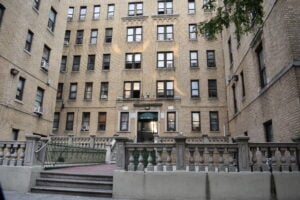
3186 Rochambeau Avenue in the Bronx, where I grew up living on the fourth floor and listening to neighbors bang on the heating pipes during the winter. Photo: Brian Kachejian.
Growing up in the Bronx and living on the fourth floor on Rochambeau Avenue, one thing I always remember is people banging on the pipes for heat in the winter. It would drive me crazy, especially at night. Sometimes I almost preferred that there be no heat in the building just so they would stop banging on the pipes, as if that was really going to do anything.
That actually leads to what this article is about. Who controls the heat in New York City apartment buildings? When does it get turned on, and when does it get turned off? Let’s dig in.
New York City’s heating season begins on October 1 and ends on May 31. During those eight months, landlords are required to maintain certain minimum temperatures inside apartments. The building owner or management is responsible for providing the heat, but the city determines when it is legally required. The superintendent may operate the boiler, or the building may have automatic heating controls that respond to changes in temperature.
There is also a fascinating history behind those old radiators that so many of us grew up with. The city’s heating laws have roots in a fuel crisis more than a century ago, and the reason some apartments become so hot that tenants open their windows in January has something to do with the public health concerns of the early twentieth century.
Who Actually Controls the Heat in a New York City Apartment Building?
In many older New York apartment buildings, a central boiler supplies heat to the entire building. The boiler heats water, producing steam that travels through pipes to the radiators in the apartments. The steam releases heat, condenses into water and returns to the boiler, where the cycle begins again. In other buildings, hot water rather than steam circulates through the heating system.
The building owner is legally responsible for providing adequate heat. In practice, a superintendent, managing agent or heating contractor may oversee the system.I will never forget one day hearing the painful screams of the super in the building when she had attempted to fix the boiler herself and wound up severely burning herself.
Some older systems operate with relatively simple controls, while newer controls use outdoor temperature sensors and, in some cases, temperature readings from inside the building to determine how frequently the boiler should operate.
Individual apartments with central steam heat do not necessarily have their own thermostats. Even when a radiator has a valve that allows a tenant to reduce or shut off the heat coming from that radiator, the tenant generally cannot use it to start the building’s boiler. Other apartments have individual heating systems, such as electric heat or heat pumps, that give residents considerably more direct control over their indoor temperatures.
So, while banging on the pipes might have alerted a superintendent or other neighbors to a problem, it did not actually tell the boiler to produce more heat. There was no secret switch hidden somewhere in those pipes.
When Does the Heat Turn On in New York City Apartments?
The New York City Department of Housing Preservation and Development, commonly known as HPD, enforces the city’s heating requirements. Section 27-2029 of the New York City Administrative Code establishes the annual heating season, which extends from October 1 through May 31.
There is a common misconception that the heat must run continuously from the first day of October until the last day of May. That is not what the law requires. It establishes minimum indoor temperatures under specific conditions. A boiler can cycle on and off as needed, provided that the apartments remain warm enough to satisfy the law.
The following requirements apply during the heating season:
- Daytime, 6:00 a.m. to 10:00 p.m.: When the outdoor temperature is below 55 degrees Fahrenheit, apartments must be at least 68 degrees Fahrenheit.
- Nighttime, 10:00 p.m. to 6:00 a.m.: Apartments must be at least 62 degrees Fahrenheit, regardless of the outdoor temperature.
For example, if it is 45 degrees outside at two in the afternoon, your apartment must be at least 68 degrees. If it is 60 degrees outside at midnight, your apartment must still be at least 62 degrees. The nighttime requirement does not depend on how cold it is outside.
These are minimum legal temperatures, not maximum temperatures or exact thermostat settings. A landlord can keep a building warmer. Nor does the law require the radiators to feel hot every minute, as long as the required indoor temperature is maintained.
When Does the Heat Turn Off in New York City Apartments?
May 31 marks the end of the city’s regular heating season. Beginning June 1, the seasonal temperature requirements of Section 27-2029 no longer apply until October 1. That does not mean that every boiler in New York City must be shut down on the same day. Building management can continue supplying heat when appropriate, and other applicable obligations may still matter.
Hot water is a different story. Building owners must generally provide it throughout the year, with the city’s standard minimum temperature of 120 degrees Fahrenheit, subject to applicable plumbing and safety provisions. A landlord cannot simply stop providing hot water because the heating season has ended. Some buildings use equipment that supplies both heat and domestic hot water, which is another reason ending the heating season does not necessarily mean shutting down all the equipment in the boiler room.
How New York City’s Heating Laws Began in 1918
One of the most interesting aspects of the city’s heating law is how long the number 68 has been associated with indoor temperatures in New York. On October 17, 1918, the city’s Board of Health adopted a regulation requiring those responsible for heating occupied residential and business buildings to maintain a minimum indoor temperature of 68 degrees. The provision became Section 225 of the Sanitary Code.
It was a particularly difficult period in New York history. World War I had disrupted the nation’s fuel supply, and a severe coal shortage during the winter of 1917–1918 had made heating homes a major concern. In apartment buildings with central heating, residents depended on someone else to purchase fuel and keep the furnaces operating. Those who lived in cold-water flats often had to buy their own coal and heat their apartments with stoves. The financial burden could be especially severe for poorer families.
Public health officials were also concerned about the effects of cold indoor environments. The influenza pandemic of 1918 added to the urgency of protecting people’s health. Establishing a standard temperature gave the city a measurable way to address inadequate heating while national fuel authorities were also encouraging people not to waste scarce coal.
The standard did not remain unchanged throughout the following century. During World War II, the city lowered its minimum heating temperature to 65 degrees amid concerns about fuel supplies. The 68-degree standard returned in 1956. The history of heating regulation in New York is therefore not just a history of boilers and radiators. It is also a history of tenant rights, public health and the cost of keeping millions of people warm.
Why Are So Many Old New York City Apartments Overheated?
Anyone who has lived in a prewar apartment building in New York knows that the opposite problem can be just as familiar. The heat comes on, the radiator starts hissing, and before long someone has to open a window in the middle of winter.
There is a historical explanation for some of that excessive heat. During the late nineteenth and early twentieth centuries, fresh air was considered essential to good health, particularly in the fight against respiratory illnesses such as tuberculosis. The 1918 influenza pandemic reinforced interest in ventilation. As heating historian Dan Holohan has documented, engineering manuals of the 1920s recommended sizing heating systems so that buildings could stay warm even with windows open in bitter weather.
Many of those buildings were originally heated with coal. Later, boilers were converted or replaced to use fuel oil or natural gas, but much of the original radiator and pipe network remained. New windows, better insulation and improvements to the buildings themselves also reduced the amount of heat needed to maintain a comfortable indoor temperature.
Not every overheated apartment can be blamed on the influenza pandemic or an oversized radiator, however. Poorly balanced systems, malfunctioning controls and oversized replacement boilers can all contribute to the problem. It is entirely possible for one apartment to be so warm that its occupants open their windows while another apartment in the same building is freezing. A well-maintained and properly controlled steam system should not require tenants to leave windows open all winter just to stay comfortable.
Why Do the Steam Pipes and Radiators Bang?
Of course, some of the banging I remember from my childhood was coming from the neighbors themselves. But anyone who grew up with steam heat also knows that those pipes and radiators could make plenty of noise on their own.
In a common one-pipe steam heating system, the same pipe delivers steam to the radiator and carries the condensed water back toward the boiler. The pipes must be positioned so the water can drain properly. If water collects in a low spot and moving steam drives it through the pipe, it can produce a loud banging sound known as water hammer.
Other noises can come from the expansion and contraction of metal pipes as they heat and cool. A radiator that hisses excessively, fails to heat properly or produces repeated violent banging may need attention from a qualified heating professional. Air vents, pipe alignment and other components can affect the performance of the entire system.
Tenants should report persistent noise or uneven heating to the superintendent rather than attempt to dismantle a radiator or adjust unfamiliar equipment themselves. Steam and hot metal can cause serious burns. The fact that a radiator is old does not mean it is supposed to make an enormous racket every time the heat comes on.
How New York City’s Nighttime Heating Law Changed in 2017
For much of the period when generations of New Yorkers were growing up in apartment buildings, the city’s nighttime heating requirement was considerably less protective than it is today. Before the 2017 amendment, the law required an indoor temperature of only 55 degrees between 10:00 p.m. and 6:00 a.m., and that requirement applied when the outdoor temperature fell below 40 degrees.
Local Law 86 of 2017 changed both parts of the nighttime rule. Effective October 1, 2017, the minimum indoor temperature rose to 62 degrees and the outdoor temperature condition was eliminated. The daytime minimum of 68 degrees when it is colder than 55 degrees outside remained unchanged.
The debate over adequate apartment temperatures continues. In January 2026, legislation was introduced in the City Council proposing a daytime minimum of 70 degrees and a nighttime minimum of 66 degrees. As of November 18, 2026, that proposal remained in committee and had not become law. The existing 68-degree and 62-degree standards still apply.
What Can You Do if Your Landlord Is Not Providing Heat?
The first step is to notify your superintendent, landlord or managing agent. If the problem is not resolved, tenants can call 311 or submit a heat complaint through the city’s 311 online service. Keeping a record of indoor temperatures, dates, times and communications with the owner can help establish an ongoing problem.
After receiving a complaint, HPD attempts to contact the building owner and may contact the tenant to determine whether service has been restored. If necessary, an inspector attempts to visit the building. A violation can be issued if the temperatures measured during the inspection fall outside the legal requirements. During the daytime, the inspector also checks the outdoor temperature.
Failure to provide legally required heat is classified as an immediately hazardous violation. Under Local Law 71, which increased penalties effective December 8, 2023, the city can seek the following civil penalties:
- Initial heat violation: $350 to $1,250 per day.
- Subsequent heat violation at the same building within two consecutive heating seasons: $500 to $1,500 per day.
These are potential civil penalties, which the city can pursue through Housing Court. An eligible first violation can be resolved under a separate statutory procedure if the condition is corrected within 24 hours and the owner submits the required notice and a $250 payment within ten days. Additional inspection fees can apply to repeated violations. If essential services are not restored, HPD may arrange emergency repairs and charge the property owner for the work.
Tenants can also seek help through Housing Court, and tenants in rent-controlled or rent-stabilized apartments may be eligible to file a reduction-in-services complaint with New York State Homes and Community Renewal. Never use a gas oven, charcoal grill or outdoor heater to warm an apartment. Such equipment can create serious fire and carbon monoxide hazards.
More Than a Century of Keeping New Yorkers Warm
The heating systems in New York City’s older apartment buildings are a reminder of the era when the city was expanding rapidly and entire neighborhoods were being built around the idea of apartment living. Central heating offered a considerable improvement over having to maintain a stove or fireplace in every apartment. More than a century later, many of the same pipes and radiators are still part of daily life.
Thinking back to those winter nights on Rochambeau Avenue, it is funny how something as ordinary as the sound of a pipe can bring back so many memories of growing up in the Bronx. I certainly would not want to spend a cold winter night listening to the neighbors banging on those pipes again. At least now we know a little more about who was actually responsible for turning on the heat.
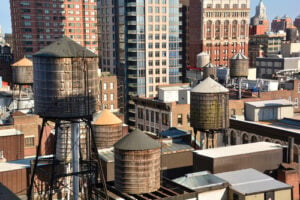
For more stories about New York City’s buildings and daily life, explore our article on Why Do NYC Buildings Have Wooden Water Towers on the Roof? and our personal recollections in A Bronx Life on Bainbridge Ave and 204 Street and Living in the Bronx During Son of Sam.