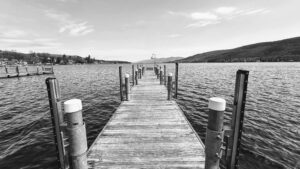
A timeless view of Lake George, one of Upstate New York’s most beloved family vacation destinations for generations. Photo: Brian Kachejian.
There was a time when a summer vacation in Upstate New York began with a station wagon, a road map, a cooler full of sandwiches and a few hours of driving. The kids watched for the first signs advertising Lake George or the Catskill Mountains, while their parents hoped the motel they had booked over the telephone would look something like the photograph in the brochure. If the place had a swimming pool and a television, so much the better. And I can vouch for every single word that I just wrote because I was one of those kids in the back of the station wagon.
During the decades following World War II, growing automobile ownership, paid vacations and improved highways brought the mountains and lakes of New York within reach of more families. Roadside attractions sprang up to entertain children, motels offered rooms along the main highways, and campgrounds gave families the chance to spend a week away without paying for an expensive hotel. A trip upstate could mean a ride on a steamboat, a visit to a cave, an afternoon at an amusement park or a night around a campfire.
Of course, not everyone vacationed the same way. Some New Yorkers spent their summers in the bungalow colonies of the Catskills. Others rented cottages on the Finger Lakes, fished in the Adirondacks or drove to Niagara Falls. There were families who returned to the same lake, motel or campground every year, watching their children grow up against a familiar backdrop of mountains and water.
Here are 25 Upstate New York vacation destinations that generations of families discovered during the twentieth century, particularly from the 1950s through the 1980s. Some of the attractions have disappeared, but the communities and landscapes that made these trips memorable are still there. You might even recognize a few places from your own family’s old photo albums.
1. Lake George Village
Few places capture the spirit of the postwar Upstate New York family vacation quite like Lake George. This is where we used to go. I was young in the 60s, but I never forget the family vacations driving in my father’s old Buick from the Bronx up to Lake George. It was like going to a different planet.
By the 1950s, motels, cottage colonies, miniature golf courses and roadside restaurants were bringing a new generation of visitors to a lake once associated with wealthy summer residents and grand hotels. Charles R. Wood opened Storytown USA in 1954, a year before Disneyland opened in California. His nursery-rhyme attractions were joined by such enterprises as Gaslight Village, which offered an old-fashioned entertainment experience with music and variety shows. Storytown eventually became the Great Escape.
There was always plenty to do without leaving the village. Families could spend the morning at the beach, tour the reconstructed Fort William Henry and board a boat for a cruise between the mountains. The Lake George Steamboat Company began operating in 1817, and its steam-powered sternwheeler Minne-Ha-Ha entered service in 1969. Canada Street still has the shops, restaurants and vacation attractions that give the village its distinctive character. Few destinations better illustrate the changes described in our history of Lake George.
2. Niagara Falls
For many families, a visit to Niagara Falls was the biggest automobile trip of the summer. The attraction had been drawing honeymooners and other travelers long before the automobile, and the establishment of the Niagara Reservation in 1885 created America’s first state park. The Maid of the Mist began operating in 1846, originally carrying passengers across the Niagara River before becoming a sightseeing service. By the middle of the twentieth century, visitors could combine the boat ride with a walk around Goat Island and a trip down toward the rushing water at the Cave of the Winds.
A great deal has changed around the falls, including the hotels, downtown streets and the boats that carry passengers. But the spectacle that made Niagara a vacation destination has not changed. There is still something extraordinary about standing near the American Falls and feeling the spray, or looking across the river at the Horseshoe Falls. For older New Yorkers, snapshots taken beside the railings and photographs of family members dressed in rain gear remain part of the story of a classic American vacation.
3. Lake Placid
Lake Placid offered something that relatively few summer resort towns could match: a national reputation as a winter destination. The village hosted the Winter Olympics in 1932 and continued developing its sporting facilities in the decades that followed. Whiteface Mountain became a major skiing destination in 1958. Families who visited in the summer could take a boat ride, walk along Main Street, enjoy Mirror Lake or drive the Whiteface Veterans’ Memorial Highway for a view of the Adirondacks. The Olympic arena also hosted ice shows when there was no snow on the ground.
The 1980 Winter Olympics brought the village into the living rooms of millions of Americans, especially during the United States hockey team’s victory over the Soviet Union. Visitors in the years following the Games could see the places they remembered from television. Lake Placid still offers that combination of mountain scenery, village shops and Olympic history. The old Lake Placid Club, once one of the area’s most influential resorts, closed in 1984, but the community it helped transform into a winter sports center remains one of New York’s great vacation towns.
4. Alexandria Bay and the Thousand Islands
For children who grew up in New York, the idea of a river filled with islands, summer cottages and castles seemed almost too good to be true. Alexandria Bay became an important center of tourism along the St. Lawrence River, where excursion boats carried visitors past the islands and elaborate summer estates. Families could rent a cottage, go fishing or spend an afternoon watching enormous vessels traveling through the river. The boat trips offered glimpses of a world of Gilded Age wealth that was otherwise inaccessible to most visitors.
Boldt Castle on Heart Island became one of the region’s most memorable sights. Hotelier George Boldt began building it in 1900 for his wife Louise, but construction stopped after her death in 1904. For much of the twentieth century, sightseers encountered an unfinished and deteriorating castle. The Thousand Islands Bridge Authority acquired the property in 1977 and began restoring it. Today’s visitors see a remarkably different building from the one photographed by earlier generations, but cruising through the islands is still one of the great pleasures of an Alexandria Bay vacation.
5. Old Forge and the Fulton Chain of Lakes
Old Forge was an ideal place for families who wanted a taste of the Adirondack wilderness without giving up the conveniences of a small town. The Fulton Chain of Lakes provided opportunities for boating, fishing and swimming, and the surrounding communities offered cottages and campgrounds. In 1956, Enchanted Forest of the Adirondacks opened at the northern end of Old Forge. Its early attractions included storybook cottages, Paul Bunyan and a small railroad that carried children through the grounds. Circus acts and costumed characters helped make it a favorite among young visitors.
The amusement park gradually expanded and added water attractions, eventually becoming Enchanted Forest Water Safari. The original miniature train still operates, providing a direct connection to its opening season. For families who preferred quieter recreation, a rented canoe or a trip along the Fulton Chain offered a completely different experience. Old Forge has retained its unusual blend of outdoor recreation and children’s entertainment, while neighboring Inlet remains another reminder of the cottage vacations that generations of Adirondack visitors enjoyed.
6. Cooperstown
Baseball transformed Cooperstown into one of the most recognizable small villages in America. When the National Baseball Hall of Fame and Museum was dedicated on June 12, 1939, thousands of people came to see some of the game’s greatest players. The museum expanded significantly during the 1950s, as new generations of fans traveled to see the bats, uniforms, photographs and plaques commemorating the players they had read about in newspapers or listened to on the radio. Doubleday Field and the shops along Main Street became part of the experience.
Yet there was much more to a Cooperstown vacation than baseball. Families could spend time along Otsego Lake, explore the Farmers’ Museum or visit the Fenimore Art Museum. The Otesaga Resort Hotel, which opened in 1909, provided a more luxurious alternative to the motels and tourist accommodations found around the village. Many of those attractions still welcome visitors. The wonderful thing about Cooperstown is that a grandparent who remembers seeing the plaques of baseball’s early stars can return with a grandchild who is discovering the game for the first time.
7. Watkins Glen
Visitors have been walking through the gorge at Watkins Glen since it opened as a commercial attraction in 1863. New York State acquired the property in 1906, and the Civilian Conservation Corps helped rebuild park facilities following destructive flooding in 1935. The stone steps, bridges and passages that visitors associate with the park are part of a long effort to make the remarkable gorge accessible. Families visiting during the middle of the twentieth century could walk beneath waterfalls, picnic at the park and camp nearby.
Watkins Glen also became famous for something entirely different: automobile racing. The first Watkins Glen Grand Prix took place on October 2, 1948, using public roads around the village. Racing eventually moved to a purpose-built circuit, which hosted the United States Grand Prix from 1961 to 1980. A vacation could include a glimpse of race cars and drivers, followed by an afternoon beside Seneca Lake. The combination of waterfalls, lakeside recreation and motorsports remains one of the most unusual attractions of the Finger Lakes.
8. Saratoga Springs
Saratoga Springs was a vacation destination long before the twentieth century, thanks to its mineral waters and reputation as a health resort. Thoroughbred racing became another attraction with the race meeting organized in 1863 and the development of the present racecourse the following year. By the postwar era, visiting the track in August had become a summer ritual for people who traveled from across the Northeast. Even visitors who never placed a bet could appreciate the grandstand, the horses in the paddock and the excitement of a day at the races.
Saratoga Spa State Park offered a different kind of vacation, with mineral baths, swimming, picnic grounds and the Gideon Putnam hotel. In 1966, the Saratoga Performing Arts Center opened, establishing summer homes for the New York City Ballet and the Philadelphia Orchestra. Over time, rock and popular music concerts became another reason for younger visitors to travel to Saratoga. The city still brings these traditions together, and its streets, parks and racetrack remain familiar to generations of New Yorkers.
9. Sylvan Beach
Situated at the eastern end of Oneida Lake, Sylvan Beach became known as the Coney Island of Central New York. Railroads and excursion boats helped bring crowds to the village in the late nineteenth century, when hotels, dance halls and amusement facilities began transforming the shoreline. Cottage development continued well into the twentieth century, and families from Syracuse, Utica and other nearby communities found they could spend a vacation beside the water without driving to the Adirondacks or the ocean.
The amusement park became an essential part of the Sylvan Beach experience. For children, a day of swimming could end with a carousel ride, a game on the midway or an ice cream cone on the walk back to a cottage. Nearby Verona Beach State Park provided another option for picnicking and camping. Although its original resort landscape has changed, Sylvan Beach remains a place where the attractions of a small lakeside amusement town have not been entirely replaced by modern entertainment complexes.
10. Howe Caverns
Long before motorists were following highway signs to Howe Caverns, farmer Lester Howe began exploring the underground passages in Schoharie County in 1842. The early tours were far more difficult than the ones modern visitors experience. Commercial development in the late 1920s brought electric lighting, improved walkways and a 156-foot elevator shaft. When the modern Howe Caverns opened in May 1929, thousands of visitors arrived to experience a remarkable attraction hidden beneath the surface of rural New York.
For generations of families, the elevator ride was the beginning of an unforgettable experience. Even on a hot summer day, the cave remained cool, and its formations, winding passages and underground boat ride provided children with a story to tell when they returned home. The attraction still operates, and many of its fundamental experiences remain recognizable. It was one of those classic vacation stops where the landscape itself provided something more extraordinary than any amusement park designer could invent.
11. Ausable Chasm
Ausable Chasm, near the western shore of Lake Champlain, began welcoming organized tourist visits in 1870. The Ausable River cut its way through ancient sandstone, creating towering walls and narrow passages that provided the attraction with its dramatic reputation. Walkways and bridges enabled visitors to venture into the gorge and see the river from perspectives they could not have reached on their own. Old postcards showing the chasm helped make it a recognizable stop on trips through northeastern New York.
Mid-century vacationers often combined Ausable Chasm with time at Lake Champlain or a drive into the Adirondacks. The experience was different from walking through a museum or visiting a city park: the river, cliffs and changing light made every section of the gorge feel like a new discovery. Floods have damaged portions of the attraction over the years, requiring rebuilding and changes to the routes. It still welcomes visitors, offering a connection to one of the oldest organized sightseeing attractions in the region.
12. Chautauqua Lake
Chautauqua Lake in southwestern New York offered a summer vacation with an especially rich mixture of education and recreation. The Chautauqua Institution began in 1874 as a gathering for Sunday school teachers and soon developed into a broader educational and cultural community. Families attended lectures, concerts and classes while staying in cottages around the grounds. The idea that a vacation could be devoted to learning as well as relaxation helped inspire similar Chautauqua assemblies throughout the country.
At the other side of the lake, Midway Park offered a very different kind of entertainment. Established in 1898 to encourage trolley travel, it developed amusement rides and recreational facilities that delighted local families and summer visitors. The park survives as Midway State Park, with a vintage carousel, midway games and children’s rides. The Chautauqua region remains remarkable for the variety of its summer traditions: a family could attend a classical concert one day and take the children to a lakeside amusement park the next.
13. Letchworth State Park
Long before it became one of the most photographed state parks in New York, the Genesee River gorge was home to Seneca communities. In the nineteenth century, Buffalo businessman William Pryor Letchworth established his Glen Iris estate overlooking Middle Falls and worked to preserve the surrounding landscape. His gift of land to New York State in 1906 helped establish the park. His former residence began welcoming overnight guests as an inn in 1914.
For twentieth-century vacationers, the enormous gorge and its three major waterfalls were often the highlight of a trip through Western New York. Families could camp, picnic, follow trails to overlooks and watch trains cross the gorge near the Upper Falls. The old railroad bridge, a familiar sight in vacation photographs, was superseded by a new arch bridge that opened to rail traffic in 2017. The Glen Iris Inn still stands near Middle Falls, and the park remains a destination where a family can spend several days discovering a landscape that seems much larger than its individual attractions.
14. Schroon Lake
Schroon Lake developed a substantial resort industry long before the Adirondack Northway made the region easier to reach by car. Its hotels included the Brown Swan Club, the Leland House and Scaroon Manor. Scaroon Manor had a particularly extensive recreation program, with swimming, boating, tennis, golf and an outdoor amphitheater. In 1957, it provided a setting for the filming of Marjorie Morningstar, starring Natalie Wood and Gene Kelly, a movie that captured aspects of the summer resort culture familiar to many New Yorkers.
The great hotels that once drew crowds to Schroon Lake have largely given way to other forms of accommodation. New York State acquired the former Scaroon Manor property in 1967, and today it is a public campground and day-use area. The village beach, cottages and surrounding forests still offer much of what attracted families to the lake in the first place. It is particularly interesting that a spot once associated with elaborate resort entertainment can now be experienced by campers spending their evenings beside the water.
15. Saranac Lake
Saranac Lake developed as a major center for tuberculosis treatment under the influence of Dr. Edward Livingston Trudeau, and many of its early visitors came for medical rather than recreational reasons. Its mountain setting also attracted vacationers, including wealthy families who established elaborate Adirondack camps. By the twentieth century, the village’s hotels, shops and lakeside recreational opportunities made it an important destination in the North Country. Paddling and fishing offered visitors a chance to experience the surrounding waterways at their own pace.
One of the community’s most enduring traditions is its Winter Carnival, which began in 1897 and resumed annual celebrations after World War II. The Ice Palace returned in 1955, giving winter visitors a memorable centerpiece for the festivities. The downtown Hotel Saranac, opened in 1927, also became a familiar landmark. Saranac Lake remains a place where the old cure cottages, village streets, mountain views and winter traditions tell the story of a community that offered many different reasons to visit.
16. North-South Lake and the Northern Catskills
Long before families arrived at North-South Lake with tents and camping trailers, the northern Catskills were known for the great mountain hotels that stood above the Hudson Valley. The Catskill Mountain House opened in 1824, attracting visitors to the spectacular views from the escarpment. New York State began developing a campground at North Lake in 1929 with just ten campsites and a small picnic area. Over the following decades, the public campground expanded as the older era of grand mountaintop hotels came to an end.
The state burned down the Catskill Mountain House in 1963, but its former site remained accessible to visitors. Families could camp beside the lakes, swim, walk to the old hotel grounds and explore the surrounding mountain trails. Nearby attractions such as Kaaterskill Falls and the towns of Haines Falls and Tannersville offered additional reasons to spend time in the region. The remarkable difference is that a landscape once associated with fashionable hotels became a vacation spot accessible to people who brought their own tents.
17. Lake Luzerne and the Dude Ranch Country
One of the more unexpected vacation traditions of the southern Adirondacks was the dude ranch. During the middle decades of the twentieth century, visitors from New York City could head to Lake Luzerne and surrounding communities for a western-style experience without traveling beyond New York State. Ranches offered horseback riding, cookouts, campfires and accommodations. The Painted Pony began welcoming guests in 1947, and its owners introduced rodeo performances in 1953.
There were dozens of dude ranches in Warren County during the 1950s, though their numbers diminished in later decades. The old Dude Ranch Trail still recalls the era, and some ranches and the Painted Pony rodeo carry on the tradition. For families who spent their childhood vacations here, the Adirondacks were not just a place to swim and fish. They were a place to ride a horse, watch a rodeo and experience a version of the American West in the mountains of their own state.
18. Great Sacandaga Lake
Unlike the naturally formed lakes that attracted tourists elsewhere in the Adirondacks, Great Sacandaga Lake was created as a reservoir in 1930 to help control flooding. The project displaced communities and changed the lives of residents of the Sacandaga Valley. The old Sacandaga Park, which had offered rail travelers amusement rides, hotels and other recreation, was among the places affected by the enormous transformation. New vacation traditions developed around the reservoir’s extensive shoreline.
Fishing, boating and rented cottages became important parts of summer life around the new lake. Northampton Beach, which originally provided swimming and picnic facilities, added campsites in 1961. As the surrounding communities adapted, the reservoir became an affordable vacation destination for many families in the Capital Region and beyond. A day spent on Great Sacandaga Lake carries a fascinating historical contrast: beneath the water lies evidence of the communities that existed before the very lake that made these vacations possible.
19. Lake Minnewaska
For approximately a century, the Minnewaska Mountain Houses welcomed visitors to the Shawangunk Ridge. The Cliff House opened in 1879, followed by Wildmere in 1887. Carriage roads connected the hotels to scenic overlooks, woodlands and clear mountain lakes. Visitors during the twentieth century could spend their days walking, swimming and exploring a landscape remarkably different from the cities they had left behind. Nearby Mohonk Mountain House offered another version of the mountain resort experience.
The Cliff House burned in 1978 after being abandoned, and Wildmere closed in 1979 and was destroyed by fire in 1986. New York State subsequently acquired the property. Today, Minnewaska State Park Preserve protects the lake and much of the former resort landscape, including carriage roads still used by visitors. The old hotels are gone, but it is possible to stand beside the water and understand why generations of vacationers wanted to spend their summers high on the ridge.
20. Bear Mountain State Park
Bear Mountain was one of the great excursions for New York City families who could not necessarily afford a week in a resort hotel. Hudson River Day Line steamboats brought groups of passengers to the park for picnics, hiking and recreation. The Bear Mountain Inn opened in 1915, and the Bear Mountain Bridge opened in 1924, making automobile access easier. The park’s lake, swimming facilities, playing fields and mountain overlooks offered an escape from the city that was within reach of a day trip.
The Hudson River Day Line’s last steamer completed its final season in 1971, ending a transportation tradition that had helped make Bear Mountain so popular. But families continued driving to the park for many of the same activities. The inn and Perkins Memorial Tower remain familiar landmarks, and the surrounding Hudson Highlands still offer a remarkable change of scenery for people traveling north from the metropolitan area. For many New Yorkers, Bear Mountain was the place where they first discovered that a vacation need not be far from home.
21. Blue Mountain Lake
Blue Mountain Lake offered a quieter Adirondack vacation than the busy commercial streets of Lake George. Its surrounding forests and waterways had attracted wealthy summer visitors in the nineteenth century, when resorts and private camps began appearing in the region. By the twentieth century, the lake was also a destination for families who enjoyed fishing, boating and a more relaxed mountain atmosphere. Getting there meant following roads through the interior of the Adirondacks rather than simply driving to a resort near the highway.
In 1957, the Adirondack Museum opened above the lake on a property that had once accommodated lumber workers and later summer guests. Early exhibits included boats, canoes, horse-drawn vehicles and a locomotive that helped explain the history of the region. The museum, renamed Adirondack Experience in 2017, remains a distinctive attraction. Families who visited when it first opened can now return to a much larger collection devoted to the working people, travelers and communities that shaped the Adirondacks.
22. Fair Haven Beach State Park
For families in Central and Western New York, the shores of Lake Ontario offered something that felt surprisingly like a seaside vacation. Fair Haven had originally developed as a commercial port, with railroad facilities used for shipping coal. The establishment of a state park in the late 1920s helped shift its identity toward recreation, and subsequent improvements created facilities that attracted campers and beachgoers. The sandy shoreline and high bluffs made the park an appealing alternative to a long drive to the Atlantic coast.
Fair Haven Beach still offers camping, cabins, picnic grounds and swimming, with opportunities for fishing and boating around nearby Little Sodus Bay. A family could spend days there without needing a boardwalk or a major commercial attraction to keep everyone entertained. The memories associated with the park are those of a simpler vacation: packing a lunch, carrying everything down to the beach and spending much of the afternoon in or beside the water.
23. The Catskills Bungalow Colonies and Resort Towns
For many Jewish New Yorkers, a trip to the mountains meant the communities of Sullivan and Ulster counties. Monticello, Liberty, South Fallsburg, Woodridge and Loch Sheldrake were surrounded by hotels, boardinghouses and bungalow colonies that offered a welcoming vacation environment during a period when antisemitism excluded Jewish guests from many other resorts. The largest hotels, including Grossinger’s, the Concord and Kutsher’s, became famous for their entertainment and recreation programs. But modest bungalow colonies were equally important to the lives of many working and middle-class families.
In the colonies, families rented small cottages, gathered around shared swimming pools and spent their evenings playing cards or attending entertainment. Some families stayed for the summer while working relatives traveled back and forth to the city. Changing vacation habits, declining demand and other economic pressures brought an end to many of the large resorts, but the bungalow tradition has not entirely disappeared. The history of these communities is about far more than the buildings that once stood there, as the performers, families and workers created a culture that became synonymous with the Catskills.
24. Green Lakes State Park
Just east of Syracuse, Green Lakes became a recreational destination in the nineteenth century, long before the surrounding property was acquired by New York State in 1928. The park’s two lakes have unusual water conditions that help explain their distinctive appearance. During the Great Depression, the Civilian Conservation Corps helped construct park facilities, including cabins and other improvements that made the landscape available to a broader public. The beach, trails, golf course and campgrounds subsequently became familiar to generations of Central New York families.
Green Lakes is a particularly good example of a destination whose vacation appeal did not depend on extravagant hotels or elaborate amusement rides. A family could spend a day swimming, take a walk around the lake or camp overnight. The unusual color of the water made it a memorable place to photograph. Many of the facilities have been updated, but the forested setting and the lakes themselves continue to provide the kind of vacation experience that drew visitors there decades ago.
25. Canandaigua Lake and Roseland Park
Canandaigua Lake has been a summer destination since the nineteenth century, when steamboats helped connect lakeside communities and encouraged the development of cottages, hotels and camps. For much of the twentieth century, however, one attraction stood out above the others. Roseland Park opened on the northern shore in 1925 and entertained children and adults for sixty years. Its roller coasters, carousel, miniature golf and other attractions made it a central part of summer life in the Finger Lakes.
Roseland closed after the 1985 season, and the rides were sold. The old carousel went to a shopping mall in Syracuse, and the Skyliner roller coaster was relocated to Lakemont Park in Pennsylvania. A new generation of waterfront development eventually occupied much of the former amusement park property. Canandaigua Lake remains a popular destination, with public waterfront parks and boating opportunities, but the original Roseland occupies a special place in the memories of people who discovered the joys of amusement park rides beside the lake.
When Going Upstate Was the Vacation
What made these vacations so memorable was not always the money spent or the distance traveled. Sometimes it was the excitement of seeing an enormous waterfall for the first time, the smell of a campfire, or the pleasure of walking to a village ice cream shop after a day of swimming. Many of these places are still here, and although the old motels, attractions and hotels may have changed, the mountains, lakes and rivers that brought families to them remain.
For more memories of vacationing in New York State, explore our articles on 25 Lost Amusement Parks Upstate New Yorkers Still Remember, 10 Lost Catskills & Adirondacks Hotels and Resorts, 25 Historic Hotels in Upstate New York Still Welcoming Guests, and 25 Lost Ski Areas of Upstate New York.