The summer of 1977 remains one of the most intense chapters in New York City history. As David Berkowitz, known as the Son of Sam, terrorized the city, New Yorkers were also living through a blackout, a mayoral race, a legendary rock concert season, and a Yankees pennant chase. For those who were young and living in the Bronx, Queens, Brooklyn, or Manhattan at the time, the fear was real, and the memories never faded.
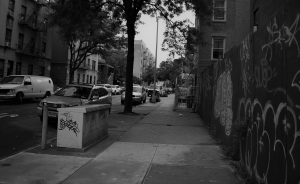
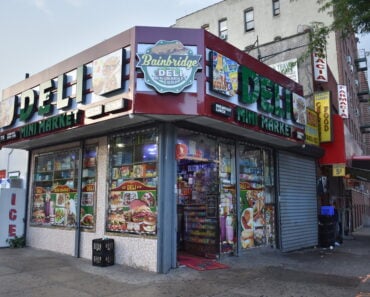
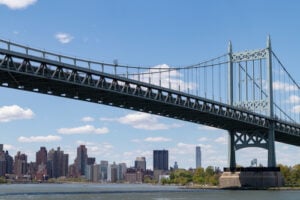
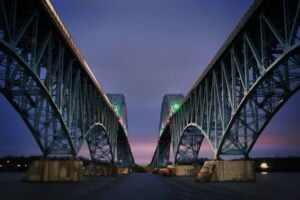
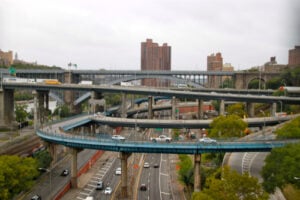
The Bronx. Photo: Brian Kachejian © 2017
Over forty years ago, on August 10, 1977, New Yorkers were shocked to see the face of the Son of Sam killer captured on the cover of the New York Daily News. We were shocked for two reasons. The first one was obvious. We were shocked that the New York City Police Department had finally captured the feared Son of Sam killer. That’s not a knock on the police department. It was simply shocking that they caught him, since he had been on the loose for over a year. If it were not for a parking ticket, who knows how long the murders would have gone on? If you were living in the city at that time, it seemed as if the murders would continue endlessly.
The second reason we were shocked was the photo of the killer. With all the demonic ritual notes and brutal murders that David Berkowitz had committed as the Son of Sam killer, we all pictured a Charles Manson type of look, or something even worse. Yet there was Berkowitz on the cover of the Daily News, looking like the postal worker who lived next door, which is exactly what he was.
For an entire year, from July 26, 1976, to August 10, 1977, David Berkowitz had terrorized New York City. The man was known originally as the .45-caliber killer and eventually, because of the letters left behind, Berkowitz assumed the label of Son of Sam. David Berkowitz was living in Yonkers and driving just a few miles south into the boroughs of New York City, committing murders that left us all looking over our shoulders on a nightly basis.
I was sixteen at the time and living in the Bronx. At night, my friends and I would hang out on the street corners and in parks in the Bronx. You don’t keep teenagers in their city apartments, especially during the summer, no matter what is happening. We would hang out on park benches that lined Mosholu Parkway, listening to music, talking, and doing what teenagers did in the seventies. I vividly remember those summer nights in 1977. Son of Sam was on our minds, but it did not stop us from going out. It did, however, keep us on our toes.
Every time we would be sitting on a bench and hear a voice or some footsteps from behind, we would all jump. Everyone was on edge. We were constantly saying to friends who approached from behind on the dark streets, “Whoa, I thought you were Son of Sam.” It wasn’t funny; it was a scary time. David Berkowitz had mainly targeted couples parked in cars, but we would hang out on the hoods of cars. There is usually an alley located on every Bronx city block. We watched those alleys closely. The streets of the Bronx neighborhood were dark at night. There were no bright LED lamps in the seventies.
No one knew who the Son of Sam was, but it was not as if we were looking at friends and neighbors as suspects. The letters that were published in the Daily News seemed to depict a murderer who looked ghastly in our imagination. No one who was committing such horrible murders and writing letters that bled with such demonic prose could look normal.
As much as the threat of Son of Sam lurked over us, there were so many other things going on in the city that helped divert our attention from the killings. The summer of ’77 was a special time in the city. Led Zeppelin, Fleetwood Mac, and Pink Floyd had all played Madison Square Garden that summer. Bands like Boston, Heart, and Foreigner had also released their first albums between 1976 and 1977. The punk scene was flourishing. The New York Yankees were battling for a pennant that would eventually earn them their first World Series victory since 1962. The great blackout occurred on July 13. The city was broke, and Ed Koch was in a furious race against Mario Cuomo to become the next mayor of New York City. Koch was a brazen figure who seemed to appear on television every night. It was a hot summer, filled with action and tension.
In the 1970s, most people who lived in the city had televisions with antennas that received only the broadcast networks and local channels, which were 2, 4, 5, 7, 9, and 11. There were no cable channels, no all-news networks. The networks and local affiliates only broadcast the news at 6:00 and 11:00 p.m. For the most part, New York City residents received most of their news from the city’s big three papers. Those papers were The New York Times, The New York Post, and The New York Daily News. Newspaper columnists were the voice of the people. The New York papers employed some of the best writers the media world has ever known. If you have ever read a column by Pete Hamill, Dick Young, Mike Lupica, or, of course, Jimmy Breslin, you would understand the emotional connection these writers had with their readers. It was that emotional connection that led David Berkowitz to reach out to the Daily News’ legendary columnist Jimmy Breslin.
David Berkowitz was a fan of Jimmy Breslin’s columns. Berkowitz had begun writing letters to Breslin, telling the journalist that he had read his columns daily and found them very informative. Breslin started publishing excerpts from the Berkowitz letters in his columns. The words that Berkowitz wrote were spine-chilling and only led to greater fear of the Son of Sam killer. Breslin continued the correspondence with David Berkowitz, hoping to convince the killer to reveal his identity. Jimmy Breslin wrote that the killer could be relieved from his torment by turning himself in to Breslin. Those columns had a profound effect on those of us who lived in the Bronx, Queens, Brooklyn, and Manhattan. Everyone bought newspapers back then. People read them together in the streets, at work, and in school. The messages that Berkowitz wrote to Breslin instilled a terrible fear in the city.
When David Berkowitz was caught, detectives revealed they had found evidence that he had been planning to reach beyond the boroughs of New York City and into the suburbs of Long Island. Who knows what else would have happened if it had not been for the witness who saw a car drive away quickly at the scene of the last murder with a parking ticket on the windshield?
The New York City detectives were shocked by how David Berkowitz instantly admitted to the killings when he was first caught. The detectives realized that they had their man when Berkowitz began describing details of the murders that only the killer would know. Berkowitz’s yearning to talk about the murders may have been the trigger that would have eventually given him away if he had not been caught.
There have been a few movies released about the Son of Sam murders. Spike Lee’s film Summer of Sam was the most popular film released. However, I never liked that film. I love many of Spike Lee’s films, but he didn’t capture the city’s true essence in that one. The Bronx Is Burning was a book that was later adapted into a television miniseries. However, that book was written by a writer who grew up on the West Coast and was nowhere near the city during those years. To truly understand how a city felt, you need to talk to the people who lived there. And if you can’t find anyone, then it’s best to search the archives of the city newspapers and read the columns by the writers who lived it. I was there, and it’s a time and place I will never forget.
Related New York History Articles
If you enjoyed this article, be sure to explore more ClassicNewYorkHistory.com stories about New York City in the 1970s, including features on life along Mosholu Parkway in the Bronx, Madison Square Garden, New York City history, and the people and moments that shaped the city during one of its most unforgettable decades.
Updated: June 27, 2026