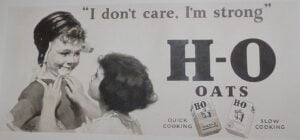
Illustration by Paul Martin (1931), via Wikimedia Commons, Public Domain.
There was a time when you could tell a great deal about where someone grew up in Upstate New York just by looking inside their kitchen cupboards. A family in Syracuse might buy Jean’s Potato Chips, while Rochester shoppers brought home Schuler’s. In the Southern Tier, a box of Spaulding Krullers could be waiting on the kitchen table when the kids came home from school. Buffalo had its own pasta, bread, cereal and sausage companies, many of which had been supplying Western New York families for generations.
These products were part of an economy that connected New York’s farms to its cities and towns. Potatoes grown in the countryside arrived at local chip factories. Milk from surrounding farms was bottled at neighborhood dairies. Fruit and vegetables from the Finger Lakes went into jars and cans bearing the names of companies located just a few miles from the fields. Some of those names became famous nationwide; others rarely traveled beyond a handful of counties.
The disappearance of these labels took place over more than a century. Refrigeration changed the dairy business, national distribution networks reshaped the snack industry, and corporate acquisitions brought an end to many family-owned enterprises. Sometimes the company survived but discontinued a familiar product. Sometimes an entire factory closed, taking with it a brand that had been part of the community for decades.
For this collection, we are looking back at discontinued product lines and historic food brands that no longer have the grocery-store or retail presence they once enjoyed. We have included a few individual products from companies that are still in business, but not brands that merely changed owners and remain readily available. From the early days of commercial food manufacturing to the snacks and soft drinks of our own lifetimes, these are 25 lost Upstate New York food brands worth remembering.
1. Blue Ribbon Potato Chips (Albany)
Brothers Alexander and Alfred Walter were making potato chips in Fair Haven, Vermont, before establishing their Blue Ribbon factory at 4 Liberty Street in Albany in 1902. The Capital Region offered everything an early commercial chip maker needed: potatoes from surrounding farms, workers from the city’s neighborhoods and railroad connections that opened markets well beyond Albany. In 1925, the company moved to a mechanized plant on South Lansing Street, described by local historians as the first factory devoted exclusively to making potato chips.
During World War II, the Walter company supplied chips and dehydrated foods under government contracts. It relocated to a new Colonie facility in 1948 and was sold in 1949. The family subsequently established Walter Foods, which brought back the original potato chip recipe in the 1950s as part of a smaller business best known for fried fish. That operation disappeared in the early 1970s, bringing an end to a remarkable Albany food-making tradition.
2. Schuler’s Potato Chips (Rochester)
Among the regional snack companies that once competed for space on Rochester grocery shelves was the Schuler Potato Chip Company. The city’s 1940 business directory listed its operation at 64 Chester Street. This was an era when a local chip manufacturer could build a substantial business by delivering its products to neighborhood grocers and serving customers throughout the surrounding region.
Schuler’s became part of the Bachman snack business in 1973, as the Pennsylvania company expanded by acquiring several regional potato chip manufacturers. Bachman itself ultimately withdrew from the potato chip business in 2012. The old Schuler label disappeared from the snack aisle, one of the many regional names that did not survive the industry’s consolidation.
3. Fanny Farmer Candies (Rochester)
Fanny Farmer began in Rochester in 1919 and grew into a major American candy business. Its name evoked that of cookbook author Fannie Farmer, although she was not the company’s founder. Boxed chocolates purchased at a Fanny Farmer shop became familiar gifts for birthdays, Valentine’s Day, Mother’s Day and Christmas. The Rochester confectionery operation also provided employment to generations of local workers.
The company’s Rochester factory closed in 1967, but the candy stores continued doing business. Corporate changes ultimately brought Fanny Farmer and the similarly named Chicago-based Fannie May under common ownership. In 2004, financial difficulties at their parent company led to the closure of Rochester’s last three Fanny Farmer shops. Fannie May survives, and rights to the Fanny Farmer name have also survived, but the Rochester-born candy chain that shoppers knew is gone.
4. Force Toasted Wheat Flakes (Buffalo)
Force was introduced in 1901 by the Force Food Company of Buffalo. At a time when packaged breakfast cereals were still a relatively new invention, the company promoted toasted wheat flakes as a convenient alternative to cooking breakfast from scratch. Its most enduring advertising character was Sunny Jim, a cheerful figure whose transformation into a lively, energetic man was attributed to his new breakfast routine.
Force became an international brand, finding an especially receptive market in Britain. The cereal even sponsored the American radio adventures of Superman in 1940. Its American production eventually ended, while the British version remained on the market for decades longer before being discontinued in 2013. A product that originated in Buffalo at the beginning of the twentieth century thus survived into the twenty-first on the other side of the Atlantic.
5. H-O Oats (Buffalo)
Buffalo’s H-O Oats operation was part of the extraordinary grain industry that developed around the city’s waterfront. The initials referred to Hornby’s Oatmeal, and the company built up its Buffalo manufacturing facilities during the 1890s. Its signature steam-cooked oatmeal and rolled oats were marketed to families at a time when preparing breakfast cereals at home could be a labor-intensive process.
The H-O complex grew into a collection of mills, storage buildings and grain elevators. In 1983, CPC International ended oatmeal production there. A major fire damaged the property in 1987, and the remaining elevators were demolished in 2006. The H-O label continued beyond the factory’s closure, but its old American trademark registrations subsequently expired or were canceled. The familiar oatmeal brand and the Buffalo industrial complex that produced it have both receded into history.
6. Spaulding Bakeries (Southern Tier)
For many families in Central New York and the Southern Tier, Spaulding meant much more than a loaf of bread. The bakery produced Table Queen bread, cakes and its memorable powdered-sugar Krullers. The little doughnuts came in striped boxes that allowed shoppers to see the contents through a window in the package. The company operated bakeries in Binghamton, Oneonta, Elmira and Middletown, as well as in Pennsylvania.
Spaulding’s distribution network carried its baked goods to communities throughout a large portion of Upstate New York. The bakery’s demise left a particularly recognizable gap in the regional snack market. Even people who have forgotten the company’s other products often remember its Krullers, the little box they came in and the inevitable dusting of powdered sugar that went with eating them.
7. Geneseo Jam Kitchen (Geneseo)
In 1893, Ellen North began preparing preserves in her kitchen in Geneseo. Her enterprise developed into a commercial business selling jams, jellies and other fruit products to customers far beyond Livingston County. It was a notable achievement for a woman starting a manufacturing business at a time when relatively few women had the opportunity to build companies on such a scale.
The Jam Kitchen eventually passed into new ownership and expanded into vegetable canning. Its products reached American military personnel during both world wars. North died in 1939, and the company survived her by a decade before filing for bankruptcy in 1949. The final settlement came in 1951. What began with a small home kitchen had become an important employer in the Geneseo community.
8. Larkin Pure Food Specialties (Buffalo)
Although the Larkin Company is remembered primarily for soap, mail-order catalogs and its association with architect Frank Lloyd Wright, it also sold an extensive range of packaged foods. Early catalogs featured Larkin peanut butter, vanilla extract, coconut, spices, baking powder and numerous other pantry necessities. Customers could order directly from the Buffalo company, years before buying groceries online became commonplace.
Larkin expanded into grocery retailing in 1918, establishing stores that helped distribute its food products. The company subsequently struggled with changes in shopping habits and the effects of the Great Depression. Liquidation began in the early 1940s, although a much smaller successor continued taking orders until 1962. Larkin’s old food containers and catalogs document an enormous Buffalo-based business whose reach extended into kitchens across the country.
9. Faultless Canned Foods (Newark)
Wayne County’s agricultural economy once supported numerous canneries, including the Edgett-Burnham Company of Newark. One of its most prominent labels was Faultless, used for canned fruits and vegetables. The company marketed peas under that name and guarded the trademark closely enough to bring a legal action against a Wisconsin competitor in 1917.
The cannery benefited from its proximity to the Erie Canal and railroad transportation. As the business changed, it increasingly packed vegetables for retailers under their own labels rather than relying on its historic brands. The operation was eventually sold to Perfection Foods, which continued production until 1973. Faultless disappeared, and the Newark cannery site was redeveloped for commercial use.
10. Magnolia Farms Milk (Beacon)
Major E. Vail Watson established Magnolia Farms in 1913, raising dairy cattle in Fishkill and operating a bottling facility on North Cedar Street in Beacon. The company promoted sanitary production and the quality of its Holstein herd. By 1925, Magnolia had become the area’s largest milk distributor, serving families at a time when local dairies competed for household delivery routes.
The bottling business filed for bankruptcy in 1927, although the farm remained in operation until 1952. The former milk plant passed to other dairy companies. Magnolia’s labeled glass bottles are now among the artifacts that preserve the history of Beacon’s early commercial dairy industry.
11. Krinx Candied Popcorn (Albany)
Krinx was another product from the A.A. Walter Company, the Albany manufacturer behind Blue Ribbon Potato Chips. Introduced around 1935, it was a sweet popcorn snack developed during a difficult period for the company. Walter was attempting to expand beyond potato chips as new packaged snacks competed for consumers’ money during the Depression.
Unlike Cracker Jack, the established national competitor, Krinx offered neither peanuts nor a toy prize. It never achieved the lasting commercial recognition of Blue Ribbon chips. Its disappearance illustrates how even successful regional manufacturers could have difficulty introducing a new brand in a market increasingly dominated by nationally advertised products.
12. Dold’s Niagara Hams and Bacon (Buffalo)
Jacob Dold began his meat business on Abbott Road in Buffalo in 1860, eventually developing a major packing operation on the city’s East Side. One of the company’s nationally advertised product lines was Niagara hams and bacon. At the time of the Pan-American Exposition of 1901, advertisements promoted the brand to customers who might never have visited Western New York.
By 1920, the Dold company employed approximately 2,000 people. Its success was tied to Buffalo’s position as a major livestock and railroad center. The business was sold to Hygrade in 1938. The old Dold Niagara label belongs to an earlier period in Buffalo’s commercial history, when the names of the city’s packing companies appeared on meat products shipped throughout the country.
13. Beech-Nut Chewing Gum (Canajoharie)
Before Beech-Nut became associated primarily with baby food, the company produced a remarkably diverse assortment of packaged groceries. Its Canajoharie operation introduced chewing gum around 1910, adding a product that would become particularly important to the business during the Great Depression. Peppermint and spearmint gum were familiar purchases at candy counters, drugstores and newsstands.
The traditional Beech-Nut stick gum line eventually disappeared, even though the company name remained in the food business. Today, the Beech-Nut name survives on baby food produced in the Mohawk Valley. Its once-prominent chewing gum belongs to a different chapter of the company’s history, when the Canajoharie business was a major force in American confectionery.
14. Fruit Stripe Gum (Canajoharie)
One of the most memorable products to come out of Beech-Nut’s confectionery business was Fruit Stripe Gum. The colorful striped sticks offered several fruit flavors in one package and eventually became associated with the zebra mascot Yipes. Children collected the temporary tattoos that came with the gum, and its flavor was almost as famous for disappearing quickly as it was for its initial sweetness.
Fruit Stripe developed a separate brand identity from Beech-Nut’s traditional peppermint and spearmint gum. It passed through several owners, eventually becoming part of Ferrara’s candy business. In January 2024, Ferrara confirmed that it was discontinuing Fruit Stripe. The announcement ended a product line that had survived for decades after its original Upstate New York company left the gum business.
15. Gioia Macaroni (Fredonia, Rochester and Buffalo)
Alfonso and Antonio Gioia came to America from Sicily and settled in Fredonia. They acquired an existing macaroni business and eventually operated under the Gioia name. The company moved to Rochester before Antonio’s branch of the family relocated the operation to Buffalo. Generations of the family participated in building the business into a major pasta producer.
The Gioia name appeared on macaroni, spaghetti, egg noodles and other Italian food products. The family ultimately sold the company, and production at its Buffalo plant ended in 1995. The original American trademark registration expired in 2007. For a region with a rich Italian American culinary heritage, Gioia was one of the brands that connected the family dinner table with the local manufacturing economy.
16. Kaufman’s Bakery (Buffalo)
Kaufman’s rye bread became a distinctive Western New York product, but the bakery also supplied rolls and other breads to local restaurants and grocery stores. The Freedman family expanded the business from its East Ferry Street beginnings and moved production into a larger Fillmore Avenue bakery in 1968. Its advertising featured a little baker character whose memorable jingle was widely recognized in Buffalo.
Stroehmann acquired Kaufman’s in 2000, ending its long period of family ownership. The Buffalo bakery closed in 2004, leaving the neighborhood without the morning aroma of bread baking at that location. Kaufman’s rolls had been used by popular local hot dog restaurants, making the company’s disappearance particularly noticeable to customers who enjoyed those Western New York specialties.
17. Easter Brand Meats (Buffalo)
The Danahy Packing Company was one of the major businesses in Buffalo’s once-thriving meatpacking district. Its products included Easter Brand hams, Queen City smoked meats and Snow Flake lard. These were labels developed during an era when Buffalo’s stockyards, packinghouses and rail connections supported a substantial food-processing economy.
Danahy’s East Side operation stood near other major meatpackers, including the Dold and Klinck companies. The old industrial district declined as livestock shipping and meat processing changed. Easter Brand is one of the vanished labels associated with those Buffalo packinghouses, a reminder that even a holiday ham purchased at a neighborhood grocery store once had a direct connection to the city’s industrial workforce.
18. Blue Label Ketchup (Rochester)
Brothers Simeon and Edgar Curtice established their Rochester canning business in 1868. The Curtice Brothers Company subsequently developed its Blue Label line of products, most famously tomato ketchup. A surviving bottle in the Smithsonian’s collection identifies Rochester as its place of manufacture, evidence of the city’s role in the development of America’s commercial condiment industry.
Curtice Brothers also produced soups, preserved foods, jams and other pantry staples. In later years, the company became part of the Curtice-Burns business, while the historic Blue Label ketchup disappeared from its once-familiar place in American kitchens. Heinz remains a household name, but Rochester’s Curtice brothers were important competitors in the early years of commercially bottled ketchup.
19. Dairylea (Orange County and Syracuse)
The roots of Dairylea go back to 1907, when New York dairy farmers organized the Dairymen’s League to improve their position in the milk market. The cooperative introduced the Dairylea trade name in the 1920s and built a broad business selling milk, evaporated milk, ice cream and other dairy products. Its organization eventually extended across the Northeast, with headquarters in the Syracuse area.
In 1969, the cooperative adopted the name of its best-known consumer brand. But by 1988 it had sold its product lines and remaining milk plants, concentrating instead on marketing and services for dairy farmers. Dairylea ultimately merged with Dairy Farmers of America in 2014. The old cartons and packages represented a time when a cooperative owned by farmers had its own substantial identity in the supermarket dairy case.
20. Netherland Dairy (Syracuse)
Netherland Dairy belonged to Syracuse’s earlier generation of local milk businesses. Its name appeared on glass milk bottles, and its employees participated in the city’s extensive dairy-processing and distribution industry. Former employees’ accounts identify the business with Crowley Foods after the two operations became connected.
The Netherland name continued as a dairy trademark, with Byrne Dairy registering it for milk and sour cream in the 1990s. That registration was subsequently canceled. The old Netherland milk bottle is a tangible reminder of the era when Syracuse residents could identify the dairy that supplied their household by the name printed on the glass.
21. Emmadine Farms (Hopewell Junction and Beacon)
One of the more surprising names in Hudson Valley dairy history was Emmadine Farms, associated with department store founder J. C. Penney. The business acquired the former Magnolia bottling facility in Beacon in 1935. Emmadine distributed milk and an extensive selection of other dairy products, including ice cream, cream, cottage cheese and buttermilk.
The company’s operation served numerous delivery routes throughout Dutchess, Putnam, Orange and Westchester counties. Its Beacon plant ceased operations in 1959, and milk routes were acquired the following year by Fitchett Brothers of Poughkeepsie. The disappearance of Emmadine ended a remarkable connection between one of America’s best-known retail businessmen and the Hudson Valley dairy industry.
22. Fro-Joy Ice Cream (Syracuse and Schenectady)
Fro-Joy was one of the ice cream brands associated with General Ice Cream Corporation, which developed through the consolidation of regional ice cream companies in the 1920s. The Syracuse Ice Cream Company, established in 1909, was part of that development. General Ice Cream joined Kraft in 1928 but continued operating under its own corporate name.
In 1935, a new Syracuse factory opened to produce ice cream, including Fro-Joy and Sealtest products. Its design incorporated viewing areas so visitors could watch the manufacturing process. The factory ceased production in 1988, and the Fro-Joy trademark later expired. The building survives as a historic property, but the old Fro-Joy name has disappeared from the frozen dessert market.
23. Jean’s Potato Chips (Syracuse)
The history of Jean’s began in 1924, when Frank J. Childs started selling beans prepared by his wife. The business subsequently expanded into prepared foods, including potato chips made by its Jean’s Foods division. Customers bought Jean’s chips in distinctive boxes, with different colors identifying the regular and rippled varieties. The company also experimented with franchised prepared-food stores across Upstate New York.
In 1995, Syracuse’s Terrell’s Potato Chips acquired Jean’s Foods. Terrell’s remains in business, but Jean’s boxed chips are no longer produced. The Jean’s Beans name does survive at a restaurant in Watertown that dates to 1953. It is specifically the old grocery-store potato chip brand that has been lost, not every business carrying the Jean’s name.
24. Malecki’s Polka Brand Sausages (Buffalo)
Joseph Malecki arrived in Buffalo from Poland in 1914 and built a meat business rooted in the city’s Polish American community. Malecki’s became known for its sausages, hot dogs and cold cuts, including products sold under the Polka brand. The company’s meats were widely distributed in Western New York and were served at Ted’s Hot Dogs for many years.
When the Malecki factory closed in 1988, Ted’s customers briefly had one last opportunity to purchase the familiar hot dogs before the remaining supplies ran out. The business’s decline ended a sausage-making tradition that had lasted more than seven decades. For longtime Buffalo residents, the loss was not simply a change in the brand of hot dogs at the grocery store; it also changed the taste of a meal at one of their favorite local restaurants.
25. Wegmans WPOP (Rochester)
One of the more recent additions to Upstate New York’s lost grocery products came from a company that is very much still in business. Rochester-based Wegmans introduced its WPOP private-label soft drinks in the late 1980s, backing the line with a memorable advertising campaign. Buffalo Bills quarterback Jim Kelly even appeared in its promotions. The inexpensive soda became a familiar alternative to national brands at Wegmans stores.
In 2023, Wegmans announced that it was discontinuing its conventional store-brand sodas because their ingredients did not meet the company’s current standards for its Food You Feel Good About line. The original WPOP product family disappeared, although Wegmans continues selling other beverages. For shoppers who grew up with bottles and cans of its old store-brand soda, WPOP is one of the newest examples of how even the biggest hometown retailers can retire products that customers remember from childhood.
Many of the grocery stores that once sold these products have disappeared as well. We look back at those familiar shopping destinations in 25 Lost Supermarkets Upstate New Yorkers Still Miss. The state’s culinary ingenuity is celebrated in 20 Foods That Were Invented in Upstate New York, while the broader story of its industrial past is explored in 25 Famous Upstate New York Manufacturing Companies That Disappeared. Together, these stories preserve a part of New York’s history that can be found in the things we bought, the places we worked and the foods we grew up eating.