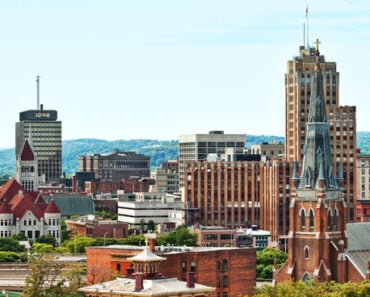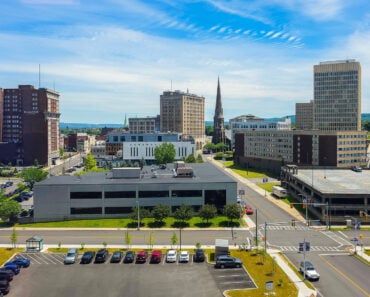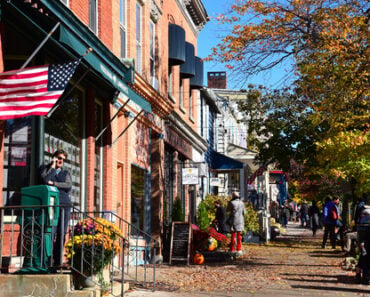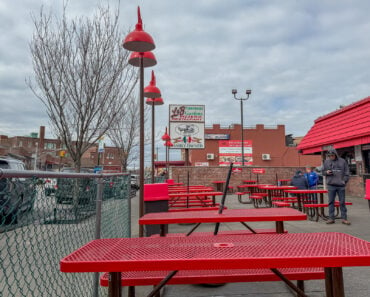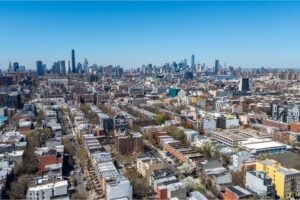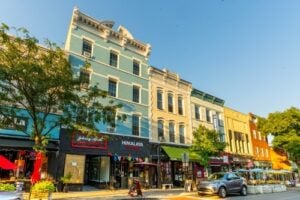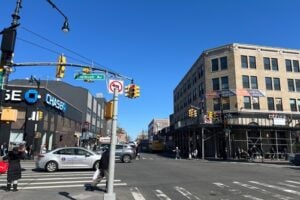
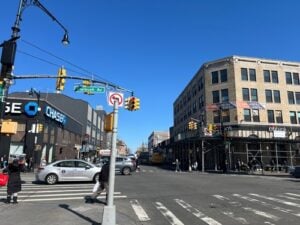
The intersection of Flatbush Avenue and Church Avenue in the heart of Flatbush, Brooklyn, New York City. Photo: Minhaj_Graphix / Shutterstock.com.
Few Brooklyn neighborhoods can tell their history through as many different kinds of famous people as Flatbush. Barbra Streisand and Neil Diamond walked the halls of Erasmus Hall High School before either became a recording star. A future Supreme Court justice grew up in a Brooklyn household that prized education. An illustrator who would help invent modern television cartoons, an Oscar-winning actress, and a writer whose childhood experiences became material for his novels all have stories tied to the neighborhood. Even the list of names associated with Flatbush’s later hip-hop culture would fill an article of its own.
Flatbush was a town long before it was a neighborhood. Dutch settlers called the community Midwout, and the old village developed around what is now Flatbush Avenue and Church Avenue. It remained largely rural for generations, then changed as transportation links and apartment construction brought new residents. Erasmus Hall, founded as an academy in 1786 and later incorporated into a major public high school, became one of the area’s most important institutions. Its famous graduates span music, sports, literature, politics, and the arts, but a school connection is not automatically proof that a person grew up on a particular Flatbush block.
There is also a geographical distinction worth making. Today’s Flatbush, East Flatbush, and Midwood are different neighborhoods, although the borders and names have shifted over time and all have connections to the older town of Flatbush. Several people in this article grew up specifically in East Flatbush. Others lived in streets now usually identified with Midwood, or moved into Flatbush after being born elsewhere. Their biographies make those distinctions clear rather than treating all of central Brooklyn as a single neighborhood.
The 25 people below are not ranked by fame. They represent different generations of Brooklyn life, from the period when enslavement existed in the old town to the era of televised comedy, professional football, dancehall, and hip-hop. Some left Brooklyn young, while others kept returning or made the community part of their public identity. All offer a different way to understand the cultural reach of Flatbush and its neighboring communities.
1. Barbra Streisand
Barbra Streisand was born in Brooklyn in 1942 and spent important childhood years in Flatbush. After her father died when she was a baby, the family faced financial difficulties, and Streisand grew up in a home where a professional performing career was far from assured. Her family lived on Newkirk Avenue, and she attended Erasmus Hall High School. She remembered watching movies at the Loew’s Kings Theatre, then one of the neighborhood’s grand movie palaces. Those experiences belonged to the Brooklyn world she repeatedly recalled long after becoming famous.
Streisand began performing in New York clubs and reached Broadway in I Can Get It for You Wholesale before becoming a major recording star. Her career expanded through Funny Girl, The Way We Were, A Star Is Born, and her work as director and star of Yentl. She has won major honors for music, film, and theater and has often spoken proudly of her Brooklyn roots. In 2012, when she prepared to perform at Barclays Center, her own website specifically identified Flatbush and Erasmus Hall as central to her upbringing.
2. Neil Diamond
Neil Diamond was born in Brooklyn in 1941 and grew up in a family whose moves included both Brooklyn and several years in Wyoming during his father’s military service. Back in New York, the family operated a dry-goods business in Flatbush, and Diamond attended Erasmus Hall High School. He sang in the school chorus at a time when Barbra Streisand was also a student. They were not a famous childhood singing duo, but the school gave both future performers an early setting for music.
Diamond went on to write and record songs including “Solitary Man,” “Cherry, Cherry,” “Sweet Caroline,” and “I Am… I Said.” He developed into one of America’s most recognizable singer-songwriters, with a career stretching from the Brill Building era into major concert tours. His connection to Erasmus Hall remained meaningful: in 2014 he returned to the Flatbush school for a surprise performance and spoke about how much he had learned there. That homecoming supplied a rare moment when an internationally famous musician performed in the very building where he had once been a student.
3. Ruth Bader Ginsburg
Ruth Bader Ginsburg was born in Brooklyn in 1933 and grew up in Flatbush as Joan Ruth Bader. Her mother, Celia, strongly encouraged education and independent thinking. Ginsburg attended James Madison High School in the nearby Midwood area and graduated in 1950. Her mother’s death shortly before the graduation ceremony was a profound personal loss. The neighborhood connection is her childhood home in Flatbush; the high school should not be relocated there simply because it is closely associated with famous Brooklyn graduates.
After studying at Cornell University and attending Harvard and Columbia law schools, Ginsburg became an important lawyer in the campaign against sex discrimination. Her cases before the Supreme Court helped establish a broader constitutional understanding of equal protection. President Bill Clinton appointed her to the Supreme Court in 1993, and she served until her death in 2020. Her public career eventually reached the highest level of American law, but the discipline and encouragement that shaped her early education belonged to a Brooklyn household.
4. Joseph Barbera
Joseph Barbera was born on Manhattan’s Lower East Side in 1911, not in Flatbush. His family moved to Flatbush when he was an infant, and he grew up there, eventually graduating from Erasmus Hall High School in 1928. At school he boxed and considered athletics and playwriting before taking a job in banking. He continued drawing in his spare time, copying illustrations and developing the visual skills that would eventually become his profession. His early working life was less a straight path to animation than a series of attempts to find a dependable livelihood.
Barbera entered the animation business during the 1930s and formed an enduring partnership with William Hanna. Together they were responsible for Tom and Jerry cartoons and later television favorites including The Flintstones, Yogi Bear, and The Jetsons. Their studio helped establish the look and rhythm of animated television for generations of viewers. Barbera’s Flatbush childhood is well documented in biographical research, making him more than someone who happened to attend a well-known Brooklyn school.
5. Joe Paterno
Joe Paterno was born in Brooklyn in 1926 and grew up in the southern part of the older Flatbush area, on East 23rd Street near Avenues S and T. Today that location is generally associated with Midwood, a distinction worth preserving when discussing Brooklyn geography. Paterno attended Brooklyn Preparatory School and spent much of his childhood playing neighborhood sports with friends and relatives. The small games and busy sidewalks of Brooklyn were a long way from the enormous college football stadium that later became the setting of his professional life.
After playing football at Brown University, Paterno joined the coaching staff at Pennsylvania State University and became head coach in 1966. His teams won national championships, and his decades at Penn State made him one of college football’s most recognizable figures. His tenure also ended in disgrace amid the university’s response to the Jerry Sandusky child-abuse scandal, a central part of any balanced account of his legacy. Paterno’s Brooklyn youth is genuine, but both his achievements and the controversy surrounding his final years belong in the historical record.
6. Michael K. Williams
Michael K. Williams was born in Brooklyn in 1966 and grew up in East Flatbush, a separate neighborhood immediately east of Flatbush. His home was in the Vanderveer Estates housing complex, later known as Flatbush Gardens. He spoke candidly about growing up amid the pressures of the neighborhood during the 1980s and about struggling to find confidence and direction. His mother worked hard to support the family, and he later returned frequently to the community even after his acting career brought him national recognition.
Williams became unforgettable as Omar Little on HBO’s The Wire, giving the character a mixture of danger, vulnerability, and personal conviction. He also played Chalky White in Boardwalk Empire and appeared in The Night Of and Lovecraft Country. Before acting, he worked as a dancer and performed with major recording artists. Williams died in 2021, and his memoir, Scenes from My Life, was published posthumously. His East Flatbush roots were not a passing biographical footnote: the people and experiences of the neighborhood informed his work and his public advocacy.
7. Busta Rhymes
Busta Rhymes was born Trevor Smith Jr. in East Flatbush in 1972 to parents of Jamaican heritage. His early surroundings exposed him to the Caribbean sounds and Brooklyn street culture that later appeared in his music. His family eventually moved to Uniondale on Long Island, and he attended Uniondale High School, so it would be inaccurate to describe his entire adolescence as a Flatbush school experience. Brooklyn was the beginning of his story, while Long Island was important to the musical partnerships he developed as a teenager.
At Uniondale, Busta connected with musicians who became members of Leaders of the New School. He attracted attention through group recordings and a memorable appearance on A Tribe Called Quest’s “Scenario” before starting a successful solo career. Songs such as “Woo-Hah!! Got You All in Check,” along with his high-speed delivery and imaginative videos, made him one of the most distinctive voices of 1990s hip-hop. His East Flatbush birthplace also places him within Brooklyn’s extensive relationship with Caribbean American music.
8. Susan Hayward
Susan Hayward was born Edythe Marrener in the Flatbush section of Brooklyn in 1917. Her family did not live a glamorous life, and she attended Girls’ Commercial High School, where she studied practical subjects including stenography. She was injured in a childhood street accident and later turned to modeling. A photographer’s model from Brooklyn was hardly the most likely candidate for a Hollywood career, but her appearance in advertising helped attract attention when studios were searching for actresses in the late 1930s.
Hayward traveled west to audition for the role of Scarlett O’Hara in Gone with the Wind. She did not win the part, but the trip opened the door to film work. Her later performances in Smash-Up, the Story of a Woman, With a Song in My Heart, and I’ll Cry Tomorrow earned major acclaim. She won the Academy Award for Best Actress for I Want to Live! in 1958. The transformation from a Brooklyn student preparing for office work to an Oscar-winning actress is one of the neighborhood’s great Hollywood stories.
9. Leona Helmsley
Leona Helmsley was born Lena Rosenthal in Marbletown, New York, in 1920, but grew up in Flatbush after her family moved to Brooklyn. Her childhood was far removed from the luxury hotels and real estate holdings she later helped manage. She left school, changed names during her early working years, and found employment before entering the city’s real estate business. The Flatbush connection is her upbringing, not her birthplace or the location of her later corporate headquarters.
Helmsley became a prominent hotel and property executive after marrying real estate investor Harry Helmsley. Her reputation for demanding management and extravagant wealth made her a frequently discussed figure in New York business. In 1989 she was convicted of federal tax-related offenses and later served a prison sentence. Any account of her achievements needs that part of the story as well. Her career illustrates a very different journey from Brooklyn childhood to Manhattan fame, one shaped by business, celebrity, and a highly public legal downfall.
10. Shaggy
Shaggy, born Orville Richard Burrell in Jamaica in 1968, moved to Flatbush as a teenager to join his mother in Brooklyn. He attended Erasmus Hall and found himself surrounded by the dancehall and reggae culture of the city’s Caribbean communities. In interviews he has recalled that life was not easy, but music gave him a focus and helped him find an audience. His presence on this list is based on his actual teenage years in Flatbush, not on a claim that he was born in New York.
After serving in the United States Marine Corps, Shaggy developed an international music career with recordings such as “Oh Carolina,” “Boombastic,” and “It Wasn’t Me.” His delivery brought Jamaican dancehall traditions to mainstream pop audiences around the world. The Borough President’s office recognized his Brooklyn connection with a Shaggy Day proclamation in 2026. His story shows how Flatbush’s Caribbean communities have influenced music well beyond the borough, while allowing him to retain a strong identification with Jamaica.
11. Talib Kweli
Talib Kweli grew up in Brooklyn in an academic family, with parents who worked as educators. His earliest childhood was associated with Park Slope, but he recalled moving to Flatbush around junior high school age. In an interview about Brooklyn hip-hop, he contrasted the different neighborhood communities he experienced and described the influence of the West Indian environment he found after the move. It is therefore more accurate to say Flatbush was part of his youth than to insist he was born and raised there from infancy.
Kweli developed into a major lyricist in underground and alternative hip-hop, collaborating with Mos Def as Black Star and recording with producer Hi-Tek as Reflection Eternal. His work blended social observation, political commentary, and technical skill. Albums such as Train of Thought and Quality helped establish his reputation beyond New York. The move from one Brooklyn neighborhood to another also gives his local biography a specificity that would be lost if every borough experience were described simply as growing up in Flatbush.
12. Roz Chast
Cartoonist Roz Chast was born in Brooklyn in 1954 and grew up in Flatbush as an only child. Her parents worked in New York City schools, and the small apartment, neighborhood characters, and conversations she overheard became part of her understanding of everyday anxiety and family life. She has spoken about being a shy, worried child who loved drawing and reading. Rather than romanticizing her childhood, Chast often turns the awkwardness, fears, and peculiar household routines she knew into comic material.
Chast became one of the most recognizable cartoonists associated with The New Yorker, where her drawings capture the absurdity of modern life in a style instantly recognizable to readers. Her books include the acclaimed illustrated memoir Can’t We Talk About Something More Pleasant?, about her aging parents. That work brought her family history and Brooklyn background into a particularly moving story about caregiving. The humor is often sharp, but it comes from close observation, a skill Chast traces to her early years in Flatbush.
13. Norman Mailer
Norman Mailer was born in Long Branch, New Jersey, in 1923, then moved to Brooklyn as a young child. A detailed chronology compiled by his biographer places the family on Cortelyou Road in Flatbush from 1925 to 1933, before they moved to Crown Heights. Mailer’s childhood thus included a documented period in Flatbush, rather than a vague claim that he spent all of his early life there. He later attended Boys High School and entered Harvard University at an unusually young age.
Mailer became a novelist, essayist, journalist, and public intellectual whose work provoked admiration and controversy. His first novel, The Naked and the Dead, drew on World War II experiences, while later books including The Armies of the Night and The Executioner’s Song won Pulitzer Prizes. He also helped found The Village Voice. His adult life involved many places, but Flatbush was part of the childhood Brooklyn that preceded the outspoken and sometimes combative literary persona for which he became known.
14. Bobby Shmurda
Bobby Shmurda was born Ackquille Pollard in Miami, Florida, in 1994. His family moved to East Flatbush after his father was incarcerated, and he grew up around the Clarkson Avenue area. His childhood included instability and encounters with the criminal justice system. Those experiences shaped his early musical circle, but his later public history should not be reduced to an easy story about neighborhood circumstances. East Flatbush is a specific part of Brooklyn and should be identified as such.
Shmurda attracted national attention in 2014 when “Hot N****” and the accompanying Shmoney Dance spread rapidly online. He became associated with the Brooklyn drill sound and signed a recording contract, but his career was interrupted by criminal charges. He pleaded guilty in 2016 in a case involving conspiracy and weapons offenses and was released from prison in 2021. His rise, incarceration, and return to recording have remained part of the story of Brooklyn’s modern rap scene. His East Flatbush upbringing is supported by contemporary interviews and reporting.
15. Yvette D. Clarke
Yvette D. Clarke was born in Brooklyn in 1964 and grew up in Flatbush in a family with strong ties to the borough’s Jamaican immigrant community. Her mother, Una S. T. Clarke, became a New York City Council member, and the younger Clarke attended community meetings from an early age. She was educated in Brooklyn and attended Oberlin College. Her personal connection to Flatbush is unusually strong: official congressional materials state that she still resides in the neighborhood where she grew up.
Clarke entered the New York City Council in 2002, succeeding her mother in the same district, and was elected to the U.S. House of Representatives in 2006. Her congressional work has included immigration, telecommunications, consumer access to technology, and issues affecting Caribbean American communities. Unlike public figures whose only Flatbush connection is an old school enrollment or a short-lived address, Clarke’s neighborhood identity has remained part of her life and political representation. Her career is a significant example of Flatbush’s influence on contemporary New York public service.
16. Jimmy McMillan
Jimmy McMillan became a familiar New York political personality through his Rent Is Too Damn High Party and repeated campaigns for public office. His connection to Flatbush is a later residential one rather than a documented childhood there. During the attention surrounding the 2010 New York gubernatorial election, CBS New York reported that he maintained his primary apartment in the Flatbush section of Brooklyn. That reporting provides a specific geographical tie without inventing school or childhood stories that are not established in reliable accounts.
McMillan attracted widespread attention during a televised gubernatorial debate when he repeatedly returned to the cost of housing. His distinctive presentation and memorable party name turned a local affordability complaint into an internet phenomenon. Although he did not win statewide office, the phrase remained familiar in discussions of New York rents. He belongs here as a later Flatbush resident with a recognizable place in the city’s political culture, a different kind of association from those of the singers and actors raised on nearby streets.
17. Angela Yee
Radio personality Angela Yee has described growing up in East Flatbush before moving to South Orange, New Jersey, while in high school. Her father is Chinese American and her mother’s family comes from Montserrat, and she has recalled how the Caribbean music heard on her block influenced her childhood. Yee attended school through the Prep for Prep educational program, which introduced her to young people from other parts of the city. Her own interviews provide far more meaningful information about the neighborhood than a simple claim that she was born somewhere in Brooklyn.
Yee became known nationally as one of the hosts of the syndicated radio program The Breakfast Club before launching her own show, Way Up with Angela Yee. Her career combines interviews, music broadcasting, business, and public-facing community projects. She has also spoken about wanting to bring resources and opportunities back to neighborhoods she knows. Identifying her childhood specifically as East Flatbush preserves the local Caribbean American context she herself has emphasized in discussing her life.
18. Jidenna
Jidenna Mobisson was born in Wisconsin in 1985 and spent part of his childhood in Nigeria before his family returned to the United States and settled in Massachusetts. His upbringing was spread across different locations, including a period in East Flatbush. In a SPIN interview, he discussed the neighborhood’s Caribbean and Nigerian communities and compared its atmosphere with the part of Boston where he had also lived. He should not be described as a lifelong East Flatbush resident, but his own recollections establish a genuine connection.
Jidenna became widely known after the success of “Classic Man” and later released albums including The Chief and 85 to Africa. His music draws on hip-hop, funk, West African styles, and Caribbean rhythms, reflecting an upbringing that crossed national and cultural boundaries. The East Flatbush years form part of that mixture rather than the entirety of his biography. His career adds a contemporary musician whose connection to Brooklyn is best explained in his own words, not inflated into a conventional born-and-raised story.
19. Special Ed
Rapper Special Ed, born Edward Archer in Brooklyn in 1972, grew up in Flatbush before his family moved to Canarsie. He attended Erasmus Hall and Samuel J. Tilden high schools during his youth. As a teenager he connected with producer Howie Tee and began recording music while New York hip-hop was moving through a period of tremendous experimentation. His calm, controlled delivery stood out alongside the more forceful styles of other performers working in the same era.
Special Ed released Youngest in Charge in 1989, when he was still a teenager. The album included “I Got It Made,” “Think About It,” and “I’m the Magnificent,” songs that established his place in hip-hop history. He later recorded additional albums and participated in projects involving other New York artists. His Flatbush childhood, followed by his move to Canarsie, gives his history a clear neighborhood progression rather than a generalized Brooklyn label.
20. Jackie Loughery
Jackie Loughery was born in Brooklyn in 1930 and grew up in Flatbush, according to biographical accounts of the actress and pageant winner. She attended St. Francis Xavier Academy and entered beauty competitions before national pageants became the extensive media industry they later developed into. By 1952 she had won the Miss New York USA competition, earning the opportunity to represent the state at the first Miss USA pageant.
Loughery won the inaugural Miss USA title in 1952 and advanced to the first Miss Universe pageant. She subsequently developed an acting career with credits in film and television, appearing in Pardners and The D.I., among other productions. She died in 2024. Her place in this Flatbush list is rooted in the neighborhood where she was raised, while her significance extends to a nationally familiar institution that was itself new when she became its first winner.
21. Joey Bada$$
Joey Bada$$, born Jo-Vaughn Virginie Scott in Brooklyn in 1995, grew up in Flatbush in a family with Caribbean roots. In a Village Voice interview he placed his childhood around Church Avenue and Snyder Avenue, giving an unusually precise account of the streets he knew. He also spoke about early memories of riding a bicycle and discovering hip-hop. Although he has discussed connections to Bedford-Stuyvesant, he has repeatedly insisted that Flatbush is his neighborhood.
His 2012 mixtape 1999 attracted major attention for its relationship to classic New York rap sounds, and he went on to record albums including B4.DA.$$ and All-Amerikkkan Bada$$. He also pursued acting, including a role in the television series Mr. Robot. His rise helped establish the Pro Era collective and renewed interest in lyrical traditions associated with 1990s East Coast hip-hop. Unlike many celebrities whose childhood neighborhoods are assigned by biographical databases, Joey Bada$$ has identified the specific Flatbush blocks himself.
22. Michael Badalucco
Michael Badalucco was born in Flatbush in 1954 and grew up in a family connected to film work. His father was employed as a carpenter and set worker, and Badalucco has recalled visiting film sets while still young. He attended Xaverian High School in Brooklyn and later studied theater at SUNY New Paltz. The early exposure to the mechanics of making movies gave him an unusual perspective long before he became a regularly employed screen actor.
Badalucco became particularly well known for playing attorney Jimmy Berluti on the television drama The Practice, a role that earned him a Primetime Emmy Award in 1999. He also appeared in films including Miller’s Crossing, O Brother, Where Art Thou?, and The Man Who Wasn’t There. His career has included stage and television roles as well as film work. His Flatbush connection is a birthplace and family background, not a claim that all of his later education occurred in the neighborhood.
23. Eric Kaplan
Writer and producer Eric Kaplan grew up in a Jewish family in Flatbush. His father practiced law in a storefront office, and his mother taught biology at Erasmus Hall High School. Kaplan attended Hunter College High School and then Harvard, where he wrote for the Harvard Lampoon. His studies eventually extended into philosophy, a subject that remained important to his work in comedy. His Flatbush roots are documented by both the University of California, Berkeley, and his book publisher.
Kaplan wrote for Late Show with David Letterman, Futurama, The Simpsons, Malcolm in the Middle, and The Big Bang Theory. His work with animation and television sitcoms combined jokes with an interest in philosophical questions and absurd situations. He later earned a doctorate in philosophy from Berkeley and published Does Santa Exist? A Philosophical Investigation. His career offers a different example of Flatbush influence: an everyday Brooklyn upbringing followed by a professional life joining intellectual inquiry and popular comedy.
24. Sid Luckman
Sid Luckman was born in Brooklyn in 1916 and grew up in several parts of the borough, including a home near Prospect Park in the Flatbush area. His father encouraged his interest in football, and Luckman developed into an outstanding athlete at Erasmus Hall High School. By the time he graduated, his talent attracted attention from college programs across the country. He chose Columbia University, where he continued playing football while studying in New York rather than leaving immediately for a distant campus.
Luckman became the quarterback of the Chicago Bears from 1939 through 1950 and helped lead the team to four NFL championships. His passing ability and command of the T formation made him an important figure in the development of the modern professional game. He was inducted into the Pro Football Hall of Fame. The Brooklyn connection is more than the school name on a list of alumni: contemporary biographies identify Flatbush as one of his childhood homes and Erasmus Hall as the place where his football talent emerged.
25. John Jea
John Jea’s connection to Flatbush reaches back to the period when slavery existed in Brooklyn. Jea was born in West Africa around 1773 and, according to his autobiographical account, was kidnapped as a small child along with members of his family and transported to North America. He was enslaved on a Flatbush farm and subjected to severe abuse and deprivation. The Center for Brooklyn History and Brooklyn Public Library have used his account to help explain the experiences of enslaved people in the old town. It would be inaccurate to describe Jea as having been born in Flatbush or to turn his enslavement into a sentimental tale of neighborhood upbringing.
Jea gained his freedom while still young and later became a preacher and writer. His book, The Life, History, and Unparalleled Sufferings of John Jea, published in the early nineteenth century, records both his experiences of enslavement and his religious life. The narrative requires the same careful reading as other autobiographical sources, but it remains a significant firsthand testimony. Including him gives the article historical depth beyond entertainment and sports and reminds readers that Flatbush’s history also includes the lives of people whose names were rarely preserved in traditional accounts of Brooklyn.
Flatbush’s Famous People Reflect More Than One Brooklyn Era
It would be tempting to explain every one of these careers by saying that Flatbush somehow produced ambition or talent. That would miss what makes the list interesting. Erasmus Hall mattered to performers and athletes at particular moments in their lives. Caribbean communities in Flatbush and East Flatbush provided a setting for later musical styles and broadcasters. A family apartment, a school, a residential block, or a temporary home can mean very different things to different people.
The neighborhood has changed repeatedly, and the people who came from it represent those changes. For more New York neighborhood history, see our look at how Brooklyn neighborhoods got their names, our 25 Famous People From Brooklyn article, and the companion feature on famous people from Bensonhurst. Each tells part of a borough whose history is far too varied to be summed up by a single neighborhood or a single generation.