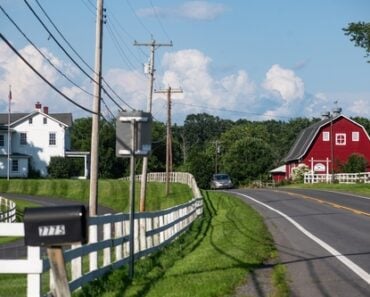

Chautauqua Lake viewed from Bemus Point in Chautauqua County, New York. Photo: aceshot1 / Shutterstock.com.
Chautauqua County is one of those parts of New York State where the scenery changes almost as quickly as the history. Along Lake Erie are grape-growing communities such as Westfield and Ripley. Dunkirk grew into a busy railroad and lake port, while Fredonia developed its own traditions in education, music, and civic life. Farther south, the roads wind past Chautauqua Lake, Mayville, Panama, and the smaller towns that have been home to people whose accomplishments reached well beyond Western New York.
When people talk about famous Chautauqua County residents, the conversation often begins with Jamestown, the home of Lucille Ball’s legacy and the birthplace of several nationally recognized entertainers. But it would be a mistake to let the county’s largest city overshadow all the others. The story of Chautauqua County also includes a girl in Westfield who wrote to Abraham Lincoln, a future industrialist born near Brocton, a filmmaker from Dunkirk who built his own spectacular car chases, and an Olympic champion from Fredonia.
The historical range is just as remarkable. Men from the county helped shape American railroads, publishing, rubber manufacturing, and economic thought. Writers exposed fraudulent medicines or filled the shelves of nineteenth-century homes with adventure stories. Others challenged racial segregation, fought in the Civil War, or helped change the way Americans understood birds and the natural world. Some of these names are still familiar; others have faded from public memory even though their work had national consequences.
For this article, I wanted to look at the entire county, rather than simply repeat the famous people associated with Jamestown. Only two names from our separate Jamestown article appear here. The rest emphasize communities including Dunkirk, Fredonia, Westfield, Ripley, Mayville, Brocton, Gerry, Busti, and Panama. A few people were born elsewhere but lived or worked in the county for many years. Their local connection is identified clearly, rather than presenting every person as a native. Here are 25 people whose lives make Chautauqua County history a great deal larger than most people realize.
1. Robert H. Jackson (1892–1954)
Chautauqua County connection: Grew up in Frewsburg and established his early legal career in Jamestown; born in Spring Creek, Pennsylvania.
Robert Houghwout Jackson did not have the conventional educational background many people associate with a Supreme Court justice. Born in northwestern Pennsylvania, he grew up in Frewsburg, attended its public schools, and spent an additional year at Jamestown High School. He pursued the law largely through apprenticeship, taking courses at Albany Law School without following the customary path to a law degree. Much of his professional education came from working with attorneys and developing a practice in Jamestown, where his ability as an advocate attracted wider attention.
Jackson rose through the Roosevelt administration to become solicitor general and attorney general before joining the Supreme Court in 1941. He wrote the Court’s influential opinion in West Virginia State Board of Education v. Barnette, protecting students against compelled flag salutes. His most internationally recognized assignment came after World War II, when he took leave to serve as chief United States prosecutor at the Nuremberg trials of major Nazi leaders. His career made Frewsburg and Jamestown part of the story of American constitutional law and international accountability. The Robert H. Jackson Center in Jamestown preserves that legacy.
2. Roger Tory Peterson (1908–1996)
Chautauqua County connection: Born and raised in Jamestown.
Roger Tory Peterson was born in Jamestown in 1908, when the region’s woods and fields provided an ideal classroom for a curious boy who loved birds and drawing. Before he became a major naturalist, he worked painting decorative designs on furniture, a trade closely connected to Jamestown’s manufacturing economy. His observations outdoors convinced him that ordinary people needed a more practical way to identify birds than the complicated reference books then available to specialists.
His 1934 book A Field Guide to the Birds revolutionized birdwatching through clear illustrations and arrows pointing to identifying features. It encouraged readers to observe living birds where they stood, rather than rely on specimens or long technical descriptions. Peterson went on to create numerous other guides and to advocate for conservation, receiving the Presidential Medal of Freedom. The Roger Tory Peterson Institute in Jamestown connects his international influence to the Chautauqua County landscape that first inspired his interest in nature.
3. George Pullman (1831–1897)
Chautauqua County connection: Born in Brocton, in the Town of Portland; spent part of his early life in the county.
George Mortimer Pullman was born near Brocton in 1831 and spent childhood years in Western New York before moving with his family to Albion. He also worked in Westfield as a young man. Those beginnings are easy to overlook because his name became so strongly identified with Chicago and the luxury sleeping cars used on long-distance American railroads. His early career involved practical construction and moving buildings, experience that preceded his entry into railroad equipment.
Pullman developed sleeping cars that offered passengers greater comfort on overnight journeys and organized a large manufacturing enterprise. But the company town he established outside Chicago also became associated with labor conflict. In 1894, wage reductions and workers’ grievances helped trigger the Pullman Strike, a national confrontation involving railway workers and federal intervention. His career changed American travel while also exposing tensions between industrial wealth and labor. Both sides of that legacy belong in the story of this Brocton-born businessman.
4. Grace Bedell (1848–1936)
Chautauqua County connection: Lived in Westfield as a child and wrote her famous letter from the village.
In October 1860, eleven-year-old Grace Bedell wrote a letter from Westfield to presidential candidate Abraham Lincoln. Having seen his campaign picture, she suggested that he might look better with whiskers and that women might be more inclined to persuade their husbands to vote for him. What makes the episode so appealing is how direct the letter was. Bedell was not writing a formal political argument; she was offering advice in the plain language of a child.
Lincoln answered her letter, and by the time his inaugural train passed through Westfield in February 1861 he had grown a beard. During the stop he asked for Grace, who came forward to meet him. Historians cannot prove that her suggestion alone determined Lincoln’s appearance, but the exchange and meeting are documented. The episode remains one of the county’s most charming connections to a major turning point in American history, and Westfield commemorates it today.
5. Benjamin Franklin Goodrich (1841–1888)
Chautauqua County connection: Born in Ripley; studied medicine in Westfield and practiced briefly in Mayville.
Benjamin Franklin Goodrich was born in Ripley in 1841, into a farming family near the Pennsylvania border. After losing his parents while young, he lived with relatives and pursued an interest in medicine, studying with a physician in Westfield. He earned his medical degree in Ohio and briefly practiced in Mayville before serving as a medical officer during the Civil War. It is a very different beginning from the rubber manufacturing empire eventually associated with his name.
After the war, Goodrich moved into business and eventually established the rubber company in Akron, Ohio, that became B. F. Goodrich. Its products grew from industrial rubber goods into important contributions to the tire industry. Goodrich himself died in 1888, before many of the developments that later made the brand internationally familiar. His ties to Ripley, Westfield, and Mayville make him a particularly strong example of a nationally important entrepreneur whose education and early career were anchored in Chautauqua County.
6. Samuel Hopkins Adams (1871–1958)
Chautauqua County connection: Born in Dunkirk.
Samuel Hopkins Adams was born in Dunkirk in 1871 and went on to become a leading investigative journalist of the Progressive Era. After studying at Hamilton College, he worked in newspapers and magazines as Americans were debating how government should respond to industrial power, public-health problems, and deceptive commercial advertising. His most celebrated investigation examined patent medicines, many of which promised cures without reliable evidence and sometimes contained hazardous ingredients.
His 1905 series in Collier’s, known as The Great American Fraud, helped expose these practices and added momentum to the movement that produced the Pure Food and Drug Act of 1906. Adams was also a novelist and biographer, with a literary career that extended well beyond investigative reporting. The Dunkirk-born writer helped show that journalism could do more than describe public life: careful reporting could prompt readers and lawmakers to question an entire industry.
7. Jean Webster (1876–1916)
Chautauqua County connection: Born in Fredonia.
Jean Webster, born Alice Jane Chandler Webster in Fredonia in 1876, grew up with unusual connections to American publishing. Her father worked in the business associated with Mark Twain, who was a relative of her family. Webster later attended Vassar College, where she developed the independence of mind and interest in institutional reform that would become important in her fiction. Her education and observations of young women’s opportunities helped shape the stories she told.
Her best-known novel, Daddy-Long-Legs, appeared in 1912 and followed a young woman whose college education was financed by a mysterious benefactor. The book’s humor, letters, and spirited heroine led to stage and film adaptations. Webster also wrote Dear Enemy and supported reforms affecting children in institutions. Her career ended with her death in 1916, but the books continued reaching new generations. Fredonia’s connection to her is a birthplace, not a claim that she spent her entire literary life there.
8. Jenn Suhr (Born 1982)
Chautauqua County connection: Born in Fredonia and graduated from Fredonia High School.
Jenn Suhr, born Jennifer Stuczynski, grew up in Fredonia and initially attracted attention as a talented basketball player. She played basketball at Roberts Wesleyan College before concentrating on pole vaulting, a sport that demanded a different combination of speed, strength, timing, and technical skill. Unlike many elite track-and-field competitors, she began her specialist career relatively late and developed rapidly under dedicated coaching.
Suhr won silver in the pole vault at the 2008 Beijing Olympics and gold at the 2012 London Games. She also set major indoor records and won the world indoor title in 2016. Her achievements made her one of the leading American women in the event across multiple Olympic cycles. For Fredonia, the connection is particularly meaningful: a local school graduate reached the top of an international sport through a career built on repeated technical improvement rather than an early reputation in pole vaulting.
9. Marion Dickerman (1890–1983)
Chautauqua County connection: Born in Westfield.
Marion Dickerman was born in Westfield in 1890 and later studied at Wellesley College and Syracuse University. She became involved in women’s suffrage, education, labor reform, and opposition to child labor. Her public career unfolded during a period when women were expanding their political influence and demanding stronger legal protections. She also volunteered with wartime relief efforts in Britain during World War I.
Dickerman later became closely associated with Nancy Cook and Eleanor Roosevelt. With Cook, she was involved in educational work and in the Val-Kill circle that became important in Roosevelt’s personal and political life. Their relationship with Roosevelt changed over time, but Dickerman continued her interest in progressive reform and public affairs. Her life connects a Westfield birth to the early twentieth-century movements that changed women’s participation in American government and education.
10. John M. Schofield (1831–1906)
Chautauqua County connection: Born in Gerry; moved away with his family during childhood.
John McAllister Schofield was born in Gerry in 1831 and grew up chiefly in Illinois after his family left New York. He graduated from West Point and became an Army officer whose career stretched from the years before the Civil War into the professional military system of the late nineteenth century. During the war, his leadership at Wilson’s Creek in Missouri earned him the Medal of Honor, and he later commanded major Union forces in the western theater.
Schofield’s Army of the Ohio resisted Confederate General John Bell Hood at Franklin, Tennessee, in 1864, helping set the stage for Union victory at Nashville. After the war he served as secretary of war, superintendent of West Point, and eventually commanding general of the United States Army. His military importance is well documented, although Chautauqua County was the place of his birth rather than the center of his adult service. That distinction is part of telling his story accurately.
11. John Bidwell (1819–1900)
Chautauqua County connection: Born on a farm in Chautauqua County, associated in county records with Ripley; left the region as a child.
John Bidwell was born in Chautauqua County in 1819 and moved with his family to Pennsylvania and then Ohio before reaching adulthood. He eventually joined the 1841 overland migration to California, taking part in an arduous journey through the West before the era of regular transcontinental routes. That expedition helped place him among the better-known American pioneers of California’s early settlement by newcomers from the East.
Bidwell acquired land, established agricultural enterprises around Chico, took part in California politics, and served in the U.S. House of Representatives. He was also the Prohibition Party’s presidential candidate in 1892. His biography belongs within the history of expansion that profoundly affected Indigenous communities and the ownership of Western land; those consequences should not be omitted. His birthplace in Chautauqua County is documented even though most of his fame came from his later California life.
12. Horatio Gates Brooks (1828–1887)
Chautauqua County connection: Born in Portsmouth, New Hampshire; made Dunkirk his longtime industrial base.
Horatio Gates Brooks began working with railroad machinery in New England before joining the Erie Railroad. His career brought him to Dunkirk, the railway’s western terminal on Lake Erie, where maintenance shops and the waterfront helped turn the community into an important industrial center. Brooks rose through engineering and management positions, acquiring an understanding of locomotive construction and the challenges of keeping a growing rail network in operation.
In 1869 he helped organize the Brooks Locomotive Works using the railroad’s existing Dunkirk facilities. The business developed into a substantial manufacturer and eventually became part of the American Locomotive Company after Brooks’s death. His story qualifies through decades of work and residence in Dunkirk, not through a local birth. Few businessmen did more to connect the city’s name with rail manufacturing during the nineteenth century.
13. Charles Emerson Beecher (1856–1904)
Chautauqua County connection: Born in Dunkirk; moved away during childhood.
Charles Emerson Beecher was born in Dunkirk in 1856 and became interested in fossils after his family moved to northwestern Pennsylvania. The rocky landscapes of that region offered evidence of ancient marine life that could be examined and collected. His fascination eventually led to a career at Yale University’s Peabody Museum, where he investigated fossil invertebrates and became particularly associated with the study of trilobites.
Beecher’s research included unusually well-preserved specimens from central New York that revealed details often missing from ordinary fossils. The site became known as Beecher’s Trilobite Bed and remains important to paleontology. He also worked on museum collections and scientific publications, advancing the understanding of prehistoric animals through careful examination of their structures. His scientific accomplishments connect a Dunkirk birthplace to research that continues to interest specialists long after his death.
14. Harry Castlemon / Charles Austin Fosdick (1842–1915)
Chautauqua County connection: Born in Randolph, Cattaraugus County; lived and wrote for many years in Westfield.
Charles Austin Fosdick, better known by his pen name Harry Castlemon, is often included among Westfield’s notable residents. He was actually born in Randolph, outside Chautauqua County, and attended school in Buffalo. His long residence and literary career in Westfield are what connect him to this list. During the Civil War, he served in the Union Navy, an experience that later supplied material for stories about military life and adventure.
Castlemon became a remarkably popular nineteenth-century author of books for young readers, especially boys. His series included the Gunboat stories and outdoor adventures involving hunting, travel, and the frontier. Many were written at his Westfield home on South Portage Street. Although their assumptions reflect the era in which they were produced, the books were major commercial successes. The Village of Westfield and Chautauqua County historians have preserved the local connection of an author whose readership once stretched across the country.
15. George W. Patterson (1799–1879)
Chautauqua County connection: Born in New Hampshire; settled in Westfield and became active in its civic and business life.
George Washington Patterson was born in New Hampshire in 1799 and moved into the business and political world of Western New York during the nineteenth century. His career included agricultural, commercial, and public responsibilities, and he developed ties to Westfield that lasted for many years. He belonged to a generation in which local business success and public office frequently overlapped, with politicians often moving among village government, Albany, and Washington.
Patterson served in the New York State Assembly, including terms as speaker, and was lieutenant governor from 1849 to 1850. He later served in Congress representing a Western New York district. His story illustrates the importance of Westfield as a center of business and politics as well as grape-growing. He qualifies here through his meaningful residence and public work in the county, not because he was born there.
16. Albion W. Tourgée (1838–1905)
Chautauqua County connection: Born in Ohio; lived in Mayville from the 1880s and conducted important writing and civil-rights work there.
Albion Winegar Tourgée was born in Ohio in 1838 and served in the Union Army during the Civil War. He later moved south during Reconstruction, working as a judge and becoming an outspoken defender of equal civil and political rights. His fiction and political writing challenged white supremacy and brought him national attention. In 1881 he established a home in Mayville on Chautauqua Lake, making the county an important base for his later work.
Tourgée is remembered especially for his role as counsel for Homer Plessy in the case that became Plessy v. Ferguson. The Supreme Court’s 1896 ruling upheld racial segregation under the doctrine of ‘separate but equal,’ rejecting the arguments he and other advocates made against discriminatory laws. Tourgée’s long residence in Mayville included writing, journalism, and continued efforts for racial justice. His history provides a powerful local connection to one of the nation’s most consequential civil-rights cases.
17. James H. McGraw (1860–1948)
Chautauqua County connection: Born in Panama and attended the State Normal School in Fredonia.
James Herbert McGraw was born in Panama in 1860 and attended local schools before continuing his education at Fredonia. His early working life included teaching and selling books, experiences that helped introduce him to the business possibilities of publishing. He eventually moved to New York City and began acquiring specialized trade publications aimed at readers interested in technical, industrial, and professional subjects.
McGraw’s publishing interests became part of the company known as McGraw-Hill, which grew into an influential supplier of educational materials, business information, and reference works. His success shows how technical magazines and books became essential to an industrial economy that increasingly relied on specialized knowledge. From a small Chautauqua County community came an entrepreneur whose surname became familiar to students and professionals across the United States.
18. S. Frederick Nixon (1860–1905)
Chautauqua County connection: Born in Westfield and spent his public and business life there.
Samuel Frederick Nixon was born in Westfield in 1860 and became involved in local business and politics after his education at Hamilton College. He served in village and town government before rising to the New York State Assembly. His career reflected the importance of political organization at the local level, where relationships with voters and colleagues could lead to influential positions in Albany.
Nixon served numerous terms in the Assembly and was speaker from 1899 until his death in 1905. The position made him a central figure in the legislature’s business and negotiations during an era of rapid economic and governmental change. Although not a household name today, his prominence was considerable in his own time. Westfield remained his community throughout that career, making the county connection straightforward and well documented.
19. Enoch A. Curtis (1836–1907)
Chautauqua County connection: Born in Busti; established his architectural practice in Fredonia.
Enoch Arnold Curtis was born in the Town of Busti in 1836 and grew up in a farming family before studying and learning the building trades. During the Civil War, he served in the 112th New York Infantry and was wounded at Cold Harbor. After military service he built a professional career as an architect based in Fredonia, joining practical construction experience with the designs increasingly expected for ambitious civic and commercial buildings.
Curtis designed buildings in Western New York and Pennsylvania, including public structures and private homes. Among the surviving projects associated with him is the Reuben Gridley Wright house in Westfield. His work helped shape the physical appearance of communities growing in wealth and population in the late nineteenth century. Unlike a famous national architect remembered for one landmark, Curtis had a regional career visible across many towns, with especially strong roots in Busti and Fredonia.
20. Alonzo H. Cushing (1841–1863)
Chautauqua County connection: Born in Wisconsin; raised in Fredonia after his family moved to New York.
Alonzo Hereford Cushing was born in Wisconsin in 1841, but his childhood in Fredonia made the village an important part of his story. He attended West Point and graduated in 1861, just as the Civil War began. His service as an artillery officer brought him to some of the conflict’s decisive campaigns, and by July 1863 he was commanding Battery A of the 4th U.S. Artillery at Gettysburg.
On July 3, during the Confederate attack remembered as Pickett’s Charge, Cushing remained with his guns on Cemetery Ridge despite severe wounds. He was killed during the fighting. His actions helped defend a critical Union position, and in 2014 he was awarded the Medal of Honor posthumously. Fredonia’s remembrance of Cushing is not based on birthplace but on the years he grew up there before military service took him away.
21. Mark Brazill (Born 1962)
Chautauqua County connection: Born in Dunkirk.
Mark Brazill was born in Dunkirk in 1962 and entered a television industry in which writing and production often happen far from public attention. He gained experience working on comedy programs before becoming best known as a co-creator of That ’70s Show. The series turned the everyday frustrations of teenagers and their parents into a sitcom set in the fictional Wisconsin town of Point Place, using the details of an earlier decade as a source of humor.
Brazill’s television credits also include work connected with 3rd Rock from the Sun and other comedy projects. His creative career demonstrates that a nationally successful television program depends on writers and producers as well as its recognizable cast. Although That ’70s Show was set in the Midwest, its co-creator had roots in Dunkirk on the southern shore of Lake Erie, another example of a Chautauqua County connection viewers might never suspect.
22. H. B. Halicki (1940–1989)
Chautauqua County connection: Born in Dunkirk and grew up around the family’s automotive business.
Henry Blight ‘Toby’ Halicki was born in Dunkirk in 1940, into a family associated with automobile repair and sales. His fascination with cars eventually became the foundation of an unusual filmmaking career. After moving to California, he worked in automotive businesses and accumulated the knowledge, vehicles, and practical skills that would allow him to create action sequences on his own terms.
Halicki wrote, produced, directed, and starred in the original 1974 film Gone in 60 Seconds, remembered for its extended automobile chase. He worked with modest resources and placed an extraordinary emphasis on real driving and physical stunts. He died in 1989 during production of a proposed sequel, and the story later inspired a major Hollywood remake in 2000. His career connects Dunkirk’s automotive culture with a distinctive chapter of independent action filmmaking.
23. Wendy Corsi Staub (Author)
Chautauqua County connection: Raised in Dunkirk and graduated from SUNY Fredonia.
Wendy Corsi Staub grew up in Dunkirk and attended SUNY Fredonia before moving to New York City to pursue publishing. She entered the business through editorial work and eventually became a prolific author of suspense and other popular fiction. Her path is worth distinguishing from that of a writer who happened to set a book in Western New York: Staub’s upbringing and education took place in Chautauqua County.
Her novels have appeared on national bestseller lists, and her long career includes psychological suspense and books published under the name Wendy Markham. The Lily Dale mystery and paranormal fiction that she developed also draw on a distinctive Chautauqua County setting known for its Spiritualist community. This gives her career a continuing connection to the region, both through biography and through the atmosphere of some of her fiction.
24. Gar Samuelson (1958–1999)
Chautauqua County connection: Born in Dunkirk; developed his drumming in Western New York before joining Megadeth.
Gary Charles ‘Gar’ Samuelson was born in Dunkirk in 1958 and came to heavy metal from an unusually broad musical background. He played jazz-influenced rock and developed a flexible, technically demanding drumming style before becoming part of Megadeth’s early lineup. That background gave his playing a rhythmic character that differed from straightforward rock drumming and helped shape the sound of a band still establishing its identity.
Samuelson played on Megadeth’s first two studio albums, Killing Is My Business… and Business Is Good! and Peace Sells… but Who’s Buying?, before leaving the group in 1987. The second album became particularly influential in thrash metal. Samuelson later performed with other projects, including Fatal Opera, and died in 1999. His career provides a different musical connection for Chautauqua County without repeating the Jamestown members of 10,000 Maniacs featured in our separate city article.
25. Richard T. Ely (1854–1943)
Chautauqua County connection: Born in Ripley and studied at the Fredonia Normal School.
Richard Theodore Ely was born in Ripley in 1854 and grew up in a farming family in western Chautauqua County. His education took him from local schools to Columbia University and graduate study in Germany. He became an economist during a time when industrialization was raising difficult questions about wages, labor, monopolies, public regulation, and the proper role of government in economic life.
Ely taught at Johns Hopkins University and later at the University of Wisconsin, where his ideas influenced students and public debates about reform. He helped establish the American Economic Association, and a controversy over his teaching in Wisconsin became an important episode in the history of academic freedom. His views were influential but also contested. His career adds another important dimension to the county’s history: a thinker who began life in Ripley helped shape national arguments about economics and the freedom of university scholars to challenge established assumptions.
Chautauqua County’s Influence Goes Far Beyond Jamestown
There is a reason Jamestown receives so much attention in discussions of Chautauqua County history. Its industry, museums, and nationally known entertainers have left an enormous legacy. But looking at the entire county opens up a different story. Westfield contributed writers, political leaders, and a young correspondent of Abraham Lincoln. Dunkirk produced people associated with investigative journalism, science, television, movies, and music. Fredonia can claim an Olympic champion and people whose careers took them into literature and public service. Ripley and Brocton connect the county to companies and industries that became familiar around the world.
Some of these lives also remind us that success and historical importance are not the same as uncomplicated heroism. Industrial growth brought labor conflict; Western settlement imposed severe costs on Indigenous peoples; and the struggle for equal rights included courtroom defeats that later generations had to confront. These are not reasons to set aside the accomplishments of individuals. They are reasons to write their stories with the care they deserve.
For more people and places from Western New York, see our articles on 25 Famous People You Didn’t Know Were From Jamestown, New York, 25 Famous People You Didn’t Know Were From Buffalo, New York, 25 Famous People You Didn’t Know Were From Erie County, New York, and 25 Famous People You Didn’t Know Were From Upstate New York.