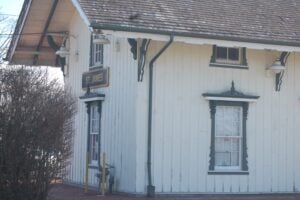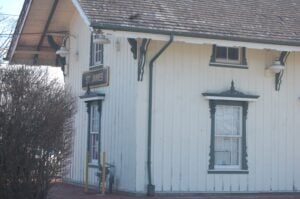
The historic St. James Train Station, built in 1873, is the oldest surviving station building constructed for the Long Island Rail Road. Photo: Brian Kachejian.
For generations of Long Islanders, the railroad station was the first building they saw when they came home from work and the last one they saw when they left for the city in the morning. Long before the elevated platforms, electronic signs, and glass shelters of the modern Long Island Rail Road appeared, passengers bought their tickets from station agents working inside little wooden depots and substantial brick buildings. Some of those buildings have survived for well over a century.
The Long Island Rail Road was chartered in 1834. Its original ambition was to establish a rail and steamship connection between New York and Boston, a plan that brought the railroad all the way to Greenport in 1844. Over the following decades, the railroad and its predecessors expanded along the North Shore, South Shore, and into the Hamptons. Communities grew around their stations, farmers shipped produce to city markets, and summer visitors discovered places that had previously been difficult to reach.
The railroad’s transformation into a suburban commuter system brought enormous changes to its architecture. Many stations disappeared when tracks were elevated or when new platforms and buildings replaced older facilities. Others survived because residents understood that a railroad depot was more than a place to catch a train. It was part of the history of their town.
Here are 25 historic railroad stations in Nassau and Suffolk counties whose old station buildings survive. Several have been adapted for museums or municipal purposes, while others continue to stand beside active railroad platforms. The dates identify the surviving buildings or their principal historic construction, rather than simply the year when trains first stopped in the community.
1. St. James Station
County: Suffolk
Branch: Port Jefferson
Historic building: 1873
When the railroad reached St. James in 1873, the community initially had little more than a stopping point along the tracks. Local residents raised money to build a proper depot, and members of the Smith family donated land. Carpenter Calvin L’Hommedieu completed the station that fall. Its modest wooden construction, broad roof, and decorative trim recall a time when the surrounding countryside was still largely agricultural.
As the railroad brought summer visitors and new residents to St. James, Lake Avenue developed into a commercial center. The station has survived as the oldest standing station house built for the Long Island Rail Road itself, although the former Hewlett depot is older. Its preservation is especially remarkable considering how many other wooden LIRR depots have vanished. We have also documented the building in our history of the St. James Train Station.
2. Hewlett Station
County: Nassau
Branch: Far Rockaway
Historic building: 1870
The oldest surviving railroad depot associated with the LIRR was actually constructed by one of its predecessors, the South Side Railroad of Long Island. Service began in the Hewlett area in 1869, and the surviving wooden depot dates to 1870. The stop was briefly known as Cedar Grove before acquiring the Hewlett name, reflecting the importance of the family that had long been associated with the area.
The little depot served passengers for more than 130 years. A modern station building opened across Franklin Avenue in 2003, ending the original depot’s role as the active passenger station. The old structure remained standing and was subsequently used by a taxi business. It is a rare physical reminder of the separate South Shore railroad that eventually became part of the much larger Long Island Rail Road system.
3. Sea Cliff Station
County: Nassau
Branch: Oyster Bay
Historic building: Late 1860s; rebuilt in 1888
Despite its name, Sea Cliff Station stands just outside the village of Sea Cliff in the city of Glen Cove. Railroad service reached the area in 1867. The station developed into an important gateway to the North Shore summer resort, and the depot underwent substantial rebuilding in 1888. Its red brick walls, gabled roof, and ornamental wooden canopy details make it one of the railroad’s most recognizable Victorian buildings.
Summer visitors once continued from the railroad to the hotels, cottages, and waterfront attractions of Sea Cliff by carriage and later by trolley. The depot was added to the National Register of Historic Places in 1988 as part of the documentation of Sea Cliff’s resort heritage. Trains still stop beside the historic building, preserving a connection to the era when vacationers discovered the village by rail.
4. Oyster Bay Station
County: Nassau
Branch: Oyster Bay
Historic building: 1889; enlarged in 1902
The railroad extended its line from Locust Valley to Oyster Bay in 1889. Its station subsequently became associated with one of the most famous residents of Long Island, Theodore Roosevelt. During his presidency, Roosevelt regularly traveled between his home at Sagamore Hill and other destinations by railroad. The depot was enlarged in 1902, during the first years of his presidency, giving it much of the appearance familiar today.
The LIRR transferred passenger operations to a new platform in 1999. Rather than demolishing the old station, preservationists worked to establish the Oyster Bay Railroad Museum there. Listed on the National Register in 2005, the brick and half-timbered depot now interprets the history of the railroad and its presidential passenger. Few Long Island train stations can claim such a direct connection to the White House.
5. Farmingdale Station
County: Nassau
Branch: Main Line (Ronkonkoma service)
Historic building: 1896
Farmingdale has been connected to the railroad since the 19th century, when the Main Line helped open the interior of Long Island to commerce and development. The surviving station building dates to 1896. Its brick construction, deep roof overhangs, and decorative details distinguish it from the modern platform structures found elsewhere along the line. The depot underwent alterations in the early 20th century as passenger traffic increased.
The station’s location near the village’s commercial center made it an important part of daily life as Farmingdale developed from a rural settlement into a suburban community. The depot was listed on the National Register of Historic Places in 1991. Even with the changes brought by electrification and modern commuter operations, the old building remains beside the tracks, recalling the Main Line’s earlier architectural character.
6. Greenport Station
County: Suffolk
Branch: Main Line (Greenport service)
Historic building: 1892
Greenport was the eastern terminus of the original Long Island Rail Road in 1844. At the time, the railroad envisioned passengers continuing to New England by steamship. Although that long-distance transportation scheme eventually lost its advantage to competing routes, Greenport remained an important railroad and maritime community, with connections to local ferries and the agricultural economy of the North Fork.
The surviving brick passenger station and associated freight facilities date largely to 1892. The complex includes a historic turntable, which once allowed locomotives to reverse direction at the end of the line. Today the passenger building houses the East End Seaport Museum, while the Railroad Museum of Long Island occupies the former freight facilities nearby. Trains continue to serve Greenport, making this one of the finest surviving examples of a nineteenth-century railroad terminal on Long Island.
7. East Hampton Station
County: Suffolk
Branch: Montauk
Historic building: 1895
The arrival of the railroad in East Hampton in 1895 helped accelerate the village’s development as a summer destination. The surviving brick depot was built that year, with a broad hipped roof and decorative supports extending over the passenger areas. Its compact size reflects the requirements of a rural railroad station before the extraordinary growth of the Hamptons as a resort region.
The station is significant for more than its age. Its historic ticket office, waiting-room features, and canopy design illustrate how the railroad accommodated passengers at the turn of the twentieth century. It was added to the National Register of Historic Places in 2000. While the surrounding community has changed considerably, passengers arriving in East Hampton still encounter the same distinctive building that welcomed visitors in the late 1800s.
8. Southampton Station
County: Suffolk
Branch: Montauk
Historic building: 1902
Rail service reached Southampton in 1871, helping turn the village into one of Long Island’s premier summer destinations. The present historic station house replaced an earlier depot in 1902. Its substantial construction reflects the growth of passenger traffic during the period when wealthy New Yorkers were building elaborate summer residences along the South Fork.
For decades, passengers traveled to Southampton on trains that included premium parlor-car accommodations. The depot’s waiting room, with its fireplace and traditional seating, was a reminder of the attention once given to the comfort of railroad travelers. The historic building is a contributing property in Southampton’s historic district and remains part of a station serving modern passengers.
9. Wantagh Station
County: Nassau
Former branch: Montauk, served by Babylon Branch trains
Historic building: 1885
The old Wantagh depot dates to 1885 and originally stood beside the railroad tracks in a community that was still developing along the South Shore. Its wooden walls and ornamental trim belong to an era when local station buildings were among the most important public gathering places in a town. Residents could collect parcels, meet arriving relatives, and purchase tickets there.
When plans to elevate the tracks threatened the station, residents formed the Wantagh Preservation Society in 1965. The building was moved the following year and restored to resemble its appearance in 1904. It opened as a museum in 1982 and now stands beside a preserved railroad parlor car and a recreated post office. The original depot survives at the museum grounds on Wantagh Avenue, apart from the modern station.
10. Lindenhurst Station
County: Suffolk
Former branch: Montauk, served by Babylon Branch trains
Historic building: 1901
The South Side Railroad reached the area that became Lindenhurst in 1867. The community was subsequently known as Breslau before adopting the Lindenhurst name in 1891. Its earlier depot was destroyed by fire in January 1901, and a replacement opened that March. The new building’s wide eaves and distinctive roof gave it a character quite different from many other South Shore stations.
When the railroad elevated its tracks in the late 1960s, the depot faced demolition. The Lindenhurst Historical Society secured its preservation, and in 1968 the building was moved to Irmisch Historical Park. Its former ticket office, stove, and railroad exhibits preserve the atmosphere of the old station. A freight house and caboose also survive at the museum, helping visitors understand the railroad’s importance to the village.
11. Malverne Station
County: Nassau
Branch: West Hempstead
Historic building: Early 1910s (possibly 1909)
Malverne was once known as Norwood, a largely agricultural community with relatively few commuters. The name changed in 1913, around the time the surrounding area began to develop as a residential suburb. The modest station house survives from the early years of that transformation. Historical accounts differ on whether it was constructed in 1909 or 1913.
In the early twentieth century, the West Hempstead Branch carried passengers between developing communities using unusual battery-powered railroad cars before conventional electrification arrived in 1926. Malverne’s depot witnessed that transition and the growth of a neighborhood around its tracks. It remains an uncommon surviving early station building on a branch where many other historic facilities have disappeared.
12. Roslyn Station
County: Nassau
Branch: Oyster Bay
Historic building: 1887
The railroad reached Roslyn in 1865, and a modest wooden station served the community before the present brick depot opened in 1887. The new building featured an elaborate Victorian exterior and covered passenger areas. It also helped stimulate commercial development around the tracks in Roslyn Heights, some distance from the older village center near the harbor.
The building was modernized in the 1920s, and the writer Christopher Morley later objected to the stucco that had been applied over its brickwork. Preservation efforts in the 1980s restored the station’s Victorian appearance, and the structure was relocated a short distance as the surrounding station grounds were redeveloped. In October 2026, historic photographs of Roslyn’s transportation history were installed inside the depot, bringing the story of the station back into the building itself.
13. Mineola Station
County: Nassau
Branch: Main Line and Oyster Bay services
Historic building: 1923
Mineola is one of the oldest railroad communities in Nassau County. Service reached the area in 1837, and the station became a major junction linking the Main Line with other routes. Earlier depots were replaced as the railroad expanded. The present historic station house opened on September 22, 1923, on the north side of the tracks.
The building survived a century of substantial changes, including electrification in 1926 and the modern expansion of the Main Line. In September 2023, the station’s centennial was marked by the reopening of upgraded facilities that included the renovated historic building, longer platforms, and improved pedestrian connections. It is an excellent example of an old depot remaining in place even as the railroad around it becomes increasingly modern.
14. Manhasset Station
County: Nassau
Branch: Port Washington
Historic building: 1924–1925
When the railroad extended service beyond Great Neck to Port Washington in 1898, it transformed Manhasset’s accessibility to New York City. A small wooden station initially served the community. It was replaced in the mid-1920s by the larger brick building still standing near Plandome Road, designed in a Dutch Colonial Revival style.
The station was constructed at street level above the tracks, allowing passengers to reach the platforms without requiring trains to cross the road at grade. Improved railroad service encouraged the development of nearby residential communities, including Plandome and Munsey Park. The historic station house remains an architectural reminder of the era when the North Shore was becoming a major commuter region.
15. Mill Neck Station
County: Nassau
Former branch: Oyster Bay
Historic building: 1912 design; rebuilt in 1919
Mill Neck’s railroad stop initially served a relatively small community along the line to Oyster Bay. The station acquired the Mill Neck name in 1892. After a fire destroyed an earlier depot in 1911, local residents financed a handsome new station designed by architect Harrie T. Lindeberg. Another fire in 1918 resulted in further rebuilding the following year.
The railroad discontinued passenger stops at Mill Neck in March 1998, but the distinctive brick and stone building was spared. It subsequently became a center of village activity, accommodating municipal offices and postal facilities. Trains still travel past the former station on their way to Oyster Bay, but they no longer stop there. The building’s survival provides a particularly interesting example of a railroad depot finding a useful second life.
16. Riverhead Station
County: Suffolk
Branch: Main Line (Greenport service)
Historic building: 1910
The railroad reached Riverhead in 1844 as tracks were extended across eastern Long Island toward Greenport. The community subsequently became an important shipping point for the agricultural products grown on the East End. The surviving brick station house opened in 1910, replacing an earlier structure. Its grounds once included a locomotive turntable, water facilities, and other equipment required during the steam era.
The ticket agency closed in 1972, and the historic building later underwent renovation. Although its interior has experienced various uses and periods of vacancy, the old depot remains beside an active railroad stop. The nearby Railroad Museum of Long Island preserves additional reminders of Riverhead’s transportation history, including equipment from the railroad’s twentieth-century operations.
17. Garden City Station
County: Nassau
Branch: Hempstead
Historic building: 1898
Garden City’s railroad history is closely tied to Alexander Turney Stewart, the wealthy New York department store merchant who established the planned community in 1869. Stewart developed the Central Railroad of Long Island to provide transportation to the new town. The original Garden City depot opened in 1873 and was replaced by the present historic station building in 1898.
The station continued serving residents after Stewart’s railroad became part of the LIRR system. A monument to Stewart near the depot recalls the relationship between his transportation enterprise and his ambitious residential development. The surviving building, along with the nearby Cathedral of the Incarnation and the village’s older homes, remains part of the architectural landscape created around that nineteenth-century vision.
18. Nassau Boulevard Station
County: Nassau
Branch: Hempstead
Historic building: 1907
The Nassau Boulevard depot opened in 1907 during the development of the western section of Garden City. Railroad service was an important selling point for new residential properties in the area, and the station provided another connection to the expanding commuter network. Its distinctive cupola and traditional roofline helped give the relatively small building an architectural identity of its own.
The surrounding neighborhood continued to grow, and the relocation of Adelphi University to Garden City in 1929 brought another important institution within walking distance of the station. Although the railroad closed the ticket agency in 1996, the old depot was remodeled in 2005 and survives alongside the modern platform. It remains a reminder of the relationship between the railroad and the development of Garden City’s residential neighborhoods.
19. Northport Station
County: Suffolk
Branch: Port Jefferson
Historic building: 1927
The present Northport railroad station actually stands in East Northport. When the railroad extended its route toward Port Jefferson in the 1870s, the station along the new line became distinct from the earlier branch that reached the waterfront village of Northport. For years, a trolley helped connect the more distant railroad depot with the village.
The original station house at the present location was moved away in 1927 and replaced by the historic building that survives today. The depot underwent a restoration completed in 2019, retaining an appearance that recalls the railroad’s earlier years. Its location tells an interesting story about the way railroad construction influenced the growth of East Northport and changed transportation patterns around the older harbor community.
20. Port Jefferson Station
County: Suffolk
Branch: Port Jefferson
Historic building: 1903
The railroad reached Port Jefferson in 1873, providing another means of traveling to the North Shore harbor and connecting with its maritime businesses. The surviving station house dates to 1903, following the loss or replacement of earlier depots. By that time the railroad had already extended eastward to Wading River, with Port Jefferson becoming an intermediate point along the line.
The Wading River extension ceased regular service in 1938, and Port Jefferson once again became the terminus of the branch. The depot was restored and reopened in 2001 after substantial modernization of the station facilities. Its historic exterior remains a tangible link to the days when the tracks continued through Miller Place, Rocky Point, and Shoreham toward Wading River.
21. Bay Shore Station
County: Suffolk
Branch: Montauk
Historic building: 1912
Railroad service reached Bay Shore in 1868 under the South Side Railroad. Initially called Penataquit, the stop soon acquired the Bay Shore name. The surviving station building opened in July 1912, replacing an earlier depot. Its construction coincided with the growth of Bay Shore as a commercial center and a departure point for visitors traveling to the South Shore waterfront.
For generations of summer travelers, the railroad was the first part of a journey that might continue by ferry to Fire Island. Bay Shore also developed into an important community for year-round residents, and the station continued serving commuters. The historic depot remains beside modern railroad facilities, preserving a piece of the era when the South Shore’s resort economy was developing.
22. Glen Cove Station
County: Nassau
Branch: Oyster Bay
Historic building: 1895
Originally known as Nassau Station, the handsome Glen Cove depot opened in 1895 during the development of the North Shore’s Gold Coast estates. Wealthy residents sought a station closer to their homes and distinct from the existing Glen Street stop. Its brick architecture and spacious waiting room reflected the importance of the railroad to the surrounding estate community.
The station later acquired a place in Hollywood history. Audrey Hepburn and William Holden appeared there in the 1954 film Sabrina, in which Hepburn’s character returns from Paris. The station still stands, and its old waiting-room architecture and exterior recall the world of wealthy estate owners and their employees that inspired the film.
23. Port Washington Station
County: Nassau
Branch: Port Washington
Historic building: 1898
June 23, 1898, was a turning point in Port Washington’s history. That day the first railroad train arrived at the new terminus, completing an extension from Great Neck through Manhasset. The connection made it much easier for residents to travel to New York City and encouraged the growth of a new commercial district away from the village’s older waterfront.
The wooden depot was altered over the years, including the application of brick facing in 1930. A restoration associated with the railroad’s centennial in 1998 returned much of its earlier appearance. The historic station house remains at the end of the Port Washington Branch, where successive generations of commuters have begun and ended their journeys.
24. Great Neck Station
County: Nassau
Branch: Port Washington
Historic building: 1924–1925
Great Neck was the eastern end of its railroad line from 1866 until the extension to Port Washington opened in 1898. Several names were used for the station during its early years, including Brookdale and Thomaston. The surviving brick station house was built in 1924 and opened in 1925, replacing an earlier wooden depot.
Its Dutch Colonial Revival design includes a steep roof, dormers, and decorative wooden supports. In the 1930s, the railroad lowered the tracks to eliminate a street-level crossing, changing the relationship between the station and the surrounding downtown. The historic depot remains part of Great Neck Plaza, a commercial district whose growth was closely associated with railroad transportation.
25. Sayville Station
County: Suffolk
Branch: Montauk
Historic building: 1906
The first South Side Railroad trains reached Sayville in December 1868, and the village initially served as the eastern end of the line before the railroad continued to Patchogue. The early depot was eventually replaced by the present historic station building, which opened in the summer of 1906. A new freight house had been built nearby the previous year.
Sayville’s railroad connection helped establish the village as a commercial center and a gateway to the Great South Bay. Like Bay Shore, it became associated with journeys to Fire Island as well as with the everyday travel of local residents. The 1906 depot survived subsequent platform improvements and renovation. Its continued presence recalls a time when the railroad station was one of the most important buildings in the village.
Preserving Long Island’s Railroad History
It is easy to take the old station buildings for granted when rushing to catch a morning train. Yet these structures tell the story of how Long Island became the place we know today. Some are reminders of a rural island whose produce was shipped to New York City. Others recall the days of luxurious summer resorts, steam locomotives, and the early growth of commuter suburbs. The preservation of these buildings ensures that the railroad’s history remains visible in the communities it helped build.
For more Long Island railroad and local history, explore our articles on 12 Lost Long Island Rail Road Branches & Rail Lines, the historic St. James General Store, and 25 Famous People You Didn’t Know Were From the Town of Oyster Bay, New York.