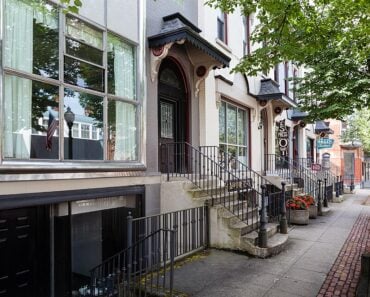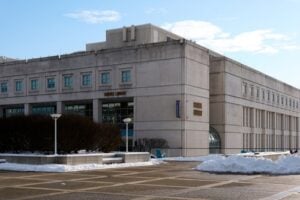
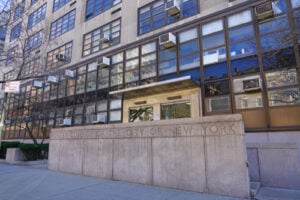
Hunter College of the City of New York in Manhattan. Photo by EQRoy / Shutterstock.com.
New York City has long been one of the world’s great college towns, although it rarely looks like one in the traditional sense. Its universities, conservatories, professional schools, and public colleges are woven directly into the streets of Manhattan, Brooklyn, Queens, and the Bronx. Students leave classrooms for auditions, internships, courtrooms, laboratories, theaters, museums, newsrooms, and music clubs, often discovering that the city itself becomes part of their education.
The twenty-five people in this article followed very different paths through higher education in New York City. Some earned degrees from Columbia, New York University, Queens College, City College, or Juilliard. Others attended only briefly before another opportunity pulled them away. A few arrived as already gifted performers and found teachers who helped shape their careers, while others discovered an entirely new direction on campus. From Barack Obama and Alexander Hamilton to Martin Scorsese, Miles Davis, Lady Gaga, and Adam Sandler, all twenty-five spent part of their college years studying in New York City.
Barack Obama
Barack Obama transferred to Columbia University in 1981 after spending his first two college years at Occidental College in California. At Columbia, he studied political science with a concentration in international relations and graduated in 1983. Obama later wrote and spoke about his New York years as a period of serious reading, introspection, and growing awareness of the economic and social divisions around him. After graduation, he eventually moved to Chicago and worked as a community organizer before attending Harvard Law School. Decades later, the Columbia graduate became the 44th president of the United States and the first African American to hold the office.
Martin Scorsese
Martin Scorsese grew up in New York City’s Little Italy and found the academic home for his love of movies at New York University. He earned his undergraduate degree from NYU’s Washington Square College in 1964 and later completed a master’s degree in 1968. One of the most important figures in his education was professor Haig Manoogian, whose encouragement helped Scorsese turn his fascination with cinema into a profession. During his student years, Scorsese made early short films and developed many of the visual and thematic interests that would later appear throughout his work. He eventually returned to NYU as a teacher before building one of the most acclaimed directing careers in American film history.
Lady Gaga
Before the world knew her as Lady Gaga, Stefani Germanotta attended New York University’s Tisch School of the Arts through the CAP21 musical theater program. She entered NYU as a teenager and studied performance, acting, music, and writing while also beginning to establish herself in New York’s downtown music scene. Germanotta ultimately left school before earning a degree so she could devote herself fully to songwriting and live performance. That decision took her into the clubs of the Lower East Side, where the performer who would become Lady Gaga began developing her public identity. NYU Tisch continues to recognize her among the school’s prominent alumni.
Robin Williams
Robin Williams came to New York City in the 1970s to study acting at the Juilliard School. He entered an extraordinarily competitive drama program and became close friends with fellow student Christopher Reeve. Under the direction of John Houseman and other Juilliard teachers, Williams studied classical acting, voice, movement, and stage technique, even as his astonishing improvisational ability already set him apart from his classmates. Williams left Juilliard before earning a degree and returned to California, where his stand-up comedy career rapidly accelerated. The training he received in New York remained part of the remarkable range that later allowed him to move effortlessly between manic comedy and serious dramatic roles.
Alexander Hamilton
Alexander Hamilton arrived in New York as a young immigrant from the Caribbean and enrolled at King’s College, which later became Columbia University, in 1774. Hamilton studied while the American colonies moved rapidly toward revolution. As a student, he studied mathematics and political thought and published arguments supporting the Continental Congress. His college career ended before graduation when the Revolutionary War disrupted King’s College and Hamilton entered military service. He later became one of the principal authors of The Federalist Papers, the nation’s first secretary of the Treasury, and one of the most consequential political thinkers of the early United States.
Miles Davis
Miles Davis arrived in New York City in 1944 and enrolled at Juilliard to study trumpet and music. Formal training mattered, but the broader education Davis wanted happened at night in the city’s jazz clubs. He sought out Charlie Parker and other musicians connected to the emerging bebop movement while continuing his studies at Juilliard. Davis eventually left the school without graduating and fully committed to jazz. His time in New York placed him at the center of one of the twentieth century’s great musical revolutions, launching a career in which he would repeatedly change the direction of modern jazz.
Spike Lee
After graduating from Morehouse College, Spike Lee returned to New York and entered the graduate film program at New York University’s Tisch School of the Arts. He earned his Master of Fine Arts in 1982. His graduate work helped sharpen an independent filmmaking style rooted in New York neighborhoods, Black culture, politics, music, and street life. Lee’s thesis film, Joe’s Bed-Stuy Barbershop: We Cut Heads, earned major recognition before he moved into feature films. He later returned to NYU as a professor and eventually became artistic director of Tisch’s Graduate Film Program, making his relationship with the university extend far beyond his years as a student.
Paul Simon
Paul Simon attended Queens College in Flushing and graduated in 1963 with a degree in English. By the time he reached college, Simon had already been performing with his childhood friend Art Garfunkel under the name Tom & Jerry. His Queens College years gave him a traditional liberal arts education while he continued pursuing songwriting and recording. Simon briefly attended Brooklyn Law School after graduation but soon chose music instead. His writing eventually became the foundation of Simon & Garfunkel and a celebrated solo career that made him one of the most important American songwriters of his generation.
Art Garfunkel
Art Garfunkel attended Columbia University while continuing the musical partnership he had begun years earlier with Paul Simon. He initially enrolled in architecture, later returned to Columbia College, and earned his bachelor’s degree in art history in 1965. Garfunkel also performed with Columbia’s a cappella group, the Kingsmen, while developing the extraordinary tenor voice that became central to Simon & Garfunkel. His academic interests continued beyond the bachelor’s degree, but music soon became the center of his professional life. Songs including “The Sound of Silence,” “Mrs. Robinson,” and “Bridge over Troubled Water” turned the Queens-raised singer and Columbia student into an international star.
Jerry Seinfeld
Jerry Seinfeld transferred to Queens College after starting college at SUNY Oswego and graduated from Queens College in 1976 with a degree in communications and theater. During college, Seinfeld became increasingly interested in the mechanics of comedy and began experimenting with performance. Soon after graduation, he committed himself to the New York stand-up circuit, where years of club work gradually established his observational style. That career eventually led to Seinfeld, the landmark television comedy he created with Larry David. Queens College remains an important part of the New York story behind one of America’s most successful comedians.
Bernie Sanders
Bernie Sanders began his college education at Brooklyn College in 1959. Born and raised in Brooklyn, Sanders encountered an active campus political culture while studying there and occasionally attended meetings with his older brother, who had been involved in student government. Sanders remained at Brooklyn College for one year before transferring to the University of Chicago in 1960. His most intensive student activism came after the transfer, but Brooklyn College marked the beginning of his higher education. Sanders later became mayor of Burlington, a U.S. representative, a U.S. senator from Vermont, and a nationally prominent presidential candidate.
Colin Powell
Colin Powell attended the City College of New York and graduated in 1958 with a degree in geology. The son of Jamaican immigrants, Powell later described City College as the place where he found his direction. That happened through the Reserve Officers’ Training Corps. Powell joined ROTC, discovered an aptitude for military leadership, and received his commission as a second lieutenant when he graduated. He went on to a thirty-five-year Army career, rising to four-star general and chairman of the Joint Chiefs of Staff before becoming the first Black United States Secretary of State. His long relationship with City College eventually led to the naming of the Colin Powell School for Civic and Global Leadership.
Tony Kushner
Playwright Tony Kushner attended two major New York City universities. He graduated from Columbia College in 1978, where he studied medieval studies, and later entered New York University’s graduate directing program. Kushner earned his Master of Fine Arts from NYU Tisch in 1984. The combination of literature, history, politics, religion, and theatrical training that shaped his education later became central to his work as a dramatist. His masterpiece Angels in America won the Pulitzer Prize for Drama and established Kushner as one of the most important American playwrights of his generation.
Yo-Yo Ma
Yo-Yo Ma’s New York education began early. After moving from Paris to New York as a child, the young cellist studied at Juilliard with renowned teacher Leonard Rose. After finishing high school early, Ma briefly attended Columbia University while continuing his musical studies, but the experience lasted less than a semester. He ultimately chose a broader liberal arts education at Harvard, where he graduated in 1976. Even so, his years of training in New York provided an essential foundation for a career that would make him one of the most celebrated classical musicians in the world.
Neil Diamond
Neil Diamond attended New York University as a pre-med student on a fencing scholarship. The Brooklyn native was a serious competitive fencer and was part of NYU’s championship-era fencing program, but his growing interest in songwriting increasingly competed with his academic work. Diamond left NYU only a few credits short of completing his degree after receiving an offer to write songs professionally for a music publisher. The early songwriting years were difficult, but persistence eventually produced hits such as “Solitary Man,” “Cherry, Cherry,” “Sweet Caroline,” and “Cracklin’ Rosie.” His abandoned medical studies became one of the more remarkable detours in New York popular music history.
Woody Allen
Woody Allen briefly attended both New York University and the City College of New York during the 1950s. After graduating from Brooklyn’s Midwood High School, Allen enrolled at NYU and studied film and communications but left after a short and academically unsuccessful stay. He then attended City College for an even shorter period before leaving formal education behind. By then, Allen was already writing jokes professionally and concentrating increasingly on comedy. His career eventually expanded from gag writing and stand-up into screenwriting, acting, and filmmaking, with New York City becoming the setting for many of his best-known films.
Philip Glass
Composer Philip Glass came to New York after completing his undergraduate studies at the University of Chicago and entered the Juilliard School in the late 1950s. At Juilliard, he studied composition with teachers including Vincent Persichetti and William Bergsma. Glass earned a diploma in composition in 1960 and a Master of Science degree in 1962. His formal education gave him a strong foundation in classical composition, even though his later work moved far beyond conventional academic expectations. Glass became one of the most influential composers of the late twentieth century through works including Einstein on the Beach and an enormous body of operas, symphonies, chamber music, and film scores.
Joy Behar
Joy Behar attended Queens College and graduated in 1964 with a bachelor’s degree in sociology. She later earned a master’s degree in English education at Stony Brook University and worked as a teacher before entering comedy. Behar did not become a professional stand-up comedian until later in adulthood, making her career path very different from many performers who begin chasing entertainment work immediately after college. She eventually became one of the original co-hosts of ABC’s The View and built a long career combining comedy, conversation, politics, and cultural commentary. Her Queens College education formed the first stage of a professional journey that took several unexpected turns.
Jonas Salk
Jonas Salk was born in New York City and was the first in his family to attend college. He graduated from the City College of New York in 1934 and then attended the New York University School of Medicine, earning his medical degree in 1939. Salk chose research rather than the conventional path of private medical practice and eventually devoted his career to studying infectious disease. His work led to the first successful polio vaccine, one of the twentieth century’s most important medical achievements. He completed both his undergraduate and medical education in New York City.
Donald Judd
Donald Judd enrolled in Columbia University’s School of General Studies in 1950 while also attending classes at the Art Students League. He graduated cum laude from Columbia in 1953 with a bachelor’s degree in philosophy and later returned to study art history at the graduate level. Judd did not complete the graduate degree, choosing instead to focus more and more on art and criticism. His intellectual background remained important to the rigorous way he thought and wrote about art. Judd eventually became one of the most influential American artists of the postwar period, although he famously resisted the “Minimalist” label commonly applied to his work.
Ray Romano
Ray Romano attended Queens College and studied accounting before comedy became his profession. Unlike Jerry Seinfeld, another Queens College comedian, Romano did not earn a degree there. He attended only briefly and spent years working ordinary jobs before his stand-up career began to gather momentum. Romano eventually became a regular presence on the New York comedy circuit and earned national attention through television appearances. That success led to Everybody Loves Raymond, the enormously popular sitcom that drew heavily on the family life and Queens sensibility that had shaped him.
Paul Robeson
Paul Robeson entered Columbia Law School after an extraordinary undergraduate career at Rutgers University. While studying law in New York, Robeson supported himself in part through singing, acting, teaching, and professional football. He earned his law degree from Columbia in 1923 and briefly worked at a New York firm, but the racism he encountered in the legal profession helped convince him to leave law behind. Robeson instead built an international career as a concert singer and actor while becoming one of the most outspoken political and civil rights activists of his era. His Columbia years unfolded alongside the Harlem Renaissance, placing him in one of twentieth-century New York’s most important cultural settings.
Oliver Stone
Oliver Stone entered New York University’s undergraduate film program after serving in the United States Army in Vietnam. At NYU, one of his teachers was Martin Scorsese, then a young filmmaker teaching film production. Stone used his student work to begin processing experiences that later became central to his movies, including the Vietnam War. He graduated from NYU Tisch in 1971 and went on to become an Academy Award-winning screenwriter and director. Films including Platoon, Born on the Fourth of July, JFK, and Nixon established him as one of the most provocative American filmmakers of his generation.
Mahershala Ali
Mahershala Ali came to New York University for graduate acting training after completing his undergraduate education at Saint Mary’s College of California. He earned his Master of Fine Arts from NYU Tisch’s Graduate Acting program in 2000. Ali later credited the program’s teachers with emphasizing that acting was about serving the character and the story rather than the performer’s ego. That training became part of a career that moved through television, theater, and film. Ali eventually won two Academy Awards for his performances in Moonlight and Green Book.
Adam Sandler
Adam Sandler enrolled in New York University’s Tisch School of the Arts in 1984 and graduated from the drama program in 1988. While still a student, Sandler studied at the Lee Strasberg Theatre and Film Institute and began working regularly in comedy clubs. His NYU years also introduced him to several people who later became longtime creative collaborators, including writer Tim Herlihy. Only a few years after graduation, Sandler joined the cast of Saturday Night Live, beginning a film and comedy career that would make him one of the most commercially successful comedians of his generation. NYU honored Sandler’s career repeatedly in later years, and he has remained closely identified with Tisch.
New York City’s colleges did not produce these careers in any single way. Some of these students earned degrees, some transferred, and some left before graduating. What they shared was studying in a city where higher education often existed only a subway ride from the industries, institutions, and cultural movements they hoped to enter. Columbia, NYU, Queens College, City College, Brooklyn College, Juilliard, and the city’s professional schools became part of stories that eventually reached far beyond campus.
For more stories about the people and forces that shaped New York, read Why Is New York City So Important? How Gotham Built America’s Economy, explore What Is Greenwich Village Famous For? A History & Visitor Guide, and meet 25 Famous People You Didn’t Know Were From Manhattan.