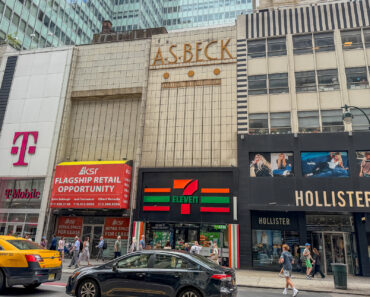

Stand on the corner of 34th Street and Fifth Avenue on any given day, and even if you were born in this city, as I was, you cannot help but stand there in awe of your surroundings. I was born at Manhattan General Hospital in 1961. I have lived here for 65 years, yet every day I still discover something new, something magical, a piece of New York that holds me tightly to this city’s core and will never let me go. You can feel the hum of the city beneath your feet. Taxicabs fill the streets, though Uber drivers have now largely taken over the scene once dominated by yellow medallion cabs. Pedestrians crowd the sidewalks in numbers that would paralyze most American downtowns. Meanwhile, the newer bike lanes are filled with delivery drivers working for gig apps, often posing a greater threat to pedestrians than cars do.
Construction cranes rotate overhead, adding new floors to a skyline that never seems to stop reaching. New York City is not just a city. It is the financial, cultural, and historic heartbeat of the United States, and for more than three centuries it has driven the American economy forward in ways no other city can claim.
New York City matters because it is one of the world’s leading financial capitals, the historic gateway for millions of immigrants, the birthplace of the federal government under the Constitution, and a central engine of United States economic expansion for more than 300 years. From a small Dutch trading outpost on the southern tip of Manhattan to the towering global metropolis of today, New York has shaped the destiny of the nation at nearly every critical turning point. This is the story of how that happened, and why it still matters.
ClassicNewYorkHistory.com exists to document, preserve, and celebrate the authentic, living history of the five boroughs and New York State. Beyond the glossy tourist brochures and the familiar postcard images, there is a deeper New York that most visitors never see.
This is a city built by immigrants, financed by bold speculators, engineered by visionaries, and continuously reinvented by generations of people who arrived with nothing and helped build the most powerful city in the world. Those of us who grew up here know it in our bones. The rest of this article is our attempt to prove it.
From Fur Trading Outpost to Financial Empire: The Dutch and Colonial Foundation
New Amsterdam and the Natural Deepwater Harbor
New York Harbor is one of the finest natural harbors on earth, a sheltered deepwater anchorage at the mouth of the Hudson River with easy access to the Atlantic Ocean. Its protected waters and direct ocean access supported year-round commerce, while the harbor and surrounding estuary were shaped by the glaciers and rising waters of the last Ice Age.
That natural gift would prove central to the city’s destiny, but it is worth remembering that greatness took time. During the colonial era, New York remained behind Boston and Philadelphia as a commercial port. The harbor’s advantages were real. The dominance that would one day define the city was still a long way off.
In 1624, the Dutch West India Company dispatched its first colonists to establish the trading colony of New Netherland. The company had been chartered on June 3, 1621, with one primary aim: to exploit the North American fur trade. The first thirty families arrived in 1624, settling at several locations including Fort Orange near present-day Albany and Governors Island.
The settlement on Manhattan Island itself followed in 1625 and 1626, when the colonists were consolidated there and Fort Amsterdam rose at the island’s southern tip. Unlike the religiously motivated Puritan colonies of New England, New Amsterdam was built on commerce from day one. That distinction matters more than almost anything else in this story.
The Dutch West India Company accepted non-Calvinists as colonists to encourage trade and immigration, granting them freedom of conscience, though not full public worship rights. This pragmatic tolerance was commercially motivated rather than ideological, and it produced a remarkably diverse population. By 1643, eighteen languages could be heard on the streets of New Amsterdam.
Business first. Everybody welcome, more or less, as long as the trade kept moving. Four centuries later, that is still the essential character of New York.
The Wall on Wall Street and Early Trade
In 1653, the Dutch settlers of New Amsterdam built a wooden palisade wall across the northern boundary of their settlement, running from the East River to the Hudson. The wall was completed by May 1, 1653, and it gave Wall Street its name.
Its purpose was purely defensive. The Anglo-Dutch Wars had begun in 1652, and hostilities between England and the Netherlands were spilling into North America. Fearing an English attack, the Dutch built the wall from sharpened logs and dirt, roughly 2,340 feet long and nine feet tall, complete with stone bastions and an earthen embankment.
Earlier fortifications folded into the wall had been raised against possible attacks by Native Americans and pirates. The wall itself came down in 1699. The street that carried its name would go on to become the most famous financial address on the planet.
Lower Manhattan grew into a major center of colonial Atlantic trade, though it was not yet the giant it would become. Under Dutch rule, New Amsterdam became a significant North Atlantic port by the 1650s. Under English rule after 1664, New York stood alongside Boston and Philadelphia as one of the three great northern colonial seaports.
Still, honesty demands perspective. New York was only the third-largest American port at the time of the Revolution, behind Boston and Philadelphia. Its rise to Atlantic dominance came later. By the early twentieth century, the Port of New York had become the busiest in the world, a position it retained for decades. The colonial period laid the foundation. The explosion was still to come.
America’s First Capital Under the Constitution
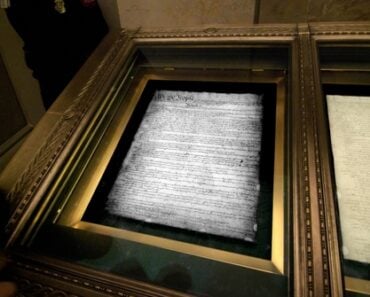
On April 30, 1789, George Washington took the oath of office as the first President of the United States on the second-floor balcony of the original Federal Hall, at the corner of Wall and Nassau Streets. Chancellor Robert Livingston of New York administered the oath.
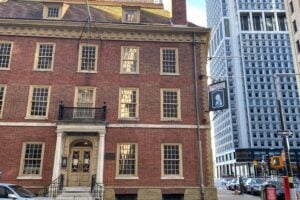
The structure was built in 1700 as New York City Hall and was later remodeled by Pierre L’Enfant for the new federal government. It served as the first Capitol building of the United States under the newly ratified Constitution, housing the inaugural Congress, the first Supreme Court, and the earliest offices of the Executive Branch. The original building was later demolished; today’s Federal Hall National Memorial occupies the site at 26 Wall Street.
New York City served as the national capital under the Constitution from 1789 until the federal government moved to Philadelphia in 1790 under the Residence Act, and then to Washington, D.C., in 1800. The National Park Service describes Federal Hall as the birthplace of American government, and the Library of Congress confirms that the federal government under the new Constitution first met there in the spring of 1789.
Think about that for a moment. The American federal government was born on Wall Street. New York City can make that claim with complete accuracy, and no other city can.
The Erie Canal Boom of 1825: How New York City Supercharged American Commerce
The Erie Canal officially opened on October 26, 1825, when Governor DeWitt Clinton boarded the packet boat Seneca Chief in Buffalo and began the long voyage down to New York City. The canal ran 363 miles, 40 feet wide at the top, 28 feet wide at the bottom, and 4 feet deep, with 83 locks along the way.
Construction had begun on July 4, 1817, and took eight years to complete at a cost of roughly $7 million. When Clinton reached New York Harbor on November 4, 1825, he poured a keg of Lake Erie water into the Atlantic Ocean in a ceremony remembered as the Wedding of the Waters, joining the Great Lakes to the sea.
The canal connected the Hudson River at Albany to Lake Erie at Buffalo, creating the first navigable water route linking the Atlantic Ocean, by way of New York Harbor and the Hudson, to the upper Great Lakes above Niagara Falls. It threaded through the Mohawk River gap, a rare low-elevation passage through the Appalachian chain. Geography handed New York the key, and New Yorkers turned it.
DeWitt Clinton, remembered as the Father of the Erie Canal, championed the project through his entire political career. He served two terms as governor of New York, from 1817 to 1822 and again from 1825 to 1828. He was governor when construction began in 1817, won re-election in 1824, and returned to office in January 1825, nine months before the canal opened.
His opponents mocked the project as Clinton’s Ditch, Clinton’s Folly, and Clinton’s Big Ditch. Clinton had served on the Erie Canal Commission from 1810 to 1824 and personally persuaded the legislature to appropriate the $7 million for construction. His stubbornness in the face of ridicule redrew the economic map of the United States. Every New York schoolkid should know his name.
Outpacing Philadelphia and Boston
Before 1825, Philadelphia was America’s financial and banking center. Philadelphia was home to the first United States commercial bank, chartered in 1782, the First Bank of the United States, established in 1791, and the country’s first stock exchange, founded in 1790.
New York, however, had already overtaken its rivals in commerce and trade. By the late 1790s, the city had surpassed Philadelphia and Boston in import and export volumes, and by the opening years of the nineteenth century, it had become the nation’s largest city.
Philadelphia remained the nation’s principal banking center into the early nineteenth century, but New York’s growing trade, securities market, and banking network steadily shifted financial power toward Wall Street. The expiration of the Second Bank of the United States charter in 1836 strengthened that shift. The Erie Canal accelerated New York’s commercial dominance rather than creating it from scratch. The groundwork had already been laid by the natural harbor and the city’s hungry merchant class.
The numbers behind the canal still astonish. The Erie Canal cut shipping costs by roughly 90 percent, the figure most consistently cited by authoritative sources. The cost of moving a ton of freight from Buffalo to New York City dropped from about $100 per ton overland by wagon to roughly $6 to $10 per ton on the canal.
Transit time fell from about three weeks to 6 to 8 days. Within ten years, costs fell further still, to as low as $3 to $4 per ton. The canal made New York City the dominant port for western trade, the great funnel through which midwestern flour, grain, timber, and raw materials flowed toward domestic and European markets.
By 1835, the Port of New York handled more tonnage than Boston, Baltimore, and Philadelphia combined. By 1860, roughly two-thirds of all United States imports came through New York Harbor. The city’s share of national imports rose from 38 percent in 1821 to 62 percent in 1836. Manufactured goods flowed west through the canal while the wealth of the American interior flowed east into New York for export. The city never looked back.
The Rise of the NYC Port and Merchant Dynasties
South Street Seaport, on the East River waterfront of lower Manhattan, became one of the busiest shipping hubs in the world during the first half of the nineteenth century. The area’s maritime history reaches back to 1625, when the Dutch West India Company established a trading post there.
The seaport’s rise accelerated with the founding of the Black Ball Line in 1818, the first regular transatlantic packet service, and the opening of the Erie Canal in 1825. During its peak years, roughly 1815 to 1860, the seaport was known simply as the Street of Ships. By the end of the Civil War, the Port of New York was the nation’s dominant harbor and one of the busiest ports in the world.
The commercial empires of John Jacob Astor and Cornelius Vanderbilt both centered on New York City, though the two men worked different territories. Astor built a fur trade empire, founding the American Fur Company in 1808 and shipping furs to Europe and China. He later pivoted to real estate and became America’s first multimillionaire on the strength of Manhattan property.
Vanderbilt built a shipping and transportation empire. He started with ferry services around New York Harbor in 1810, expanded to steamship lines on the Hudson River and Atlantic coast through the 1820s and 1840s, and pivoted to railroads in the 1860s. His vast fleet earned him the nickname the Commodore. Both men worked out of New York, and both helped transform it into the commercial capital of the Western Hemisphere.
New York’s commercial banking sector grew directly out of its port. As maritime commerce expanded in the late eighteenth and early nineteenth centuries, merchants who had once financed their ventures on their own increasingly needed backing for foreign trade. Financing cargoes, juggling exchange rates in pounds, shillings, and a jumble of foreign coins, and extending credit across oceans all demanded merchant banks.
The City Bank of New York, chartered in 1812 and later known as National City Bank, the predecessor to Citibank, was founded to serve exactly these New York merchants. The Erie Canal’s opening in 1825 dramatically expanded trade volume and pushed the banking sector into overdrive. New York’s banks grew to surpass Philadelphia’s precisely because of the port trade advantage, amplified by the canal.
The World’s Financial Capital: Wall Street, Stocks, and Global Banking
The Buttonwood Agreement and the NYSE
On May 17, 1792, 24 stockbrokers signed the Buttonwood Agreement, named for the buttonwood tree, also known as the American sycamore, traditionally associated with their outdoor meetings near 68 Wall Street. The agreement organized securities trading and set commission rules among the signers.
Whether the agreement was literally signed beneath the tree is a matter of tradition, since the brokers had also met at Corre’s Hotel. The date and the count of 24 signers, however, are firmly documented. This modest agreement is recognized as the founding document of what became the New York Stock Exchange, and the NYSE still celebrates May 17, 1792, as its birthday.
In 1817, the brokers adopted a constitution creating the New York Stock and Exchange Board, renamed the New York Stock Exchange in 1863, the direct institutional forerunner of today’s NYSE.
The New York Stock Exchange remains the world’s largest stock exchange by the market value of its listed companies. New York City is also home to Nasdaq, which is based in Manhattan and has its MarketSite at 4 Times Square.
Together, the NYSE and Nasdaq remain the world’s two largest stock exchanges by listed-company market value. No other city houses both of them. That concentration of capital is the bedrock of New York’s claim as the financial capital of the world.
Capitalizing American Innovation
Wall Street firms, above all J.P. Morgan and Company, financed America’s railroads, steel mills, electrification, and eventually its technology giants. Morgan reorganized and consolidated major railroad systems, while Drexel, Morgan and Company took a leading role in financing America’s rail network.
In 1901, J.P. Morgan and Company financed the formation of the United States Steel Corporation, the first billion-dollar corporation in history, consolidating Andrew Carnegie’s steel business. In 1892, Morgan financed the creation of General Electric by merging Edison General Electric and Thomson-Houston, helping drive the electrification of America.
In our own era, Wall Street’s exchanges list and raise capital for the world’s largest technology companies, including Apple, Microsoft, Nvidia, Alphabet, Amazon, and Meta. For more than a century, the capital that built America has flowed through the same few blocks of lower Manhattan.
The Federal Reserve and Global Financial Supremacy
World War I shifted the center of global finance decisively toward New York. European belligerents, especially Britain and France, first sold their American securities back to United States buyers to raise war funds, then borrowed heavily from American banks.
J.P. Morgan and Company became the principal American purchasing agent and financial intermediary for Britain and France, arranging enormous Allied loans and bond issues. European nations also shipped gold across the Atlantic, and the United States changed from the world’s largest debtor nation before the war into its largest creditor nation by the war’s end.
By the 1920s, New York had emerged as a leading hub of international finance and a formidable rival to London. The Museum of the City of New York has described this transformation as the moment when New York became the center of global capital for the first time. It remains one of the world’s most important financial centers.
The Federal Reserve Bank of New York is the largest and most operationally significant of the 12 regional Federal Reserve Banks. It implements monetary policy through the Open Market Trading Desk, which buys and sells securities and manages the System Open Market Account.
It serves as a key fiscal agent for the United States Treasury, conducts Treasury market operations, and maintains the Treasury’s General Account. It is the only Reserve Bank with a permanent vote on the Federal Open Market Committee, and its president traditionally serves as the committee’s vice chair. It also conducts foreign exchange operations and provides financial services to foreign official and international institutions. Among the Reserve Banks, the New York Fed is widely considered first among equals.
Then there is the gold. The New York Fed’s vault sits in the basement of its main office building at 33 Liberty Street in Lower Manhattan, on the full block bounded by Liberty Street to the south, Nassau Street to the west, William Street to the east, and Maiden Lane to the north. The public visitor entrance is at 44 Maiden Lane, but the official address is 33 Liberty Street.
The vault rests on Manhattan bedrock 80 feet below street level and held approximately 507,000 gold bars, weighing about 6,331 metric tons, as of 2024. The New York Fed identifies it as the world’s largest known depository of monetary gold. None of the gold belongs to the New York Fed or the Federal Reserve System; the bank serves as custodian for the United States government, foreign governments, central banks, and official international organizations. The world keeps an extraordinary share of its monetary gold in a basement in Lower Manhattan. That fact alone tells you something.
Wall Street manages sums that stretch past ordinary comprehension. The NYSE and Nasdaq list companies worth tens of trillions of dollars, while New York-based banks and asset managers direct, hold, lend, trade, or safeguard trillions more. The exact figures vary by market, but the scale of capital concentrated in the city remains unmatched in the United States.
The exchanges, banks, clearing systems, and the New York Fed connect the city to capital managed worldwide. Fedwire alone settles trillions of dollars in payments on a typical business day. Few cities can match New York’s concentration of trading, banking, asset management, and central-bank operations.
The Gateway to the American Dream: Immigration and Labor
Ellis Island and Castle Garden
Between 1892 and 1954, more than 12 million immigrants passed through the Ellis Island immigration station in New York Harbor. The peak year was 1907, when 1,004,756 people were processed. Ellis Island opened on January 1, 1892, and closed on November 12, 1954.
Before Ellis Island, Castle Garden, also known as Castle Clinton, at the southern tip of Manhattan, served as America’s first official immigrant receiving station. Castle Garden operated from August 3, 1855, to April 18, 1890, processing roughly 8 million immigrants, about two-thirds of all those who entered the United States during those years. After Castle Garden closed, immigrants passed through the Barge Office until Ellis Island opened.
New York City was the primary port of entry to the United States throughout the nineteenth and twentieth centuries. During the peak years from 1892 to 1924, approximately 71 to 75 percent of all immigrants to America came through New York Harbor and Ellis Island. For most American families, the national story begins here. For many of us, it is not an abstraction. It is our grandparents.
Building the City and the Nation
The people who came through those gates built the city with their hands. Immigrant laborers, predominantly Irish and Italian, alongside significant numbers of Eastern European, German, and other immigrant groups, as well as African Americans, physically constructed New York’s subways, bridges, tunnels, and much of its early infrastructure.
Irish and Italian immigrants became especially prominent among the contractors, foremen, laborers, and tunnel workers known as sandhogs who built New York’s transportation network. Workers from many other immigrant communities, along with Black Americans and native-born laborers, also helped dig streets, lay track, raise bridges, and construct the modern city.
Construction of the first subway line from 1900 to 1904 employed thousands of laborers at its peak. Skyscraper construction also depended heavily on immigrant ironworkers, including Mohawk high-steel workers whose skill on the beams became legendary. Jewish immigrants were especially prominent in the garment trade, although members of every major immigrant community could be found throughout the city’s building trades and industrial workforce.
Immigrant labor, especially young Jewish and Italian women, powered New York’s garment industry, the city’s largest manufacturing sector in the early twentieth century. In thousands of crowded workshops known as sweatshops, these workers labored on a piecework system for long hours and painfully low pay.
By 1910, hundreds of thousands of American women worked in the garment trades. The Triangle Shirtwaist Factory’s workforce reflected that reality, as most of its victims were recent Italian or Jewish immigrants. The garment industry was New York City’s single largest manufacturing sector in the early twentieth century, and it ran on immigrant hands.
Labor Reform and the American Workplace
On March 25, 1911, at approximately 4:40 in the afternoon, fire broke out on the eighth floor of the Asch Building in Greenwich Village, home of the Triangle Waist Company. The fire killed 146 garment workers, 123 women and girls and 23 men, most of them recent Italian and Jewish immigrants, some as young as 14.
The blaze was over in less than half an hour. Locked exit doors, inadequate fire escapes, and other failures trapped the workers inside, and many jumped to their deaths rather than burn. It remains the deadliest industrial disaster in New York City history. The horror of that afternoon shocked the nation and lit the fuse of sweeping labor reform.
The Triangle fire catalyzed the most comprehensive set of workplace safety and labor laws in the country. New York State created the Factory Investigating Commission on June 30, 1911, chaired by State Senator Robert F. Wagner and co-chaired by Assemblyman Alfred E. Smith.
Between 1911 and 1915, the commission’s work produced dozens of new labor and workplace-safety laws in New York. These measures required safer exits, fire drills, improved fire protection, better ventilation and sanitation, limits on hours for women and children, and stronger state enforcement. New York also adopted a workers’ compensation law after a constitutional amendment. Other states studied and copied parts of the New York model.
The connection between the Triangle fire and minimum-wage laws is indirect but real, and it deserves to be told carefully. Massachusetts enacted the nation’s first state minimum-wage legislation on June 4, 1912, after years of reform advocacy and amid the public pressure generated by the Lawrence textile strike. The Triangle fire was not the sole cause, but it helped make low wages and dangerous factory conditions impossible to ignore.
The Factory Investigating Commission documented the poverty wages paid to factory women, and that evidence fed the broader minimum-wage movement. Most importantly, Frances Perkins, who witnessed the Triangle fire and later worked with the commission, became Secretary of Labor under President Franklin D. Roosevelt.
Perkins championed the Fair Labor Standards Act of 1938, which established the first federal minimum wage at 25 cents per hour. The path from the Triangle fire to federal wage law was not direct, but the disaster transformed Perkins and other New York reformers who later carried those lessons into national policy.
New York’s post-Triangle reforms became a model for other states. At the national level, the United States Department of Labor was created in 1913, and the National Safety Council was founded the same year, reflecting a broader movement toward workplace regulation and accident prevention.
The most significant national changes came two decades later through the New Deal. Figures associated with New York’s reform movement, most notably Frances Perkins and Robert F. Wagner, helped shape landmark federal legislation including the National Labor Relations Act of 1935, the Social Security Act of 1935, and the Fair Labor Standards Act of 1938. Later workplace-safety laws continued the reform tradition strengthened by the Triangle fire. The people who watched that building burn carried its lessons to the entire nation.
Architectural and Technological Marvels: Setting the Global Standard
The Invention of the Vertical City
In 1854, Elisha Otis demonstrated his safety elevator at the Exhibition of the Industry of All Nations, also known as the New York Crystal Palace, in Manhattan. Standing on a platform hoisted high above the crowd, Otis ordered the hoisting rope cut. His spring-loaded safety brake engaged instantly, stopping the platform after only a few inches of descent.
Otis had invented the safety brake in 1852 and founded E.G. Otis and Company on September 20, 1853. The famous public demonstration came during the second season of the Crystal Palace Exhibition, beginning in May 1854. The first commercial passenger elevator was installed in 1857 in the E.V. Haughwout Building at 488 Broadway.
It is hard to overstate what that moment meant. The safety elevator made the skyscraper possible by solving the one problem no architect could design around: how to move people safely to the upper floors. The vertical city was invented in New York, in front of a crowd, with the cutting of a rope.
The city’s geology cooperated. Manhattan is underlain by ancient metamorphic rocks, including Manhattan schist, which provides strong foundation conditions in many parts of the island. That bedrock helped engineers support increasingly tall and heavy structures.
Bedrock lies relatively close to the surface in parts of Midtown and Lower Manhattan, helping make deep foundations practical in those districts. Manhattan’s geology includes Manhattan schist, Inwood marble, and Fordham gneiss, but geology alone did not create the two great skyscraper clusters. Land values, transportation hubs, zoning, and patterns of commercial development mattered just as much.
Iconic Skyscrapers as Economic Symbols
The Woolworth Building, completed in 1913, earned the nickname the Cathedral of Commerce, a phrase associated with Reverend S. Parkes Cadman. At 792 feet and 60 stories, it reigned as the tallest building in the world from 1913 until 1930, its Gothic detailing recalling the great cathedrals of Europe.
Designed by architect Cass Gilbert and commissioned by F.W. Woolworth, the building stood as the second-tallest structure on Earth after the Eiffel Tower. At the opening ceremony, President Woodrow Wilson pressed a button in the White House and the entire building blazed with light. The Woolworth Building announced to the world what early twentieth-century American commerce could do.
The Chrysler Building, designed by architect William Van Alen and commissioned by Walter P. Chrysler, rose between 1928 and 1930. When it officially opened in May 1930, it was the tallest building in the world at 1,046 feet and 77 stories, and the first building to rise higher than 1,000 feet.
It held the crown for less than a year, until the Empire State Building opened on May 1, 1931. But the Chrysler won the famous race to the sky against 40 Wall Street with pure New York audacity, secretly assembling a 185-foot spire inside the building and raising it through the crown in October 1929. It surpassed the Eiffel Tower as the tallest man-made structure on earth and remains a masterpiece of Art Deco design.
The Empire State Building, designed by Shreve, Lamb and Harmon in the Art Deco style, broke ground on March 17, 1930, and opened on May 1, 1931. The building was completed in approximately 410 days, an astonishing pace of construction. At 1,250 feet to the roof and 102 stories, it took the title of world’s tallest building from the Chrysler.
It held that record for roughly 40 years, until the North Tower of the World Trade Center surpassed it in 1970. After September 11, 2001, it once again stood as New York City’s tallest building until One World Trade Center surpassed it in 2012. It remains one of the most recognized structures on earth and an enduring symbol of American ambition. Built in the depths of the Depression, in approximately 410 days. Let that sink in.
The original World Trade Center was a complex of seven buildings in Lower Manhattan, developed primarily between the 1960s and 1980s. The iconic Twin Towers, designed by architect Minoru Yamasaki, rose 110 stories each, the North Tower to 1,368 feet and the South Tower to 1,362 feet. The complex was officially dedicated on April 4, 1973.
When the North Tower was completed, it became the tallest building in the world, surpassing the Empire State Building, though Chicago’s Sears Tower soon took the title. The World Trade Center contained roughly 10 million square feet of office space and housed hundreds of businesses from around the world.
The complex stood as a global symbol of American economic power until its destruction on September 11, 2001. The National September 11 Memorial & Museum describes the World Trade Center as a symbol of globalization and American economic power. Every New Yorker carries that day with them. The city rebuilt, because that is what this city does.
Engineering Feats: Bridges, Subways, and Tunnels
The Brooklyn Bridge opened on May 24, 1883, the first fixed crossing of the East River, joining Manhattan and Brooklyn. Construction took 14 years, beginning in 1869. At the time it opened, Brooklyn was still a separate city and would not join New York City until consolidation in 1898.
The bridge was designed by John A. Roebling and, after his death, completed by his son Washington Roebling. A pioneering steel-wire suspension bridge, it became and remains one of the most beloved structures in New York.
The New York City Subway opened on October 27, 1904. The first line, operated by the Interborough Rapid Transit Company, ran roughly 9.1 miles from City Hall to 145th Street with 28 stations. Mayor George B. McClellan himself took the controls on the inaugural run at 2:35 in the afternoon, and the subway opened to the public at 7:00 that evening. More than 100,000 people paid a nickel apiece to ride on the first day.
The original IRT used electric third-rail power and an ambitious four-track design that allowed local and express trains to share the same trunk line. The American Society of Mechanical Engineers designated the system a Historic Mechanical Engineering Landmark. London’s Underground, opened in 1863, was the world’s first underground railway and influenced metro systems everywhere. New York’s subway developed its own scale, operating pattern, and express-service design, and it remains one of the few major systems with round-the-clock service across most of the network.
The Holland Tunnel, running beneath the Hudson River between Manhattan and Jersey City, officially opened to vehicular traffic on November 13, 1927. President Calvin Coolidge triggered the ceremonial opening the day before by turning a golden telegraph key from his yacht.
The tunnel was the first mechanically ventilated underwater vehicular tunnel in the world, featuring a revolutionary ventilation system designed by engineer Ole Singstad, with 84 fans capable of replacing the tunnel’s entire air supply every 90 seconds. It takes its name from its original chief engineer, Clifford M. Holland, who died during construction and never saw it finished.
At its opening, the Holland Tunnel was also the longest underwater vehicular tunnel in the world. Construction had begun in 1920, and Singstad’s ventilation system became a model for later vehicular tunnels.
The World’s Cultural Capital: Media, Arts, Food, and Publishing
Radio, Television, and Madison Avenue
NBC has broadcast from 30 Rockefeller Plaza, the centerpiece of Rockefeller Center, since the building opened in 1933. The tower was formerly known as the RCA Building, later the GE Building, and is now the Comcast Building. NBC and its parent company, RCA, became foundational tenants of Rockefeller Center.
CBS has called New York home throughout its history. The network maintained major offices at 485 Madison Avenue before moving into the CBS Building, known in the business as Black Rock, at 51 West 52nd Street, designed by Eero Saarinen. CBS News also operated for decades from the CBS Broadcast Center at 524 West 57th Street. With the nation’s major broadcast networks concentrated in Manhattan, New York became the capital of American television and radio.
Madison Avenue became synonymous with the American advertising industry beginning in the 1920s. By 1937, 37 percent of the American Association of Advertising Agencies’ New York members had offices on Madison Avenue itself. The phrase was first used to mean advertising around 1923, and by the late 1920s it was both common and geographically accurate.
The golden age of Madison Avenue ran from roughly 1945 to the mid 1960s. Most agencies have long since scattered, but the name endures as shorthand for the entire industry. New York’s grip on global advertising shaped how products were sold across America and around the world.
Both The New York Times and The Wall Street Journal are headquartered in New York City. The Times operates from 620 Eighth Avenue in Midtown Manhattan. The Journal is based at 1211 Avenue of the Americas, the headquarters of its publisher, Dow Jones. These two newspapers, along with the many media organizations clustered around them, reinforce New York’s position as the publishing capital of the United States.
Broadway, Jazz, Hip-Hop, and Fine Arts
The Harlem Renaissance was an intellectual and cultural movement centered in Harlem, spanning roughly 1918 to the mid 1930s, with its peak between approximately 1924 and 1929. It stands among the most influential movements in African American literary and cultural history, producing landmark work by figures such as Langston Hughes, Zora Neale Hurston, Claude McKay, and Duke Ellington. The movement laid the groundwork for later civil rights activism and established Harlem as a cultural capital of Black America.
52nd Street in Manhattan, particularly the blocks between Fifth and Sixth Avenues, earned the nickname Swing Street as the center of New York’s jazz scene from the 1930s to the 1950s. After Prohibition ended in 1933, 52nd Street replaced 133rd Street in Harlem as the city’s premier jazz district.
More than a dozen clubs, including the Onyx, the Famous Door, the Three Deuces, Jimmy Ryan’s, and the Spotlight, hosted legends such as Charlie Parker, Dizzy Gillespie, Billie Holiday, Art Tatum, and Miles Davis. The district’s great jazz era faded after the 1950s, but on those few blocks, American music changed forever.
Hip-hop was born in the Bronx in the 1970s, and the borough will never let anyone forget it. One foundational event took place on August 11, 1973, when Jamaican-born DJ Kool Herc, whose real name is Clive Campbell, played a back-to-school party at 1520 Sedgwick Avenue in the Morris Heights section of the Bronx.
Herc’s use of two turntables to extend the instrumental break helped establish the breakbeat technique at the foundation of hip-hop DJing. What began at Bronx block parties and community rooms grew into a global cultural force that reshaped music, fashion, language, dance, and visual art.
Broadway theatre lives in the Theater District of Midtown Manhattan, where 41 designated Broadway theaters operate. A Broadway house generally has 500 or more seats and meets industry criteria tied to location and production contracts. Broadway stands at the highest level of live commercial theater in the English-speaking world, drawing millions of visitors to the city and generating billions of dollars in economic activity.
Both the Metropolitan Museum of Art and the Museum of Modern Art call New York home. The Met’s main building stands at 1000 Fifth Avenue on the Upper East Side, along Museum Mile on the eastern edge of Central Park, and the museum also operates The Met Cloisters at Fort Tryon Park in Upper Manhattan. MoMA sits at 11 West 53rd Street in Midtown.
The Met is one of the largest art museums in the world, and MoMA is among the most influential museums of modern art anywhere. Add the Guggenheim, the Whitney, the Frick Collection, and dozens of other institutions, and New York stands as one of the great art capitals of the world.
Culinary Dominance and Bodega Culture
New York City is home to thousands of bodegas across its five boroughs, with estimates often placing the total near 13,000. The exact number is impossible to pin down, since there is no single legal definition of a bodega and records vary from one source to another.
These corner stores are a defining feature of New York life, serving as neighborhood gathering places and essential sources of food and household goods for millions of residents. Ask any New Yorker. The bodega is as much a part of the city’s identity as the skyscraper.
New York has dozens of Michelin-starred restaurants and one of the strongest fine-dining scenes in the United States, rivaling the great restaurant cities of Europe and Asia. But the deeper story of New York food is the story of its immigrants.
Jewish delicatessens emerged in the late nineteenth century, especially on the Lower East Side, following waves of German and Eastern European immigration. They served pastrami on rye, corned beef, matzo ball soup, and other foods that became part of New York’s identity. Far fewer traditional Jewish delis survive today, but institutions such as Katz’s Delicatessen keep the tradition alive.
New York-style pizza is its own internationally recognized creation: a large, hand-tossed, thin-crust pizza, crisp along the edges yet soft and foldable beneath the toppings, dressed with tomato sauce and low-moisture mozzarella, and sold in wide slices to go. From delis and dollar slices to Michelin stars and thousands of bodegas, the food of New York tells the story of its people.
Preserving Gotham’s Legacy: Why Classic New York History Matters
The Importance of Independent Local Storytelling
Algorithms and corporate travel sites miss the real soul of New York. They will tell you where to find the Empire State Building and how to buy a ticket to the top. They will rarely tell you about the forgotten drive-in theaters that once dotted the outer boroughs, or the historic taverns where revolutionaries gathered to plot independence, or the Gilded Age mansions still hiding in plain sight on quiet side streets. I have written about these places many times on our site.
ClassicNewYorkHistory.com exists to uncover those stories, document the history that never makes it into tourist guides, and preserve the memory of the people, places, and events that made New York what it is.
The Living History of New York
The history of New York City is not a closed book. It is a living, breathing force that shapes the city every single day. The street grid laid down by the Commissioners’ Plan of 1811 still determines how millions of people move through Manhattan. The subway lines dug by immigrant laborers over a century ago still carry the city to work each morning.
The harbor that lured Dutch traders in 1624 remains the center of a major regional port. The financial institutions built on Wall Street still allocate capital across the American and global economies. The tenements where immigrant families once crowded together have become some of the most valuable real estate on earth.
To understand New York today, you have to understand where it came from. ClassicNewYorkHistory.com is dedicated to telling that story with accuracy, with passion, and with an unwavering commitment to the authentic history of the greatest city in the world.
Frequently Asked Questions About New York City’s Importance
Why is New York City called the financial capital of the world?
New York City houses the world’s two largest stock exchanges by listed-company market value, the New York Stock Exchange and Nasdaq. Their totals change every trading day, but together they represent tens of trillions of dollars in corporate value.
New York is also home to major financial institutions and asset managers, including BlackRock, JPMorgan Chase, Goldman Sachs, and Morgan Stanley, as well as the Federal Reserve Bank of New York, which helps implement United States monetary policy and operates the world’s largest known depository of monetary gold. No other American city concentrates banking, trading, asset management, and central-bank operations on the same scale.
Why was New York City so important during the Industrial Revolution?
Thanks to the Erie Canal and its natural deepwater harbor, New York City served as the primary hub for manufacturing, shipping, and immigrant labor in North America. The canal made New York the dominant port for midwestern agricultural products and raw materials, while the city’s garment industry employed hundreds of thousands of immigrant workers.
The Port of New York handled more tonnage than Boston, Baltimore, and Philadelphia combined by 1835, and by 1860 roughly two-thirds of all United States imports came through the city. New York’s banks financed the railroads, steel mills, and factories that powered American industrialization.
What makes New York City historically unique compared to other American cities?
New York City began as a commercial colony of the Dutch West India Company, unlike many New England settlements, which were founded primarily around religious communities. It later served as the first capital of the United States under the Constitution, where George Washington was inaugurated as the first President in 1789.
During the great immigration era, New York Harbor served as the principal gateway to the United States, and millions passed through Castle Garden and Ellis Island. No other American city shares this same combination of commercial founding, constitutional importance, and immigrant history. Those three facts alone make New York historically unique among American cities.
Sources
Encyclopedia Britannica, New York City: britannica.com/place/New-York-City
National Park Service, New Netherland: nps.gov/mava/learn/historyculture/new-netherland.htm
National Park Service, Dutch Commercial Colony: nps.gov/sapa/planyourvisit/new-netherland-the-dutch-commercial-colony.htm
New York City Municipal Archives, Dutch New Amsterdam: nyc.gov/assets/records/pdf/Dutch-NewAmsterdam_MSS0040_MASTER.pdf
New York City Landmarks Preservation Commission, Wall Street Archaeological Report: s-media.nyc.gov/agencies/lpc/arch_reports/370.pdf
HISTORY.com, Wall Street Timeline: history.com/articles/wall-street-timeline
National Park Service, Federal Hall Inaugural Balcony: nps.gov/feha/learn/historyculture/inaugural-balcony.htm
National Park Service, Federal Hall National Memorial: nps.gov/places/000/federal-hall-national-memorial.htm
Library of Congress, Washington Inaugural Address: loc.gov/item/mcc.053/
Library of Congress, Forging a Federal Government: loc.gov/exhibits/creating-the-united-states/forging-a-federal-government.html
Library of Congress, This Day in History, Erie Canal: loc.gov/item/today-in-history/october-26/
Encyclopaedia Britannica, Erie Canal: britannica.com/topic/Erie-Canal
Wikipedia, Erie Canal: en.wikipedia.org/wiki/Erie_Canal
Smithsonian Magazine, Erie Canal History: smithsonianmag.com/history/brief-history-erie-canal-180981546/
Smithsonian Magazine, Erie Canal: smithsonianmag.com/history/grab-your-mule-named-sal-and-explore-erie-canal-180963892/
New York State, Hall of Governors, DeWitt Clinton: empirestateplaza.ny.gov/hall-governors/de-witt-clinton
Investopedia, How New York Became the Center of American Finance: investopedia.com/articles/investing/022516/how-new-york-became-center-american-finance.asp
NBER Working Paper, New York City’s Economic Dominance: nber.org/system/files/working_papers/w11398/w11398.pdf
South Street Seaport Museum, History of the Seaport: southstreetseaportmuseum.org/history-of-the-seaport/
Encyclopedia Britannica, Cornelius Vanderbilt: britannica.com/money/Cornelius-Vanderbilt-1794-1877
Wikipedia, John Jacob Astor: en.wikipedia.org/wiki/John_Jacob_Astor
NYSE Official History: nyse.com/history-of-nyse
Wikipedia, Buttonwood Agreement: en.wikipedia.org/wiki/Buttonwood_Agreement
Wikipedia, New York Stock Exchange: en.wikipedia.org/wiki/New_York_Stock_Exchange
Statista, Largest Stock Exchange Operators: statista.com/statistics/270126/largest-stock-exchange-operators-by-market-capitalization-of-listed-companies/
Encyclopedia Britannica, J.P. Morgan: britannica.com/money/J-P-Morgan
Wikipedia, J.P. Morgan: en.wikipedia.org/wiki/J.P.Morgan
U.S. State Department, New York City’s Dominance in Global Finance: 2017-2021.state.gov/understanding-new-york-citys-dominance-in-global-finance/
Museum of the City of New York, Capital Guide: mcny.org/sites/default/files/2016-11/Capital_Guide.pdf
Federal Reserve Bank of New York, What We Do: newyorkfed.org/aboutthefed/whatwedo.html
Federal Reserve Bank of New York, Gold Vault: newyorkfed.org/aboutthefed/goldvault.html
Wikipedia, Federal Reserve Bank of New York Building: en.wikipedia.org/wiki/Federal_Reserve_Bank_of_New_York_Building
Wikipedia, Federal Reserve Bank of New York: en.wikipedia.org/wiki/Federal_Reserve_Bank_of_New_York
National Archives, Ellis Island: archives.gov/dc/highlights/ellis-island-report
U.S. Census Bureau, Historical Census Statistics on the Foreign Born Population: census.gov/newsroom/blogs/random-samplings/2011/01/historical-census-statistics-on-the-foreign-born-population.html
National Park Service, Castle Garden Emigrant Depot: nps.gov/cacl/learn/historyculture/castle-garden-emigrant-depot.htm
New-York Historical Society, Castle Garden: nyhistory.org/blogs/castle-garden-where-immigrants-first-came-to-america
National Park Service, Subway Construction Exhibit: nps.gov/crps/CRMJournal/Summer2005/reviewexhibit3.pdf
U.S. Census Bureau, Triangle Shirtwaist Fire and Garment Industry: census.gov/about/history/stories/monthly/2016/march-2016.html
Garment District NYC, History: garmentdistrict.nyc/history
Library of Congress, Triangle Shirtwaist Factory Fire: guides.loc.gov/this-month-in-business-history/march/triangle-shirtwaist-factory-fire
U.S. Department of Labor, Factory Investigating Commission: dol.gov/general/aboutdol/history/mono-regsafepart07
Cornell University ILR School, Triangle Fire Legislative Reform: trianglefire.ilr.cornell.edu/legacy/legislativeReform.html
Library of Congress, History of the Minimum Wage: blogs.loc.gov/law/2020/09/from-the-serial-set-the-history-of-the-minimum-wage/
Otis Elevator Company, History: otis.com/en/us/our-company/history
BBC News, Manhattan Geology: bbc.com/news/science-environment-22798563
Wikipedia, Woolworth Building: en.wikipedia.org/wiki/Woolworth_Building
HISTORY.com, Woolworth Building: history.com/articles/woolworth-building
Encyclopaedia Britannica, Chrysler Building: britannica.com/topic/Chrysler-Building
Wikipedia, Chrysler Building: en.wikipedia.org/wiki/Chrysler_Building
Encyclopaedia Britannica, Empire State Building: britannica.com/topic/Empire-State-Building
Empire State Building, Official History: esbnyc.com/about/history
Wikipedia, World Trade Center 1973 to 2001: en.wikipedia.org/wiki/World_Trade_Center(1973-2001)
National September 11 Memorial and Museum, World Trade Center Facts: 911memorial.org/learn/resources/digital-exhibitions/world-trade-center-history/world-trade-center-facts-and-figures
Wikipedia, Brooklyn Bridge: en.wikipedia.org/wiki/Brooklyn_Bridge
Wikipedia, New York City Subway: en.wikipedia.org/wiki/New_York_City_Subway
Library of Congress, New York City Subway: guides.loc.gov/this-month-in-business-history/september/new-york-city-independent-subway-system-opened
American Society of Mechanical Engineers, Building the First Subway: asme.org/topics-resources/content/how-engineers-built-new-york-s-first-subway-the-interborough-rapid-transit-system
Port Authority of NY and NJ, Holland Tunnel History: panynj.gov/bridges-tunnels/en/holland-tunnel/history.html
Encyclopaedia Britannica, Holland Tunnel: britannica.com/topic/Holland-Tunnel
NBCUniversal, About NBC Studios: nbcuniversal.com/article/learn-about-tour-nbc-studios
Wikipedia, History of NBC: en.wikipedia.org/wiki/History_of_NBC
Wikipedia, CBS Building: en.wikipedia.org/wiki/CBS_Building
Encyclopaedia Britannica, Harlem Renaissance: britannica.com/event/Harlem-Renaissance-American-literature-and-art
Wikipedia, 52nd Street Manhattan: en.wikipedia.org/wiki/52nd_Street(Manhattan)
NPR, 50 Years of Hip Hop: npr.org/2023/07/11/1186407223/50-years-ago-teenagers-partied-in-the-bronx-and-gave-rise-to-hip-hop
Broadway.com, Theater Venues: broadway.com/venues/theaters/broadway/
Metropolitan Museum of Art, Plan Your Visit: metmuseum.org/plan-your-visit
Museum of Modern Art, Visit: moma.org/visit/
Wikipedia, Bodega: en.wikipedia.org/wiki/Bodega
Michelin Guide, New York City: guide.michelin.com/us/en/travel-guide/new-york-city
Wikipedia, Michelin Starred Restaurants in New York City: en.wikipedia.org/wiki/List_of_Michelin-starred_restaurants_in_New_York_City
Wikipedia, New York Style Pizza: en.wikipedia.org/wiki/New_York-style_pizza
Museum of the City of New York, Port City: mcny.org/nyaic-portcity-online
National Park Service, Federal Hall: nps.gov/feha/index.htm
New-York Historical Society, Taming Traders: nyhistory.org/exhibitions/taming-traders-origins-new-york-stock-exchange
Wikipedia, Nasdaq: en.wikipedia.org/wiki/Nasdaq
Wikipedia, List of Asset Management Firms: en.wikipedia.org/wiki/List_of_asset_management_firms
More New York City History
Readers interested in the forces that built New York can continue with our History of the Erie Canal, History of the New York Stock Exchange, History of Ellis Island, and History of the Brooklyn Bridge. Our New York History Article Directory brings together more stories about the people, places, institutions, and events that shaped the city and state.
Updated July 29, 2026.
Why Is New York City So Important? How Gotham Built America’s Economy article published on ClassicNewYorkHistory.com © 2026