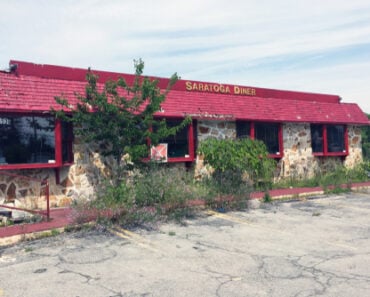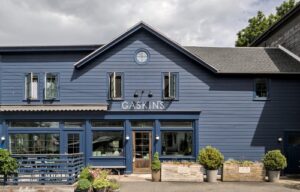
Gaskins restaurant in Germantown, New York, May 29, 2024. Photo: yuriyt / Shutterstock.com.
Restaurants become part of the memory of a place in ways that are difficult to measure. A family remembers the room where grandparents celebrated their anniversary. Former college students remember a favorite place to gather after classes. Someone driving through town still looks for a sign that disappeared years ago. Across the Hudson Valley, a remarkable number of restaurants built that kind of connection with the communities around them.
The region’s dining history is as varied as its landscape. There were waterfront restaurants along the Hudson, Italian family businesses in Orange and Ulster counties, country inns serving special-occasion dinners, and neighborhood bars where customers knew the people behind the counter. More recently, smaller restaurants helped transform places such as Beacon, Hudson, and Germantown into dining destinations with reputations extending far beyond their communities.
Some of these places closed because their owners retired after decades of work. Others were sold, lost their leases, or changed hands and reopened under different names. A few disappeared quite recently. The important distinction is that the restaurants on this list no longer operate under the identities that made them familiar. In several cases, the buildings are still standing and new restaurants have taken their place.
These 25 lost Hudson Valley restaurants span Westchester and Putnam counties, the mid-Hudson region, and communities farther north along the river. Each had its own place in local dining history, and each tells us something about the people who lived, worked, and ate in these towns.
1. Ship Lantern Inn (Milton, Ulster County)
For more than a century, the Ship Lantern Inn was one of the Hudson Valley’s best-known destinations for a special dinner. John Foglia established the restaurant in 1925 on Route 9W in Milton, a hamlet in the Town of Marlborough. Its long history belonged not only to the dining room but also to the Foglia family, which guided the business through several generations.
The inn was known for continental cooking, seafood, and a traditional atmosphere that felt far removed from a casual roadside stop. The historic building, with origins reaching back to the Revolutionary War era, added to its appeal. The restaurant served its final meals on June 28, 2026, after 101 years. Third-generation owner Michael Foglia explained that no one else in the family planned to continue operating it. Although future use of the property has been discussed, the century-long Foglia family restaurant operation came to an end.
2. Tony Boffa’s Restaurant (Middletown, Orange County)
Tony Boffa’s was the kind of Italian restaurant that became inseparable from the community it served. Antonio and Antoinette Boffa founded the family business in 1951, and its home at 75 Railroad Avenue became a familiar Middletown address. Generations of customers came for pizza, Italian-American dinners, and the comfort of being served by people whose family had run the place for decades.
In July 2022, the Boffa family announced that they were retiring and had sold the property. They had hoped someone would take over the restaurant under the existing name, but those plans did not work out. Tony Boffa’s closed on August 21, 2022, after 71 years. For regular customers, the loss was not simply another change in the local restaurant business. It was the end of a family tradition that had lasted through much of Middletown’s modern history.
3. Bia (Rhinebeck, Dutchess County)
Bia brought a modern interpretation of Irish cooking to Rhinebeck when it opened in 2019. Owner Kyle Kelley and chef Rich Reeve built a menu that treated Irish food as more than a collection of familiar pub staples. Fish and chips, roasts, seafood, and other dishes reflected a more ambitious approach without abandoning the comfort that diners expect from a good neighborhood restaurant.
In January 2026, the owners announced that Bia would close in early February, after approximately seven years. Its departure was particularly notable because the dining room had established a distinctive identity in a village already known for restaurants. The space later became associated with plans for Wunderbar Bistro, the Hudson restaurant seeking a new home. Bia itself, however, was gone.
4. O’Sho Japanese Steak House (Poughkeepsie, Dutchess County)
O’Sho was a landmark of the Route 9 restaurant corridor in the Town of Poughkeepsie. Located at 1998 South Road near the Poughkeepsie Galleria, it offered a style of Japanese steakhouse dining that turned dinner into an occasion. Diners came as much for the shared-table atmosphere and preparation of food in front of them as for the meal itself.
The restaurant eventually ceased operating, leaving its substantial building behind. A commercial property listing later described the site as the former popular O’Sho restaurant and marketed the two-level building for another use. The surviving building made the loss particularly visible to people who passed along Route 9 and remembered the years when the restaurant was a lively dining destination.
5. The Egg’s Nest (High Falls, Ulster County)
Few Hudson Valley restaurants looked quite like The Egg’s Nest in High Falls. Richard and Gillian Murphy opened it in 1973, creating a place where unusual artwork, bright colors, and an extraordinary assortment of objects gave the dining room the feeling of an eccentric personal museum. Eating there meant looking around as much as looking at the menu.
The Murphys ended their original 43-year run in 2016, and Eric and Cristina Silver subsequently carried the restaurant forward. In May 2023, Eric Silver announced that unexpected health problems required the immediate end of day-to-day operations. The Egg’s Nest left behind memories of a restaurant that never tried to resemble anywhere else. Its distinctive setting was part of the experience, and that originality helped make it a landmark of High Falls.
6. Conca D’oro (New Paltz, Ulster County)
Longtime New Paltz residents and former students still have reason to remember Conca D’oro. The Italian restaurant and pizzeria was one of the places associated with the town’s earlier dining scene, long before today’s assortment of restaurant concepts filled its commercial streets. It was particularly well remembered for its shrimp-and-garlic pizza.
An old local television segment from 1993, revisited in later reporting, preserved Conca D’oro’s place in the New Paltz restaurant landscape. That retrospective noted that the business had operated for 21 years before closing amid rising costs and strong competition among pizzerias. Memories of its pizza have outlasted the business itself, which is often the clearest measure of how much a neighborhood restaurant mattered to its customers.
7. China Rose (Rhinecliff, Dutchess County)
China Rose enjoyed a location few Chinese restaurants could match. It stood at 1 Shatzell Avenue in Rhinecliff, close to the railroad station and overlooking the Hudson River. Diners were drawn by the river setting as well as a menu associated with Hunan-style Chinese cooking. The restaurant’s own promotional material described its history as beginning in 1995.
China Rose closed in 2016, and for years the hamlet was left without a comparable full-service restaurant. The dining rooms eventually found a new life when Kip’s Tavern opened in the former China Rose space in 2022. People can once again eat at that waterfront address, but the Chinese restaurant that helped make it a local destination belongs to Rhinecliff’s past.
8. Dutch Cabin (Arlington, Dutchess County)
In the Arlington section of the Town of Poughkeepsie, near Vassar College, the Dutch Cabin was a familiar restaurant name. It belonged to an earlier era of neighborhood dining around the college, when small businesses on the surrounding streets served students, faculty, and local residents. State food-service records place the Dutch Cabin on Fairmont Avenue.
The business eventually closed. Its name continued to surface in local discussions of vanished Arlington restaurants, alongside Babycakes and the Beech Tree. Specific claims about the Dutch Cabin’s early ownership, menu, or precise final service date are not sufficiently documented to repeat, but its existence and its disappearance from the neighborhood restaurant scene are established.
9. Mariner’s on the Hudson (Highland, Ulster County)
Mariner’s on the Hudson used one of the area’s great natural attractions as part of the dining experience. Located at 46 River Road in Highland, the restaurant stood close to the Hudson waterfront and the Walkway Over the Hudson. Its outdoor dining area provided views of the river, the bridges, and boats passing along the shoreline.
The seafood-and-grill restaurant offered something different from a meal along a commercial highway. Its riverside setting made even an ordinary dinner feel connected to the landscape of the Hudson Valley. Mariner’s subsequently closed, although its former address and descriptions of the restaurant survive in business records. The location remains a reminder of how strongly a restaurant’s identity can depend on the view from its tables.
10. Beech Tree Grill (Poughkeepsie, Dutchess County)
The Beech Tree opened in 1991 on Collegeview Avenue in the Arlington neighborhood near Vassar College. It was appreciated for imaginative food, changing specials, and a beer selection that helped introduce local diners to craft brewing. The restaurant became especially well known for a thick hamburger served on a toasted English muffin.
Owner and executive chef Aaron Foglietta announced plans to close the Beech Tree in early 2020, explaining that he wanted to give his employees time to find other jobs before the final service. The loss was felt by people who had made the compact restaurant part of their regular routines for almost three decades. Its history is also a reminder that the Hudson Valley’s influential dining rooms were not all large or formal establishments.
11. Gunk Haus (Clintondale and Highland Area, Ulster County)
Gunk Haus earned a reputation for German-inspired food, beer, and a broad view toward the Shawangunk Mountains. At 387 South Street in the Clintondale and Highland area, the restaurant’s deck was as much a draw as its menu. People visited for Bavarian dishes, a relaxed atmosphere, and the chance to look across the surrounding countryside.
After 14 years, owners Dirk Schalle and Elizabeth Steckel closed the restaurant in August 2024. The property was sold to the team behind Poughkeepsie’s Mill House Brewing Company, which developed a new restaurant called The Ridge by Mill House. The spectacular view did not disappear, but Gunk Haus and the particular dining experience its owners created did.
12. Max’s Memphis BBQ (Red Hook, Dutchess County)
Max’s Memphis BBQ gave Red Hook a taste of slow-cooked Southern barbecue. At 136 South Broadway, the restaurant became known for pulled pork, ribs, brisket, and other barbecue favorites. A contemporary dining guide described its imported hickory-smoking equipment and meats cooked for many hours, a very different approach from the quick meals offered by ordinary roadside grills.
The business eventually closed, with local radio reporting the loss in April 2017. That report also recalled a fire and a reopening before the final shutdown. For customers who made Max’s a regular stop, the restaurant had helped bring a distinct food tradition to northern Dutchess County. Its disappearance left them looking elsewhere for the meals they associated with South Broadway.
13. Gaskins (Germantown, Columbia County)
Gaskins became one of the restaurants that helped establish the northern Hudson Valley’s reputation for thoughtful, locally connected dining. Nick and Sarah Suarez opened it in Germantown in 2014, bringing restaurant experience from New York City to a smaller community. Its American cooking and warm hospitality attracted local regulars as well as visitors from farther away.
Nick Suarez was named a James Beard Award semifinalist in 2018. After a decade, the couple closed Gaskins in November 2024. Sarah Suarez explained that the decision reflected a desire for a personal change rather than an unsuccessful business. A new restaurant, Nines, opened in the former space in 2026. That continuation of dining at the address does not erase the influence Gaskins had on Germantown’s restaurant identity.
14. Canterbury Brook Inn (Cornwall, Orange County)
For roughly 30 years, Canterbury Brook Inn offered Cornwall diners a taste of European country cooking. The restaurant at 331 Main Street was associated with Swiss chef Hans Baumann, whose dishes included bratwurst, fondue, and traditional European preparations. It provided an intimate alternative to the larger suburban restaurants found in other parts of Orange County.
The family announced its closing in August 2025. Their farewell indicated that the end of the business had come sooner than they expected, without offering a detailed public explanation of the circumstances. The closing deprived Cornwall of a long-running dining destination that many patrons associated with special meals and a distinctive culinary tradition.
15. Red Brick Tavern (Rosendale, Ulster County)
Red Brick Tavern operated at 388 Main Street in Rosendale, where its brick interior and neighborhood atmosphere made it a familiar gathering place. The restaurant served American tavern food, and former customers still remember individual dishes and the experience of meeting friends there. It was part of Rosendale’s small but distinctive dining scene.
The tavern closed in June 2019. Contemporary reporting about a new restaurant elsewhere in town referred to former Red Brick patrons looking for another place to gather. The old Main Street building later housed Santa Fe Burger Bar. Although a new restaurant could reuse the space, the Red Brick Tavern’s identity remained closely tied to the people who had frequented it.
16. Clock Tower Grill (Brewster, Putnam County)
Clock Tower Grill brought a farm-to-table approach to Brewster long before its owners were ready to move on. Chef Rich Parente and his wife, Cassie, opened the restaurant in 2013 and developed menus around locally produced ingredients, including food from their own farm. The couple treated the restaurant as both a business and a place to support their community.
After 12 years, they announced the end of the restaurant and scheduled farewell meals for February 21 and 22, 2025. Their explanation emphasized a desire to begin another chapter rather than a simple story of business failure. Clock Tower Grill demonstrated that locally focused dining could find a loyal audience in Putnam County, and its closing marked the end of that particular collaboration between restaurant and farm.
17. Eddy’s Restaurant (Kingston, Ulster County)
Eddy’s Restaurant was a Kingston diner with more than half a century of local history. Eddy Constantinou and his son-in-law Chris Millouras opened the business at 742 Broadway in 1971. Customers returned for breakfasts, turkey dinners, sandwiches, and the dependable hospitality that helped turn a restaurant into a neighborhood institution.
Millouras, who had run the restaurant for decades, retired in August 2024, and Eddy’s served its final customers on August 25. The space did not stay unused for long: Joe McDole, a former employee who considered Millouras a mentor, opened Good Eat’n there. The new restaurant kept some familiar favorites, but the long Eddy’s chapter of Kingston’s dining history had ended.
18. Pancho Villa Taqueria y Cantina (Nyack, Rockland County)
Pancho Villa Taqueria y Cantina brought Mexican food and a lively bar atmosphere to 90 Main Street in downtown Nyack. The restaurant served tacos, fajitas, and other familiar Mexican dishes, providing another casual dining choice in a village that has long attracted people from across Rockland County.
State food-service inspection records document the business at this address as recently as July 2025. More recent restaurant listings identify the Nyack operation as closed. Its history was shorter than that of some restaurants on this list, and claims that it served Nyack for generations would be misleading. It nonetheless represented one of the dining places that came and went as the village’s Main Street restaurant scene changed.
19. The Derby (Poughkeepsie, Dutchess County)
The Derby was one of the enduring names in Poughkeepsie’s bar and restaurant history. Its Main Street location served customers through years of changes in downtown nightlife. Unlike a destination restaurant built around a spectacular view or an elaborate dining room, The Derby depended on the familiar appeal of a neighborhood bar where people could return for drinks, food, and conversation.
The Derby closed at the end of April 2026. Local reporting indicated that its lease, which had been extended beyond December 2025, was not renewed while the building owner pursued a sale. The closing removed a longstanding gathering place from Main Street. Its story is another reminder that the fate of a restaurant is often tied as much to the property it occupies as to the meals served there.
20. Max’s on Main (Beacon, Dutchess County)
Max’s on Main opened in Beacon in 2006 under brothers Richie and Harvey Kaplan. Named for their father, the restaurant and bar at 246 Main Street became a place where regulars could meet over burgers, drinks, music, and conversation. As Beacon developed a wider reputation as a destination for visitors, Max’s remained closely tied to the everyday life of the city.
In April 2024, Richie Kaplan announced the restaurant’s closing and his retirement. The property had been sold, and the final service was scheduled for April 21. Max’s was remembered not simply for its food but for the relationships created over nearly 18 years. It belonged to the version of Beacon where a neighborhood bar could still feel like an extension of someone’s living room.
21. Chef Antonio Ristorante (Mamaroneck, Westchester County)
Chef Antonio Ristorante served the Mamaroneck community for 38 years. The Italian restaurant at 551 Halstead Avenue opened in 1984 and became known for family-style hospitality and dishes influenced by the cooking traditions of Sicily and Abruzzo. The restaurant’s longevity reflected the appeal of an independent dining room that customers could rely on for a familiar meal.
Owners Mario and Emilia announced its closure in April 2022, thanking customers and friends for supporting the business over the decades. They described the farewell as bittersweet, emphasizing how much of their lives had gone into the restaurant. For its longtime patrons, Chef Antonio represented a kind of continuity that is increasingly difficult to find in a changing village dining scene.
22. Stella’s Italian Restaurant (Kingston, Ulster County)
Stella’s was a fixture of Uptown Kingston for roughly half a century. Located at 44 North Front Street, the family-run Italian restaurant opened in the 1970s and became closely associated with traditional dishes, including pasta, meatballs, and the familiar experience of a family dinner downtown.
In April 2026, local news outlets reported that Stella’s had closed after approximately 50 years. Its loss drew particular attention because the restaurant had become part of Kingston’s identity for more than one generation. Many establishments open and close during a city’s evolution, but few remain long enough to be remembered by both parents and their adult children as a regular place to eat.
23. Dogwood (Beacon, Dutchess County)
Dogwood at 47 East Main Street developed a reputation as a comfortable Beacon bar where food, drinks, and live music brought residents together. Its place in the community was especially meaningful during the city’s changing arts and nightlife scene. The building itself had housed bars and restaurants under various names since the nineteenth century.
Dogwood closed in 2023. In January 2024, a new establishment called Cooper’s opened in the space, preserving the property’s long hospitality history while creating a different identity. Local reporting in 2025 continued to recall Dogwood’s role as a music gathering place. The replacement of one bar with another is common enough, but the people who spent time at Dogwood remember a particular community that grew around it.
24. Lil’ Deb’s Oasis (Hudson, Columbia County)
Lil’ Deb’s Oasis was one of the Hudson Valley’s most original dining establishments. With its exuberant color, art, and cooking described as tropical comfort food, the Hudson restaurant became an internationally noticed place to eat and a gathering space for creative communities. Halo Kaya Perez-Gallardo and Hannah Black developed the restaurant from an earlier pop-up project into a distinctive presence at 747 Columbia Street.
After roughly a decade, the restaurant’s final service was set for October 12, 2026. Perez-Gallardo described a combination of exhaustion, financial pressure, and unsuccessful attempts to find a future ownership arrangement, with the building also facing a sale. Lil’ Deb’s received James Beard recognition and national press attention, but its greatest legacy may be the sense of welcome it created for people who felt a personal connection to the restaurant and its community.
25. Tito Santana Taqueria (Beacon, Dutchess County)
For years, Tito Santana Taqueria was a familiar stop at 142 Main Street in Beacon. Opened in 2011, it served tacos and other Mexican-inspired food to residents and visitors, making it part of the city’s lively independent restaurant scene. Its presence at a prominent Main Street corner made the restaurant especially recognizable.
The restaurant stopped operating in 2025 after building-safety problems and a subsequent dispute involving the property owner. The owners publicly maintained that conditions in the building had made it impossible to remain. Another taqueria later moved into the storefront, but Tito Santana’s identity and its years on Main Street could not simply be transferred to a new sign. Its closing illustrates how a popular restaurant can disappear for reasons that extend beyond the quality of its food.
These restaurants were very different from one another. Some served elegant dinners for a century, while others became known for burgers, barbecue, tacos, or a welcoming neighborhood bar. Their stories also show that there is no single explanation for why beloved restaurants close. Retirement, real estate, health, family decisions, and changing business circumstances all played a role. The places themselves may have changed, but their names remain part of Hudson Valley memory.
For more stories about New York’s vanished dining institutions, explore our articles on 25 Lost Westchester Restaurants Locals Still Miss, 25 Lost Restaurants Upstate New Yorkers Wish Were Still Open, and 10 Classic New York Restaurants We Miss the Most. You can also read about 25 Famous Long Island Restaurants We Miss.