New York’s bridges do more than carry traffic across rivers, channels, and borough lines. They tell the story of how the city expanded, how neighborhoods changed, and how millions of people learned to move through one of the busiest metropolitan regions in the world. These ten crossings stand out not only for their engineering and architecture, but also for the memories, frustrations, views, and personal histories New Yorkers carry across them every day.
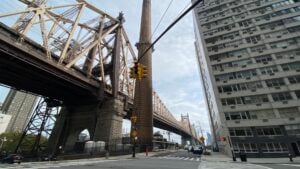
Featured Photo by Brian Kachejian 2026
Having spent my entire life in New York, I have crossed these bridges more times than I can count. They are not just steel, cable, and concrete connecting boroughs. They are massive, soaring lifelines that shaped the economic and cultural history of the entire tri-state area.
I have studied these bridges intensely, and I am not talking only from an academic standpoint. I am also talking about sitting in my car for half an hour or an hour in traffic, staring at the steel beams, the cables, the iconic architecture, and, of course, the views of the city from high above the water and concrete. It can be breathtaking. Sitting in traffic is frustrating, but as a New Yorker, I have always tried to make the best of it. That is simply what you do when you have lived here as long as I have.
That is why presenting an article covering ten of my favorite bridges is special to me. I have written about each of these bridges in much greater detail. I hope you click the links below and read about them, the experiences of New Yorkers crossing them, the heartbreak, pain, and love that went into building them, and the reasons they were needed. Most of all, these stories explain why New York could not survive without them.
These are not just bridges for New Yorkers. They belong to the entire world because, to me, New York has always felt like the center of the world, and these bridges are what connect us all.
If you want to understand how New York grew from a crowded island into a global center of commerce, culture, and immigration, you have to look at its bridges. Here is a local’s guide to ten of the most iconic bridges in New York, their fascinating histories, and why each one deserves a place in the story of the city.
1. The Brooklyn Bridge
Spanning the East River between Manhattan and Brooklyn, the Brooklyn Bridge is arguably the most famous suspension bridge in the world. When it opened in 1883, it was hailed as the “Eighth Wonder of the World” and stood as the longest suspension bridge on Earth. John A. Roebling designed the bridge, his son Washington Roebling served as chief engineer, and Emily Warren Roebling became the essential link between her ailing husband and the engineers completing the project. Its majestic neo-Gothic stone towers remain an enduring symbol of American ingenuity.
Read our full, deep-dive story: History of the Brooklyn Bridge
2. The Williamsburg Bridge
When the Williamsburg Bridge opened in 1903, it took the title of the world’s longest suspension bridge from its neighbor downriver, the Brooklyn Bridge. Built with steel towers and a massive stiffening-truss system, it played a monumental historical role in relieving the densely populated tenements of Manhattan’s Lower East Side by allowing immigrant families to move into Brooklyn. Today, its bold industrial profile remains an essential part of New York’s cultural fabric.
Read our full, deep-dive story: History of the Williamsburg Bridge
3. The Manhattan Bridge
Completed in 1909 as the youngest of the three lower East River suspension bridges, the Manhattan Bridge was an engineering marvel designed by Leon Moisseiff. It was the first suspension bridge built using deflection theory, an approach that influenced major bridge construction for decades. With its grand triumphal arch entrance on the Manhattan side, busy subway tracks, pedestrian path, and sweeping views, it remains one of the city’s most recognizable landmarks.
Read our full, deep-dive story: History of the Manhattan Bridge
4. The 59th Street Bridge, Officially the Ed Koch Queensboro Bridge
Immortalized in classic music, literature, film, and television, the 59th Street Bridge connects Midtown Manhattan with Long Island City, Queens. Opened in 1909, this double-deck cantilever bridge bypassed the traditional suspension design entirely, creating a colossal steel corridor over Roosevelt Island. Whether you know it from Simon & Garfunkel, The Great Gatsby, or the unforgettable view from the East River, its intricate steel framing is pure classic New York.
Read our full, deep-dive story: New York’s 59th Street Bridge: Traffic, Romance, and History
5. The George Washington Bridge
Spanning the Hudson River between upper Manhattan and Fort Lee, New Jersey, the George Washington Bridge is one of the busiest bridges in the world. Opened in 1931 under the direction of engineer Othmar Ammann, its crisscrossed exposed-steel towers are instantly recognizable. Watching the massive American flag unfurl beneath the New York tower on major holidays is a sight many local residents hold dear.
Read our full, deep-dive story: History of the George Washington Bridge
6. The Triborough Bridge, Officially the Robert F. Kennedy Bridge
The Triborough Bridge is not a single bridge. It is an enormous transportation complex consisting of three bridges, connecting viaducts, interchanges, and approach roads linking Manhattan, Queens, and the Bronx through Randall’s and Wards Islands. Planned under Robert Moses and opened in 1936 during the Great Depression, this engineering giant transformed travel across the metropolitan region.
Read our full, deep-dive story: History of New York’s Triborough Bridge
7. The Verrazzano-Narrows Bridge
Guarding the entrance to New York Harbor between Brooklyn and Staten Island, the Verrazzano-Narrows Bridge was the longest suspension span in the world when it opened in 1964. Another masterpiece engineered by Othmar Ammann, its double-deck roadway stretches between towers rising approximately 690 feet above the water. Because of the distance between them and the curvature of the Earth, the tops of the towers are slightly farther apart than their bases.
Read our full, deep-dive story: History of the Verrazzano-Narrows Bridge
8. The Hell Gate Bridge
Rising over the East River between Queens and Randall’s and Wards Islands, the Hell Gate Bridge is one of the most powerful-looking railroad bridges ever constructed. Engineered by Gustav Lindenthal and opened to rail traffic in 1917, the massive steel arch now carries Amtrak passenger trains and freight traffic. Its heavy construction inspired the often-repeated estimate that, without human maintenance, it might remain standing for as long as a thousand years.
Read our full, deep-dive story: History of the Hell Gate Bridge
9. The Bayonne Bridge
Connecting Staten Island with Bayonne, New Jersey, across the Kill Van Kull, the Bayonne Bridge is a legendary steel arch span. When it opened in 1931, it was the longest steel arch bridge in the world. Decades later, engineers completed a breathtaking feat by raising the roadway within the existing arch to provide greater clearance for modern container ships traveling to and from the ports of Newark and Elizabeth.
Read our full, deep-dive story: History of the Bayonne Bridge
10. The Outerbridge Crossing and Goethals Bridge
Serving as crucial gateways between Staten Island and New Jersey, the original Outerbridge Crossing and Goethals Bridge opened on the same day, June 29, 1928. The Outerbridge Crossing was named for Eugenius H. Outerbridge, the first chairman of the Port Authority, while the Goethals Bridge honored George W. Goethals, the engineer who supervised construction of the Panama Canal. These crossings helped establish modern interstate automobile travel across the region. The original Goethals Bridge was eventually replaced by the current cable-stayed crossing, while the Outerbridge continues to carry traffic across the Arthur Kill.
Read our full, deep-dive story: History of Staten Island’s Outerbridge Crossing and Goethals Bridges