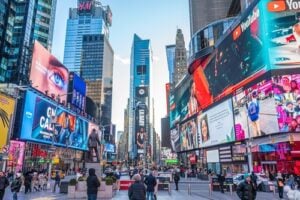
Times Square in Manhattan, New York City, January 8, 2025. Photo by Selcuk Oner / Shutterstock.
For more than a century, New York City has served as the world’s ultimate cultural proving ground. This article is about a very specific group of people: artists, musicians, writers, actors, and performers who were not from New York City, moved here from somewhere else, and then saw their careers take off. Some arrived with almost nothing. Others had already begun working in their fields. What connects all twenty-five is that New York became the turning point, the place where ambition met opportunity and where careers that had not yet reached their full potential suddenly found the audiences, collaborators, institutions, clubs, theaters, galleries, and publishing worlds that changed everything.
They came from Minnesota, Michigan, New Jersey, Wales, East St. Louis, Washington, D.C., Pennsylvania, Wisconsin, Illinois, California, Ohio, Hawaii, the Netherlands, and beyond. They arrived by bus, train, car, and ship, carrying guitars, manuscripts, portfolios, and dreams into Greenwich Village apartments, Harlem clubs, downtown lofts, Broadway rehearsal rooms, and publishing offices. New York did not create their talent, but in case after case, it gave that talent the stage on which it exploded.
Pioneers of Folk, Rock, Jazz, and Modern Music
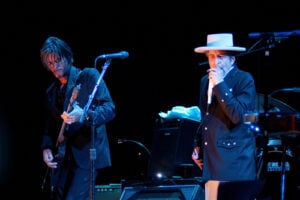
Bob Dylan
Christian Bertrand / Shutterstock.com
He arrived in Manhattan in January 1961 from Minnesota, a nineteen-year-old musician entering a Greenwich Village folk scene that would transform his life. He played coffeehouses and clubs, absorbed the music, politics, literature, and personalities around him, and sought out his hero Woody Guthrie, who was then seriously ill. New York rapidly pushed Dylan beyond traditional folk imitation and into the songwriting voice that made him unique. By 1962, songs such as “Blowin’ in the Wind” and “A Hard Rain’s a-Gonna Fall” had begun the extraordinary ascent of one of the most influential songwriters in American history.
Madonna

Denis Makarenko / Shutterstock.com
She moved to New York in 1978 from Michigan determined to pursue dance. She supported herself with a series of jobs while studying, auditioning, and living through the rougher edges of late-1970s New York. Dance soon gave way to music. Madonna played drums and sang in bands, immersed herself in the downtown club scene, and eventually began recording the dance-oriented demos that changed her direction. Her connection with New York DJs and Sire Records founder Seymour Stein led to a record deal, and her 1983 debut album Madonna launched one of the biggest careers in the history of pop music.
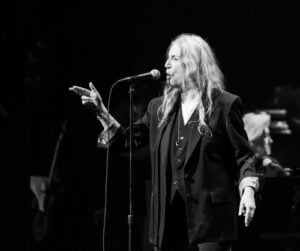
Patti Smith
lev radin / Shutterstock.com
She came to New York from New Jersey in 1967 with little money and a fierce determination to become an artist. She worked in bookstores, lived for a time at the Chelsea Hotel with photographer Robert Mapplethorpe, wrote poetry and rock criticism, and moved through a downtown world where poetry, visual art, theater, and rock and roll continually collided. Her partnership with guitarist Lenny Kaye helped turn poetry readings into something louder and more dangerous. By the mid-1970s, performances at CBGB had made the Patti Smith Group a central force in New York’s emerging punk scene, and the 1975 album Horses became a landmark of American rock.
Debbie Harry

Adam McCullough / Shutterstock.com
She moved from New Jersey to New York City in 1965 and entered the city’s downtown music and art world long before fame arrived. She worked a succession of jobs, including waitressing at Max’s Kansas City and working as a Playboy Bunny, while singing with early bands. After joining the Stilettos, she met guitarist Chris Stein. The two eventually formed the group that became Blondie, playing clubs such as CBGB and Max’s Kansas City. What began as part of New York’s underground punk and new-wave scene eventually became an international success, with hits including “Heart of Glass,” “Call Me,” and “Rapture.”
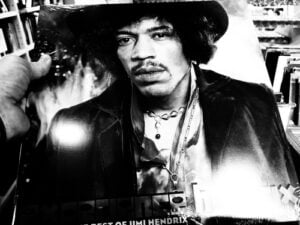
Jimi Hendrix
Stefano Chiacchiarini ’74 / Shutterstock.com
Born in Seattle, he spent years working as a backing guitarist before New York gave him the chance to become something more. After arriving in the city, Hendrix worked in Harlem and eventually moved downtown to Greenwich Village, where he formed Jimmy James and the Blue Flames. Performing at Cafe Wha?, Hendrix was seen by former Animals bassist Chas Chandler. Chandler brought him to London in 1966, where the Jimi Hendrix Experience was formed and international fame followed almost immediately. Hendrix became a star in Britain, but the turning point happened on a Greenwich Village stage.
John Cale

Bart Cabanier, CC BY-SA 2.0 <https://creativecommons.org/licenses/by-sa/2.0>, via Wikimedia Commons
He came to the United States from Wales in 1963 after receiving a scholarship connected with Tanglewood. Later that year, he moved to New York and immersed himself in the city’s avant-garde music scene, working with experimental composers and performing with La Monte Young’s Theatre of Eternal Music. Cale soon met Long Island-born songwriter Lou Reed, and the collision between Cale’s drone-based experimental background and Reed’s street-level songwriting became the foundation of the Velvet Underground. The band’s influence grew far beyond its original commercial success, permanently altering the future of punk, alternative rock, and underground music.
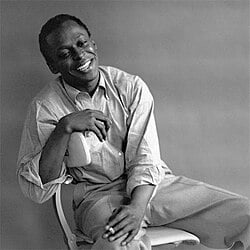
Miles Davis
Tom Palumbo from New York City, USA, CC BY-SA 2.0 <https://creativecommons.org/licenses/by-sa/2.0>, via Wikimedia Commons
He moved from East St. Louis to New York in September 1944, officially to attend the Juilliard School of Music but with another goal already in mind: he wanted to find Charlie Parker and Dizzy Gillespie and enter the rapidly changing world of modern jazz. Davis began sitting in with the musicians who were developing bebop, left Juilliard, and quickly became part of the city’s professional jazz community. His New York years produced a career that repeatedly reinvented jazz, culminating in recordings such as the 1959 album Kind of Blue, one of the most celebrated and best-selling jazz albums ever made.
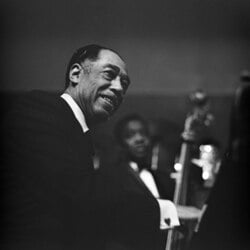
Duke Ellington
Bert Carpelan, CC BY 4.0 <https://creativecommons.org/licenses/by/4.0>, via Wikimedia Commons
He moved from Washington, D.C., to New York City in 1923 and joined the group that became known as the Washingtonians. The band worked in New York clubs through the middle of the decade while Ellington developed as a composer, arranger, pianist, and bandleader. His great breakthrough came in 1927 when the orchestra began its legendary engagement at Harlem’s Cotton Club. National radio broadcasts carried Ellington’s music far beyond New York, and compositions such as “Mood Indigo” helped turn him into one of the defining figures of American music. Ellington had been a working musician before New York, but New York made him a national name.
Titans of Visual Art and the New York Art World
Andy Warhol
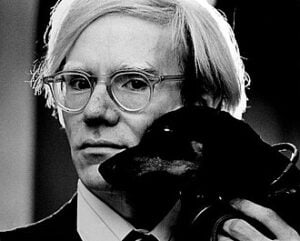
Jack Mitchell, CC BY-SA 4.0 <https://creativecommons.org/licenses/by-sa/4.0>, via Wikimedia Commons
He moved to New York City from Pittsburgh in 1949 after graduating from the Carnegie Institute of Technology. He entered Manhattan’s booming commercial-art world and became one of the most successful illustrators of the 1950s, working for magazines, newspapers, department stores, and fashion clients. By the early 1960s, Warhol turned the visual language of advertising and consumer culture into fine art. His Campbell’s Soup cans, Coca-Cola bottles, celebrity portraits, and silkscreens helped define Pop Art. New York’s advertising industry first gave Warhol a career, and its gallery world then gave him the platform to reinvent himself.
Keith Haring
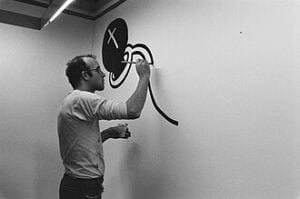
Rob Bogaerts (Anefo), CC0, via Wikimedia Commons
He moved from Pennsylvania to New York in 1978 to attend the School of Visual Arts. The city immediately changed the direction of his work. Haring became fascinated by graffiti, downtown clubs, street culture, and the visual language of the subway. He began drawing with white chalk on unused black advertising panels in subway stations, creating the radiant babies, barking dogs, dancing figures, and other images that became his signature. Within only a few years of arriving in New York, Haring went from art student to internationally recognized artist, proving how quickly the city itself could become both a canvas and an audience.
Mark Rothko
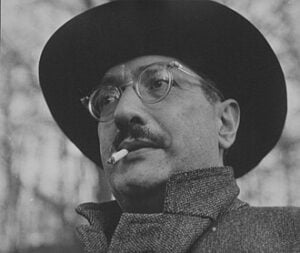
Brooklyn Museum, No restrictions, via Wikimedia Commons
He immigrated from the Russian Empire to Portland, Oregon, as a child and moved to New York City in 1923. He studied at the Art Students League and spent years developing as an artist while supporting himself partly through teaching. His first New York solo exhibition came in 1933, but his greatest breakthrough took much longer. By the late 1940s and early 1950s, Rothko had stripped away recognizable imagery and developed the monumental fields of floating color that made him one of the central figures of Abstract Expressionism. His career developed almost entirely in New York.
Jackson Pollock
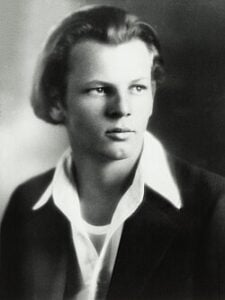
Smithsonian Institution, Public domain, via Wikimedia Commons
He was born in Wyoming, grew up largely in the West, and moved to New York City in 1930 to pursue art. He studied at the Art Students League under Thomas Hart Benton and later worked for the federal government’s art programs during the Great Depression. Years of experimentation eventually led to the paintings that made him famous. By the late 1940s, Pollock placed canvases on the floor and dripped, poured, and flung paint across them in a method that came to define action painting. His rise helped move the center of the international art world from Paris to New York.
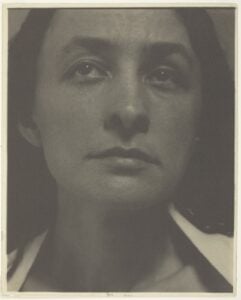
Georgia O’Keeffe
Rawpixel.com / Shutterstock.com
She was born in Wisconsin and had studied and taught in several parts of the country before moving to New York City in 1918. Photographer and gallery owner Alfred Stieglitz had already begun exhibiting her work, but the move gave O’Keeffe the financial support and artistic environment to devote herself seriously to painting. During the 1920s, her exhibitions became major New York art events, and her large flower paintings, abstractions, and views of Manhattan skyscrapers established her as one of America’s most important modern artists. By the end of the decade, she had become a nationally recognized figure.
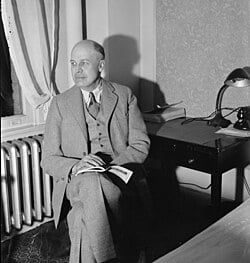
Edward Hopper
Harris & Ewing, photographer, Public domain, via Wikimedia Commons
He grew up in Nyack, New York, north of the city, and moved to New York City full time in 1908. He initially earned money as a commercial illustrator while continuing to pursue painting, a career that developed slowly and often with little recognition. New York eventually became both his home and one of his greatest subjects. By the 1920s, Hopper’s work was receiving serious attention, and paintings such as Automat, Early Sunday Morning, and New York Movie transformed ordinary urban scenes into some of the most haunting images in American art. Nearly his entire mature career unfolded after he settled in the city.
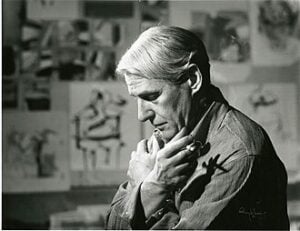
Willem de Kooning
Antony di Gesu, photographer, Public domain, via Wikimedia Commons
He was born in Rotterdam, Netherlands, and came to the United States in 1926. After working for a time in New Jersey, he moved to New York, where he found the artistic world that would define his life. He worked as a commercial artist and house painter, built relationships with other modern artists, and later participated in federal art projects during the Depression. By the postwar years, de Kooning had emerged as a leader of the New York School. His aggressive, fluid style and celebrated Woman series made him one of Abstract Expressionism’s dominant figures.
Literary Voices Whose Careers Took Off in New York
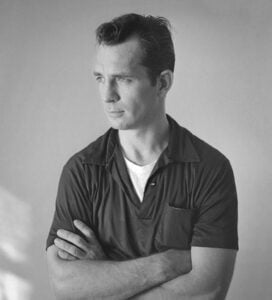
Jack Kerouac
Tom Palumbo from New York, NY, USA, CC BY-SA 2.0 <https://creativecommons.org/licenses/by-sa/2.0>, via Wikimedia Commons
He arrived in New York from Lowell, Massachusetts, in 1940 on a football scholarship to Columbia University. His college career did not last, but New York did. Kerouac remained in the city and became part of a circle that included Allen Ginsberg and William S. Burroughs. Harlem jazz clubs, late-night conversations, and the rhythms of bebop became central to the emerging Beat sensibility. In 1951, while living in Chelsea, Kerouac produced the famous scroll manuscript of On the Road. The novel’s eventual publication in 1957 made him one of the defining writers of postwar American culture.
Joan Didion
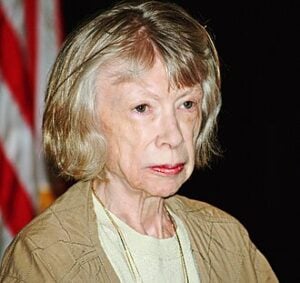
David Shankbone, CC BY-SA 3.0 <https://creativecommons.org/licenses/by-sa/3.0>, via Wikimedia Commons
She graduated from the University of California, Berkeley, in 1956 and moved from California to New York after winning Vogue‘s Prix de Paris competition. The prize brought her a job at the magazine and gave her an intense education in editing, precision, and style. Didion spent years in New York developing the controlled, unsparing prose that became her signature. Although she later returned to California, her years in Manhattan formed a crucial first stage of her professional career and inspired “Goodbye to All That,” her famous essay about the intoxicating promise and eventual exhaustion of being young in New York.
Truman Capote
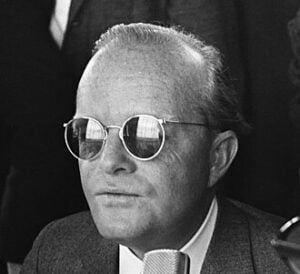
Eric Koch for Anefo, CC0, via Wikimedia Commons
He spent much of his childhood in the South before moving to New York in his teens to live with his mother and stepfather. At seventeen, he went to work at The New Yorker, an entry-level job that placed him inside the literary world he wanted to conquer. He soon began publishing stories in magazines including Harper’s Bazaar and Mademoiselle, and his first novel, Other Voices, Other Rooms, made him a literary celebrity in 1948. New York became the center of both his professional life and his public persona, culminating in works including Breakfast at Tiffany’s.
Toni Morrison
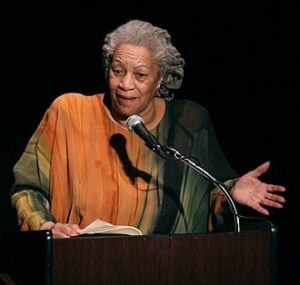
Angela Radulescu, CC BY-SA 2.0 <https://creativecommons.org/licenses/by-sa/2.0>, via Wikimedia Commons
She grew up in Lorain, Ohio, studied at Howard University and Cornell, and taught before entering publishing. She began working for a Random House textbook division in Syracuse in 1965 and moved to New York City in 1968 to become an editor in Random House’s trade division. There she became a major force in American publishing while continuing to write her own fiction. The Bluest Eye appeared in 1970, followed by Sula and the 1977 breakthrough Song of Solomon. Morrison’s years in New York established her simultaneously as an influential editor and one of America’s greatest novelists.
Lorraine Hansberry
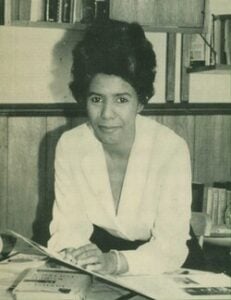
Jacket design not credited, Public domain, via Wikimedia Commons
She was born and raised in Chicago and moved to New York City in 1950 after leaving the University of Wisconsin. She studied at the New School and began writing for Paul Robeson’s newspaper Freedom, entering a world of writers, intellectuals, activists, and theater artists. Less than a decade after arriving, Hansberry’s A Raisin in the Sun opened on Broadway in 1959, making her the first Black woman to have a play produced on Broadway. Its success turned a young writer who had come to New York searching for a place in the arts into one of the most important playwrights of her generation.
Giants of Stage, Comedy, and Screen
Richard Pryor
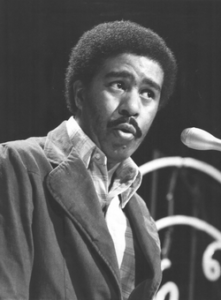
NBC Television, Public domain, via Wikimedia Commons
He began performing professionally in the Midwest after growing up in Peoria, Illinois, but he moved to New York City in 1963 to pursue comedy seriously. In Greenwich Village and other New York clubs, Pryor worked alongside performers who were themselves on the edge of major careers and began gaining recognition as a stand-up comedian. Television appearances followed, bringing him into the national entertainment world. Pryor’s comedy would later become far more personal, confrontational, and revolutionary, but New York was where his local club career first turned into national momentum.
Sidney Poitier
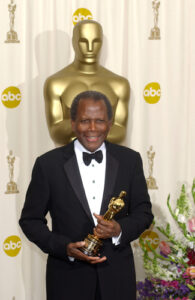
Featureflash Photo Agency / Shutterstock.com
He spent much of his childhood in the Bahamas and moved to New York City as a teenager. The city was brutally difficult at first, but Poitier persisted, worked to improve his speech and acting, and eventually found a place with the American Negro Theatre in Harlem. That stage experience led to Broadway and then film. By the 1950s, Poitier had become one of Hollywood’s most important actors, and in 1964 he became the first Black performer to win the Academy Award for Best Actor. The international career began with a teenage move to New York and years of determination inside its theater world.
Bette Midler
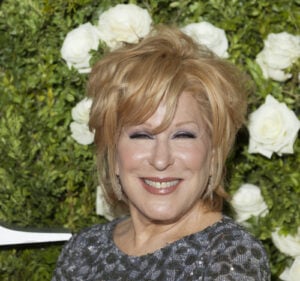
lev radin / Shutterstock.com
She came from Hawaii to New York in 1965 with plans to become an actress. She found work in Off-Broadway theater and soon reached Broadway in Fiddler on the Roof. Her career then took an unexpected turn when she began singing at the Continental Baths in Manhattan, where her outrageous humor, dramatic vocals, and growing partnership with pianist Barry Manilow helped create the persona of “The Divine Miss M.” The attention led to a recording contract, and her 1972 debut album The Divine Miss M made her a star. Few careers demonstrate the strange possibilities of New York better.
Meryl Streep
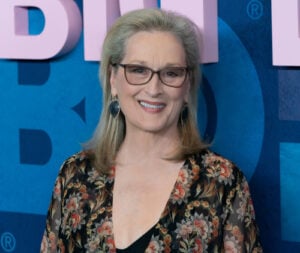
lev radin / Shutterstock.com
She grew up in New Jersey and studied acting at Vassar and the Yale School of Drama before moving to New York in 1975 to begin her professional career. She almost immediately entered the city’s serious theater world, appearing in Trelawny of the “Wells” at the Vivian Beaumont Theater and working with the New York Shakespeare Festival. Within a remarkably short period, Streep was earning critical attention and major stage nominations. Film roles soon followed, including The Deer Hunter and Kramer vs. Kramer, and the young actress who had arrived in New York after graduate school quickly became one of the most acclaimed performers of her generation.
Marlon Brando
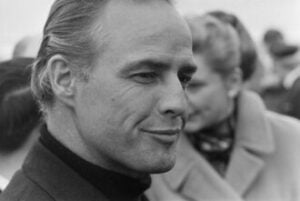
Urpo Rouhiainen, CC BY 4.0 <https://creativecommons.org/licenses/by/4.0>, via Wikimedia Commons
He came to New York in 1943 after a troubled youth in the Midwest. He studied acting in the city, most importantly with Stella Adler, and began finding professional stage work almost immediately. His Broadway performances during the mid-1940s built his reputation, but the explosion came on December 3, 1947, when he opened as Stanley Kowalski in Tennessee Williams’s A Streetcar Named Desire at the Ethel Barrymore Theatre. Brando’s physical, psychologically immediate performance changed expectations of American acting and made him one of the most important performers of the twentieth century.
From Greenwich Village coffeehouses and Harlem jazz clubs to Broadway theaters, publishing offices, subway platforms, downtown galleries, and Manhattan rehearsal rooms, these twenty-five careers tell the opposite side of New York’s famous-people story. These were not artists who became famous simply because they were born here. They came from somewhere else. They moved to New York, entered its competitive cultural world, and found the break, community, collaborator, job, club, gallery, theater, or audience that changed the direction of their lives.
For more stories about the places that shaped these careers, read our guide to Greenwich Village, explore the history of New York’s Apollo Theater, and visit our look at 45 Legendary New York Nightclubs and Music Venues That Defined an Era. Readers interested in New York’s entertainment history can also explore our essential New York film actors and essential New York film actresses.