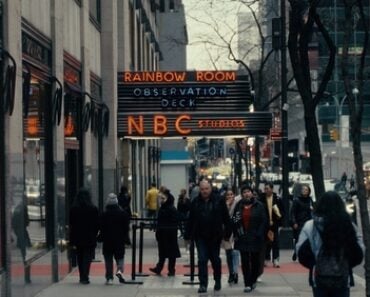
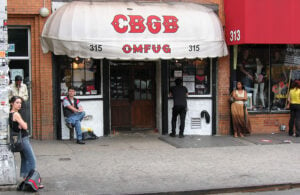
CBGB at 315 Bowery in Manhattan, one of the most influential music clubs in New York City history and a defining home of punk and new wave. Photo: Stig Nygaard from Copenhagen, Denmark, CC BY 2.0, via Wikimedia Commons.
For much of the 20th century, New York City’s music clubs did far more than book bands. They created scenes. Jazz musicians found national audiences in Harlem basements and Midtown clubs. Folk singers tested new songs in Greenwich Village coffeehouses. Punk and new wave exploded from cramped Bowery stages. Rock promoters turned old theaters into rooms where live albums were made and careers changed overnight.
Many of those legendary rooms are gone. In the case of the Cotton Club, the historic Harlem location and defining era ended even though the name later returned elsewhere. What disappeared was the particular room, neighborhood moment, and musical community that made each place legendary.
1. CBGB & OMFUG
Active Years: 1973–2006
Location: 315 Bowery, East Village
Hilly Kristal opened CBGB in 1973 with a name that stood for Country, Bluegrass, Blues and Other Music for Uplifting Gormandizers. His original concept did not predict what the club would become. As young downtown bands searching for places to perform original music began appearing on the Bowery, CBGB evolved into one of the defining incubators of American punk and new wave.
The Ramones, Blondie, Talking Heads, Television, Patti Smith Group, the Dead Boys, and the Dictators all became closely associated with the club. In later years, CBGB also became important to New York’s hardcore scene. The narrow room, low stage, sticker-covered surfaces, and famously rough surroundings became part of the mythology.
What Happened: A long-running rent and lease dispute with the Bowery Residents’ Committee ultimately ended CBGB’s run. The final night was October 15, 2006, with Patti Smith headlining the farewell performance.
What’s There Today: The address remains home to a John Varvatos boutique. The store preserved elements of the old club’s graffiti-covered interior and concert-history atmosphere, making 315 Bowery one of the rare lost music sites where traces of the former venue remain visible.
2. The Original Cotton Club in Harlem
Harlem Era: 1923–1936
Location: Lenox Avenue at West 142nd Street, Harlem
The Cotton Club became one of the most famous nightclubs of the Harlem Renaissance. Operated during Prohibition by Owney Madden, it presented lavish revues and some of the greatest Black performers in American music while maintaining a discriminatory whites-only audience policy for much of its Harlem era.
Duke Ellington led the house band from 1927 to 1931, and national radio broadcasts from the club helped spread his music far beyond New York. Cab Calloway later became another defining Cotton Club bandleader. The contradiction at the heart of the Cotton Club was impossible to ignore: Black musical genius drove the entertainment while Black New Yorkers were generally excluded from the audience.
What Happened: The original Harlem Cotton Club closed in February 1936 and relocated to Broadway and 48th Street in Midtown. That incarnation closed in 1940. The original Harlem building was later demolished during redevelopment of the area.
What Survived: The Cotton Club name was revived in later years at another Harlem address. This entry refers specifically to the legendary 1923–1936 Lenox Avenue club that became inseparable from the history of the Harlem Renaissance.
3. The Scene
Active Years: 1964–1969
Location: 301 West 46th Street, Theater District
Steve Paul was only 23 when he opened The Scene in 1964. Located in a basement on West 46th Street, the club began as a gathering place for actors, musicians, and people from the Broadway world before developing into one of the most exciting rock rooms in late-1960s Manhattan.
Jimi Hendrix became closely associated with The Scene and frequently appeared at late-night jam sessions. The Doors played an important early New York engagement there, and the club also welcomed artists including the Velvet Underground, Pink Floyd, Jeff Beck, the Young Rascals, and the Lovin’ Spoonful. Part of the excitement came from never knowing who might walk in after finishing a concert somewhere else in the city.
What Happened: The Scene closed in 1969. Accounts differ on the precise circumstances surrounding its final days, but its short life coincided with one of the most explosive periods in the history of rock music.
What’s There Today: The building that housed The Scene was eventually demolished as this section of West 46th Street was redeveloped. The Riu Plaza New York Times Square hotel complex now occupies the redeveloped stretch of the block.
4. The Bottom Line
Active Years: 1974–2004
Location: 15 West 4th Street at Mercer Street, Greenwich Village
Founded by Allan Pepper and Stanley Snadowsky, The Bottom Line opened in 1974 as an intimate 400-seat room where the music mattered more than spectacle. Its relatively small capacity allowed nationally famous performers to play within feet of the audience, and its eclectic booking policy ranged across rock, folk, jazz, country, blues, and singer-songwriter music.
Bruce Springsteen and the E Street Band began a celebrated 10-show stand there on August 13, 1975, as excitement built around Born to Run. One of the performances was broadcast by WNEW-FM, helping turn the engagement into part of Springsteen’s breakthrough story. Lou Reed recorded the performances that became Live: Take No Prisoners at The Bottom Line in 1978.
Prince, Eric Clapton, Neil Young, Dolly Parton, Miles Davis, Peter Gabriel, Billy Joel, and countless other artists appeared in the room over its three decades.
What Happened: The Bottom Line closed in January 2004 after a long rent dispute with its landlord, New York University. The club owed substantial back rent, and efforts to negotiate a new arrangement ultimately failed.
What’s There Today: The former club space became part of NYU’s academic facilities and has been used for classrooms.
5. The Palladium / Academy of Music
Academy of Music Era: 1927–1976
Palladium Era: 1976–1997
Location: 126 East 14th Street, between Third Avenue and Irving Place
The building generations of rock fans knew as the Palladium opened in 1927 as the Academy of Music, a grand movie palace designed by theater architect Thomas W. Lamb. By the 1960s, the Academy had become an increasingly important concert hall, and after the Fillmore East closed in 1971, its role in New York rock history grew even larger.
On September 18, 1976, the Academy of Music was officially rechristened the Palladium with a live radio broadcast performance by The Band. From there, the venue became one of Manhattan’s great rock rooms. The Rolling Stones, the Allman Brothers Band, Bruce Springsteen, Frank Zappa, Patti Smith, the Ramones, Iggy Pop, Judas Priest, Iron Maiden, U2, Duran Duran, Ozzy Osbourne, and countless other major acts appeared on its stage.
The Palladium also has a personal place in my own New York music history. I saw many concerts there, but one night that still stands out was November 12, 1977, when Rush headlined a tremendous triple bill with UFO and Cheap Trick. What a show that was.
One of the most famous photographs in rock history was also created at the Palladium. During the Clash’s September 20, 1979 performance, bassist Paul Simonon smashed his Fender Precision Bass onstage as photographer Pennie Smith captured the moment. Her photograph became the iconic cover image for London Calling.
What Happened: The Palladium’s life as a major concert hall ended when the building was transformed into a nightclub in 1985. The nightclub continued under several operators until 1997, when New York University acquired the property.
What’s There Today: The Palladium was demolished in 1998. NYU’s Palladium residence hall now occupies the site, preserving the old venue’s name but not the historic theater where generations of New Yorkers saw concerts.
6. The Fillmore East
Active Years: 1968–1971
Location: 105 Second Avenue at East 6th Street, East Village
Bill Graham opened the Fillmore East on March 8, 1968, inside a former Yiddish theater. With approximately 2,650 seats, disciplined concert production, excellent sound, and psychedelic light shows, the venue became known as the East Coast counterpart to Graham’s San Francisco music empire.
The Fillmore East became one of the great live-recording rooms in rock history. The Allman Brothers Band’s At Fillmore East and Jimi Hendrix’s Band of Gypsys performances are inseparable from the venue. The Who, Led Zeppelin, Frank Zappa and the Mothers of Invention, Jefferson Airplane, Derek and the Dominos, and many other major acts played the room during its remarkably short life.
What Happened: Graham closed the Fillmore East on June 27, 1971, as the economics of rock touring shifted toward larger venues and higher artist fees. The Allman Brothers Band performed on the final night, which also included other scheduled and surprise performers.
What’s There Today: The original auditorium was long ago replaced by residential development, while part of the entrance and commercial building at 105 Second Avenue survived through decades of other uses. As of 2026, the property is being converted toward residential use, with plans for a 16 Handles location in the building.
7. The Gaslight Cafe and Cafe Au Go Go
Gaslight Cafe: 1958–1971, 116 MacDougal Street
Cafe Au Go Go: 1964–1969, 152 Bleecker Street
These two Greenwich Village basement venues captured different sides of the extraordinary downtown music and comedy culture of the 1960s.
The Gaslight Cafe began as a beat-poetry hangout and evolved into an important folk club. Allen Ginsberg and other Beat writers appeared there, while Bob Dylan became one of the young folk singers closely associated with the room. Recordings Dylan made there in 1962 were eventually issued as Live at The Gaslight 1962.
Cafe Au Go Go opened on Bleecker Street in 1964 and presented an unusually broad mixture of folk, blues, rock, and comedy. The Grateful Dead made important early New York appearances there, while artists associated with the club included Richie Havens, Muddy Waters, the Blues Project, and Joni Mitchell. Comedian Lenny Bruce was arrested there on obscenity charges in 1964, turning the club into part of a much larger national argument over free expression.
What Happened: Cafe Au Go Go closed in 1969, and the Gaslight ended its original run in 1971 as the Village entertainment landscape changed. Their disappearance helped mark the end of a period when tiny downtown basements could become nationally important cultural laboratories.
For another surviving piece of that Greenwich Village music history, read our History of New York City’s Famed Cafe Wha? and our guide to Greenwich Village.
8. Max’s Kansas City
Active Years: 1965–1974 and 1975–1981
Location: 213 Park Avenue South
Mickey Ruskin opened Max’s Kansas City in December 1965 and created a place where the boundaries between music, contemporary art, fashion, celebrity, and downtown nightlife almost disappeared. Andy Warhol and members of his Factory circle became closely associated with the famous back room, while artists and musicians moved freely between the dining room, bar, and performance spaces.
The Velvet Underground became central to the club’s early mythology, while later performers and regulars included David Bowie, Iggy Pop, Alice Cooper, the New York Dolls, and many of the artists who helped move New York from glam into punk.
What Happened: Ruskin’s original Max’s closed in 1974. The club reopened in 1975 under new ownership and continued until 1981, giving the address a second major era in New York music history.
What’s There Today: The building at 213 Park Avenue South survives, but Max’s Kansas City is gone. Its cultural reputation has outlived the club by decades, particularly because it brought together the visual-art world and the downtown rock scene in a way few venues ever duplicated.
9. The Ritz at Webster Hall
Original Ritz Era: 1980–1989
Location: 119 East 11th Street, East Village
When promoter Jerry Brandt opened The Ritz inside historic Webster Hall in 1980, the club helped establish a new model for the large-scale rock nightclub. The venue combined live bands, dancing, a large ballroom, and an unusually ambitious video component at a time when music television was still emerging.
MTV broadcast its first live show from The Ritz, and “Live from the Ritz” became part of the club’s identity. Guns N’ Roses delivered one of the best-remembered televised performances of its early career there in 1988. U2, Tina Turner, Depeche Mode, the Clash, Run-DMC, Prince, Ozzy Osbourne, and many other major performers also appeared during the Ritz era.
What Happened: In 1989, The Ritz moved uptown to the former Studio 54 building on West 54th Street. The Ritz name continued there into the 1990s before disappearing.
What’s There Today: The original East 11th Street building is very much alive as Webster Hall, which continues operating as a major New York concert venue. For the history of the building The Ritz later moved into, see our History of the Studio 54 Theater on Broadway.
10. Roseland Ballroom
New York Era: 1919–2014
Famous Final Location: 239 West 52nd Street
Roseland began its New York life in 1919 and spent nearly a century adapting to changes in American entertainment. In 1956, it moved to the West 52nd Street building that generations of New Yorkers would remember as Roseland Ballroom.
Its history stretched from ballroom dancing and the big-band era into rock, pop, alternative music, hip-hop, and major special events. The Rolling Stones, Nirvana, Madonna, Metallica, Radiohead, Beyoncé, and countless other performers played Roseland during its later decades. Few New York venues managed to remain relevant across so many different musical generations.
What Happened: Roseland Ballroom closed on April 7, 2014. Lady Gaga marked the end with a sold-out seven-show residency, becoming the final performer to take the Roseland stage.
What’s There Today: The ballroom was demolished after its closing. The luxury residential tower ARO now occupies the former Roseland property at 242 West 53rd Street.
More New York Music History
New York’s live-music story extends far beyond these lost rooms. For more, read Why NY’s Summer of 1977 Defined the Greatest Concert Season Ever, explore the History of New York City’s Famed Cafe Wha?, revisit the History of New York’s Apollo Theater, and see our 10 Essential Songs About New York City.
Sources
Village Preservation: The Beginnings of Punk in the East Village and CBGB
John Varvatos: Bowery Store at 315 Bowery
New York City Landmarks Preservation Commission: Jazz in Harlem
New York City Department of City Planning: Malcolm X Boulevard and Cotton Club History
The New York Times via Boston.com: Steve Paul and The Scene
Bruce Springsteen: Live at The Bottom Line
Mix: History of The Bottom Line
New York City Municipal Archives: Academy of Music and Palladium History
Village Preservation: The Many Lives of the Palladium
How CBGB Fueled The 1970’s Punk Movement
Rush Tour Archive: November 12, 1977 Palladium Concert with UFO and Cheap Trick
New York City Municipal Archives: The Fillmore East and New York Music History
New York Business Journal: 2026 Redevelopment of 105 Second Avenue
New York City Landmarks Preservation Commission: South Village Historic District
Max’s Kansas City Project: History and Legacy of Max’s Kansas City
New York City Department of Records: Webster Hall and The Ritz
CBS New York: Lady Gaga and the Closing of Roseland Ballroom
New York City Department of City Planning: Redevelopment of the Former Roseland Ballroom Site
Updated August 22, 2026.