Feature Photo: ehrlif / Shutterstock.com
Before ordering a baseball glove, fishing rod, or pair of ski boots became something people could do on a phone, Upstate New Yorkers often depended on the sporting goods store they knew by name. It might have been the place where a Little League player tried on a first mitt, where a parent brought hockey skates for sharpening, or where an experienced skier explained which equipment made sense for the mountain ahead.
Those stores were never all alike. A family outfitting a child for soccer in Utica had different needs from an ice climber setting out from Keene Valley or a paddler getting ready for the Adirondack lakes. Across Western New York, the Southern Tier, the Capital Region, the Hudson Valley, and the North Country, sporting goods businesses reflected the activities and communities around them.
Some of the best-known names have disappeared. Goldstock’s in the Schenectady area, Klein’s All Sports, Herb Philipson’s, and several national chains with Upstate locations all closed their doors. Other stores are still serving their communities, sometimes after changing owners, locations, or specialties. Potter Brothers in Kingston and Great Skate in Amherst are good examples of why the history of local sporting goods retail is not only a story of vanished stores.
This collection brings together 25 documented sporting goods, outdoor, ski, hockey, running, and team-apparel businesses with meaningful Upstate New York connections. It includes former stores and surviving institutions, and it identifies the difference. Some were founded here; others began elsewhere but developed recognizable locations in New York. The common thread is the way these retailers helped generations of New Yorkers get ready to play, compete, fish, hike, ride, and explore.
1. Dick’s Sporting Goods — Binghamton’s Local Beginning
Status: Still operating as a national chain. Upstate connection: Founded in Binghamton in 1948.
The story of Dick’s Sporting Goods began in the Southern Tier, not in a national chain’s corporate headquarters. Richard “Dick” Stack opened a small bait-and-tackle business in Binghamton in 1948. The company’s widely repeated founding story describes a $300 contribution from his grandmother that helped him get started. Its early identity was tied to fishing and other outdoor activities familiar along the Susquehanna River and in surrounding New York communities.
Over time the business expanded into broader sporting goods, and Dick’s son Edward Stack helped turn the family operation into a national retailer. That growth changed the company’s scale and shopping experience, but it did not erase the significance of its Binghamton origin. Few national sporting goods names have such a clear beginning in Upstate New York.
2. Klein’s All Sports — Utica and the Regional Chain That Closed
Status: Closed in 2004–2005. Upstate connection: Founded in Utica in 1948; expanded across the region.
Klein’s All Sports deserves a place on this list for a reason the original draft missed: it was founded in Utica, not Albany. Donald B. Klein started the business in 1948, and it developed into a regional sporting goods chain. His obituary identifies a network that at one point reached fourteen stores in Upstate New York and western Massachusetts. Locations included Capital Region shopping centers, among them Latham Circle Mall and Crossgates.
By December 2004, industry reporting announced the liquidation of Klein’s twelve remaining stores. For customers, the loss meant more than another empty mall space. Klein’s represented a regional competitor that had survived for more than half a century before the larger sporting goods marketplace changed around it.
3. Galyan’s Trading Company — The Walden Galleria Store
Status: Acquired by Dick’s Sporting Goods in 2004. Upstate connection: Operated at Walden Galleria in Cheektowaga.
Galyan’s was not an Upstate New York company. It grew from a business established in Indiana, later developing large outdoor-oriented stores with ambitious merchandising and a distinctive retail presentation. Its location at Walden Galleria in the Buffalo area brought that format to Western New York. Contemporary dealer listings place Galyan’s at 2 Walden Galleria, and accounts of the mall’s history document the store’s early-2000s presence.
In July 2004, Dick’s Sporting Goods acquired Galyan’s, a transaction documented in the buyer’s Securities and Exchange Commission filings. The Walden Galleria location became part of the Dick’s network. Galyan’s belongs here as a remembered Upstate shopping destination, but the evidence does not support the draft’s claim of a separate Galyan’s store at Syracuse’s Carousel Center.
4. Goldstock’s Sporting Goods — Schenectady and Glenville
Status: Permanently closed; inventory liquidated in 2019. Upstate connection: Founded in downtown Schenectady in 1896.
Goldstock’s Sporting Goods had a history extending back to the nineteenth century. It began in downtown Schenectady in 1896 and survived into an age of chain retailers and online shopping. After relocating to Freemans Bridge Road in Glenville, the store remained associated with skis, athletic equipment, running merchandise, and fly-fishing supplies. Customers could find not just ready-made tackle but materials for tying their own flies.
The store closed in 2018, and a liquidation sale followed in April 2019. Local reporting made clear that it would not reopen. That final chapter matters because old online business listings sometimes still display its name and opening hours. Goldstock’s is one of the truly lost Upstate sporting goods institutions on this list.
5. Herb Philipson’s — Rome’s Army-and-Navy Outfitter
Status: Liquidated in 2019. Upstate connection: Founded in downtown Rome in 1951.
Herb Philipson’s began in Rome in 1951 and became one of Central and Northern New York’s recognizable names in outdoor clothing and sporting merchandise. The stores combined workwear, boots, camping supplies, hunting and fishing equipment, and practical casual clothing. That mixture made sense in communities where a customer might need clothing for work during the week and outdoor gear for the weekend.
By 2018 the retailer operated stores in communities that included Rome, Liverpool, New Hartford, Newark, Oneida, Oswego, Herkimer, DeWitt, and Watertown. After a change in ownership, it filed for Chapter 11 protection in October 2018. Efforts to save the business failed, and the final stores underwent liquidation in 2019. The original draft’s 2018 closing date is therefore too early.
6. Olympia Sports — The Regional Stores Across Upstate New York
Status: Chain closed in 2022. Upstate connection: Operated in Western, Central, and Northern New York.
Olympia Sports began in Maine in 1975 and expanded into a regional athletic-footwear and sporting goods retailer. Its stores became familiar in shopping plazas and malls across several Northeastern states, including Upstate New York. They offered the kind of straightforward athletic merchandise that families sought for school sports, exercise, and everyday activewear.
Industry and local reporting documented the chain’s final liquidation in 2022. A Potsdam, New York, store was among the locations holding closing sales, and FingerLakes1 reported the company’s former presence across Western New York, the Finger Lakes, and Central New York. Olympia was not locally founded, but its departure was part of the wider disappearance of mid-sized regional sporting goods chains.
7. Sports Authority — The Syracuse Big-Box Store
Status: Chain liquidated in 2016. Upstate connection: Operated at Syracuse’s Carousel Center/Destiny USA.
Sports Authority represented a different kind of sporting goods retailer from the small family shop. Its large stores competed on broad selections of athletic clothing, exercise equipment, and goods for popular team sports. One confirmed Upstate location was at Syracuse’s Carousel Center, later known as Destiny USA.
In March 2016, the company filed for Chapter 11 bankruptcy protection and announced a first round of closures that included its Syracuse store. When a sale of the remaining business failed, Sports Authority moved to liquidate the chain. Its collapse illustrates that the challenges facing sporting goods retailers did not spare national businesses with large shopping-center locations.
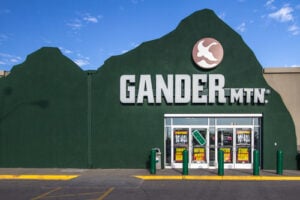
8. Gander Mountain — Rochester-Area Outdoor Retail
Status: Original chain entered bankruptcy in 2017; its brand and some assets changed hands. Upstate connection: Operated a store in Henrietta.
Gander Mountain attracted customers interested in fishing, camping, hunting, and other outdoor activities. Its large-format stores were especially suited to areas with strong traditions of recreation beyond the city. In the Rochester region, a Gander Mountain location in Henrietta served as a familiar destination for people seeking outdoor equipment.
In May 2017, WXXI reported that the Henrietta location was slated to close amid Gander Mountain’s bankruptcy and liquidation process. Camping World acquired the brand and certain business assets, and later versions of the business should not be confused with the original store network. For Upstate shoppers, the loss of the Henrietta location was part of a broader national retrenchment.
9. Shirt World — Syracuse University’s Lost Fan-Gear Store
Status: Closed in 2024. Upstate connection: Marshall Street, Syracuse.
Shirt World was not a conventional store where families bought baseball gloves or fishing rods. It was a collegiate sports-apparel shop, and that distinction is part of its history. For nearly five decades, it served Syracuse University students, alumni, and fans from its Marshall Street location with Orange-themed shirts and other merchandise.
Its closing in 2024 ended a familiar shopping choice on University Hill. Reporting by Syracuse University’s Newhouse students described the effect on a neighborhood where visitors often compared merchandise at Shirt World and Manny’s before making a purchase. Shirt World belongs in this broader sports-retail history precisely because the passion for college athletics created its own specialized local retail economy.
10. Potter Brothers — Kingston’s Ski and Snowboard Institution
Status: Still operating. Upstate connection: Founded in Kingston in 1945.
Potter Brothers began as a general sporting goods store in Kingston in 1945. Brothers Jack and Bud Potter established the business, which later became especially closely associated with skiing and snowboarding. Its history spans several generations of the same family, and its customers have included people preparing for winter trips into the Catskills and neighboring mountain regions.
The company adapted its business as sporting goods retail changed, emphasizing specialized service, fitting, and equipment knowledge. The Poughkeepsie location closed in 2017 after more than fifty years, while the wider company continued. Potter Brothers is a useful example of why an article about classic Upstate stores must distinguish a lost individual location from a business that remains active.
11. High Peaks Cyclery — Lake Placid’s Mountain Adventure Store
Status: Still operating. Upstate connection: Founded in Lake Placid in 1983.
Brian and Karen Delaney established High Peaks Cyclery in Lake Placid in 1983, shortly after the 1980 Winter Olympics brought renewed attention to the village. The store developed into a year-round outfitter, selling bicycles and other warm-weather equipment alongside products for Nordic skiing, winter travel, and other mountain activities.
Its development reflects the unique demands of Lake Placid, where an outfitter may serve everyone from visiting tourists to experienced endurance athletes. The shop’s own history documents its move from an earlier location into larger facilities as its services expanded. It remains a working part of the Adirondack outdoor community rather than merely a nostalgic name.
12. Mud, Sweat n’ Gears — Ellicottville’s Ski Specialty Shop
Status: Still operating. Upstate connection: Ellicottville, Cattaraugus County.
Mud, Sweat n’ Gears is a specialty ski and snowboard business closely associated with the Ellicottville area and the nearby Holiday Valley and HoliMont ski communities. Kimberly Reading and Miguel Azcarate took over the shop in 2000 and developed it into a business emphasizing equipment selection, technical fitting, and service for people who spend serious time on the slopes.
A 2025 anniversary profile traced the shop through several Ellicottville addresses and identified its location at 18 Monroe Street, where it moved in 2012. The address matters because the original draft incorrectly placed it at 18 Washington Street. The business is a survivor of local ski retail, not another closed Upstate outfitter.
13. The Ski Company — Rochester and Central New York
Status: Still operating. Upstate connection: Established Rochester-area ski retailer with locations including Rochester and East Syracuse.
The Ski Company is a useful reminder that specialty retailers sometimes succeed by focusing closely on the equipment that large general stores sell only seasonally. A 1999 Rochester Business Journal report described the company’s move and expansion from East Henrietta Road to Jefferson Road, adding larger facilities and an emphasis on ski and snowboard merchandise.
The company’s current location information lists Rochester, East Syracuse, and a seasonal Bloomfield/Canandaigua location. These stores serve a region whose skiers travel to Bristol Mountain, the Adirondacks, and other northeastern ski areas. Unlike some of the chains on this list, The Ski Company remains active, and the evidence supports its history without inventing a founding date.
14. Blue Line Sport Shop — Saranac Lake
Status: Still operating under the Blue Line Sport name. Upstate connection: Established in Saranac Lake in 1962.
The Blue Line Sport Shop began in Saranac Lake in 1962, succeeding an earlier store known as L. E. Cheeseman Sport Shop. Local historical research identifies Albert H. Homburger and Howard Ellithorpe as the owners of the new business. The store moved within the village over the years, eventually establishing itself on Main Street.
Its inventory came to reflect the many ways residents and visitors enjoyed the Adirondacks: fishing, camping, skiing, snowshoeing, and other outdoor pursuits. The shop’s own website continues to describe an operating business in the village. Blue Line represents continuity across generations of local outdoor retail, even though the original store changed ownership and locations.
15. The Mountaineer — Keene Valley
Status: Still operating. Upstate connection: Established in Keene Valley in 1975.
In Keene Valley, near the Adirondack High Peaks, The Mountaineer developed a specialized identity centered on serious outdoor travel. Founded in 1975, it serves climbers, hikers, backcountry skiers, anglers, and others who need more than generic outdoor clothing. The equipment and knowledge required for an ice climb or winter mountain route differ considerably from the products sold in a general department store.
The Mountaineer continues to operate on Route 73, and the company’s website describes its equipment, expert service, and connections to outdoor festivals and community activities. Its long survival illustrates the importance of specialization in a region where knowledgeable advice can be as valuable as the gear itself.
16. Manny’s — The Syracuse University Sports-Apparel Tradition
Status: Still operating. Upstate connection: Founded on Marshall Street in Syracuse in 1949.
Manny’s became a familiar name to generations of Syracuse University fans. University archival research identifies Lillian and Emanuel Slutzker as the couple who opened the athletic-apparel store on Marshall Street in 1949. Its identity developed around Syracuse’s college sports culture, especially the enthusiasm for Orange basketball and football.
Students and visitors came for jerseys, shirts, and school merchandise rather than for a full selection of general sporting equipment. Newhouse student reporting has documented Manny’s continued role on Marshall Street, including its survival after Shirt World closed. That makes the two stores related but distinct parts of the same local history.
17. Kenco Outfitters — Woodstock and Kingston
Status: Still operating. Upstate connection: Founded in Woodstock in 1982; later established in Kingston.
Kenco began in Woodstock in 1982 and developed into a family-owned outdoor and workwear outfitter. According to its own history, the business first opened on Rock City Road, serving people who needed durable clothing for practical work as well as recreation. It later relocated to Hurley Mountain Road near Kingston.
Its merchandise expanded to hiking, camping, paddling, winter sports, and other activities associated with the Catskills. Kenco’s survival is a reminder that not every traditional sporting goods retailer tried to become a large multi-state chain. Some continued to succeed by understanding local customers and the kinds of outdoor pursuits common in the Hudson Valley.
18. Dick Sonne’s Bike & Ski Shop — Utica and New Hartford
Status: Still operating. Upstate connection: Founded in Utica in 1964.
After his World War II service, Dick Sonne wanted to build a business around the activity he loved. His shop opened in Utica in 1964 under the name Dick Sonne’s Bike & Hike. At a time when many adults still viewed bicycles primarily as children’s toys, Sonne promoted cycling for exercise, transportation, and recreation.
His son Steve took over the business in 1984, continuing the emphasis on cycling and service. The company later developed a broader identity that included fitness and ski equipment. Its multigenerational history connects a local retail shop with the growing popularity of bicycling as a lifelong activity in the Mohawk Valley.
19. Mountainman Outdoor Supply Company — Inlet and Old Forge
Status: Still operating in Old Forge under new ownership. Upstate connection: Began in Inlet in 1993.
Mountainman Outdoor Supply Company began in 1993, when John Nemjo opened a small paddling and gear shop in a former pizza shop in Inlet. It developed into a major Adirondack outfitter associated with canoeing, kayaking, and other outdoor recreation. Its annual paddling events allowed customers to learn about equipment and, in many cases, try boats before buying them.
In 2023, Britta and Devlin Hennessy took over the Old Forge operation, while Nemjo’s former Saratoga Springs location continued under the new name Saratoga Outdoors. That history is important: Mountainman did not simply disappear. A locally founded business survived through an ownership transition, and one related store adopted a different name.
20. Fleet Feet Syracuse — A Locally Built Running Community
Status: Still operating; ownership changed in 2021. Upstate connection: Local Syracuse franchise opened in 2000.
Ed and Ellen Griffin opened the Syracuse Fleet Feet business in 2000 and became closely involved in local running through footwear fitting, training programs, and events. Although Fleet Feet is a national brand, the Syracuse operation had a substantial locally owned chapter that made it familiar to runners of different ages and abilities.
The Griffins retired in 2021, when Fleet Feet acquired their two stores in the DeWitt and Clay areas. The brand continued in those communities. Its story demonstrates a modern form of specialty sporting retail: a shop can become an organizing point for a local sports community, even when its inventory consists largely of shoes, clothing, and accessories.
21. Adirondack Lakes & Trails Outfitters — Saranac Lake Paddling
Status: Still operating. Upstate connection: Long-established paddling outfitter in Saranac Lake.
Adirondack Lakes & Trails Outfitters developed around canoeing, kayaking, instruction, and equipment suited to the lakes and rivers surrounding Saranac Lake. In a 2021 interview with the regional tourism organization, owner Jason Smith recalled joining the business in the 1990s and helping expand its retail and instructional operations with previous owner Stephen Doxzon.
That firsthand account is more dependable than assigning the business an unverified founding year. The shop has operated from locations in Saranac Lake, and regional directories identify its later Church Street address. It exemplifies an outdoor specialty business whose value comes from local waterways knowledge as much as merchandise on the shelves.
22. Inside Edge and Reliable Racing — Glens Falls and Queensbury
Status: Business lineage continues. Upstate connection: Established by Tom and Marilyn Jacobs in the Glens Falls region during the 1960s.
Inside Edge grew from a ski shop associated with West Mountain into an influential business serving skiers and ski-racing organizations. Former Olympic skier Tom Jacobs and his wife Marilyn developed the operation, which moved to Glens Falls and became the retail counterpart to Reliable Racing Supply. The supply company was incorporated in 1969 and reached customers and competitive organizations far beyond Warren County.
The business faced financial difficulties in 2016 but remained active in later years. A 2025 Glens Falls business profile described its continuing history and innovation in ski-racing equipment. This is another case where a single bankruptcy headline would obscure a much longer story of specialized expertise and survival.
23. Great Skate Hockey Supply Company — Amherst
Status: Still operating. Upstate connection: Long-established hockey equipment retailer in the Buffalo area.
Great Skate grew into a specialized hockey retailer in Amherst, serving a region with a deep attachment to the sport. Its store on Sheridan Drive focuses on skates, protective equipment, sticks, and other hockey merchandise rather than trying to be everything to every athlete. The business says it has served Western New York for roughly half a century.
Great Skate’s longevity shows how important specialized knowledge can be to players and families. Skate fitting, equipment selection, and sharpening create reasons to visit a knowledgeable shop rather than rely entirely on a general retailer. Its current Amherst storefront and hockey focus are documented by the business itself and the local chamber of commerce.
24. L. E. Cheeseman Sport Shop — Saranac Lake’s Earlier Sporting Goods Era
Status: Historic store succeeded by Blue Line Sport Shop in 1962. Upstate connection: 32 Broadway, Saranac Lake.
Not every vanished Upstate sports store became a famous regional chain. L. E. Cheeseman Sport Shop represents the older neighborhood-level businesses that helped establish outdoor retail in the Adirondacks. Historic Saranac Lake’s archival research identifies the shop at 32 Broadway and records that Blue Line Sport Shop succeeded it in 1962.
The surviving evidence does not support a precise founding date or a detailed inventory of everything Cheeseman sold. What it does establish is a real local sporting goods business with a known address and a documented successor. That makes it a stronger historical inclusion than several unsupported store names in the original draft.
25. The Northtown Center Pro Shop — Amherst Hockey’s On-Site Retail
Status: Pro-shop services documented at the operating arena. Upstate connection: Northtown Center at Amherst, opened in 1998.
The Northtown Center in Amherst is a different type of sporting goods destination: a multipurpose ice complex that includes an on-site pro shop. Since the arena opened in 1998, the facility has been closely connected with youth hockey, figure skating, and other ice sports in the Buffalo region. Its operator and local hockey organizations describe the arena’s pro-shop services.
Skate sharpening and equipment attention are essential parts of the rink experience, particularly for families rushing between school, practice, and games. The documentation supports including an operating pro shop at this complex, but not the draft’s unsupported suggestion that a separately named store had been operating there since the 1980s—before the arena itself existed.
What Happened to Upstate New York’s Classic Sporting Goods Stores?
There is no single explanation for why so many familiar retail names disappeared. Klein’s and Goldstock’s closed after decades of business. Herb Philipson’s struggled through bankruptcy before liquidation. Galyan’s was absorbed into Dick’s Sporting Goods, while Sports Authority, Olympia Sports, and the original Gander Mountain encountered their own national financial crises. Each history needs its own explanation rather than a blanket claim that online shopping destroyed every local store.
Equally important are the stores that remain. Potter Brothers, The Mountaineer, High Peaks Cyclery, Blue Line, Kenco, Great Skate, and others have continued serving customers through specialized knowledge, personal service, and the particular sporting traditions of their communities. Their survival shows that Upstate sporting goods history is still being written.
For related shopping history, see our articles on 25 Classic Long Island Sporting Goods & Athletic Stores We Remember, 25 Sporting Goods Stores New York City Has Lost, and 25 Historic Brands That Began in Upstate New York.