Feature Photo: Antoksena? Licensed form Shutterstock
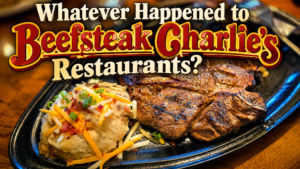
For New Yorkers who grew up in the 1970s and 1980s, the mention of Beefsteak Charlie’s usually brings back memories of shrimp before it brings back memories of steak. Where else could you order a steak dinner and then help yourself to as much shrimp as you wanted? There was the salad bar, of course, but it was the shrimp and the seemingly endless supply of beer, wine, and sangria that distinguished Beefsteak Charlie’s from so many of the other restaurant chains of that era.
Whatever happened to Beefsteak Charlie’s? The once-popular restaurant chain declined after its peak in the 1980s, was acquired by Bombay Palace Restaurants in 1987, and suffered another major setback when its new parent company filed for bankruptcy protection in 1989. The surviving restaurants gradually disappeared, although the name made a brief return on Long Island in 2009.
What many people who dined at Beefsteak Charlie’s may not realize is that the name goes back much further than the commercials they remember watching on television. The story begins in the Broadway theater district more than a century ago, with a restaurant that was quite different from the suburban steakhouses of the 1980s.
The Original Beefsteak Charlie’s in Manhattan
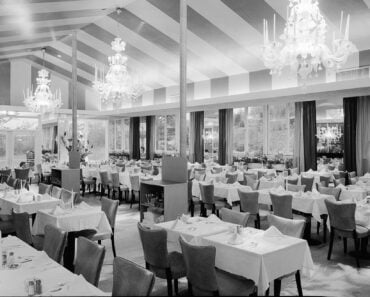
Charles W. Chessar, the restaurateur who inspired the chain’s name, opened a restaurant around 1910. He acquired his nickname from a sports editor at the New York Morning Telegraph after hosting a beefsteak dinner for employees of the newspaper. In 1914, Chessar moved to West 50th Street between Broadway and Eighth Avenue, where he continued operating his restaurant until 1934.
The restaurant was particularly popular with members of the sporting world. Pictures of horse races adorned the walls, and its signature dish was a steak sandwich. In his 1930 book Dining in New York, Rian James described the sandwich as a hot, buttered steak served with Bermuda onions and noted that the restaurant also had an oyster bar. His account depicted a casual Broadway establishment where sportswriters, boxers, and theater personalities could be found dining in the same room.
Chessar retired from the restaurant business in the 1940s and died in 1946. The original Beefsteak Charlie’s continued under William Soshnick, and by the 1950s and 1960s it had become a meeting place for jazz musicians as well as sports fans. The story of that restaurant belongs to the history of the old Broadway neighborhood, long before Beefsteak Charlie’s became a name associated with shopping malls.
How Steak & Brew Became Beefsteak Charlie’s
The chain that most New Yorkers remember grew out of a restaurant business called Steak & Brew. A 1970 federal court decision, Longchamps, Inc. v. Eig, documents how Longchamps had developed the Steak & Brew concept beginning in 1968. Its restaurants served steak in a pub-style setting, with bread, salad, and beer included in the meal. By June 1970, 15 restaurants were in operation.
Restaurateur Lawrence Ellman, better known as Larry Ellman, eventually took over the Steak & Brew operation. The company ran into financial trouble and entered bankruptcy proceedings in 1975. In early 1976, Ellman adopted the Beefsteak Charlie’s name and converted many of the existing restaurants to the new format. A December 13, 1976, Securities and Exchange Commission report identifies Beefsteak Charlie’s as the former Steak & Brew corporation and confirms that it was still undergoing bankruptcy proceedings at the time.
The new chain was not a straightforward expansion of Chessar’s old restaurant. Ellman borrowed the name and built a different kind of dining experience around it, taking the original Steak & Brew formula further. The addition of shrimp to the salad bar gave customers something that few competing steakhouses could match at comparable prices.
The Golden Era of Unlimited Shrimp, Beer, and Sangria
Beefsteak Charlie’s operated in a particularly competitive segment of the restaurant industry. Chains such as Ponderosa Steakhouse had already made the affordable steak dinner a familiar part of American suburban life. Beefsteak Charlie’s offered its customers something different. You could order a steak, hamburger, chicken, or ribs and spend much of the evening going back and forth between your table and the salad bar.
The shrimp generally came with their shells on, leaving customers to peel them at the table. Beer, wine, sangria, and soft drinks were also included with qualifying dinners. The restaurant’s television commercials emphasized the idea that customers would be pampered with generous portions. One of its best-known advertising slogans was “You’re gonna get spoiled.”
A restaurant review in The Washington Post in February 1982 illustrates how aggressively the chain marketed itself to families. A Sunday afternoon promotion allowed children to eat for five cents with a qualifying adult meal. The reviewer found the food inconsistent between two locations but recognized the value of the offer, particularly for families whose children enjoyed the salad bar and shrimp.
By 1984, Beefsteak Charlie’s had expanded to more than 60 restaurants, principally in the eastern United States. The chain had become a familiar name not only in the New York metropolitan area but also in markets farther down the East Coast.
Beefsteak Charlie’s on Long Island
For Long Island residents, the restaurants were part of a period when the shopping mall was becoming as much a place to socialize and eat as it was a place to shop. Beefsteak Charlie’s had a location at the Smith Haven Mall, where students from nearby Stony Brook University could enjoy a substantial dinner without spending a great deal of money.
On April 14, 1982, N. David Goldblatt wrote about the Smith Haven Mall restaurant in Stony Brook’s student newspaper, Statesman. At the time, a cheeseburger dinner with the restaurant’s unlimited offerings cost $7.50, and a filet mignon dinner cost $12.19. The review also mentioned video games for customers waiting to be seated and an unlimited ribs-and-chicken dinner available on weekdays. The article offers a glimpse into how the restaurant fitted into the social lives of college students and other young Long Islanders.
Those prices help explain why Beefsteak Charlie’s appealed to people who wanted to make an evening out of dinner. It was not the sort of steakhouse where customers had to worry about formal attire or how much another drink would add to the bill. A group of friends could sit down for dinner knowing in advance that much of what they consumed was included in the price.
Why Did Beefsteak Charlie’s Go Out of Business?
It is easy to assume that the unlimited shrimp and alcoholic beverages were responsible for the chain’s demise. Certainly, a restaurant with such an offer had to manage its food costs carefully. The price of seafood, meat, beverages, labor, and rent could all affect the profitability of the operation. However, the documented financial history of Beefsteak Charlie’s is considerably more complicated than the notion that its customers simply ate and drank the company out of business.
The company had emerged from the financial difficulties of Steak & Brew, and its rapid expansion did not guarantee long-term stability. In 1987, Bombay Palace Restaurants acquired the chain. By the time Bombay Palace entered Chapter 11 bankruptcy proceedings in September 1989, only about 35 Beefsteak Charlie’s locations remained.
A September 29, 1989, report in World Sikh News recorded statements from Bombay Palace president Sant Singh Chatwal attributing the bankruptcy filing to liabilities associated with the acquired restaurant chain, including more than $2 million in tax and other obligations. A subsequent New York State Tax Appeals Tribunal decision also documented the deterioration of Bombay Palace’s finances following its restaurant acquisitions in 1987.
These records establish that debt and corporate financial problems played a major role in the decline. The generous dining format may have contributed to the difficulty of maintaining profitable locations, but the available evidence does not establish it as the sole cause.
When Did the Last Beefsteak Charlie’s Close?
Bankruptcy did not bring an immediate end to every Beefsteak Charlie’s restaurant. Individual locations continued under various ownership arrangements. In 2000, one of the remaining Manhattan restaurants on West 45th Street was converted into Joe Franklin’s Memory Lane Restaurant. Another Manhattan location disappeared around the beginning of the 2000s.
The name surfaced again at a hotel in Elmsford, Westchester County, in 2003. Whether that restaurant was directly affiliated with the earlier chain is uncertain. In 2009, another restaurant bearing the Beefsteak Charlie’s name opened at the Westfield Sunrise Mall in Massapequa. It closed not long afterward. That brief revival did not restore the once extensive chain, and its precise final closing date is not well documented.
Remembering Beefsteak Charlie’s
There is something particularly nostalgic about the restaurant chains of the 1970s and 1980s. Many of them offered an experience that was tied closely to the era in which they flourished. Beefsteak Charlie’s even became the inspiration for a 1980 Saturday Night Live parody called “Pre-Chew Charlie’s.” The fact that television audiences recognized the reference says a great deal about how familiar the restaurant had become.
What separated Beefsteak Charlie’s from many of its competitors was the anticipation of what would come with dinner. The steak may have been what you ordered, but the shrimp, the salad bar, and the pitchers arriving at the table were what made the place memorable. For generations of New Yorkers, those memories remain long after the restaurants themselves disappeared.
For more stories about the restaurants New Yorkers grew up with, explore our articles on 25 Famous Long Island Restaurants We Miss, Whatever Happened to Tad’s Steaks?, Whatever Happened to Howard Johnson’s Restaurants?, and 10 Classic New York Restaurants We Miss the Most.