Photo by Brian Kachejian
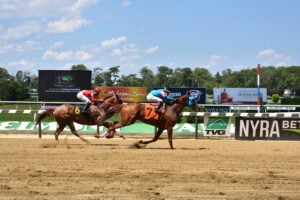
My Uncle Harry and my father were both big horse players. That was simply how their generation grew up. Men who came of age in the 1940s and 1950s and on into the 1960s played the horses the way people today check a phone, and long before off-track betting arrived, the racetrack was where it all happened.
The tracks thrived back then because they had to. If you wanted to place a bet, you either found a bookie or you went to the track, and so the grandstands filled up night after night. New York, with more tracks than almost anywhere else in the country, stood at the center of it all.
When New York City Off-Track Betting began operating in 1971, that started to change. Once bettors no longer had to walk through the turnstiles to place a wager, the crowds began to thin, and the long decline of many great tracks was underway.
I want to be honest about the other side of this. Betting on horses is gambling, and gambling can become an addiction. I watched people I knew get pulled under by it, chasing losses on the horses, ball games, and anything else with a number attached. I came close enough myself to respect how easily it happens.
What saved me was staying small. I was a two-dollar bettor, and on most nights I held myself to dropping twenty dollars or maybe a little more. I almost always lost it back in the end, but that is just the way it goes at the track.
I loved being there all the same. I loved Belmont and Aqueduct. I loved Yonkers, which was my father’s favorite and remains open today, even if it sits a little far from me now. Most of all, I loved Roosevelt Raceway.
Belmont Park is being reborn and is scheduled to reopen for live racing on September 18, 2026. Aqueduct, sadly, ran its final live card on June 28, 2026. New York’s downstate racing will now be consolidated at the new Belmont Park outside the traditional Saratoga summer season.
But it is Roosevelt Raceway I miss the most. It was always something to do, a night out among the trotters beneath the lights, with the occasional Tuesday afternoon matinee thrown in.
I am not alone in feeling this way. If you grew up around New York, the racetracks were woven into life, maybe not for everyone, but certainly for those of us who lived for that jolt of excitement that rarely lasted even two minutes. Here is a rundown of ten famous lost and historic New York racetracks, and I hope it brings back a few memories.
1. Roosevelt Raceway
Gottscho-Schleisner Collection, Public domain, via Wikimedia Commons
Location: Westbury, Long Island
Harness Racing Years: 1940–1988
Primary Sport: Standardbred harness racing
What Replaced It: Shopping centers, theaters, condominiums, apartments, and commercial development
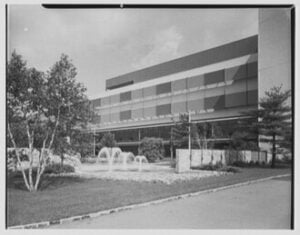
Roosevelt Raceway stood on the Hempstead Plains near the land historically associated with Roosevelt Field and Long Island aviation. The property had hosted the Vanderbilt Cup automobile races before opening for harness racing on September 2, 1940.
The track became known as the Trotting Capital of the World. It transformed harness racing on May 24, 1946, when employee Steve Phillips introduced the mobile starting gate, a moving barrier mounted on an automobile that lined up the horses before pulling away. The system dramatically reduced false starts and was soon adopted throughout the sport.
Roosevelt opened a modern enclosed grandstand during the 1950s, complete with air conditioning, closed-circuit television, dining rooms, and the enormous Cloud Casino restaurant overlooking the track. For decades, the lights, crowds, and betting windows made Roosevelt one of Long Island’s great nighttime gathering places.
Off-track betting, the New Jersey Meadowlands, Atlantic City casinos, changing entertainment habits, and deteriorating facilities all contributed to Roosevelt’s decline. The final meet ended in 1988.
The former raceway property was redeveloped in stages. Westbury Plaza, movie theaters, Meadowbrook Pointe, apartment complexes, condominiums, stores, and other commercial properties now cover the old track, grandstand, stable, and parking areas.
2. The Previous Belmont Park Grandstand
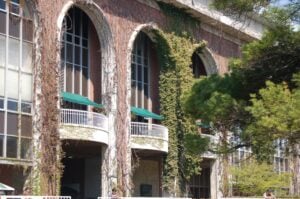
Photo by Brian Kachejian
Location: Elmont, Long Island
Belmont Park Opened: 1905
Previous Grandstand Opened: 1968
Grandstand Demolished: 2024
What Replaced It: The new Belmont Park grandstand and racing complex
Belmont Park opened in 1905 under the leadership of August Belmont Jr. and quickly became one of the great cathedrals of American Thoroughbred racing. Its mile-and-a-half main track provided a fitting home for the Belmont Stakes, the demanding final leg of the Triple Crown known as the Test of the Champion.
The original 1905 facility was replaced during a major reconstruction completed in 1968. That enormous grandstand presided over some of the sport’s most unforgettable moments, including Secretariat’s 31-length victory in the 1973 Belmont Stakes.
By the 21st century, however, the building’s vast footprint, aging systems, and seasonal limitations made another reconstruction necessary. Demolition of the 1.25-million-square-foot grandstand began in 2024.
The $455 million redevelopment centers on a smaller five-story building, renovated dirt and turf courses, a new synthetic Tapeta surface for winter racing, and expanded public access to the infield. The new Belmont Park is scheduled to reopen for live racing on September 18, 2026.
The Belmont Stakes will return to its Long Island home in 2027, when the rebuilt track will also host the Breeders’ Cup World Championships. The old grandstand is gone, but Belmont Park remains very much alive.
3. Jerome Park Racetrack
Location: The Bronx
Years Active: 1866–1894
Primary Sport: Thoroughbred racing
What Replaced It: The Jerome Park Reservoir
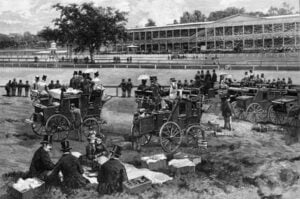
Jerome Park Racetrack opened on September 25, 1866, on the former Bathgate estate in what was then Fordham, Westchester County. The territory became part of New York City in 1874 and later formed part of the Bronx.
The track was closely associated with financier Leonard W. Jerome, the maternal grandfather of Winston Churchill, and August Belmont Sr. Its grand clubhouse catered to New York’s wealthiest racing patrons, while thousands of ordinary spectators arrived by carriage and railroad.
Jerome Park’s greatest historical distinction came in 1867, when it hosted the first running of the Belmont Stakes. The race remained there through the 1889 edition before moving to Morris Park.
The racetrack also became associated with the Champagne Stakes, handicap racing, claiming races, races for two-year-olds, and other innovations that helped shape organized Thoroughbred racing.
Jerome Park closed in 1894. The city later transformed the valley into the Jerome Park Reservoir, which remains an important part of New York City’s water system. Beneath the reservoir lies the footprint of one of the most influential racetracks in American history.
4. Sheepshead Bay Race Track
Location: Brooklyn
Thoroughbred Racing Years: 1880–1910
Later Use: Automobile speedway, 1915–1919
What Replaced It: Residential streets and homes in Sheepshead Bay and Manhattan Beach
The Coney Island Jockey Club opened Sheepshead Bay Race Track in 1880 near Ocean Avenue and the southern Brooklyn shoreline. It quickly developed a reputation as one of the most elegant and important racing facilities in the United States.
The track offered dirt and turf racing, grand dining accommodations, railroad access, and major events including the Suburban Handicap and Futurity Stakes. Its seaside setting and fashionable crowds made it an important part of Gilded Age New York.
The Hart-Agnew anti-betting laws devastated Thoroughbred racing throughout the state. Sheepshead Bay held its final horse races in 1910 and never reopened after racing returned elsewhere in New York.
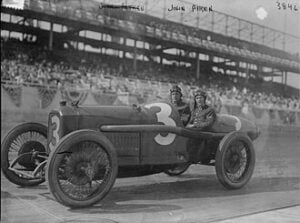
The property found a second life as the Sheepshead Bay Speedway. Beginning in 1915, automobiles raced around a high-banked two-mile wooden oval at extraordinary speeds. The speedway closed in 1919.
The land was subsequently divided into building lots. Homes and residential streets now cover the former racetrack and speedway, leaving almost no visible sign that Brooklyn once hosted one of America’s grandest racing grounds.
5. Aqueduct Racetrack, The Big A
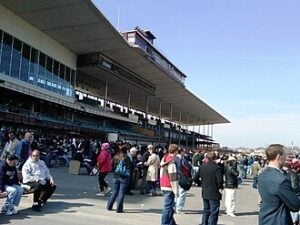
Transpoman, CC BY-SA 3.0 <https://creativecommons.org/licenses/by-sa/3.0>, via Wikimedia Commons
Location: Ozone Park, Queens
Live Racing Years: 1894–2026
Primary Sport: Thoroughbred racing
Current Status: Live racing ended; the state is planning the redevelopment of approximately 100 acres
Aqueduct Racetrack opened on September 27, 1894, under the Queens County Jockey Club. It took its name from the nearby conduit that carried water toward the Ridgewood Reservoir and eventually became known simply as the Big A.
The original track underwent numerous improvements before closing for a complete reconstruction during the 1950s. The modern Aqueduct reopened in 1959 with a sweeping concrete grandstand and direct subway access, making it New York City’s working-class winter racetrack.
Aqueduct hosted the Belmont Stakes while Belmont Park underwent its previous reconstruction during the 1960s. Secretariat made his first career start there on July 4, 1972, and returned for a public farewell in November 1973.
The track survived changing betting habits, the rise and fall of New York City OTB, casino development, and decades of declining attendance. Aqueduct held its final live racing program on June 28, 2026, after 132 years.
Simulcasting continued temporarily, but racing operations moved permanently to the rebuilt Belmont Park. Empire State Development is leading a public planning process for approximately 100 acres of state-owned land, with possible future uses including housing, retail, community facilities, and open space. A final redevelopment plan had not yet been adopted as of August 2026.
6. Jamaica Racetrack
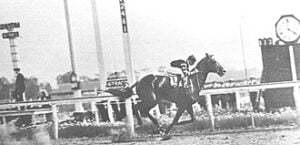
Location: South Jamaica, Queens
Years Active: 1903–1959
Primary Sport: Thoroughbred racing
What Replaced It: Rochdale Village
The Metropolitan Jockey Club opened Jamaica Racetrack on April 27, 1903, before a crowd of approximately 15,000. Its one-mile oval occupied a large property near Baisley Boulevard in southeastern Queens.
Jamaica lacked the prestige of Belmont Park, but its accessible location made it a favorite among working-class New Yorkers. Long Island Rail Road and transit connections brought large crowds, and the track became an important stop on the New York racing calendar.
Hall of Fame jockeys, including Eddie Arcaro, rode there regularly, and Jamaica hosted important stakes races during more than half a century of operation.
The Greater New York Association closed Jamaica in 1959 while concentrating its investment in the newly rebuilt Aqueduct and Belmont Park. The racetrack property was cleared for Rochdale Village.
When Rochdale opened during the early 1960s, it was the largest housing cooperative in the world. Its apartment towers, schools, shopping areas, and open spaces now occupy the former racing grounds.
7. Union Course Racetrack
Location: Woodhaven, Queens
Years Active: 1821–1880s
Primary Sports: Match racing, Thoroughbred racing, and harness racing
What Replaced It: The residential street grid of Woodhaven
Union Course opened in 1821 and became one of the most famous American racetracks of the early 19th century. Its dirt racing surface represented a departure from the European tradition of racing primarily on turf.
The track became nationally known for enormous North-versus-South match races. In May 1823, the Northern champion American Eclipse defeated the Southern horse Sir Henry in a multi-heat contest that drew national attention and an immense crowd to Queens.
Taverns, hotels, stables, and other businesses grew around the course. Neir’s Tavern opened nearby in 1829 to serve the racing community and remains in operation today as one of New York City’s oldest drinking establishments.
Union Course declined as newer tracks opened elsewhere in the region. The property was eventually divided into residential lots, and the growing neighborhood of Woodhaven absorbed the racetrack.
The old oval can still be sensed in portions of the street pattern, where roads curve in ways that reflect the shape of the vanished course.
8. Gravesend Race Track
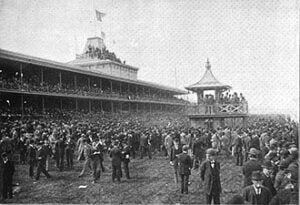
Location: Gravesend, Brooklyn
Years Active: 1886–1910
Primary Sport: Thoroughbred racing
What Replaced It: Residential streets, houses, schools, and neighborhood development
The Brooklyn Jockey Club opened Gravesend Race Track in 1886 with major backing from racing figures Philip and Michael Dwyer. The property extended across a large section of southern Brooklyn between McDonald Avenue, Ocean Parkway, Kings Highway, and Avenue U.
Gravesend featured an ornate grandstand, clubhouse, betting pavilion, stables, carriage facilities, and direct railroad access. It became the home of major races including the Brooklyn Handicap, Brooklyn Derby, Astoria Stakes, Tremont Stakes, and Gazelle Handicap.
The track also hosted the Preakness Stakes for years before the race became permanently associated with Pimlico in Baltimore.
Like Sheepshead Bay, Gravesend was devastated by New York’s anti-betting laws. The track closed in 1910 and did not reopen when racing resumed elsewhere in the state.
The land was sold for residential development during the early 1920s. Streets, houses, apartment buildings, and schools now cover the former racetrack.
9. Parr Meadows and Suffolk Meadows
Location: Yaphank, Long Island
Racing Years: 1977 and 1986
Primary Sport: Quarter horse racing
What Replaced It: The Boulevard mixed-use development, including housing, a hotel, retail stores, and a Walmart Supercenter
Parr Meadows was built near the Long Island Expressway and William Floyd Parkway as a home for quarter horse racing. It opened in May 1977 but collapsed financially after a meet lasting only 113 days.
The empty racetrack achieved its greatest public recognition through music rather than horse racing. In September 1979, the property hosted a large Woodstock tenth-anniversary reunion concert featuring several musicians associated with the original festival.
Racing returned briefly in 1986 under the name Suffolk Meadows. That revival lasted 86 days before the track closed permanently. I remember when they opened in ’86, I went quite often. It was a fun night out, free parking; I think I remember admission was free too. It was quarter horse races, and if you blinked, you missed the race because they were over usually in 20 seconds.
For years, the abandoned property attracted proposals for shopping centers, casinos, warehouses, and other developments. The former racetrack ultimately became part of The Boulevard, a large mixed-use community.
A Walmart Supercenter, apartments, townhouses, an assisted-living facility, a hotel, and additional commercial properties now occupy the grounds where Parr Meadows once tried to establish quarter horse racing on Long Island.
10. Bridgehampton Race Circuit
Location: Near Bridgehampton and Sag Harbor, Long Island
Permanent Circuit Opened: 1957
Racing Ended: During the late 1990s
Primary Sport: Sports car and road racing
What Replaced It: The Bridge golf club
Bridgehampton’s racing tradition began with automobile races held on public roads. Safety concerns and New York’s prohibition against road racing led enthusiasts to construct a permanent circuit across more than 500 acres of sandy hills overlooking Peconic Bay.
The 2.85-mile course opened in 1957 and became one of the most feared and respected road circuits in North America. Drivers faced blind crests, elevation changes, fast corners, limited runoff areas, and blowing sand.
Bridgehampton hosted sports car races, Can-Am, Trans-Am, NASCAR, and other major events. Stirling Moss, Dan Gurney, Mario Andretti, Mark Donohue, and many other celebrated drivers competed there.
By the 1970s and 1980s, noise complaints, rising property values, limited finances, and the cost of modern safety improvements threatened the circuit. Major racing disappeared, while club events and driving schools continued into the late 1990s.
The property was transformed into the private Bridge golf club. Portions of the original track, guardrails, and the Chevron Bridge were preserved within the course, allowing traces of the old circuit to survive among the fairways.
Classic New York History Fact
Have you ever wondered why several Woodhaven streets curve in a long arc rather than following the surrounding Queens grid? The answer may be the old Union Course. When the racetrack property was divided for development, portions of the new neighborhood followed the old course’s footprint. Neir’s Tavern, which opened in 1829 to serve racetrack patrons, remains nearby as a living connection to that vanished world.
Continue exploring New York racing history on ClassicNewYorkHistory.com with our in-depth features on Roosevelt Raceway, Belmont Park, Jerome Park Racetrack, and Aqueduct Racetrack.
10 Famous Lost and Historic New York Racetracks at a Glance
| # | Racetrack | Location | Active Era | What Occupies the Site or Replaced It |
|---|---|---|---|---|
| 1 | Roosevelt Raceway | Westbury, Long Island | 1940–1988 | Retail, theaters, condominiums, apartments, and commercial development |
| 2 | Previous Belmont Park Grandstand | Elmont, Long Island | 1968–2023 | The new Belmont Park racing complex |
| 3 | Jerome Park Racetrack | The Bronx | 1866–1894 | Jerome Park Reservoir |
| 4 | Sheepshead Bay Race Track | Brooklyn | 1880–1910 | Residential streets and homes |
| 5 | Aqueduct Racetrack | Ozone Park, Queens | 1894–2026 | Approximately 100 acres undergoing state-led redevelopment planning |
| 6 | Jamaica Racetrack | South Jamaica, Queens | 1903–1959 | Rochdale Village |
| 7 | Union Course Racetrack | Woodhaven, Queens | 1821–1880s | Residential Woodhaven |
| 8 | Gravesend Race Track | Brooklyn | 1886–1910 | Residential neighborhood development |
| 9 | Parr Meadows and Suffolk Meadows | Yaphank, Long Island | 1977 and 1986 | The Boulevard mixed-use development |
| 10 | Bridgehampton Race Circuit | Long Island | 1957–late 1990s | The Bridge golf club |